
Mobile Bar Member Ben Warren Wins Cumberland Volunteer of the Year for Coaching Law Students
Ben Warren, a Mobile Bar Association member who directs Cumberland School of Law's dispute resolution teams, received the law school's Volunteer of the Year Award for coaching students in negotiation, mediation and more.
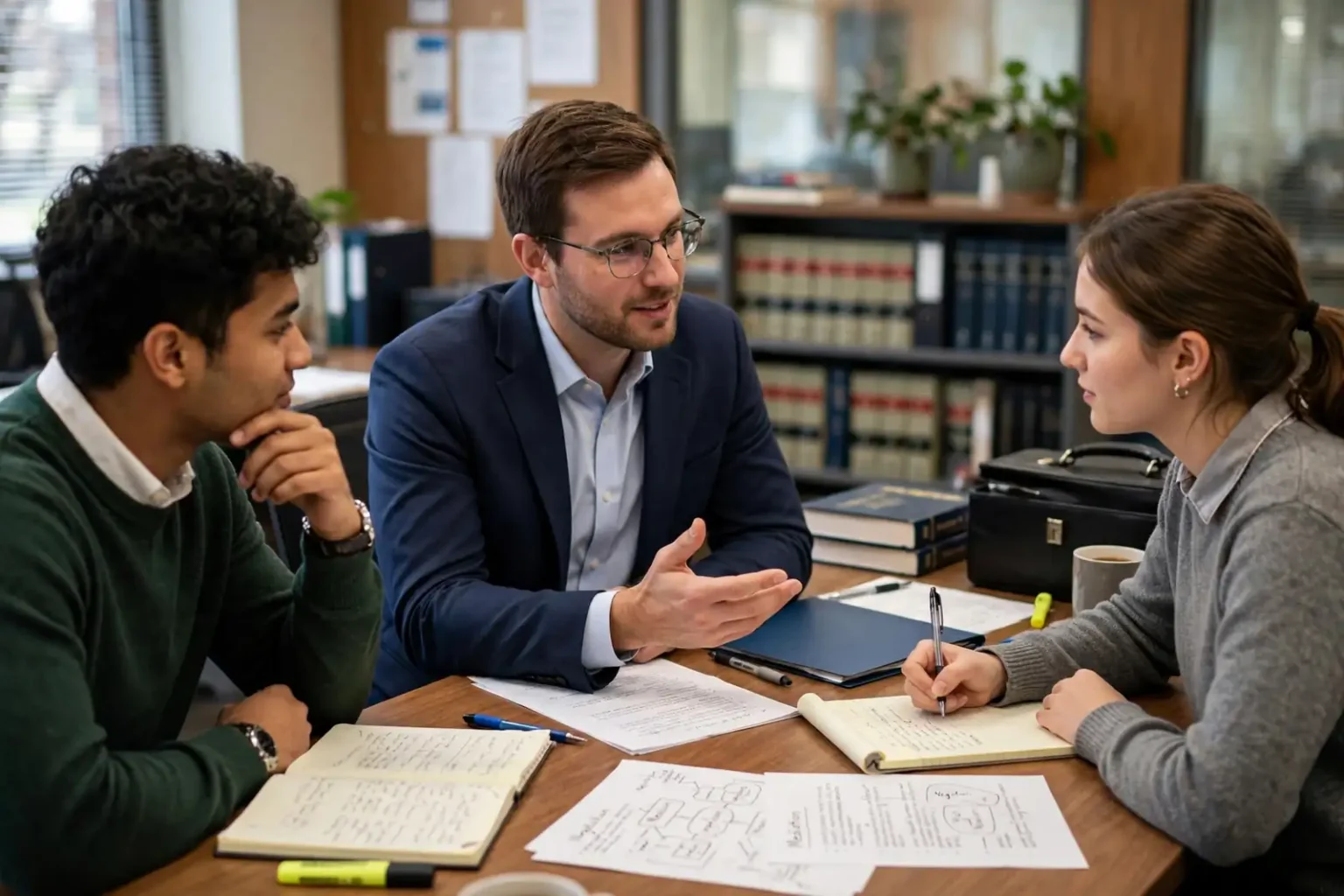
MOBILE, Ala. — Ben Warren, a member of the Mobile Bar Association who directs the alternative dispute resolution teams at Samford University’s Cumberland School of Law, has been honored as Cumberland volunteer of the year, receiving the law school’s Volunteer of the Year Award for his work preparing law students for negotiation, mediation, arbitration and client counseling competitions.
The honor reflects the time Warren has spent coaching students one on one, getting teams ready for competition and helping them build the hands-on skills lawyers rely on when cases are settled, mediated or resolved outside a courtroom. The Mobile Bar Association announced the recognition this week.
What Warren does for Cumberland’s teams
As director of Cumberland’s alternative dispute resolution teams, often shortened to ADR, Warren oversees the students who represent the law school in competitions focused on four areas: negotiation, mediation, arbitration and client counseling. His work includes individualized coaching, preparation for regional and national competitions and broader skills development aimed at the practical side of legal work.
Warren is himself a Cumberland graduate. Samford University identifies him as a member of the law school’s Class of 2018.
The goal of that work, according to the bar association’s announcement, is to help students develop the advocacy and problem-solving skills they will need in successful legal careers. Those are skills that do not always come from a textbook. A law student can learn the rules of contracts or civil procedure in a classroom, but sitting across a table from an opposing negotiator, guiding a client through a hard decision or presenting a case to an arbitrator requires practice, feedback and repetition.
Recent results for Cumberland’s ADR program
Cumberland’s dispute resolution teams have posted a string of strong results in recent seasons, according to news releases published by Samford University.
- In March 2025, Cumberland students won the American Bar Association’s Representation in Mediation regional competition, held at Loyola University New Orleans, earning a place in the national tournament in Chicago. Warren said at the time that winning the competition for the first time in years was a significant achievement and pointed to the emergence of the school’s ADR teams.
- In September 2025, the ABA Law Student Division’s list of top competition champions for 2024-25 ranked Cumberland No. 6 in the nation for alternative dispute resolution and moot court competitions, up two spots from the previous year. The ranking counts results across the ABA’s appellate advocacy, arbitration, negotiation, client counseling and mediation competitions, and Cumberland teams took part in all five.
- In October 2025, Cumberland hosted an ABA regional negotiation competition that drew law school teams from across the country, and a pair of Cumberland students were named regional co-champions, qualifying for the national negotiation competition. Warren said hosting and competing in the same weekend required a major commitment from the program and thanked the coaches, students and volunteer judges involved.
Cumberland is also widely known for its trial advocacy program. In 2025, the school reported a No. 4 national ranking for trial advocacy from U.S. News & World Report.
What alternative dispute resolution means
For readers outside the legal profession, alternative dispute resolution is an umbrella term for ways of settling disagreements without a full trial. It has become a routine part of how civil cases are handled in Alabama and across the country. The main forms include:
- Negotiation: The parties, usually through their lawyers, talk directly and try to reach an agreement on their own terms.
- Mediation: A neutral mediator helps the parties communicate and explore a settlement. The mediator does not decide the case; any agreement belongs to the parties.
- Arbitration: A neutral arbitrator, or a panel, hears evidence and arguments and issues a decision. Depending on the agreement between the parties, that decision may be binding.
- Client counseling: Not a method of resolving disputes on its own, but a core lawyering skill in which an attorney interviews a client, identifies the client’s goals and explains the options available, including whether to negotiate, mediate, arbitrate or go to court.
Law school competitions in each of these areas are built around realistic problems. Students might negotiate a business deal, represent a client in a mock mediation, argue a case before a practicing arbitrator or conduct an interview with an actor playing a client. Judges, often practicing lawyers and retired judges, score students on their preparation, judgment, communication and ethics.
Volunteers such as coaches and judges are what make those programs work. Teams practice for weeks or months before a competition, and that preparation depends on experienced lawyers willing to give their time to run practice rounds, critique performances and share what they have learned in practice.
About Cumberland School of Law
Cumberland School of Law is part of Samford University in Homewood, a Birmingham suburb. Samford was founded in 1841 and is a private Christian university with 10 schools, including the law school. Cumberland itself was founded in 1847 in Lebanon, Tennessee, and became part of Samford, then known as Howard College, in 1961. Many of its graduates practice in Mobile and Baldwin counties and across south Alabama.
About the Mobile Bar Association
The Mobile Bar Association is one of the oldest professional organizations in the city. According to the association, it was founded in April 1869 with 32 members, and its first president was Peter Hamilton. Its early goals included creating a law library in Mobile, encouraging professional learning and giving lawyers opportunities to meet socially. The association marked its 150th anniversary in 2019 and has more than 1,000 members.
Today, the association describes its mission as raising the standard of the legal profession, providing professional development and fostering connections among its members. Over the years, it has helped launch community programs, including a pro bono program that began in 1985 to provide free legal representation to low-income clients, the Mobile Bar Foundation in 1994 and a volunteer lawyers program incorporated in 2003 and later renamed the South Alabama Volunteer Lawyers Program.
The bar association regularly highlights awards and recognition earned by its members, such as Warren’s honor from Cumberland. Recognizing volunteer work in legal education is in keeping with the association’s longstanding emphasis on professional development.
Why coaching matters to the profession
Legal educators have increasingly emphasized practical skills training alongside traditional classroom instruction. Competitions give students a structured, lower-stakes place to make mistakes, receive critiques from experienced lawyers and improve before they represent real clients. Many of the skills tested in ADR competitions, including listening carefully, preparing thoroughly, explaining options clearly and finding workable solutions, carry over into almost every area of practice.
For Warren, the Volunteer of the Year Award recognizes the coaching, competition preparation and skills development he has provided to Cumberland students as director of the school’s dispute resolution teams. In the words of the bar association’s announcement, that work helps law students build the practical advocacy and problem-solving skills they will need for successful legal careers.
What to know
- Who: Ben Warren, a Mobile Bar Association member and director of Cumberland School of Law’s alternative dispute resolution teams.
- Honor: Volunteer of the Year Award from Cumberland School of Law.
- Why: His work coaching law students in negotiation, mediation, arbitration and client counseling, including individualized coaching, competition preparation and skills development.
- Program results: Cumberland ranked No. 6 nationally for ADR and moot court competitions in the ABA Law Student Division’s 2024-25 standings, and its teams won ABA regional titles in mediation and negotiation in 2025.