

Few people have dedicated as much of their lives to football and education as Benny Coffee. A standout linebacker, professional football player, respected coach, and longtime educator, Coffee built a legacy that stretched from his hometown of Plant City, Florida, to football fields and classrooms throughout Mobile, Alabama.
Now retired, Coffee is remembered not only for his accomplishments on the football field but also for the countless young people whose lives he influenced as both a coach and a physical education teacher. During his career in Mobile, he taught physical education at Hillsdale Middle School and LeFlore High School, becoming a familiar and respected figure in the Mobile County Public School System while simultaneously helping build one of the area’s most successful high school football programs. Across nearly four decades in coaching and teaching, Coffee’s path wound through three states and touched thousands of students, but it was in Mobile that he found the community he would call home for the bulk of his career.
Growing Up in Plant City
Coffee’s football journey began in Plant City, Florida, where he developed into one of the area’s premier defensive players. He attended Marshall High School—today known as Marshall Middle School—where he played under head coach Kelly Williams. Entering the school during the 1966–67 academic year, Coffee quickly established himself as a physical, hard-hitting linebacker with exceptional athletic ability.
Marshall’s demanding practices helped shape the disciplined player he would become. Coffee often recalled that practices at Marshall were among the toughest he experienced, forcing players to develop both physically and mentally. That foundation would serve him well just a few years later, when the football landscape around him changed dramatically.
In 1969, school integration brought Coffee and many of his teammates to Plant City High School. Although the transition represented a significant change, Coffee remembered it as an overwhelmingly positive experience. He later described the adjustment in practical terms, recalling that “the preparation was a little bit more intense” at Plant City High than it had been at Marshall—a comment that reflected both the higher level of competition he found there and the discipline instilled in him during his earlier years.
He credited head coach Hank Sytsma and assistant coach Kelly Williams with creating an environment where players from different backgrounds quickly came together as teammates. Coffee often said he never experienced difficulties with fellow students or teachers and remembered the school as feeling like one large family. Several of his cousins—including Chester Sikes, Jerry Sikes, and Willie James Morrison—also made the transition and became contributors to Plant City’s defense, giving Coffee a built-in support system during a period of major social change across Florida’s public schools.
Coffee’s senior season established him as one of Florida’s elite linebackers. College recruiters visited frequently, and he earned numerous honors, including county and state all-star recognition. He was also selected to the South Florida squad for the Florida All-Star Game in Jacksonville, a showcase that put him on the radar of college programs well beyond his hometown.
Florida A&M and a Hall of Fame Career
Coffee accepted a scholarship to Florida A&M University in Tallahassee, where he majored in physical education while starring at linebacker for the Rattlers.
Although the program experienced coaching changes during his four seasons—Coffee played under three different head coaches—and compiled a modest overall record of 21-22 during that stretch, Coffee distinguished himself as one of the team’s premier defensive players. His combination of football intelligence, leadership, and physical style of play made him one of the most respected linebackers in the program, even as the Rattlers navigated a period of instability at the top of the coaching staff.
His collegiate accomplishments were eventually recognized with induction into the Florida A&M University Athletics Hall of Fame as part of the Class of 2003, nearly three decades after he last suited up for the Rattlers—a testament to how lasting an impression his college career left on the program.
Coffee often spoke fondly about his years in Tallahassee, recalling both the friendships he made and the unique experiences of college life at one of the nation’s most storied historically Black universities. Florida A&M’s football program, with its deep roots and passionate fan base, gave Coffee a stage to refine the physical, disciplined style of play that would later define the defenses he coached in Alabama.
Professional Football
Following graduation in 1974, Coffee pursued professional football.
He played in the World Football League with the Houston Texans and Jacksonville Sharks. The WFL was a short-lived attempt to establish a rival to the NFL, launching that same year with franchises across the country before folding amid financial troubles within two seasons—but for players like Coffee, it offered a genuine chance to keep competing at a high level while pursuing an NFL opportunity.
That opportunity came when Coffee earned a look from the NFL’s Detroit Lions. The timing, however, was difficult. Lions head coach Don McCafferty—who had led the Baltimore Colts to victory in Super Bowl V a few years earlier—died of a heart attack that summer at his home in Michigan, just as that year’s training camp was getting underway. By the time Coffee arrived for his opportunity with the organization, longtime assistant Rick Forzano had been elevated to head coach, and the roster picture Coffee had hoped to step into had already shifted.
Although he impressed during camp, Coffee did not survive the final roster cuts. While his NFL career never materialized as he had hoped, the experience helped prepare him for the next chapter of his life—teaching and coaching.
A Career Dedicated to Education
Rather than viewing football as the end of his story, Coffee turned his attention toward education.
Using the physical education degree he earned at Florida A&M, he began teaching while continuing to coach football. His early career included coaching at Lake Wales High School in Florida, followed by five years teaching and coaching at Shaw High School in Columbus, Georgia. He also spent time working as a counselor at the Tampa United Methodist Center, rounding out a resume that combined athletics with a broader commitment to working with young people.
It was during this period that former Detroit Lions teammate Ray Parker encouraged Coffee to consider an opportunity in Mobile, Alabama. That decision would define the remainder of his career.
Building a Legacy in Mobile, Alabama
Coffee relocated to Mobile and soon became one of the area’s most respected educators and football coaches.
He spent decades teaching physical education, serving students at Hillsdale Middle School and later LeFlore High School. Students knew him as a disciplined but encouraging teacher who believed physical education was about much more than sports—it was about character, teamwork, respect, and personal responsibility.
LeFlore itself carries a distinct history in Mobile. Originally opened as Toulminville High School in 1968, the campus was renamed in 1981 in honor of John L. LeFlore, a longtime Mobile civil rights activist, and later developed into a magnet program for advanced communication and fine arts. The school’s Mighty Marching Rattler Band, known for a style influenced by HBCU powerhouse programs, became a point of pride for the community—much like the football program Coffee helped build on the other side of campus.
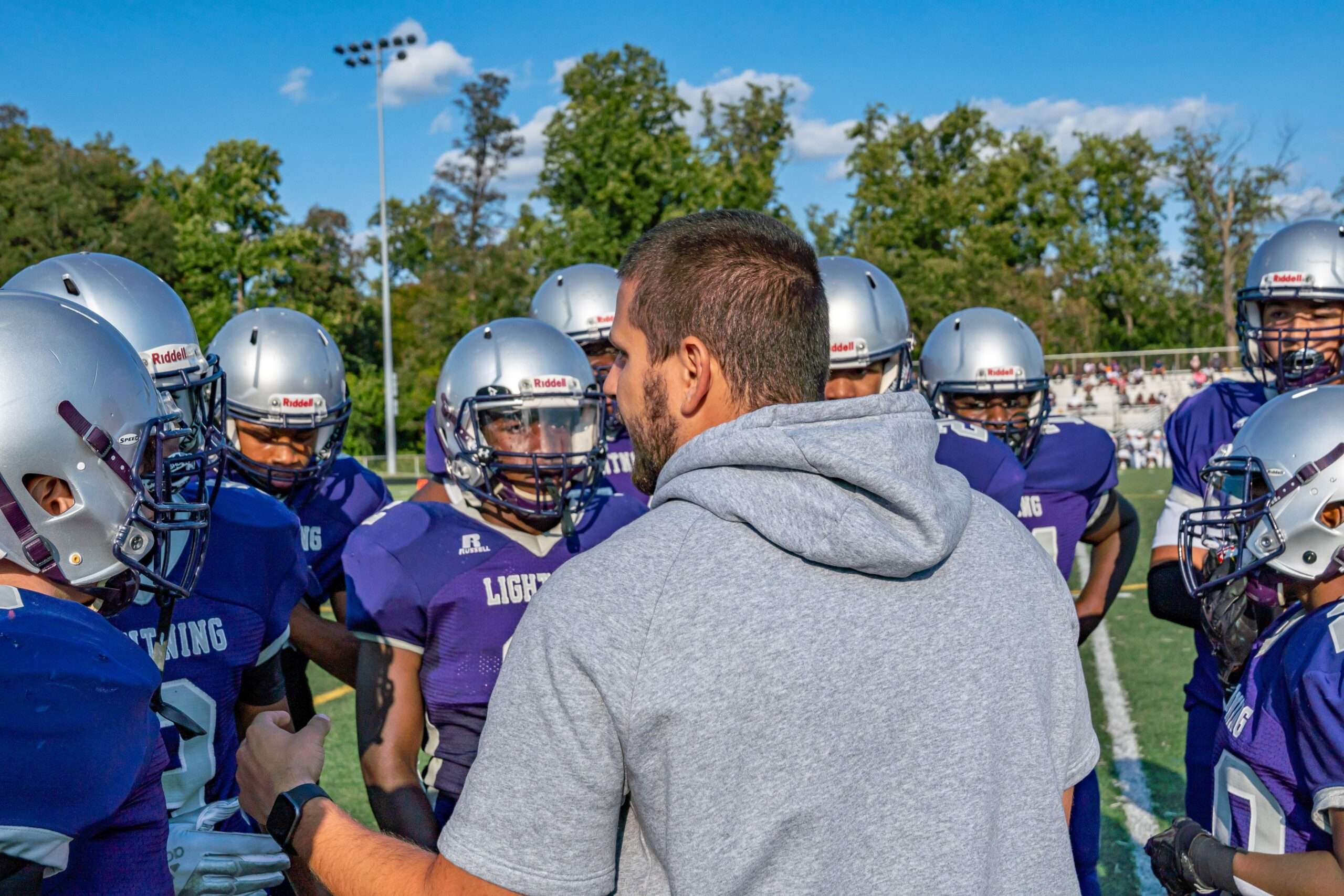
At the same time, Coffee became a cornerstone of LeFlore High School’s football program. Serving as the defensive coordinator for approximately 25 years, he helped shape generations of football players while building one of the Gulf Coast’s most respected defensive programs. Over that span, LeFlore produced a string of players who went on to play college and professional football, including NFL veterans Paul Harris, Eddie Lewis, Anthony Marshall and Lawyer Tillman—a pipeline of talent that reflected the standard Coffee and his fellow coaches set for the program.
His influence extended far beyond wins and losses. Former players frequently credited Coffee with teaching life lessons that stayed with them long after graduation, describing him as a coach who cared as much about the person as he did about the player.
Recognizing Future Talent
Over a coaching career spanning decades, Coffee evaluated hundreds of talented athletes.
Among them, one player stood out almost immediately. Williamson High School quarterback JaMarcus Russell possessed the combination of arm strength, athletic ability, and football instincts that convinced Coffee he would eventually play in the National Football League.
Years before Russell starred at LSU and became the first overall selection in the 2007 NFL Draft, taken by the Oakland Raiders, Coffee confidently predicted his professional future. When Russell eventually reached the NFL, Coffee saw it as confirmation of what years of coaching had taught him about recognizing elite talent—a skill sharpened by decades of studying opposing offenses as a defensive coordinator in one of Alabama’s most competitive football regions. Coffee’s tenure also coincided with a period when Mobile County high school football was producing an unusually deep pool of Division I and NFL talent, and defensive coordinators like Coffee played a direct role in preparing that talent for the next level, drilling fundamentals that translated from Friday nights in Mobile to college campuses and NFL training camps across the country.
Retirement
After roughly a quarter-century coaching and teaching in Mobile, Coffee retired from public education and football.
He returned to Plant City in 2013 to be closer to family after spending many years in Alabama. Although retirement allowed him to slow down, Coffee admitted that leaving coaching wasn’t easy. Football and education had been central parts of his identity for decades, and he often remarked that he still missed working with young people. Reflecting on the pace of retirement compared to the structure of a coaching career, Coffee put it simply: “I always think about going back to work.”
A Lasting Impact
Benny Coffee’s life reflects a rare combination of athletic excellence and public service.
He excelled as a high school football star, earned Hall of Fame recognition at Florida A&M, competed professionally, and ultimately devoted the majority of his life to mentoring students and athletes. Few coaches can claim the kind of full-circle career Coffee built—from integrating into a new high school as a teenager during a pivotal moment in Florida history, to being enshrined in his college’s Hall of Fame, to spending a quarter-century shaping one of Mobile’s proudest football programs.
In Mobile, Alabama, Coffee became much more than a football coach. As a retired middle school and high school physical education teacher at Hillsdale Middle School and LeFlore High School, he influenced thousands of students while helping establish a winning football tradition that endured for decades and produced players who went on to compete at the collegiate and professional level.
For many of those who crossed his path, Benny Coffee will be remembered not only for the tackles he made or the defenses he coached, but for the example he set as an educator, mentor, and leader whose greatest victories came in the lives of the young people he inspired.