Thousands Walk Downtown Mobile on Halloween in Making Strides Against Breast Cancer
Thousands of walkers filled downtown Mobile on Oct. 31 for the annual Making Strides Against Breast Cancer walk, which aimed to raise $250,000 for American Cancer Society research and patient programs.
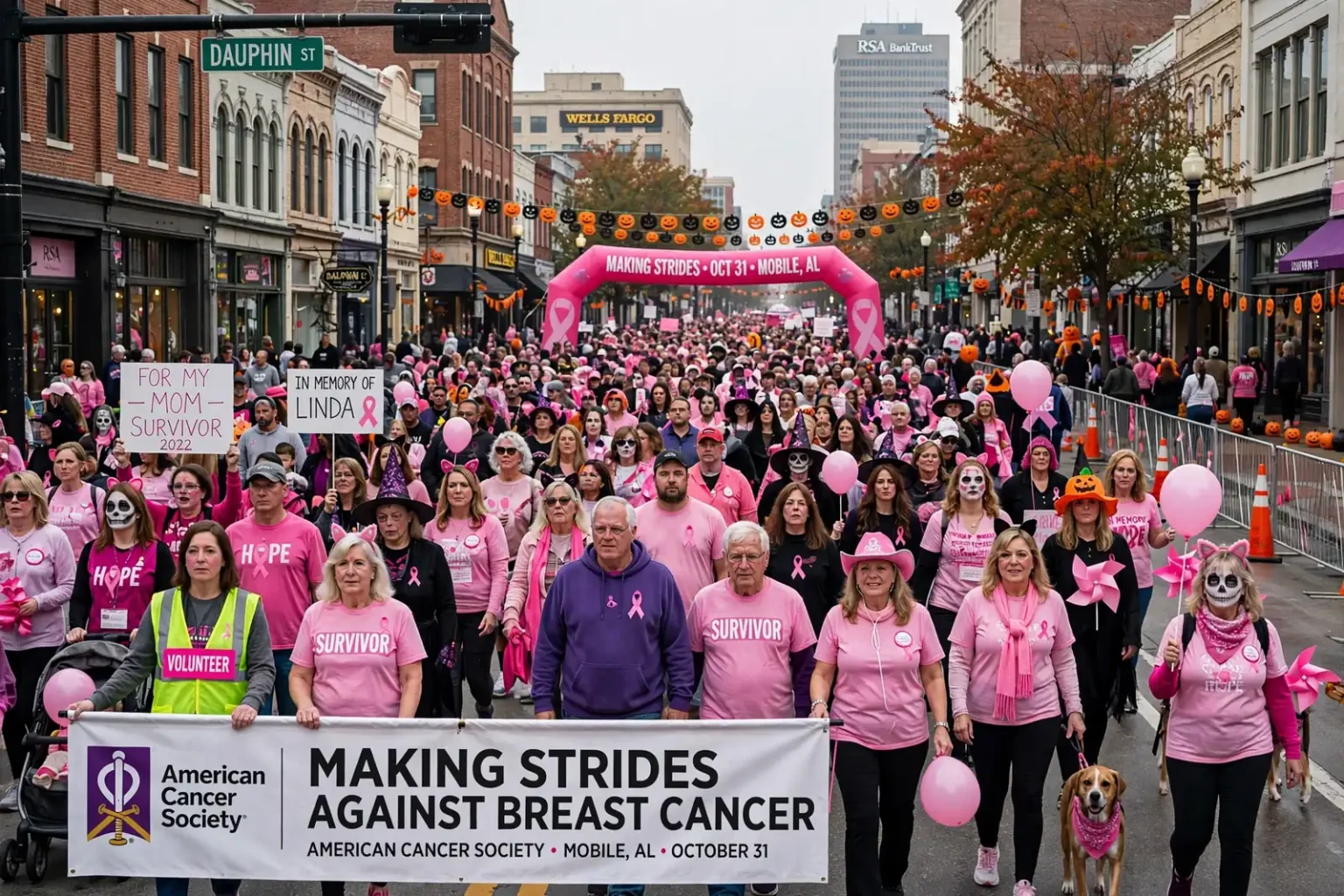
MOBILE, Ala. — Thousands of walkers filled the streets of downtown Mobile on Halloween morning for the annual Making Strides Against Breast Cancer walk, a fundraiser for the American Cancer Society that organizers hoped would bring in a quarter of a million dollars for cancer research and patient support.
The Saturday, Oct. 31, event turned downtown into a sea of participants walking for family members, friends, co-workers and neighbors touched by the disease. Organizers set a goal of $250,000, with the money going toward cancer research and programs that help patients through treatment.
A walk built on connection
People involved with the walk said cancer touches so many lives that it has become a common thread connecting families and entire communities in the search for a cure. For many participants, the event is as much about the people walking beside them as it is about the miles.
Volunteer Phillip DeKeyser, a Mobile native, said the sense of togetherness is what keeps him coming back.
“I love the camaraderie of having a walk with several thousand people here and in downtown. I’m a native of Mobile and so I enjoy the time here and we’re blessed with another wonderful morning here on Halloween,” DeKeyser said.
Where the money goes
Making Strides Against Breast Cancer is the largest network of breast cancer events in the nation, and its walks are organized by the American Cancer Society in communities across the country. Money raised supports the society’s research program along with services aimed at easing the practical burdens of treatment.
Those services include:
- Rides to treatment: The society’s Road To Recovery program connects patients with volunteer drivers who take them to and from cancer-related appointments.
- Lodging near treatment: Hope Lodge communities and lodging partnerships offer free places to stay for patients who must travel away from home for care.
- Round-the-clock help: The American Cancer Society’s 24/7 cancer helpline, 1-800-227-2345, connects patients, caregivers and families with trained specialists who can answer questions and point them toward resources.
- Research: Funding for scientists studying how to prevent, detect and treat cancer more effectively.
For patients in southwest Alabama, help with transportation and lodging can make a real difference. Many people in rural parts of the region drive long distances for chemotherapy, radiation and follow-up visits, and the cost of gas, time off work and overnight stays can add up quickly during months of treatment.
Why breast cancer awareness matters
Breast cancer is the most commonly diagnosed cancer among women in the United States other than skin cancer. According to the American Cancer Society, about 1 in 8 women in the U.S. will develop invasive breast cancer during her lifetime. Men can also develop breast cancer, though it is far less common.
Early detection remains one of the most important tools against the disease. When breast cancer is found early, before it has spread, treatment is more likely to succeed. The American Cancer Society’s screening guidelines for women at average risk say:
- Women ages 40 to 44 have the option to begin yearly mammograms.
- Women ages 45 to 54 should get a mammogram every year.
- Women 55 and older can switch to a mammogram every two years or continue yearly screening, as long as they are in good health.
Women with a strong family history, certain genetic mutations or other risk factors may need to begin screening earlier or have additional tests, and should talk with a health care provider about the right plan.
Capping a month of pink across the region
The Mobile walk came on the final day of Breast Cancer Awareness Month, closing out a busy October of events across the Gulf Coast aimed at education, screening and support.
Earlier in the month, the grassroots Let’s Think Pink 8th Annual Breast Cancer Walk brought free wellness checks and a survivor’s bell to Renaissance Park in Prichard. On Oct. 25, the USA Health Mitchell Cancer Institute hosted its 16th annual Think Pink Tea at the Arthur R. Outlaw Mobile Convention Center, honoring survivors and the caregivers who support them under the theme “The Hands That Hold Us.” The same afternoon, the inaugural Ma’am in the Mirror event at Great Day Latte urged Mobile women to get back on schedule with their screenings.
Franklin Primary Health Center followed on Oct. 27 with its free Pink for Prevention event at the Franklin Medical Mall, offering breast cancer information, health screenings and mammograms by appointment. In Baldwin County, Orange Beach police rolled out a pink patrol car for the month and invited survivors to sign it.
Finding support after the walk
While the walk lasts a single morning, the need for support continues year-round. Patients, survivors and caregivers in the Mobile area can find help through several channels:
- American Cancer Society: Call 1-800-227-2345 any time, or visit cancer.org for information on treatment, screening, transportation and lodging programs.
- Local health care providers: Primary care physicians, community health centers and hospital cancer programs in the Mobile area can help schedule mammograms and connect patients with care.
- Screening assistance: Women who are uninsured or underinsured may qualify for free or low-cost mammograms through public screening programs; community health centers can help determine eligibility.
Those who were unable to walk but want to contribute can donate to the American Cancer Society online. Teams and individuals interested in taking part in next year’s Making Strides walk in Mobile can watch for registration information from the society as the 2027 event approaches.
For the thousands who turned out downtown on Halloween, the morning was a reminder that the fight against breast cancer is shared, carried forward one step at a time by neighbors walking together.