Bayou La Batre Sewer Overflow Spills 3,240 Gallons on Shell Belt Road After Pump Malfunction
A pump malfunction at a lift station caused about 3,240 gallons of wastewater to overflow from a Shell Belt Road manhole in Bayou La Batre on Oct. 29. Officials say it did not reach the water.
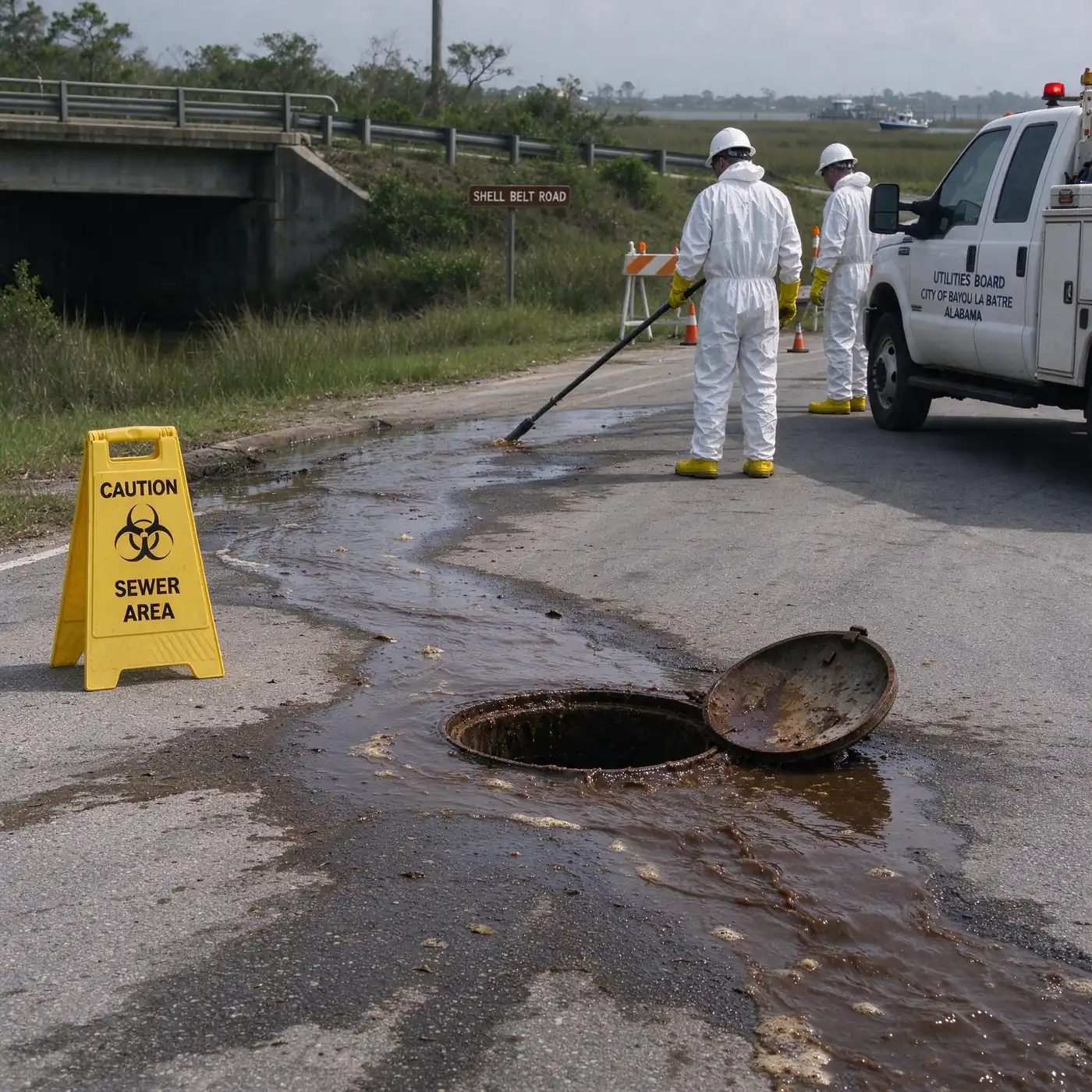
BAYOU LA BATRE, Ala. — A pump malfunction at a sewer lift station caused an estimated 3,240 gallons of wastewater to spill from a manhole on Shell Belt Road in Bayou La Batre on Thursday, Oct. 29, city utility officials reported.
The Utilities Board of the City of Bayou La Batre responded to the sanitary sewer overflow, or SSO, which occurred at a manhole just before a bridge on Shell Belt Road. According to city officials, the spilled wastewater was absorbed by the ground and did not reach any body of water.
The pump at the lift station has since been restored, and the affected area has been cleaned and disinfected, officials said.
Third overflow in the city this month
Thursday’s spill is the third sanitary sewer overflow reported in Bayou La Batre in less than two weeks. On Saturday, Oct. 17, a power surge knocked a lift station offline and sent less than an estimated 5,000 gallons of wastewater out of a manhole on Hemley Street, some of which reached a creek that feeds into the bayou. Two days later, on Oct. 19, a second overflow of less than an estimated 2,000 gallons occurred at the same Hemley Street manhole because of a malfunction tied to the earlier power surge. Read our coverage of the Hemley Street overflows.
Unlike the Hemley Street incidents, the Shell Belt Road overflow happened at a different location and was caused by a pump malfunction rather than a power problem. Officials said none of the Oct. 29 spill reached the water.
What a sanitary sewer overflow is
A sanitary sewer overflow happens when untreated or partially treated sewage escapes from the sewer system before it reaches a wastewater treatment plant. That can happen at a manhole, a broken pipe, a pump station or a building cleanout.
Overflows can have many causes, including blockages from grease, wipes and debris, heavy rain that seeps into aging pipes, power failures and equipment breakdowns. In this case, officials pointed to a malfunctioning pump at a lift station.
Sewer systems rely mostly on gravity to move wastewater through pipes toward a treatment plant. In flat, low-lying coastal communities such as Bayou La Batre, gravity alone often is not enough. Lift stations collect wastewater at low points and pump it to higher ground so it can continue through the system. When a pump stops working, wastewater can back up behind it and eventually escape from the nearest low point, often a manhole.
Utilities in Alabama are required to report sanitary sewer overflows to state environmental regulators and to notify the public, which is why even relatively small spills that stay on land are announced.
Health risks from sewage
Raw sewage can carry bacteria, viruses and parasites that cause illnesses including diarrhea, vomiting and skin infections. Even when a spill soaks into the ground, the soil in the immediate area can remain contaminated for a time, which is why crews clean and disinfect the site afterward.
Dr. Kevin Michaels, health officer for Mobile County, reminded residents to take simple precautions around any area that may have been affected by sewage:
- Avoid contact with affected water, soil and any obvious sewage.
- Keep children and pets away from ditches, creeks, flooded areas and standing water that may be contaminated.
- Do not swim, wade or fish in posted areas or in water that looks or smells contaminated.
- If you come into contact with water or soil that may be contaminated, wash your skin and clothing thoroughly with soap and clean water as soon as possible.
Michaels stressed that the last step, washing promptly and thoroughly after any contact, is the most important.
Why it matters in a seafood town
Bayou La Batre, known as the Seafood Capital of Alabama, depends heavily on clean water. The city’s economy is built around shrimping, oyster processing, seafood packing and boat building, and its namesake bayou flows into Portersville Bay and Mississippi Sound. Sewage that reaches local waterways can raise bacteria levels and pose risks to people who work on or near the water.
That makes the location of each overflow, and whether it reaches the water, an important detail for residents and businesses. In the Shell Belt Road case, officials said the spill was contained on land.
How residents can help prevent overflows
While equipment failures are the responsibility of the utility, many sewer backups start with what goes down household drains. Residents can help protect the system by:
- Never pouring cooking grease, fats or oils down sinks; let them cool and throw them in the trash instead.
- Flushing only toilet paper and human waste. So-called flushable wipes, paper towels and other products can clog pipes and pumps.
- Keeping cleanout caps on home sewer lines secure so rainwater and debris cannot get in.
Residents who see sewage coming from a manhole or smell a strong sewage odor near a drainage area should report it to the Utilities Board of the City of Bayou La Batre so crews can respond quickly.