

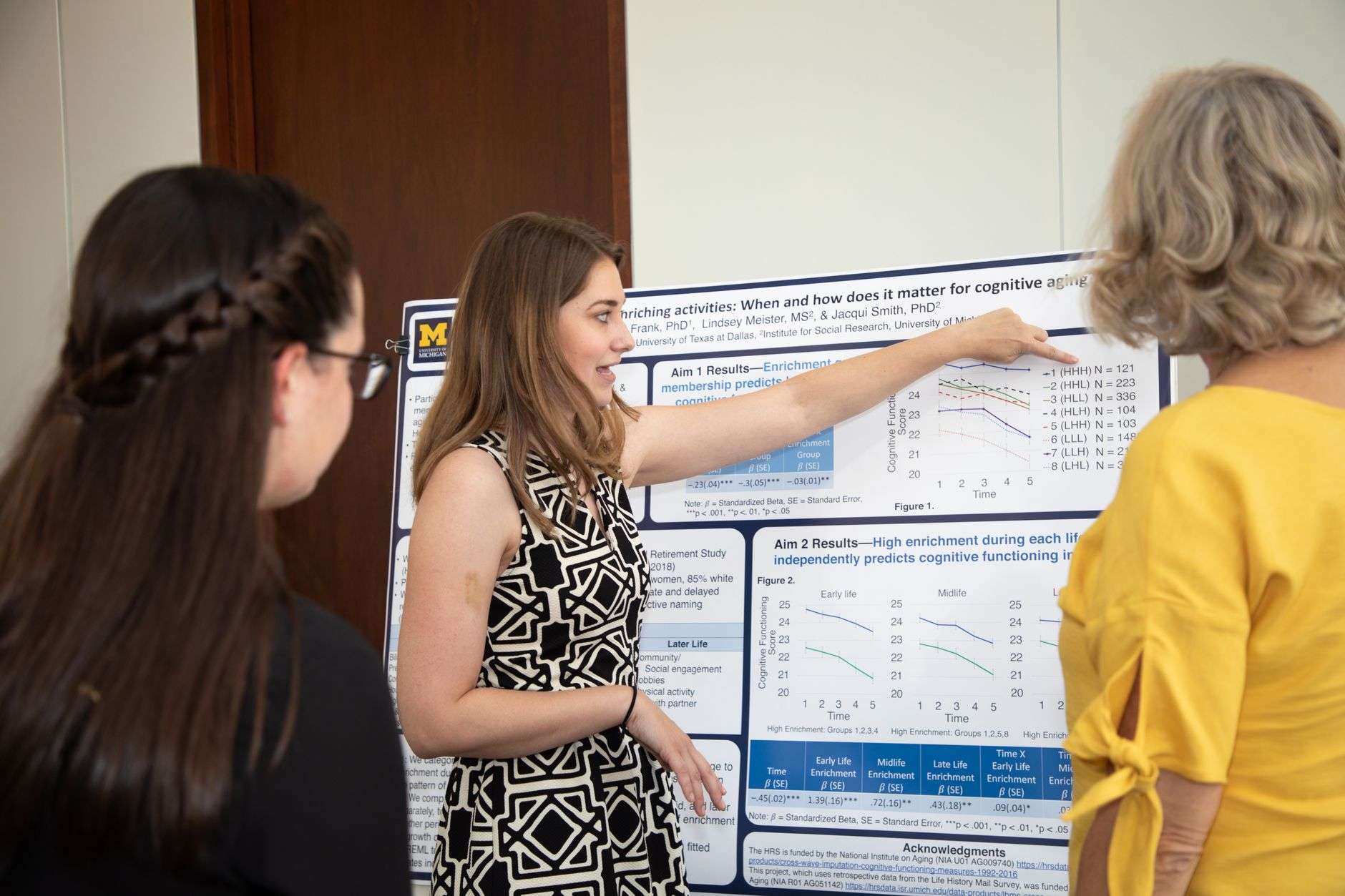
GULF SHORES, Ala. — Bryanna Diaz, MPA, research coordinator at the Mitchell Cancer Institute, recently presented a research poster at the University of Alabama at Birmingham’s Forging the Future of Palliative Care 2026 Innovation Summit, held Aug. 26-29 in Gulf Shores.
The Research
The poster was titled “Participation and Retention Outcomes in a Randomized Trial of a Lay-Navigator Led Advanced Cancer Caregiver Intervention Among Rural and African American Populations in South Alabama.”
It featured Project Cornerstone, a partnership between USA Health and UAB focused on supporting African American and rural family caregivers of patients newly diagnosed with advanced cancer.
How the Program Works
Through trained community navigators and telehealth coaching, the program provided caregivers with resources for patient support as well as methods for coping, stress management and self-care for the caregivers themselves.
The lay-navigator model is the methodological center of the study. Rather than delivering support exclusively through clinical staff, the approach trains community members to serve as navigators — people who share background and geography with the families they work with, and who can build trust more readily than an unfamiliar clinician arriving from a distant medical center.
The telehealth component addresses the distance problem directly. A caregiver in a rural county who is already managing appointments, medications and transportation for a seriously ill family member has limited capacity to add travel for their own support services.
Why Participation and Retention Are the Outcomes Measured
The poster’s focus on participation and retention, rather than clinical endpoints, reflects a genuine problem in health research. Interventions that work well in controlled settings frequently fail to reach the populations that would benefit most, because those populations are underrepresented in trials — a pattern documented repeatedly for rural and African American participants.
Demonstrating that a program can enroll and retain participants from those communities is a precondition for anything else. A caregiver intervention that people do not join, or that they abandon partway through, produces no benefit regardless of how well designed it is.
The Caregivers Themselves
Family caregivers of patients with advanced cancer occupy a demanding and largely unsupported role. They manage medications, coordinate appointments, provide physical care, handle insurance and financial matters, and absorb the emotional weight of a serious diagnosis — usually while continuing to work.
Programs that address caregiver coping, stress management and self-care are treating a population whose own health frequently deteriorates during a relative’s illness, and whose capacity to sustain care directly affects the patient’s outcome.
What the Findings Show
The findings demonstrate the importance of bringing caregiver support directly to underserved communities and continuing to develop accessible, community-focused approaches to palliative care.
A Summit on the Coast
UAB’s Forging the Future of Palliative Care 2026 Innovation Summit was held Aug. 26-29 in Gulf Shores, bringing palliative care researchers and clinicians to the Alabama coast.
The Mitchell Cancer Institute, part of USA Health, is the academic cancer center serving the Gulf Coast region, with clinical and research operations in Mobile and Baldwin counties.