Coastal Alabama Community College Begins Restoration of Historic Bay Minette Campus Buildings
Coastal Alabama Community College is modernizing 1960s-era buildings at its Bay Minette campus, including Meadows Library, after board approval Aug. 12.
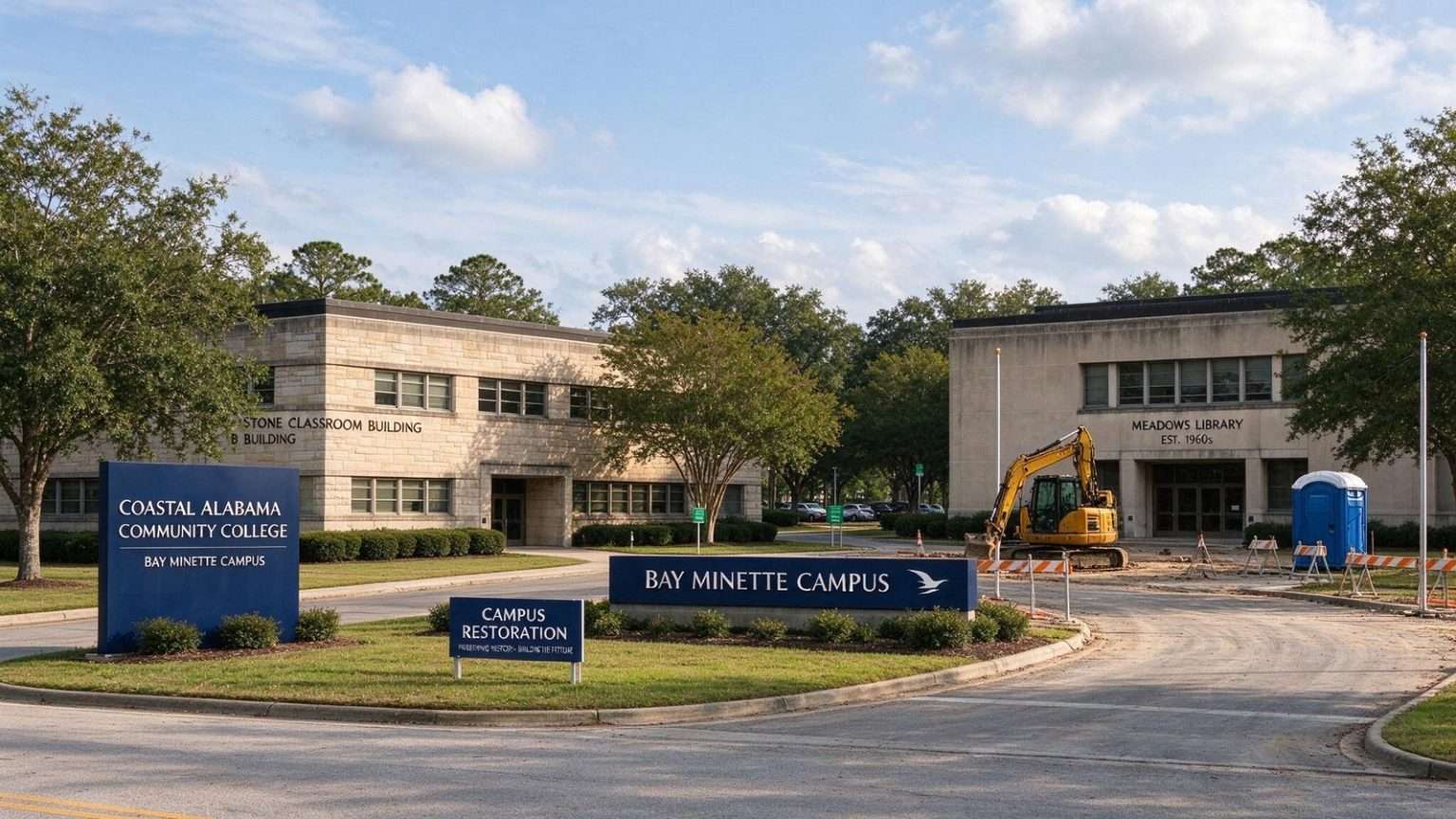
Coastal Alabama Community College is launching a major restoration of its Bay Minette campus, updating buildings that date to the 1960s while trying to preserve the history inside them.
The Alabama Community College System Board of Trustees approved the project on Aug. 12, clearing construction to begin immediately, according to a Wednesday announcement from the college. The work centers on two of the campus’s oldest and most storied structures, Meadows Library and the Stone Classroom Building, known on campus as the C Building, which date to the mid- and late 1960s.
Why the old buildings matter
The Bay Minette campus carries the layered history of Alabama’s community college system. The buildings slated for restoration have served students for more than half a century and predate the 2017 consolidation that joined three local colleges into Coastal Alabama Community College. The renovation aims to bring the facilities up to modern instructional standards without erasing the heritage that built them.
Dr. Aaron Milner, president of Coastal Alabama, said the Bay Minette campus has a rich history and these buildings have been an important part of Coastal Alabama’s story for decades. He said the project allows them to honor that history while creating new spaces that meet the needs of today’s students, faculty, and staff.
The college traces the buildings’ legacy to the birth of junior, community and technical colleges in Alabama, an era when the state built the two-year institutions that now educate a large share of its workforce. Bay Minette, the system’s administrative hub in Baldwin County, has grown around those original structures.
What changes for students
Once the work is complete, academic classrooms, faculty offices and library services will move into the renovated buildings, giving students modern academic environments and faculty and staff improved spaces for teaching and student support.
The library sits at the center of the plan. Alisha Bowen, the college’s director of library services, said the Library Services division is thrilled to see this investment in students and the future of the college. She said the renovation will allow them to create a library and a welcoming space where generations of students can learn, connect, and make lasting memories for years to come.
Dr. Mary Beth Lancaster, dean of academic instruction, said the renovations will provide enhanced instructional experiences while maintaining the rich legacy of historic buildings that were part of the birth of junior, community, and technical colleges in Alabama. She said they are proud of their faculty and the expertise they bring to the classroom, and that the building enhancements will only strengthen those environments for students and faculty.
The announcement positions the Bay Minette work as part of Coastal Alabama’s broader investment across its campuses, which stretch across a wide band of the state. Community colleges have increasingly become the front door for nursing, skilled trades, dual-enrollment and workforce programs, and aging classrooms compete directly with newer facilities at four-year campuses for students deciding where to spend their first two years.
Construction timelines were not detailed in the announcement, and the college said it looks forward to welcoming students, faculty, staff and the community to view the new spaces once the work is finished. Classes on the Bay Minette campus are expected to continue during the restoration.
Related coverage from South AL News
- Coastal Alabama Disaster Drill With Gunfire Sounds Set for Oct. 16 at Bay Minette Campus
- Coastal Alabama's Thomasville Campus Preps Students for Fall Semester
- Bay Minette, Fairhope Students Among 100 Statewide Winners of Alfa Foundation Scholarships
- New University of Mobile, Coastal Alabama Agreement Opens a Clear Transfer Path for Future Teachers