
Cold Temperatures Fail to Dampen Spirits at Mobile Lundi Gras Parades
Temperatures in the 40s didn't stop revelers from packing downtown Mobile for Lundi Gras parades, bundling up but refusing to let the chill dampen the fun.
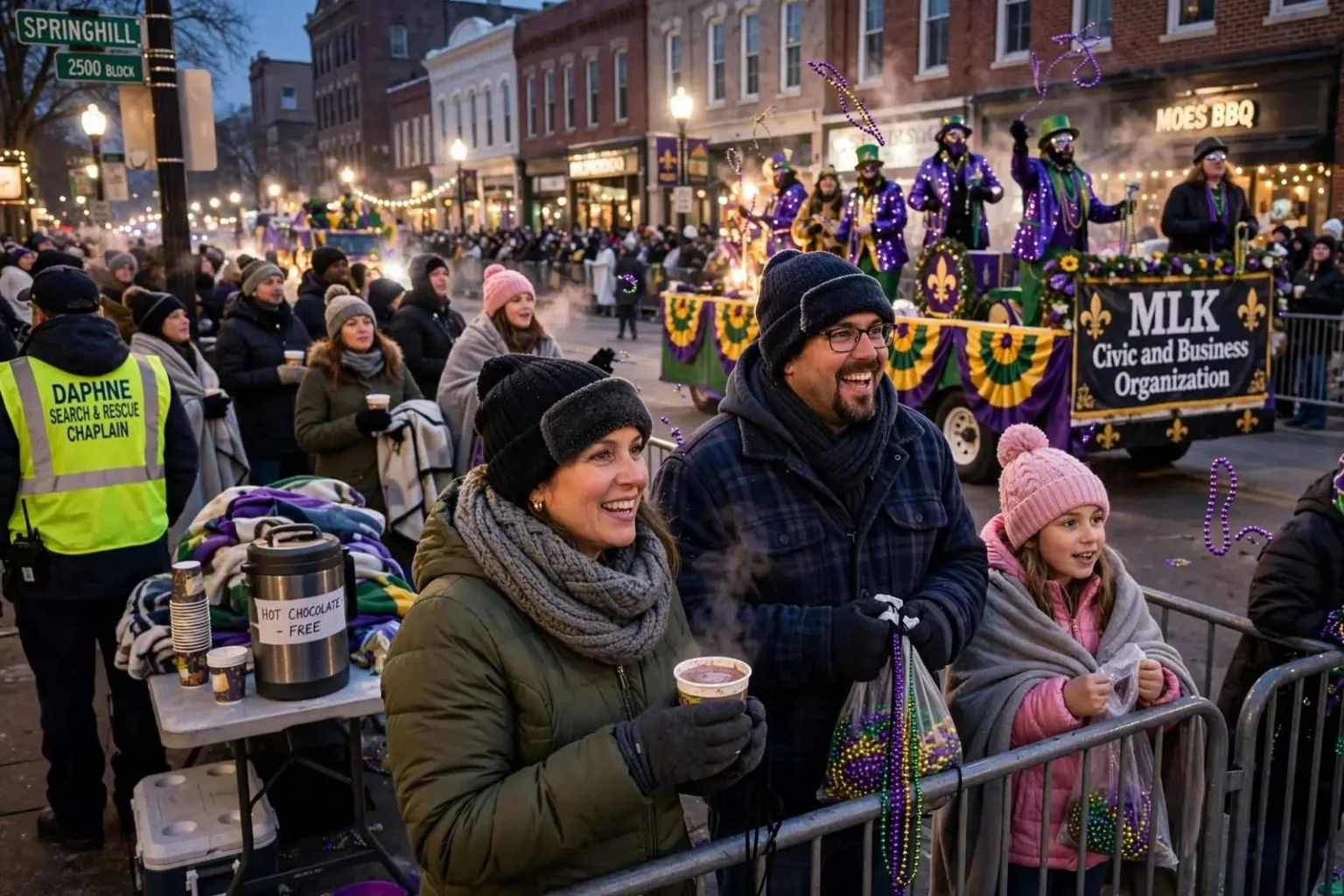
Temperatures in the 40s did little to thin the crowds as Mobile’s Lundi Gras parades rolled through downtown Monday evening, with revelers piling on jackets, scarves, and hats to catch beads and enjoy the carnival tradition. The chill was sharp by Gulf Coast standards, where winter usually means highs in the 50s and 60s, but it produced one of the region’s most reliable sights: locals refusing to let weather interrupt a celebration that predates the United States itself.
“Today’s the coldest that we’ve had,” said Pam, a parade attendee in downtown Mobile. “We are cold,” added Billy, another parade-goer. Despite the chill, the atmosphere remained festive. Some attendees handed out hot chocolate ahead of the parades, a small act of hospitality that has become part of the cold-weather parade playbook along the Gulf Coast, where thermoses and blankets appear alongside folding chairs and bead bags whenever a cold snap meets a parade night.
Tony Dickey, chaplain with Daphne Search and Rescue, said the cold was just part of the experience: “It’s cold, for people basically to stay a little warm down here and enjoy Mardi Gras.” Volunteer organizations like Daphne Search and Rescue play a quiet role in the carnival season, providing support and assistance along parade routes when large crowds gather in cold or wet conditions.
Parades rolled through downtown Mobile and down Springhill Avenue for the MLK Civic and Business Organization. The organization is one of the community groups that fields a procession during the carnival season, and its route through downtown and along Springhill Avenue brings the celebration into neighborhoods beyond the main entertainment corridor. Spectators lined the routes, bundled up but determined. “I’d like it to be a little warmer, but it will probably be 70 tomorrow,” said Seth Wilson, watching with his family. “They weren’t about to let it get in the way of their good time.”
A Mobile Mardi Gras tradition: parade rain, shine, or chill
Lundi Gras — the Monday before Fat Tuesday — traditionally kicks off the final, most intense stretch of Mobile’s carnival season. The night belongs to family-oriented processions and neighborhood groups, and it sets the stage for the crescendo of Mardi Gras Day itself, when the season’s largest parades roll and the city turns out in force from morning until night.
The city’s parades have rolled through rain, heat, and cold for generations, and Monday’s temperatures in the low 40s were hardly unprecedented. Gulf Coast winters are volatile, and carnival season in February regularly coincides with cold fronts that drop temperatures twenty degrees in a day. Parade veterans remember years of rain-soaked routes and wind-whipped confetti as readily as the mild, sunny nights, and the carnival organizations build their schedules around the calendar, not the forecast.
Mobile’s carnival season, which traces its roots to 1703, is the oldest annual Mardi Gras celebration in the United States. The tradition began with French Catholic colonists at the original settlement of Mobile, decades before New Orleans was founded, and it has evolved through three centuries into a season of mystic societies, parades, balls and community celebrations that fill the weeks between Twelfth Night and Fat Tuesday. The city’s carnival organizations maintain their own traditions of throws, floats and themes, and the season is woven into the civic identity of the region in a way few other events can match.
Veterans of the celebration know that weather is simply another variable to plan for — layers, hot drinks, and a willingness to brave the elements are all part of the ritual. Families stake out their spots along the route hours in advance, bringing lawn chairs, coolers and bags for the throws, and the veteran’s wardrobe for a cold parade night includes gloves warm enough to catch beads and a hat that survives the wind. Local shops sell out of hand warmers during cold snaps, and restaurants near the routes do brisk business in coffee and gumbo before and after the processions.
The crowds and the logistics of a cold parade night
Cold weather changes the texture of a parade night without changing its fundamentals. The crowds arrive earlier to claim heated parking spots and indoor waiting space, bars and cafes along the route fill up before the floats roll, and the strands of beads fly just as thickly down the barricade line. For the marching units and float riders, the cold is a genuine physical challenge: riders in sequins and masks feel the wind at parade speed, and organizations supply hand warmers, blankets and hot drinks to keep their members performing through the route.
Police and city crews also adjust. Cold nights mean monitoring for hypothermia among the youngest and oldest spectators, keeping emergency vehicles staged along the route, and preparing for the possibility that equipment or pavement conditions complicate the procession. The city’s parade infrastructure — barricades, route lighting, cleanup crews — operates in all weather, and Monday night’s operations proceeded without significant disruption, according to the rhythm of the evening itself.
The MLK Civic and Business Organization’s procession holds particular community significance, tying the carnival season to the civic life of the neighborhoods along Springhill Avenue, one of Mobile’s historic corridors. Community-based carnival organizations like it represent the local side of a season that also includes the large mystic societies downtown, and their parades draw families who line the route with multiple generations watching together.
With Lundi Gras complete, the city turned to Mardi Gras Day, the culmination of weeks of celebration. The forecast offered a promise of the swings the Gulf Coast is famous for — the same spectators who shivered in the 40s Monday night were told to expect near-70-degree weather by Tuesday, a reminder of how quickly conditions change along the upper Gulf Coast in February. For the families who had spent the cold evening catching beads and drinking hot chocolate, the weather was a footnote either way. The parades rolled, the throws flew, and Mobile’s oldest celebration added another chapter to a tradition that has endured cold fronts, hurricanes and three centuries of history.
For now, the story of the night was the crowd itself — bundled, cheerful and undeterred. Attendees said the same thing locals always say when weather meets carnival: the season comes once a year, the floats roll whether it’s comfortable or not, and a little cold has never stopped Mobile from celebrating Mardi Gras.
Three centuries of carnival in Mobile
The depth of Mobile’s carnival tradition is hard to overstate. The celebration took root in 1703, when French colonists at the young settlement marked the season in the New World, and it has continued in one form or another ever since — through wars, depressions and hurricanes. The mystic societies that organize the season today, with their themed floats, signature throws and formal balls, grew out of that long history, and many of the oldest organizations have been parading for well over a century. Their parades follow routes that thread through the historic downtown, past buildings older than the celebration’s American rivals, and their balls fill civic halls through the winter.
That history gives Mobile a distinct claim: the city celebrated Mardi Gras before New Orleans existed, and locals wear that fact with pride. The season’s rhythm is built on the church calendar, beginning with Twelfth Night on January 6 and building through weeks of parades to Fat Tuesday. Lundi Gras occupies a special place in that rhythm — close enough to the end that the city is fully in carnival mode, but still one night before the biggest crowds and the heaviest schedules arrive.
What cold weather means for parade night economics
The weather matters to more than comfort. Carnival season is a significant economic driver for downtown Mobile, filling hotels, restaurants and parking decks through what would otherwise be a quiet stretch of the winter. A cold Lundi Gras night trims the street commerce a bit — fewer strollers ducking into shops, shorter lines for outdoor vendors — but the parades themselves anchor the spending, and crowds that came out in the 40s kept the register activity going along the routes. Bars and restaurants near the intersections where crowds gather reported steady business through the evening, and the hot chocolate being passed around was, in its own small way, part of the local economy.
Vendors and mobile sellers also work the routes, and a cold night changes what sells. Glowing novelties and bead packs still move, but blankets, hats and warm drinks join the inventory. Parade-goers who spent the afternoon at home debating whether to come out found encouragement from the social media feed — photos of full sidewalks posted hours before the first float rolled — and the turnouts validated the decision for anyone still on the fence.
Looking toward Fat Tuesday
The season’s final stretch continues through the night and into Mardi Gras Day, when the largest processions of the year roll from morning until night and the downtown fills with families in costume. School systems in the county give students the day off, a longstanding acknowledgment of how thoroughly the holiday claims the city’s attention. By the time the last float rolls Tuesday night, the season will have included dozens of processions across Mobile and Baldwin counties, from the large mystic societies downtown to community parades in West Mobile, Prichard, Satsuma, Daphne, Fairhope, Gulf Shores and Orange Beach on the other side of the bay.
For the families who stood in the cold on Springhill Avenue and downtown, the night fit the pattern they already knew. The parades rolled on time, the throws flew, the hot chocolate made its rounds, and the coldest night of the season turned out to be just another Lundi Gras in the city that started the celebration.


