
Cuisine of India Brings South Indian Focus to Mobile
Cuisine of India, a Mobile staple for 15 years, has new ownership and a South Indian menu focus under owner Pawan Shahi.
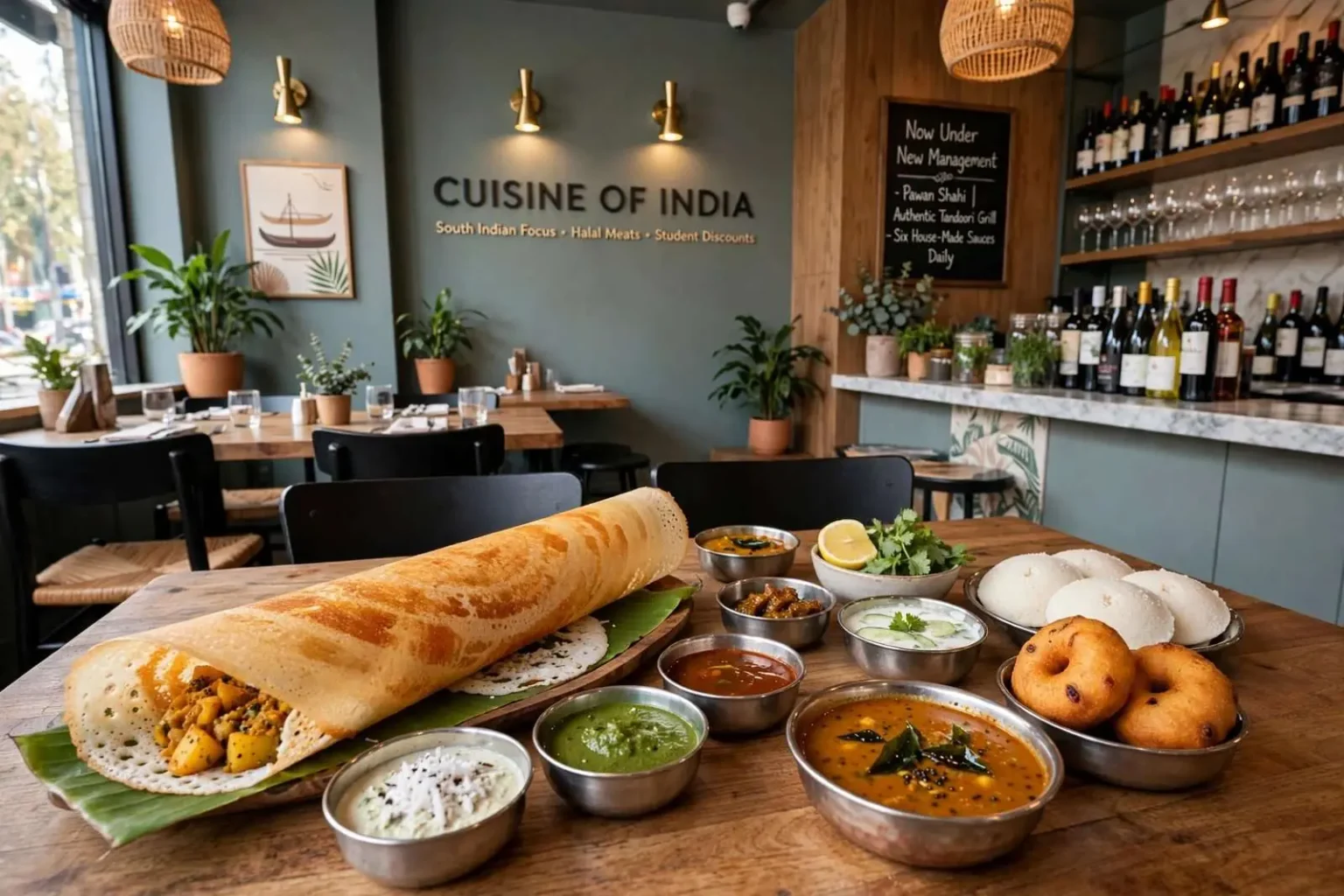
Cuisine of India, one of the few restaurants in the Mobile area devoted to Indian cuisine, has operated as a local staple for more than 15 years and recently came under new management. New owner Pawan Shahi is shifting the menu toward a South Indian focus, noting the differences in cooking style and food between northern and southern India. The change positions the restaurant to offer something the Mobile dining scene has rarely had: a fuller range of the regional dishes that make South Indian cooking distinct from the fare most American diners know.
The restaurant has been repainted and its bar renovated with a new wine selection, updates that freshen a dining room long familiar to Mobile’s lunch crowd. The updated menu highlights Halal meats, which Shahi said he wants the Mobile area to know are served — a point of significance for Muslim diners in the region, who have historically had limited options for Halal-certified restaurant meals along the Gulf Coast. The restaurant also offers student discounts and six house-made sauces, along with an authentic tandoori grill.
North and South: two kitchens, one cuisine
American diners’ picture of Indian food is overwhelmingly northern: the creamy tomato-based curries, tandoori meats, and naan breads that dominate menus across the country. South Indian cooking runs on a different pantry and a different logic. Rice replaces wheat as the staple, lentils and rice flours form the base of dishes like dosa — enormous crisp crepes — and idli, steamed rice cakes served with chutney and sambar. Coconut, curry leaves, mustard seed, and tamarind do the flavoring work that cream and ghee perform in the north, producing dishes that are lighter, sharper, and often hotter.
South Indian cuisine is also home to some of the world’s great vegetarian traditions, particularly in the states of Tamil Nadu, Kerala, and Karnataka, alongside the coastal seafood and meat cookery of Andhra Pradesh and the Chettinad region. For a restaurant in Mobile, the pivot toward that repertoire means building dishes few local competitors attempt, and it gives adventurous diners a reason to make the restaurant a regular stop rather than an occasional one.
An established name, a new chapter
Restaurants that survive more than fifteen years in one market have done something most independents never manage, and Cuisine of India’s longevity in Mobile reflects the niche it occupies. Indian restaurants cluster where university communities, medical professionals, and international businesses create steady demand, and Mobile’s mix of hospitals, the university presence, and the port’s international workforce has long supported a small but loyal Indian dining scene. The restaurant’s student discounts speak directly to that audience — affordable plates that turn a college budget into a full meal.
New ownership keeps the name and the goodwill while risking the regulars’ attachment to the familiar. Shahi’s answer has been to invest visibly — paint, a renovated bar, a broader wine list — and to deepen the menu rather than narrow it. The tandoori grill, a clay oven that produces the charred breads and meats diners already expect, remains, while the kitchen’s South Indian additions give the menu a second axis of discovery.
Halal in a Gulf Coast market
The emphasis on Halal meats addresses a growing and often underserved segment of the Gulf Coast dining public. Halal dietary law requires meat from animals slaughtered according to Islamic practice, and observant Muslims typically seek out restaurants that certify their supply chain. Mobile’s international population — students, port workers, medical staff, and families from South Asia, the Middle East, and East Africa — supports a demand that a dedicated Halal kitchen serves directly, and the restaurant’s outreach on that point is aimed at letting the community know the option exists.
For non-Muslim diners, Halal certification functions the way other quality markers do: a promise about sourcing and handling that requires the kitchen to maintain standards across its meat supply. Restaurants that commit to it often find the label broadens their appeal rather than narrowing it, drawing diners who see the certification as one more reason to trust the kitchen.
The house-made sauces and the condiment culture
The restaurant’s six house-made sauces are more than a garnish program; they are an introduction to how Indian cooking actually balances flavor. A good Indian meal moves through chutneys and pickles that contrast cool and hot, sweet and sour — coconut chutney against a fiery sambar, a tamarind date sauce against a bright mint-cilantro one. House-made matters because these condiments fade quickly; the restaurants that take them seriously make them in small batches, and the difference is one of the clearest markers between an engaged kitchen and a reheating operation.
Sauce programs also invite experimentation. A diner new to South Indian food can ride the familiar — tandoori from the grill, a mild curry — and use the sauces to step outward toward the sharper, hotter preparations. That gradient is how a menu converts the curious into regulars, and it is a deliberate strategy on the part of an owner trying to grow a niche in a market with limited Indian dining options.
The bar renovation and the wine list
The renovated bar and expanded wine selection signal an attempt to broaden the restaurant’s occasions. Indian food and wine pairing was long treated as an afterthought in American dining, but the cuisine’s spice structure — heat, aromatics, acidity — pairs naturally with aromatic whites like riesling and gewurztraminer, and with lighter reds that do not fight the food. A wine list assembled with that logic turns dinner into a longer, more considered occasion and gives the bar traffic that a lunch-oriented restaurant otherwise lacks.
The physical refresh serves the same purpose. A repainted dining room and rebuilt bar tell regulars that the new ownership is investing, and they reset first impressions for diners who had filed the restaurant away years ago. In a market like Mobile, where diners split attention between downtown’s growing restaurant row and the suburban corridors, keeping a longstanding independent visible and fresh is a year-round task.
Indian dining on the Gulf Coast
Cuisine of India’s South Indian pivot arrives as Indian food’s American moment keeps widening. Dosa-focused restaurants, regional specialists, and chaat houses have moved beyond the biggest metros, driven by South Asian communities that have grown across the South and by diners who traveled, watched, and want more than the standard buffet. Mobile has never supported the density of Indian restaurants that larger Southern cities sustain, which makes each established kitchen’s direction consequential for the local scene.
The student discount, meanwhile, ties the restaurant to the university calendar and to the habit-forming years when dining preferences are set. Students who learn dosa from idli in college become the diners who demand them afterward, and the restaurants that teach them keep the loyalty. It is a modest discount that functions as a long-term marketing strategy, the kind of move independent restaurants make when they plan to be measured in decades rather than quarters.
For Mobile, the changes at Cuisine of India add up to a familiar story with an uncommon detail: a longstanding local independent, refreshed under new ownership, deepening its menu into a regional tradition that the Gulf Coast has rarely seen served at length. Fifteen years in, the restaurant’s bet is that Mobile’s diners are ready to taste the difference between India’s north and south — one dosa, one tandoori plate, and one house-made sauce at a time.
The dosa itself deserves a closer description, because it is the dish most likely to surprise a first-time visitor. Fermented overnight from rice and lentil batter, poured thin on a hot griddle and finished with oil until it shatters like a cracker, a proper dosa arrives at the table longer than the plate and rolled around a filling — spiced potatoes in the classic masala version — with coconut chutney and sambar alongside. The fermentation is the technical heart of the dish, and kitchens that take South Indian food seriously guard their batter process the way bakeries guard their sourdough starters.
Idli and vada round out the traditional morning and snack repertoire. Idli are the steamed rice cakes — mild, soft, made for dunking. Vada are the opposite in every respect: savory lentil doughnuts, crisp outside and fluffy within, sold from carts in Chennai the way doughnuts are sold here. A restaurant offering this trio is offering a genuine South Indian table, not a northern menu with a southern garnish, and that distinction is precisely what the menu shift at Cuisine of India is about.
The tandoor, retained from the earlier menu, anchors the transition. The clay grill is a northern instrument — Punjab is its ancestral home — but its products are beloved across India and across Mobile alike, and keeping it in service lets regulars order what they have ordered for fifteen years while the rest of the menu grows around them. A kitchen that can run both traditions, turning out naan and tikka from one oven and dosa and sambar from another, is covering more of the subcontinent than most Indian restaurants anywhere attempt, and it gives the dining room a range that rewards repeat visits.
Local restaurant watchers will recognize the pattern in the renovation too. Independents that change hands successfully almost always pair a new operator’s energy with respect for what the regulars already trusted, and the visible investment here — paint, bar, wine list — reads as exactly that. The bet underneath it is demographic: Mobile’s international community keeps growing, its university keeps importing adventurous young eaters, and its dining public keeps broadening its palate. Fifteen years of standing and a new owner’s regional focus may turn out to be a well-timed combination for the local scene.


