Dauphin Island Hurricane Damage From Isaias Light: Mayor Says Island Was ‘Truly Blessed’
Dauphin Island braced for catastrophe, but Hurricane Isaias left mostly tree debris, sand on roads and some west end flooding. Mayor Jeff Collier credits a community that took the storm seriously.
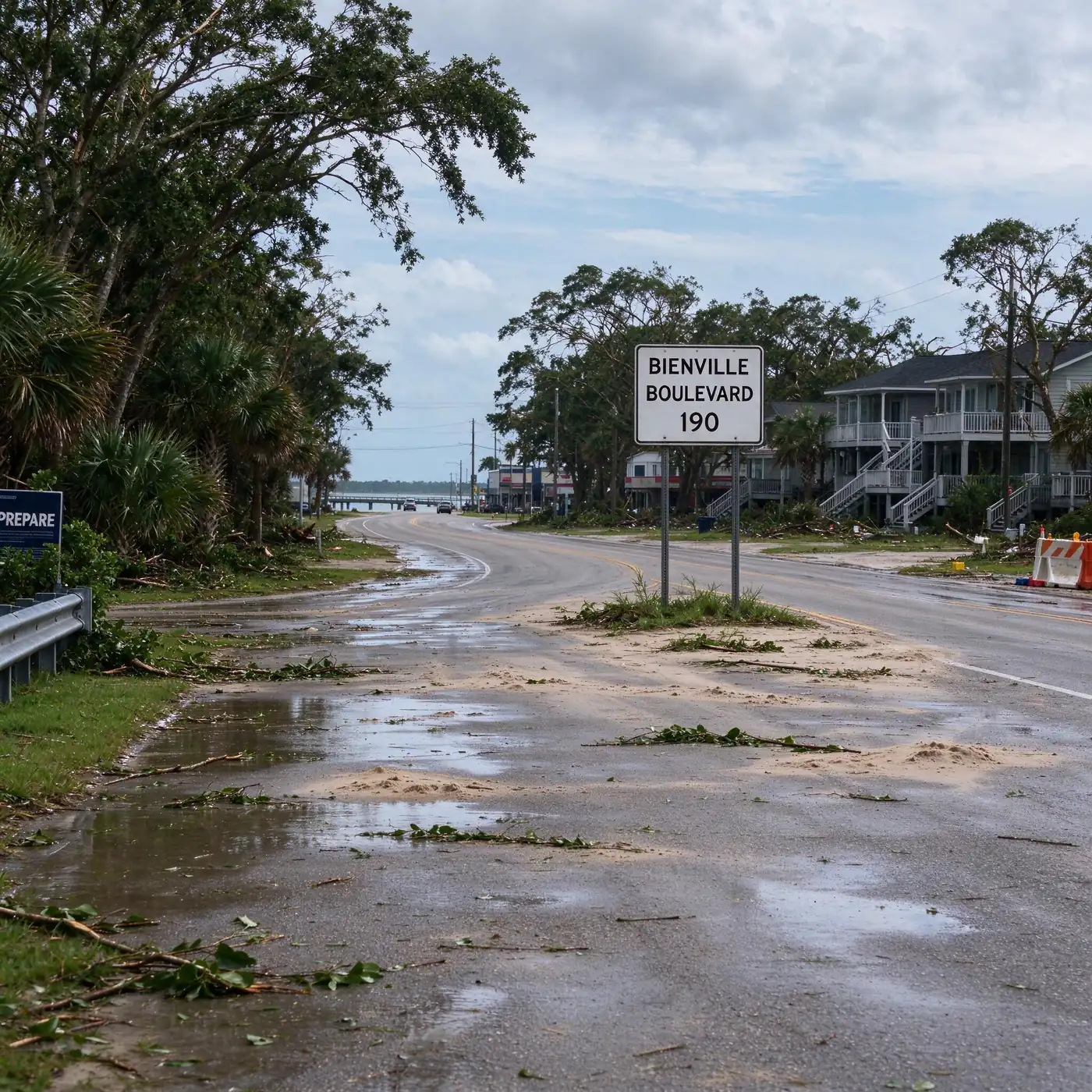
DAUPHIN ISLAND, Ala. — Residents and business owners on Dauphin Island braced for the worst as Hurricane Isaias closed in on the Gulf Coast last week. When they came back, many found little more than tree limbs in their yards, a few flooded spots and sand drifted across some roads, and Dauphin Island hurricane damage was light enough that the mayor says the island was “truly blessed.”
For a barrier island that has learned to take every storm seriously, the outcome brought deep relief, along with a sense that weeks of planning and a community willing to follow instructions had paid off.
“We expected catastrophe, because that’s what we have dealt with before,” said Jennifer Hiltabrand, general manager of Honey Bunny’s Coffee and the Beach Shack. “I cannot tell you how many people, including myself on this island, were praying for days leading up to the hurricane.”
Sand, saltwater and tree debris
Mayor Jeff Collier said the island saw some saltwater flooding, mostly on the west end, along with tree debris and sand washed over some side streets and Bienville Boulevard, the island’s main road. Town crews have been scraping sand from the roads, and Collier said most of the water had already drained.
“We were truly blessed this time,” Collier said, comparing the island’s outcome with communities farther east that took the brunt of the storm.
Isaias strengthened to a Category 3 hurricane on the morning of Friday, Oct. 9, before weakening slightly and making landfall that night near Destin, Fla., as a Category 2 storm with 105 mph winds. That track put Dauphin Island, at the mouth of Mobile Bay, well west of the storm’s center. A wind gust of 47 mph was reported on the island Friday afternoon as the storm approached, and the National Hurricane Center’s storm surge warning remained in effect from Dauphin Island eastward after landfall.
East of the state line, the picture was very different. Storm surge overtopped fences and beach walkways in Destin, roofs were torn from buildings in Milton and Pensacola, and the storm was blamed for two deaths in Florida and two elsewhere in Alabama.
A business owner’s checklist pays off
Hiltabrand prepared both businesses before she left the island with her 89-year-old mother. Refrigerated food was moved to another building, windows and doors were boarded up and everything was unplugged. While she was away, she stayed in touch with her assistant manager and contractor.
When they checked the stores Saturday morning, both had come through without damage. Her home had only a few tree limbs down.
Business was slow immediately after the storm, Hiltabrand said, because so many people had left the island. Visitors have since returned. She credited the community’s preparation, and its willingness to help one another, with making the difference even though the island was spared major damage this time.
Preparation before the storm
Collier said town staff, residents and local businesses all took Isaias seriously. Before the storm, crews handed out reentry passes, the town worked with real estate companies to get information to renters, and officials coordinated with the island’s water and sewer service.
“Not only did our staff do a wonderful job, but our community stepped up to the plate,” Collier said. “They took it seriously. They did what they needed to do.”
The preparations began days before landfall. On Wednesday, Oct. 7, the town ordered an evacuation of the island’s west end, from Pirate’s Cove Street, where the main road narrows from four lanes to two, to the western tip. That order took effect at 5 p.m. Thursday, Oct. 8. Hours earlier Thursday, Gov. Kay Ivey ordered all nonresidents, tourists and visitors to leave the entire island as part of a mandatory evacuation covering Mobile County’s Zone 1 and the Baldwin County beaches. Ivey lifted that order on Saturday, Oct. 10, after the storm passed.
Ahead of the storm, the town urged property owners to disconnect water to boat docks and piers, turn off sprinkler systems, tie down trash cans and deck furniture, and secure their boats. Public Works made sand and sandbags available, and town dumpsters were opened so residents could get rid of debris that might otherwise become airborne. Dauphin Island Water & Sewer planned to shut off service to the west end from St. Denis Court westward, a step that protects the system from losing pressure and drawing in contaminated water if lines break, and warned that west end residents would need to boil their water once service returned until a boil-water notice was lifted.
Reentry passes, issued at Town Hall, help residents and property owners get back onto the island quickly after a storm, when access is often limited at first to residents, property owners and essential workers while officials check roads and utilities.
Why the west end floods first
Dauphin Island stretches about 14 miles between the Gulf and Mississippi Sound and is connected to the mainland by the Dauphin Island Causeway and bridge. The eastern end is wider and higher, with maritime forest, Fort Gaines and the Dauphin Island Sea Lab. The west end is a narrow ribbon of low sand where homes sit on pilings close to both the Gulf and the sound.
That geography is why the west end saw most of the saltwater flooding from Isaias, and why it is usually the first part of the island ordered to evacuate. Even a storm that makes landfall far to the east can push water over low spots on the western end, and overwash can leave sand across Bienville Boulevard that has to be cleared before the road is safe.
The island has a long history with hurricanes. Hurricane Frederic’s center crossed the western end of Dauphin Island in 1979 as a Category 4 storm, and the storm destroyed the bridge to the mainland. Ivan in 2004, Katrina in 2005 and Sally in 2020 also left their mark on the island. That history is why Hiltabrand said residents expected catastrophe, and why officials said they planned for the worst even while hoping Isaias would turn east.
Before landfall, Collier had said he did not expect substantial damage but warned that storms can be unpredictable. “These things are very fickle and a little jog here or there, or some last-minute increase in strength — we just have to be prepared for the worst,” he said at the time.
A sailboat that rode it out
Not everyone left. A video of a lone sailboat bobbing off the island’s east end spread widely online as the storm approached. Its owner, Ethan Warren, who has lived aboard his 22-foot sailboat for about six years, later said experience in earlier hurricanes and a backup anchor gave him confidence he could ride out the storm. Police said they had been in contact with him before the storm and that he understood the risk. Emergency managers continue to stress that the safest place in a hurricane is on land, away from storm surge.
What residents and visitors should know now
With the evacuation order lifted and visitors returning, a few reminders apply on the island and elsewhere along the coast:
- Watch for sand and debris on roads. Crews are still clearing sand from side streets and Bienville Boulevard. Drive slowly and give work crews room.
- Avoid standing water. Floodwater can hide debris, holes and contaminants. Mobile County health officials have warned that sewer overflows are possible after the storm.
- Follow any boil-water instructions. If your water service was shut off, follow the utility’s guidance until a boil-water notice is lifted.
- Sort debris for pickup. Separate vegetation from construction materials and other debris, and keep piles away from drains and hydrants.
- Call ahead. Visitors should check with rental companies and businesses before heading to the island.
Updates are posted by the Town of Dauphin Island and Mobile County Emergency Management Agency. Gulf beaches across coastal Alabama were under double red flags in the days after the storm because of dangerous rip currents, and beachgoers should check flag conditions before entering the water.
For Collier and Hiltabrand, the lesson of Isaias is that the island’s preparations worked, and that it will need to do the same thing all over again the next time a storm threatens. As Hiltabrand put it, people on the island were praying for days. This time, the answer was a storm that turned east.