Dauphin Island Sea Lab Set to Reopen Aquarium After Hurricane Sally Repairs
The Dauphin Island Sea Lab planned an October 2020 reopening of its aquarium after Hurricane Sally damaged roofs but left animals unharmed.
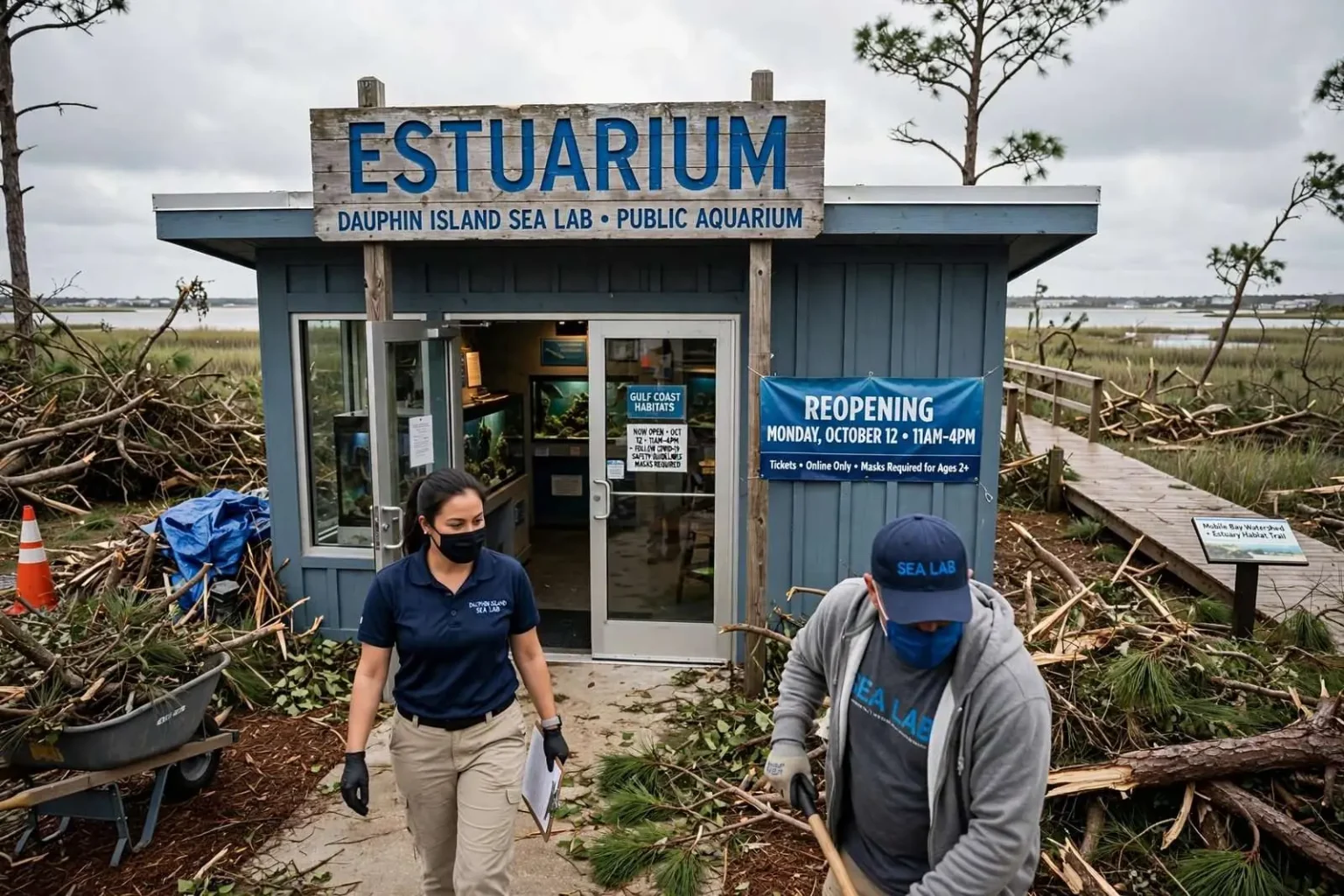
A couple of weeks after Hurricane Sally tore through the area, the Dauphin Island Sea Lab was working to reopen after sustaining extensive storm damage — and the good news was that its animals were safe and the aquarium itself had come through relatively unscathed. While the rest of the campus faced months of repair work, the public attraction at the heart of the facility was ready to welcome visitors back.
The lab set a target of reopening the Estuarium aquarium on Monday, October 12, with hours from 11 a.m. to 4 p.m. and tickets available online. Masks were required for everyone over the age of 2, part of the health precautions already in place during the pandemic year. Staff spent the days before the reopening clearing debris, checking exhibits and preparing the grounds for the return of guests.
Education Programs Return First
The Discovery Hall K-12 education programs were expected to resume the weekend prior to the aquarium’s reopening. Those programs serve students from across the region, bringing classes to the island for hands-on lessons about coastal ecosystems, marine science and the waters of Mobile Bay. Getting that schedule back on track was a priority for the lab, which counts education among its core missions alongside research.
For teachers who had planned fall field trips, the resumption of Discovery Hall activities meant the storm would not erase a semester’s worth of outdoor learning. The Sea Lab’s education staff work with thousands of students each year, and the campus facilities — classrooms, touch tanks and boardwalks out into the bay — are central to that work.
Significant Damage Elsewhere on Campus
The damage elsewhere on campus was significant. Beyond downed trees, the graduate school building lost part of its roof, leaving many dorm rooms filled with debris. Those rooms house students who come to the island for semester programs and summer courses, and getting them back in service was essential for the academic calendar.
A storage building also took roof damage, and the Marine Science Hall — which houses much of the lab’s research facilities — had offices destroyed, with daylight visible through the roof and ceiling and insulation scattered throughout. For a research institution, damage to that building threatens far more than drywall and furniture; instruments, samples and years of ongoing work all sit inside those offices and laboratories.
Executive Director: Focus on Rebuilding
Executive Director Dr. John Valentine said the aquarium saw only minimal damage and that all of the animals were unharmed, allowing the Sea Lab to focus on rebuilding and getting back open as quickly as possible. In a storm that battered coastal Alabama from Bayou La Batre to Orange Beach, that outcome qualified as remarkable luck.
Estuarium staff care for a wide range of Gulf Coast species — fish, turtles, invertebrates and the habitats that show visitors how Mobile Bay functions as an ecosystem. Losing animals to a storm would have been a blow to the facility and to the community that supports it. Instead, keepers were able to maintain life support systems and focus their attention on the campus around the aquarium.
Valentine’s message in the days after the storm was consistent: the institution had survived the worst of it, and the priority now was repair, reopening and resuming the research and education work that defines the lab’s mission.
Why the Sea Lab Matters to the Coast
The Dauphin Island Sea Lab is Alabama’s marine research and education institution, sitting at the eastern tip of Dauphin Island where Mobile Bay meets the Gulf of Mexico. It operates the graduate program in marine sciences for the state’s universities, hosts K-12 education through Discovery Hall, and runs the Estuarium as its public aquarium, drawing visitors from across the Gulf Coast and beyond.
The facility’s research reaches into fisheries management, coastal ecology, water quality and the long-term health of the bay system. Its scientists advise state agencies and contribute to the regional understanding of how estuaries respond to storms, development and a changing climate. That makes the campus itself an asset whose repair matters well beyond tourism.
Dauphin Island has long borne the brunt of Gulf hurricanes, and Sally was another test of the town’s resilience. The Sea Lab’s recovery became part of the island’s broader comeback story, a sign that normal life — school trips, family visits, research cruises — could resume sooner rather than later.
Hurricane Sally’s Blow to the Coast
Hurricane Sally came ashore in September as a slow-moving storm that pounded the central Gulf Coast with days of rain and sustained high winds. Dauphin Island, sitting directly in the storm’s path, took a beating: flooded roads, damaged homes, downed trees and power outages that stretched on for weeks in places. Across Mobile and Baldwin counties, cleanup crews worked for months after the skies cleared.
For institutions like the Sea Lab, the storm presented a double challenge — physical damage to repair and a public role to play in the recovery. Coastal science organizations often become trusted sources of information after hurricanes, documenting shoreline changes, water quality impacts and effects on fisheries. The lab’s researchers understand storm impacts professionally, but Sally made the subject personal.
Planning a Pandemic-Era Reopening
The reopening plan reflected the realities of operating a public attraction in 2020. Hours were set for 11 a.m. to 4 p.m., tickets moved online to reduce contact at the door, and masks were required for everyone over the age of 2. The measures allowed families to return to a favorite destination while keeping visitors and staff safe.
The online ticketing shift also gave the Estuarium a way to manage crowd sizes through the fall, spreading visitation across the day rather than stacking guests at the entrance. For a small island facility, controlling visitor flow is both a health measure and a practical necessity.
Staffers spent the days between the storm and the reopening restoring the grounds, trimming damaged vegetation, clearing walkways and confirming that every exhibit met the standards visitors expect. The goal was not simply to open, but to open well — a functioning, welcoming aquarium as a symbol of the coast getting back on its feet.
Visitors Return to the Estuarium
The Estuarium’s exhibits walk visitors through Alabama’s coastal habitats, from the freshwater rivers that feed Mobile Bay to the oyster reefs, seagrass beds and sandy bottoms of the lower bay. Touch tanks give children a close look at creatures they might otherwise never see up close, and the outdoor boardwalk offers views of the bay that no classroom can match.
The Repair Work Ahead
Reopening the Estuarium was the visible milestone, but the larger repair job continued behind the scenes. The graduate school building needed its roof restored and its dormitory rooms cleaned, refurnished and cleared of the debris the storm left behind. Until those rooms were ready, the residential programs that bring university students to the island for a semester of coastal study faced disruption.
The Marine Science Hall represented the biggest concern for the lab’s research mission. With offices destroyed and daylight visible through the roof, the building required extensive reconstruction. Researchers whose labs and offices were scattered by insulation and rain faced the slow work of salvaging equipment, restoring files and rebuilding experiments interrupted by the storm.
Institutions like the Sea Lab typically piece together funding for storm recovery from insurance, state support and federal disaster assistance, a process that takes longer than the physical repairs themselves. Administrators spent the fall documenting damage, filing claims and planning repairs while keeping the public face of the operation — the aquarium and the education programs — running.
Community Support on the Island
Dauphin Island residents have a long relationship with the Sea Lab, which is both a neighbor and an economic anchor for the town. The aquarium draws visitors who eat at local restaurants and stay in island rentals, and the lab’s staff are part of the community’s civic life. When Sally hit, that relationship ran in both directions, with residents checking on the campus and lab personnel helping neighbors clear debris.
The reopening date gave the island a near-term goal in a fall full of cleanup. October 12 marked the moment when at least one door on the island could swing open to the public again, with lights on, tanks humming and masks on every face above age 2.
For visitors making the drive across the causeway, the message was simple: the animals were fine, the aquarium was back, and the Sea Lab — like the island itself — was coming back from Sally one building at a time. The storm damaged the campus, but it did not touch the mission that has made the facility a Gulf Coast institution for decades.