Evacuated Beach Visitors Seek Vacation Rental Refunds as Hurricane Isaias Cuts Gulf Shores Trips Short
Tourists ordered off Alabama beaches by Hurricane Isaias are seeking vacation rental refunds. Officials and experts explain what to do, plus Airbnb and Vrbo policies.
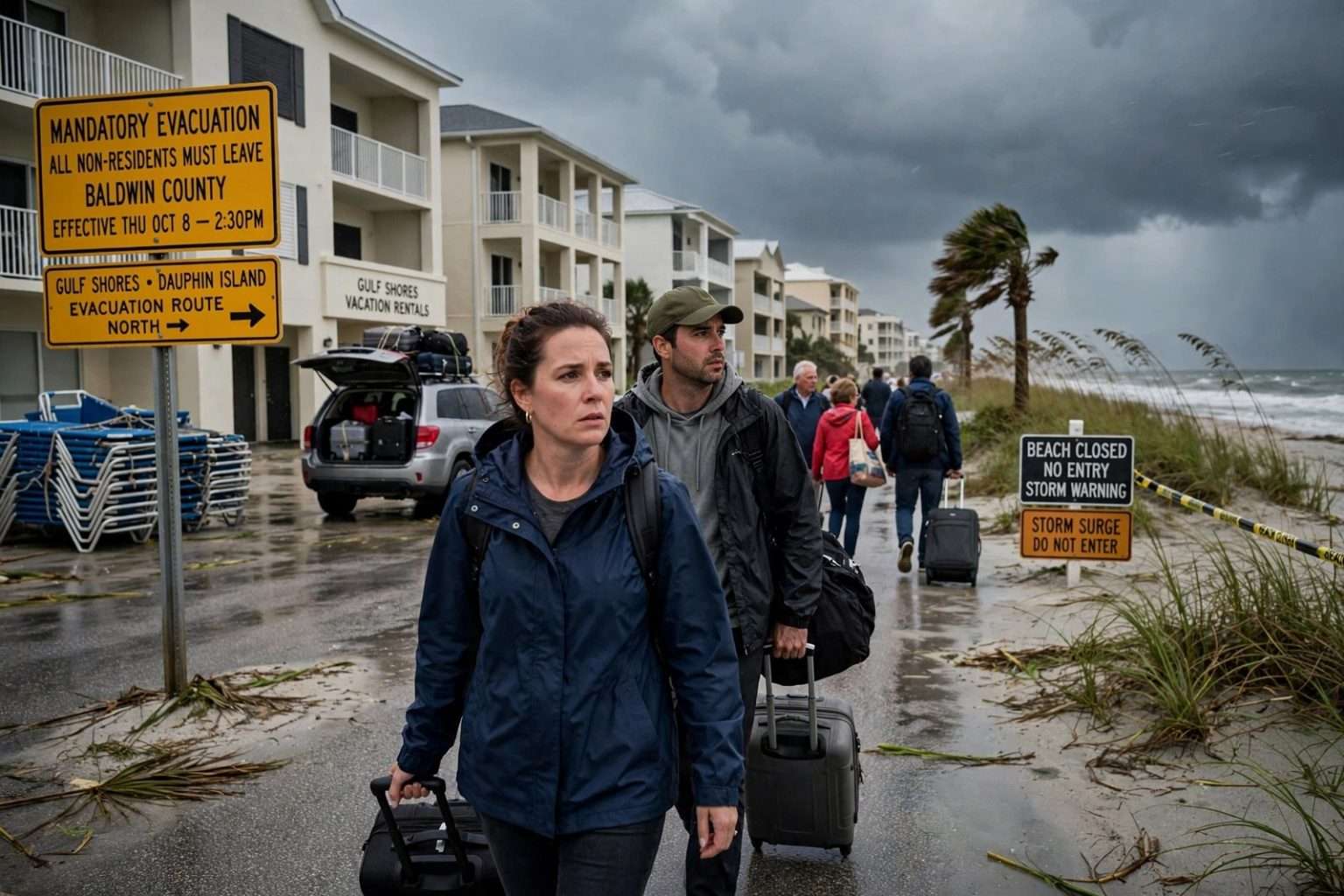
GULF SHORES, Ala. — Visitors forced off Alabama’s beaches by Hurricane Isaias are now chasing vacation rental refunds, and many of them took their frustration to social media Friday, Oct. 9, after some rental companies did not promise to return their money once Gov. Kay Ivey ordered all non-residents to leave the coast.
The complaints came as thousands of tourists packed up and headed north. Baldwin County officials said Wednesday that occupancy at beach hotels and vacation rentals stood at about 80%, a busy number for an October weekend. Large events planned for the weekend, including the National Shrimp Festival in Gulf Shores, were canceled because of the storm.
Tourism leaders, consumer advocates and industry experts all had the same first piece of advice for travelers: contact the company you booked with, read your rental agreement closely and, if you bought travel insurance, call your insurer. They also urged some patience, noting that the same businesses fielding refund requests were trying to protect their own employees and properties from a dangerous hurricane.
Why visitors had to leave
Ivey’s mandatory evacuation, issued at the request of local officials, took effect at 2:30 p.m. Thursday, Oct. 8. It requires all non-residents, tourists and visitors in Baldwin County south of the Gulf Intracoastal Waterway, which includes Gulf Shores and Orange Beach, and on Dauphin Island in Mobile County to leave. The governor had already declared a state of emergency for Mobile, Baldwin and 38 other counties on Wednesday.
By Friday, Isaias had strengthened into a Category 3 hurricane and was expected to make landfall Friday night in the Florida Panhandle, close enough to bring dangerous wind, surge and rain to coastal Alabama. For people who had paid in advance for a beach condo or house, the order meant leaving a property they could no longer use, often with no clear answer about whether they would get their money back.
What tourism officials are telling guests
Gulf Shores & Orange Beach Tourism, the official tourism marketing organization for the two beach cities, said it understands how hard the disruption has been for travelers.
“We understand how disappointing and stressful it is for travelers whose plans were disrupted by Hurricane Isaias and the mandatory evacuation,” said Beth Gendler, president and CEO of Gulf Shores & Orange Beach Tourism. “We are encouraging guests to contact the company they booked with directly, review their rental agreement, and, if they purchased travel insurance, contact their insurance provider. Guests who booked through AlabamasBeaches.com should contact the merchant of record listed in their confirmation email, with their confirmation number ready.”
The “merchant of record” is the business that actually processed the payment, which may be a lodging company rather than the tourism website itself. Travelers who used the tourism site should look for that name in their confirmation email before calling.
Attorney General’s Office takes complaints
The Alabama Attorney General’s Office is encouraging consumers who believe they have been victims of fraud or other wrongdoing to file a complaint. Complaints can be filed online through the consumer complaint portal on the Attorney General’s website, or by calling the office’s Consumer Interest Division at 1-800-392-5658.
Filing a complaint does not guarantee a refund, but it puts the dispute on record with the state’s consumer protection office. Travelers who file should keep copies of their booking confirmation, receipts, rental agreement, and any emails, texts or messages exchanged with the rental company.
The governor’s emergency declaration also activated Alabama’s price gouging law in the 40 affected counties. That law deals with unreasonable price increases on necessities, including lodging, during a declared emergency. It is separate from refund disputes over stays that were booked before the storm, but the same Attorney General’s hotline handles both kinds of consumer concerns.
A wedding trip turned upside down
One complaint that spread widely online came from Marley Conner Goley, who was traveling to Gulf Shores this weekend for a wedding. In a Facebook post, Goley said she had flown in from California and, after Ivey’s evacuation order, had received neither a refund nor any communication from the company managing her lodging.
The company responded publicly, calling it a “frightening time for our team and community” and saying it appreciated customers’ “prayers, understanding, and compassion.”
“We do not yet know what lies ahead, and memories of previous storm damage and lengthy cleanups weigh heavily on us,” the company said in a statement.
The company could not immediately be reached for additional comment.
Many Facebook users replied by urging the company to offer either a refund or a credit toward a future stay. Goley later said the company contacted her and asked her to remove her post.
“They proceeded to tell us about tragedies from past storms, completely disregarding our situation,” Goley wrote. “We are very disappointed and hope something can be worked out eventually.”
Her family has already adjusted. Goley said they rented another property in Mobile, and the wedding “is still on.” It will now be held in Mobile.
Industry expert: refund quickly or risk your reputation
Peter Ricci, director of the tourism and hospitality management program at Florida Atlantic University, said lodging businesses that refuse to work with customers during emergencies put their reputations at risk.
“Any business that does not provide a full and immediate refund for a hurricane should be called out on social media, on their own internal brand website, and reported to the proper state agency,” Ricci said. “In my 40-plus years in this industry, I rarely have ever seen a need for any individual traveler to move to that part of necessity.”
Ricci said some refund problems come down to how a trip was booked. When travelers use a third-party site, the money usually goes through that company first, not directly to the property.
“If these visitors booked through discount sites or travel advisors, including online travel advisors like Booking.com and Expedia, they do indeed need to seek a refund from the agency where they booked,” he said. “These distribution networks collect the payments and then have agreements with the hotels.”
What Vrbo and Airbnb say
The two largest vacation rental platforms already have policies for weather emergencies, and both said those policies apply to Isaias.
Vrbo said it has activated its extenuating circumstances policy in areas expected to be affected by the hurricane. Guests whose reservations fall under the policy can cancel and receive a refund. Vrbo said affected travelers should contact customer support through its website or mobile app.
Airbnb said its Major Disruptive Events policy is in effect in the areas covered by the governor’s mandatory evacuation order. Under that policy, eligible guests can cancel for a refund no matter what cancellation policy the host chose, and hosts can cancel affected reservations without penalty.
“For the safety of our community, our Major Disruptive Events policy is in effect for areas under the governor’s mandatory evacuation order,” an Airbnb spokesperson said in a statement. “This policy enables hosts to cancel eligible stays without penalty and guests to cancel eligible stays for refunds. We’re closely monitoring the situation and may adjust the policy’s coverage area as conditions evolve.”
Because Airbnb said the coverage area could change, guests with stays later in October should check the policy again before canceling or before assuming their trip is covered.
Law professor: concerns are fair, but give it time
Robert Jarvis, a professor of law at Nova Southeastern University, said travelers have good reason to ask questions when a government order keeps them from using lodging they have already paid for. At the same time, he said, property managers in the evacuation zone are focused on getting ready for the storm, keeping employees safe and protecting their buildings.
“In many cases, a definitive refund decision cannot be made until operators have assessed the property’s status, reviewed contractual obligations, and determined whether travel-insurance coverage or platform policies apply,” Jarvis said.
“Most people would say travelers have legitimate concerns when thousands of dollars in prepaid vacation expenses suddenly are at stake,” he added. “Travelers understandably want prompt answers about whether they will receive refunds, credits, or insurance documentation. At the same time, it is worth recognizing that property managers along an evacuation zone are often simultaneously trying to contact departing guests, secure buildings, protect employees and prepare for a potentially dangerous storm.”
Jarvis said the days just before a major hurricane are often the worst time to expect a personal reply from a coastal lodging company.
“Once the storm threat passes and operations stabilize, consumers should be in a better position to receive detailed explanations of their options and any reimbursement available,” he said.
What travelers can do now
Based on the guidance from tourism officials, the platforms and the experts, travelers whose beach trips were cut short or canceled can take these steps:
- Find out who has your money. If you booked through Airbnb, Vrbo, Booking.com, Expedia or a travel advisor, start with that company. If you booked through AlabamasBeaches.com, contact the merchant of record named in your confirmation email.
- Read the rental agreement. Many beach rental contracts include a section on hurricanes or mandatory evacuations. Look for how the company handles stays interrupted or prevented by a government order, and whether it offers refunds, credits or neither.
- Check your travel insurance. If you bought a policy, contact the insurer, ask what documentation it needs and file a claim promptly.
- Use the platform’s process. Vrbo guests should go through customer support on the website or app. Airbnb guests should check whether their stay is eligible under the Major Disruptive Events policy.
- Keep records. Save confirmation numbers, receipts, the rental agreement, screenshots of the listing and every message with the company. Note the dates and times of calls.
- Be patient, but follow up. As Jarvis noted, many coastal companies may not be able to give detailed answers until after the storm passes and they can see the condition of their properties.
- Report suspected wrongdoing. If you believe you have been treated unfairly or defrauded, file a complaint with the Alabama Attorney General’s Office online or call 1-800-392-5658.
A hard weekend for the beach economy
The timing hit a busy stretch of the fall season. Mid-October typically brings steady crowds to Gulf Shores and Orange Beach, and the National Shrimp Festival, held each year on the second weekend of October at the Gulf Shores public beach, is one of the area’s biggest annual events. With the festival canceled, rental occupancy near 80% and a mandatory evacuation in place, both visitors and local businesses are facing losses.
Lodging companies along the coast also face their own uncertainty. Many owners and managers in Baldwin County remember the long cleanup after Hurricane Sally made landfall near Gulf Shores in September 2020, and the rental company that responded to Goley pointed to memories of past storm damage. Whether properties come through Isaias with little damage or need repairs will shape what companies can offer guests in the days ahead.
Visitors should not plan to return to the beaches right away. The mandatory evacuation remains in place until the state of emergency expires or is changed, and local officials typically let residents back in before visitors after a storm. Travelers with upcoming reservations should watch for official reentry announcements from Gulf Shores, Orange Beach, Dauphin Island and Baldwin and Mobile county emergency managers before heading south.