Dauphin Street Beer Fest 2017 brings 90 brews to downtown Mobile
The 20th Dauphin Street Beer Fest returns to downtown Mobile Aug. 26 with 90+ brews at 30+ venues, from Hayley's Bar to Alchemy Tavern and The Blind Mule.
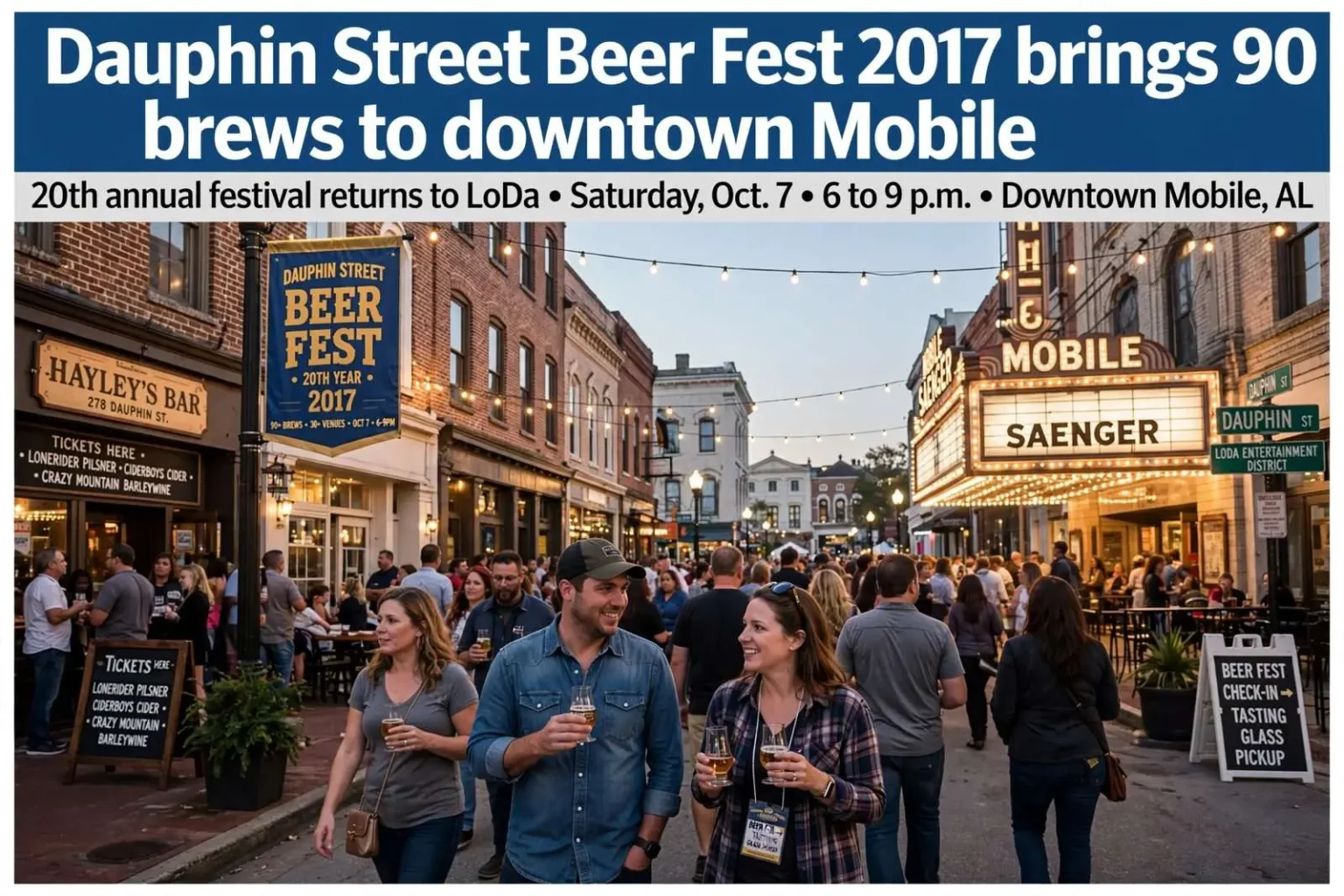
Dauphin Street Beer Festival returns to downtown Mobile for its 20th incarnation, drawing big crowds to LoDa bars this Saturday from 6 to 9 p.m. More than 90 brews will be poured at over 30 participating venues — and with only three hours, no one will hit them all.
The festival has become one of the anchors of the Lower Dauphin entertainment district’s calendar, spreading ticketholders across the bars and restaurants that line the street at the center of downtown nightlife. The format is simple: attendees buy a ticket, receive a tasting card or glass, and roam from venue to venue sampling the featured beers at each stop. With more than 90 different brews spread across more than 30 locations, the event doubles as a walking tour of the district — and as an argument for planning a route in advance rather than wandering into the crowd unprepared.
Where to Start
Hayley’s Bar, at 278 Dauphin St., is a no-brainer: it’s one of the few spots still selling tickets (while they last) and sits near many other stops. Hayley’s is pouring Lonerider Saloon Style Pilsner, Ciderboys British Dry Cider, and Crazy Mountain’s Lawyers, Guns and Money Barleywine.
The lineup at Hayley’s illustrates the breadth the festival aims for. Lonerider, out of Raleigh, North Carolina, built its reputation on well-crafted takes on classic styles; the Saloon Style Pilsner is its nod to the crisp lagers that anchor any long night of tasting. Ciderboys, from Wisconsin, represents the hard-cider side of the card with its British Dry Cider, a tart option for attendees who skip beer altogether. And Crazy Mountain’s Lawyers, Guns and Money Barleywine — from the Edwards, Colorado brewery — is a reminder that the festival pours more than session-strength sippers. Barleywine is among the strongest ale styles a brewer can offer, and festival-goers who start there will want to pace themselves accordingly.
For a break from the street, duck down Joachim to Alchemy Tavern, a large bar with three areas and a back patio. Its selections include Goodwood Bourbon Barrel Ale and Crazy Mountain’s Horshoes and Hand Grenades ESB, with the band Venom on the upstairs stage at 7 p.m. Alchemy sits directly across from the Mobile Saenger, less than a block off Dauphin.
Alchemy’s position just off the main drag makes it a natural mid-route detour. The Goodwood Bourbon Barrel Ale, from Florida’s Cigar City-linked Goodwood Brewing tradition of barrel-aged beer, brings bourbon-barrel richness to the lineup, while the Crazy Mountain ESB offers a malt-forward English-style ale that sits easier on the palate than a barleywine. The upstairs stage adds live music to the tasting, with Venom taking the stage at 7 p.m. — a reminder that the festival’s venues are working music rooms the rest of the year.
Soak It Up
When hunger hits, The Blind Mule offers food and three areas to explore, pouring Blue Point Hoptical Illusion and Ely Space Dust, with Future Hate on the Attic Stage. The Blind Mule is down N. Claiborne Street from Cathedral Square, past the Scottish Rite Temple and The Bar.
The Blind Mule stands out on the route because it solves the festival’s other problem: food. Hops-heavy beers like Blue Point’s Hoptical Illusion, an assertive East Coast IPA, and Ely Space Dust, a bright, citrus-forward pale ale from Washington State, go down better alongside a plate, and an evening of strong beer on an empty stomach ends badly. The venue’s multiple rooms and stage — where Future Hate plays the Attic Stage — make it a place to linger rather than just sample and move on.
The walk to the Blind Mule also takes attendees past some of downtown Mobile’s most recognizable landmarks. Cathedral Square anchors the historic Church Street East district with the Cathedral-Basilica of the Immaculate Conception at its head, and the Scottish Rite Temple nearby is one of the older institutional buildings in the neighborhood. The short detour off Dauphin gives festival-goers a taste of how compact and walkable downtown Mobile really is — bars, squares and historic buildings stacked within a few blocks of each other.
Planning the Route
With large crowds and kegs that can run dry, plan your route down Dauphin in advance and stick around after 9 p.m. — events like Beer Fest keep the downtown bar scene thriving, and new spots like Kazoola are worth exploring. Arrange a designated driver or ride home.
Veterans of the festival know the arithmetic: three hours, more than 30 venues and more than 90 beers means no one comes close to seeing it all. The practical approach is to pick a handful of must-hit stops, route them in a sensible line down the street, and accept that the crowd and the tapped-out kegs will shape the rest of the night. Arriving early helps; the most talked-about pours tend to disappear as the evening goes on, and lines lengthen near the popular rooms.
The event’s reach beyond the three-hour window is part of its value to downtown. Festival-goers who discover a new bar during the tasting often come back on ordinary weekends, and the post-9 p.m. crowd spills into the district’s regular Saturday business. Venues that participate treat the night as a showcase, and newer establishments such as Kazoola benefit from the foot traffic of attendees looking to add one more stop to the card.
Getting Home Safely
Organizers’ advice on transportation is worth taking seriously. Three hours of sampling strong beer across a dozen bars is not an evening to drive into. Attendees should line up a designated driver before the night begins or plan on a rideshare or taxi home. Downtown’s compact layout makes walking between venues easy, but the trip home is the one that matters, and a little planning in advance is the difference between a good festival story and a bad one.
Twenty editions in, the Dauphin Street Beer Festival has settled into its role as a late-summer fixture of LoDa: a night when the street’s bars roll out their best taps, local music fills the rooms, and downtown Mobile shows off how much there is within a few blocks. The taps open at 6 p.m. and close at 9 — come with a plan, a ticket and a ride home.
The District Behind the Festival
The festival’s endurance owes much to the district that hosts it. Lower Dauphin — LoDa, as locals shorten it — grew out of downtown Mobile’s revitalization into the city’s central nightlife corridor, with blocks of bars, music venues, restaurants and theaters packed tightly enough to walk the whole scene in an evening. The Historic Mobile Saenger Theatre, the grand 1920s movie palace across from Alchemy, anchors the block with touring concerts and film events, while smaller rooms like Hayley’s provide the nightly live music that keeps the street busy when no festival is on.
Events such as the Beer Festival fit a broader pattern of district-driven celebrations downtown, where food, music and drink festivals use the walkable street grid to spread crowds among dozens of small businesses at once. For the venues, the payoff is exposure: a bar that pours a well-chosen beer during the festival earns a ticketholder’s return visit weeks later, and the tasting-card format guarantees that even the smallest rooms see attendees who might otherwise never cross their doors.
Craft Beer’s Rise on the Gulf Coast
The festival’s 20 editions trace the arc of America’s craft beer boom, and the Gulf Coast’s place in it. When the event began, the term “craft beer” itself was still novel in much of the South, and festival lineups leaned heavily on the imports and mass-market lagers available to local distributors. Today the pour list reads like a cross-section of the national scene — pilsners from North Carolina, ciders from Wisconsin, barrel-aged specialties from Colorado, IPAs from the East Coast and Washington State — alongside the regional breweries that have opened across Alabama and the Gulf South in the past decade.
Alabama’s own brewing laws evolved dramatically over that same stretch, as legislative changes allowed stronger beers, larger bottles and taproom sales that were once off-limits in the state. Each change widened what Mobile’s bars could legally pour, and festivals like this one became the public showcase for the expanding menu. Attendees who come every year can chart the industry’s growth simply by comparing one year’s card to the next.
The Last Word Before the Taps Open
For Saturday’s crowd, the essentials haven’t changed in twenty years: a ticket, comfortable shoes and a plan. The most efficient strategy remains the same — start where tickets are still sold and the pours are strong, detour off the street for food and a change of scenery, and save a stop or two for the places you’ve never tried. The clock runs from 6 to 9 p.m., the kegs are what they are, and the best nights usually end where the plan says they should: somewhere new, with a ride home already arranged.