Dinner & a Movie: Meatballs With Fresh Squash and ‘In a World…’
This week's Dinner & a Movie serves spiced meatballs with fresh squash and a homemade tomato sauce, paired with 'In a World...,' a smart showbiz comedy about the voice-over trade.
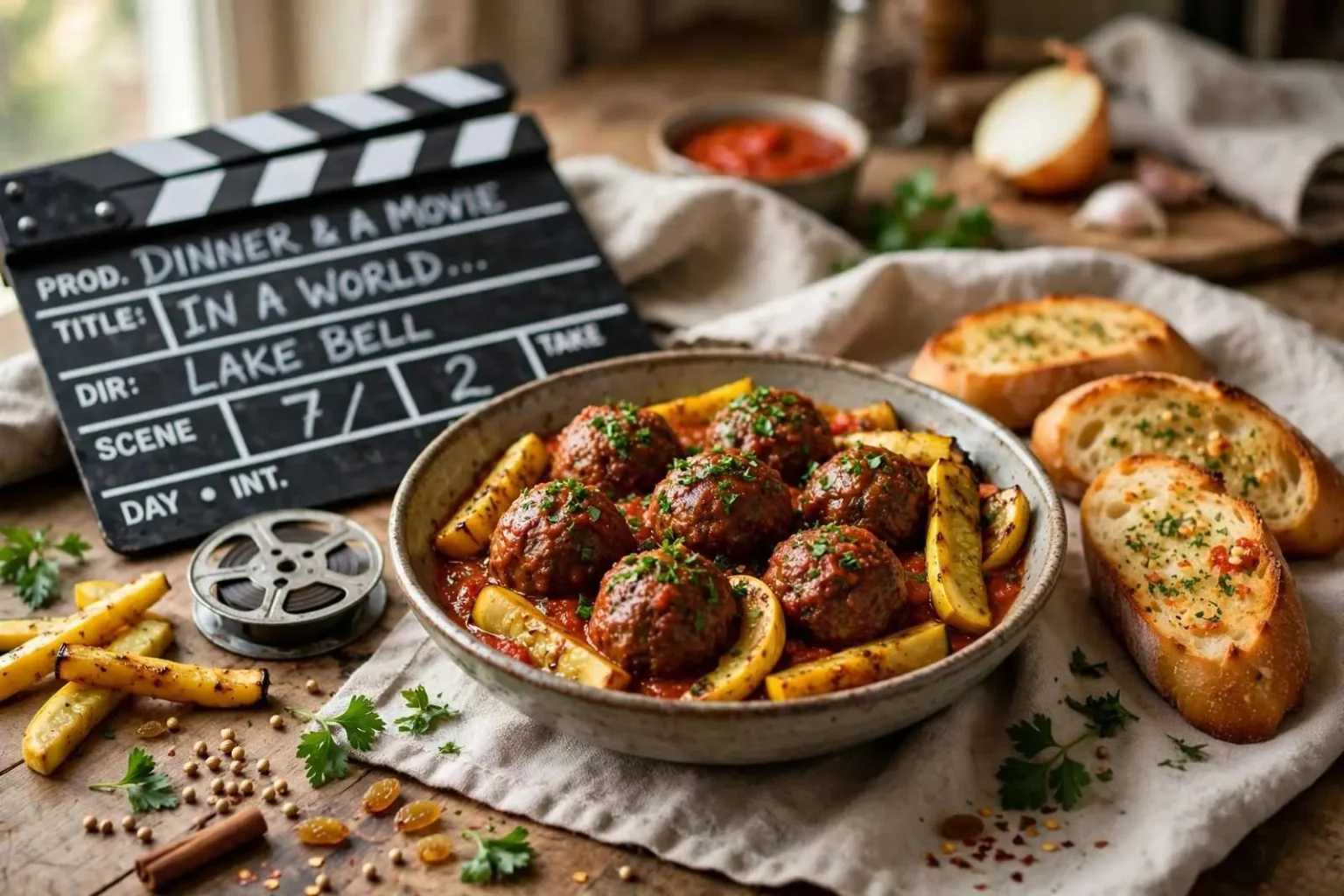
This week’s Dinner & a Movie is a comfort-food classic with a twist: spiced meatballs simmered in a quick homemade tomato sauce, served with fresh sauteed squash and garlic-rubbed bread. The film is a clever comedy set in the little-seen world of movie-trailer voice-over artists — a pairing built for a warm night in, when the meal wants to simmer slowly while the entertainment does the fast talking.
In the kitchen: Meatballs With Fresh Squash
Gather about 10 ounces of ground beef, a yellow squash, a yellow onion, garlic, a tomato, a baguette, parsley, breadcrumbs, tomato paste, a couple teaspoons of raisins and warm spices — smoked paprika, cinnamon, coriander, oregano and basil. Nothing on the list is exotic, but the combination is anything but ordinary: the raisins and the spice rack take these meatballs somewhere most weeknight versions never travel.
Start by building the aromatic base. Saute the onion and half the garlic in a wide skillet until softened and translucent, season with the spices and set aside. Blooming the spices in the hot pan with the onions — letting the paprika, cinnamon and coriander toast briefly in the fat — wakes up their flavors in a way that dumping them raw into the meat never will. Your kitchen will smell like it knows something your neighbors’ kitchens do not.
Brown the squash strips in the same pan and keep warm. Cutting the yellow squash into planks or thick strips rather than rounds gives it more contact with the hot pan, which means browning instead of steaming — the difference between squash with flavor and squash with water. Salt it lightly and let the pan do the work; the same fond the onions left behind seasons the squash for free.
Now the meatballs. Combine the beef, raisins, chopped parsley, breadcrumbs and sauteed onion, and form 12 to 14 meatballs. The raisins are the quiet stroke of genius here: they plump in the sauce and release small pockets of sweetness that play against the smoke of the paprika. Mix the meat gently — overworking is what makes meatballs dense and stubborn — and keep them on the small side so they cook through before their exteriors toughen.
Brown the meatballs in the skillet, add tomato paste and diced tomato, and simmer into a sauce. A short simmer is all this needs — fifteen minutes or so for the sauce to come together and the meatballs to finish through. Toast the halved baguette, then rub it with a whole garlic clove and a cut tomato while it is still hot. The heat of the bread roughs up the cut surfaces of the garlic and tomato, essentially making instant bruschetta with no additional oil or fuss.
Serve the meatballs and squash in bowls, garnished with parsley, with the bread on the side. The raisins and warm spices give the meatballs an unexpected, gently sweet depth — the kind of flavor that makes people ask what exactly is in these, and then not believe the answer.
Why the raisins and spices work
Sweet elements in savory meat dishes are one of the oldest tricks in cooking, appearing across North African, Middle Eastern and Mediterranean traditions. Raisins or dried currants show up in tagines, picadillos and countless meatball variations, where their sweetness rounds out cumin, cinnamon and paprika rather than competing with them. The couple of teaspoons called for here are deliberately modest — enough to register as depth rather than dessert — and the smoked paprika keeps the whole thing grounded on the savory side of the line.
The technique rewards a little patience with temperature. Brown the meatballs in batches if they crowd the pan; crowding drops the heat and steams the meat grey instead of browning it. And when the tomato paste goes in, give it the same minute of hot-pan cooking the onions got, stirring it into the fond until it darkens a shade. That darkening is flavor being built from almost nothing.
The garlic-rubbed bread, meanwhile, is the meal’s secret luxury. A baguette costs very little, but split, toasted and rubbed with garlic and ripe tomato, it becomes the spoon for the sauce — and there will be sauce worth chasing. Leftover bread, if there is any, makes an excellent lunch the next day, toasted again and dragged through reheated meatballs.
At the movies: ‘In a World…’
Written, directed by and starring Lake Bell, “In a World…” follows a mild-mannered vocal coach whose father is a legendary movie-trailer narrator. When she is asked to fill in for him and turns out to be a natural, the two find themselves in unlikely competition — a family rivalry playing out in the deep, resonant register that most moviegoers know intimately and think about never.
The premise is a genuine delight because the film takes its obscure subject seriously. Trailer voice-over is one of the last overwhelmingly male enclaves in the movie business, and the comedy mines that reality without ever turning into a lecture: Bell’s Carol simply wants the work, and the men around her — her father among them — have never considered that she might. The famous title refers to the opening phrase of countless trailers, a phrase so overused that the movie treats it as forbidden territory, a sort of nuclear launch code of the narration trade.
The cast includes Demetri Martin, Rob Corddry, Ken Marino, Nick Offerman and Geena Davis, all doing fine work. Martin plays a square-jawed voice artist with a crush on Carol; Corddry and Marino give the film its voicemail subplot, a running gag that grows funnier every time it resurfaces; Offerman appears as the studio gatekeeper; and Davis, as herself, lands the movie’s sweetest guest turn.
The showbiz comedy is smart and well made, even if it drags a bit in places, and Bell impresses on both sides of the camera. Her direction has a light, observant touch — the film notices how people actually talk, vocal fry and all, and finds comedy in the way a family can wound each other with nothing but tone of voice. For a movie about voices, that is exactly the right joke to build on.
Our verdict: two thumbs up. Ladle out the meatballs, tear into the garlic bread and enjoy a warm, witty night in.
Make it your own
The raisins and warm spices are what set these meatballs apart from the usual weeknight version, giving them a subtle North African accent, but you can dial them back or push them further depending on your table. A quarter teaspoon more cinnamon moves the dish noticeably toward the tagine end of the spectrum; omitting the raisins entirely leaves you with a perfectly good Italian-style meatball, though a pinch of sugar in the sauce can recover a little of the balance.
The protein is flexible too. Ground pork or a beef-and-pork blend makes an even juicier meatball, and ground lamb leans all the way into the North African direction the spices suggest. Whatever the meat, the breadcrumb-and-onion base is what keeps the texture tender, so keep those proportions steady even as you vary the rest.
Summer squash is at its best in the warm months, when the yellow ones arrive thin-skinned and sweet, but zucchini works identically in the same pan — and in the fall, strips of roasted bell pepper or quick-sauteed broccolini take over the vegetable slot without changing the meal’s shape. The dish is also a natural for doubling: the meatballs and sauce reheat beautifully for a second dinner, and the squash takes four minutes to remake fresh.
Plan the evening around the simmer. The sauce wants its fifteen minutes, which is precisely a trailer reel and change — enough time to get the bread toasted, the bowls warm and everyone settled on the couch. Then press play, and let the quietest voice in the family win for a change. That is a dinner and a movie in proper proportion: one night, one pan, one bright, funny film, and nothing left over but a clean skillet and a good line or two to quote at breakfast.
The pairing of menu and movie works on more than convenience. Both the meal and the film are about the pleasure of craft done unpretentiously: meatballs built by hand and a comedy built on voices, neither showing off, both better than they strictly needed to be. There is also a neat symmetry in the fact that a movie about the power of narration ends up underscoring a dinner built on a recipe with no narration at all — just steps, smells and a simmer that tells you when it is done.
For anyone new to cooking meatballs from scratch, this recipe is a forgiving place to start. The pan sauce is self-correcting — if it reduces too far, a splash of water brings it back; if it seems thin, another minute of simmer fixes it — and the meatball mixture telegraphs its seasoning plainly, so a cook can taste and adjust the spice level before the first ball is ever formed. Serve the meal with whatever the table likes to drink, keep the bread coming, and let the second half of the movie double as dessert time.