Dinner and a Movie: Baked Spaghetti Casserole and the Desert Thriller ‘Desierto’
A layered baked spaghetti casserole made a hearty weeknight supper around Mobile Bay, paired with the tense border thriller Desierto.
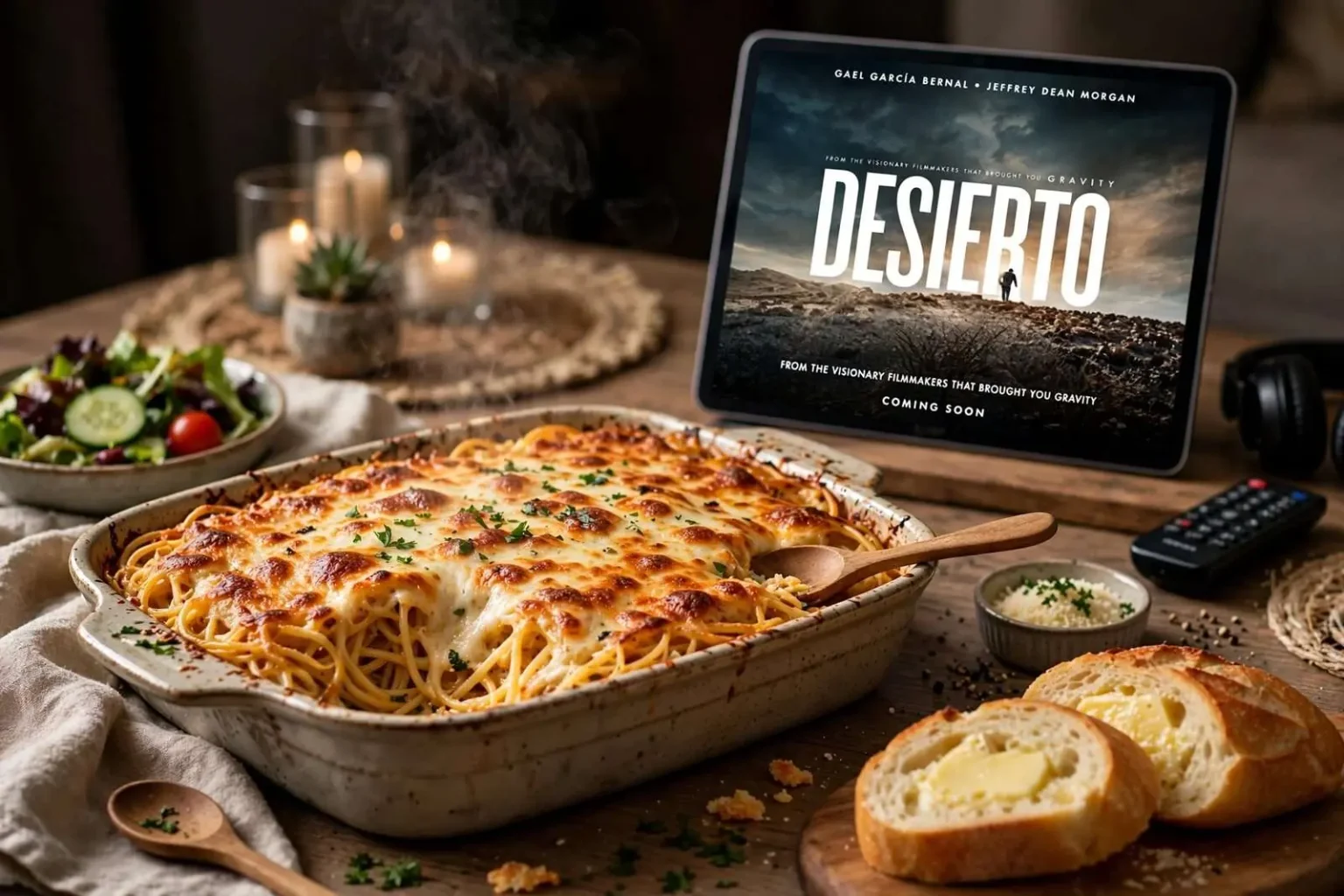
A cold-weather classic can warm a table any time of year. One Mobile Bay household leaned into a layered baked spaghetti casserole for supper, then dialed up the tension with Desierto, a lean survival thriller. The pairing worked out to a full evening — a bubbling casserole fresh from the oven, and a movie that kept everyone in their seats until the credits.
In the kitchen
The casserole was built for a crowd. The cook assembled a pound of hamburger, a chopped onion, a package of whole-wheat spaghetti, chicken stock, spaghetti sauce, seasoned salt, two eggs, grated Parmesan, melted butter, cottage cheese and shredded mozzarella — a pantry-and-fridge list that comes together without a special trip to the store, which is exactly why baked spaghetti has endured as a Southern weeknight and potluck staple.
The spaghetti cooked in chicken stock until the liquid was absorbed. It is a small technique with an outsized payoff: instead of draining the pasta and losing its starch, the noodles drink up the stock as they cook, arriving in the baking dish already seasoned and carrying a depth that water-boiled spaghetti never manages. The stock also leaves the noodles firm enough to stand up to a second round of cooking in the oven without collapsing into mush.
Meanwhile, the beef and onion were browned, drained, then combined with the sauce and set aside. Browning the meat properly — letting it sit in the pan long enough to develop a crust rather than stirring it into gray mince — builds the flavor base for the whole dish, and the onion softens into the fond at the bottom of the pan, picking up the browned bits that would otherwise go to waste. A shake of seasoned salt rounds out the sauce.
Binding came next: egg, Parmesan and melted butter were mixed and folded through the noodles. This is the step that separates a baked spaghetti that slices cleanly from one that slides apart on the plate. The egg sets as the casserole bakes, holding the layers together, while the butter and cheese coat every strand so the interior stays rich rather than dry.
Layering followed: two layers of noodles, cottage cheese, meat sauce and about three cups of mozzarella went into a greased baking dish. The cottage cheese layer — a cousin to the ricotta layer in a lasagna — brings the creamy counterpoint that makes the dish more than spaghetti with a lid on it. Spread between the two pasta layers and the meat sauce, it melts into a soft stratum that keeps the casserole moist from the bottom of the dish to the top.
Covered with foil, the casserole baked forty minutes at 350 degrees, then was topped with the remaining mozzarella and baked forty more, uncovered. The covered phase steams the layers through so the center is as hot as the edges; the uncovered phase browns the top, leaving a golden, stretchy mozzarella crust that crackles when the serving spoon breaks through. The full eighty minutes at a modest temperature is what makes the dish forgiving — it holds beautifully at the end of the bake without drying out.
Served with buttered French bread and a salad, it earned the household’s cheerful stamp of approval. A crisp green salad is the right side for a dish this rich, and the bread exists to do the casserole dish’s final duty: sopping up the cheesy, saucy residue no spoon ever fully reaches.
On the screen
The evening’s film was Desierto, directed by Jonas Cuaron, starring Jeffrey Dean Morgan, Gael Garcia Bernal, Alondra Hidalgo, Diego Catano and Marco Perez. The story follows a group of migrants whose journey across the border goes wrong when their vehicle breaks down and a shortcut through hostile terrain brings them face to face with a man determined to hunt them.
The premise strips the border thriller down to its bones. There are no subplots, no institutional backdrop, no expository detours — just a stranded group, a relentless pursuer with a rifle and a dog, and an unforgiving desert between the characters and survival. The film’s power comes from that compression: what could have been a message movie plays instead as pure survival cinema, where every cactus, every canyon wall, and every mile of dry ground is an antagonist.
Jonas Cuaron, working from a script he co-wrote, had already drawn attention as the co-writer of his father Alfonso Cuaron’s Gravity, and Desierto shows the same command of physical space as an instrument of suspense. The desert is shot as vast and indifferent, the sun and the rocks as dangerous as the hunter, and the camera tracks the diminishing group with an intimacy that makes each loss land. The film earned attention on the festival circuit for its tight execution and its willingness to let the setting do much of the storytelling.
Gael Garcia Bernal, one of the most acclaimed actors of his Mexican generation, anchors the migrant group as a father trying to reach family across the line, and Alondra Hidalgo’s Adela gives the film its emotional center as the young woman whose survival becomes the story’s moral test. On the other side, Jeffrey Dean Morgan’s hunter is played not as a cartoon villain but as something colder — a man who has decided the desert is his to police, and who stalks his prey with the patience of someone who has done it before.
The reviewers described the picture as intense and relentless, the kind of film that keeps a viewer on the edge of the seat from start to finish. The cast turned in excellent work, and no one at the table was in danger of dozing off. It earned two thumbs up for a taut, gripping watch.
Why the pairing works
There is a case to be made that a thriller this tense calls for comfort food this reliable. A baked spaghetti casserole is an unhurried meal — assembled in one dish, cooked slowly, and served family-style — and it provides a calm, convivial hour before the film tightens the screws. The contrast is the point: a warm, generous supper, and then a movie that turns the temperature down ten degrees for ninety minutes.
The household’s verdict covered both halves of the evening. The casserole, with its stock-cooked noodles and triple-cheese layers, is a keeper — the kind of recipe that earns a place in the rotation and travels well to potlucks and covered-dish suppers. Desierto is a rental for the right mood: not a Friday-night crowd-pleaser, but a gripping, well-made thriller that delivers exactly what it promises and leaves the audience grateful for the safety of the living room.
For Gulf Coast households planning their own dinner-and-a-movie nights, both halves of this one come recommended. Just finish supper before the film starts — the cooking takes longer than the movie does, and nothing in the casserole benefits from being eaten while the hunter closes in.
The baked spaghetti’s place in the Southern cookbook is well earned. Variations of the dish appear in church cookbooks and family recipe boxes across Alabama, each household convinced its version is the standard. The bones are nearly always the same — spaghetti, a meat sauce, eggs and cheese to bind, and a long bake — with the debates reserved for the details: cottage cheese or ricotta, sweet or savory sauce, and whether the top layer of cheese goes on at the start or the end. This version lands on the side of tradition with its cottage cheese interior and late-added mozzarella crust.
Whole-wheat spaghetti is a quiet upgrade in this application. The sturdier noodle holds its texture through the eighty-minute bake better than refined pasta, and its nuttier flavor stands up to the seasoned beef sauce. Cooks who find whole-wheat pasta a compromise on the stovetop often find that in a baked dish, where the pasta absorbs sauce and stock alike, the difference disappears entirely.
The chicken stock method deserves one more note for home cooks: the ratio matters. Enough stock to cook the pasta but not so much that the noodles finish before the liquid does — the goal is pasta that is perfectly al dente at the exact moment the pan goes dry. It takes one trial run to calibrate for a particular brand of spaghetti and the heat of a particular burner, and after that the technique becomes second nature.
Feeding a table, not just a household
Recipes like this one earn their keep by their flexibility. The casserole assembles ahead and waits in the refrigerator until baking time, which makes it a natural for game-day spreads, church suppers, and evenings when guests are expected. It reheats without complaint, portioning out over the following days with a brief stop in the oven or the microwave, and it welcomes additions — mushrooms into the sauce, red pepper flakes for heat, a layer of browned Italian sausage alongside the hamburger — without changing its essential character.
For a Mobile Bay household, the dish is also a practical answer to the season: the kind of meal that suits a cool evening as easily as it feeds a summer table alongside sliced tomatoes and corn. The casserole’s cheerful stamp of approval from this particular supper table is the same verdict it has earned in kitchens across the Gulf Coast for generations.
As for the movie half of the evening, Desierto stands as a reminder that the thriller genre thrives on constraint. A handful of characters, one location, a single driving conflict — and a filmmaker trusted enough to keep it that way. The film runs lean, and its two-thumbs-up verdict reflects how rarely that kind of discipline arrives on screen intact.
Dinner and a movie remains the Gulf Coast’s most reliable formula for an evening at home. When the dinner is an eighty-minute casserole with a golden mozzarella lid and the movie is a desert thriller that never lets up, the formula delivers an entire night’s entertainment from one oven, one skillet, and one couch.