
Downtown Mobile Alliance Takes Poinsettia Orders for December Delivery
Order holiday poinsettias at $16 per plant from the Downtown Mobile Alliance, with checks payable to Main Street Mobile and delivery set for December 2.
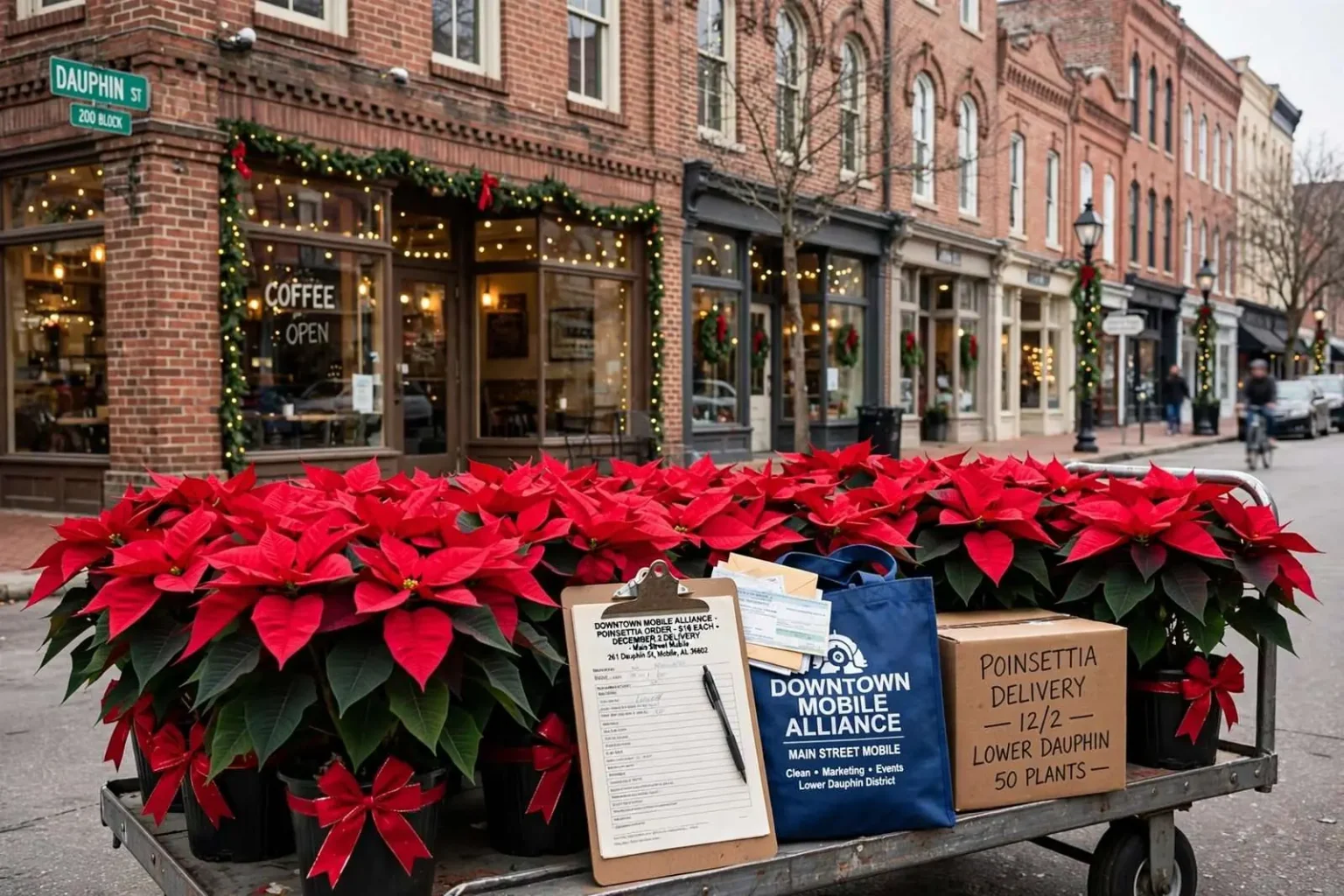
The Downtown Mobile Alliance is taking orders for its annual holiday poinsettia sale, with plants priced at $16 each. The sale has become a fixture of the organization’s December calendar, putting holiday color in the hands of downtown businesses, offices, and residents while raising money for the group’s year-round work in the city center. Orders are filled on a single delivery day, giving the season’s support a deadline that organizers say helps keep the logistics simple.
To order, customers fill out the Alliance’s order form and pay by check made out to Main Street Mobile. Checks can be mailed to 261 Dauphin Street, Mobile, AL 36602 — or handed over in person, since Alliance staff will pick up payment when they deliver the plants on December 2. The delivery-day payment option has proven popular with downtown offices, where an employee can collect the order form, count plants into lobbies and reception areas, and settle up on the spot as the delivery crew arrives.
A fundraiser with a purpose
The sale doubles as a fundraiser for the downtown organization, which uses Main Street Mobile programs to support the Lower Dauphin commercial district. Proceeds help underwrite the Alliance’s year-round work on downtown cleanliness, marketing, and events — the quieter, unglamorous activities that make a commercial district function between the headline festivals. That work includes coordinating the removal of litter and graffiti, recruiting and supporting new businesses, promoting downtown to visitors and locals, and organizing the seasonal programming that draws crowds to the historic streets around Dauphin Street.
Main Street Mobile is part of the broader Main Street movement, a national framework for commercial district revitalization that organizes local efforts around economic vitality, design, promotion, and outreach. Programs operating under that umbrella measure their results not just in events held but in buildings rehabilitated, storefronts filled, and investment leveraged in their districts. In Mobile, the Alliance’s focus on the Lower Dauphin corridor places it at the heart of the city’s historic commercial core — a district of restored storefronts, restaurants, bars, and offices where foot traffic on a given evening is a direct measure of downtown health.
Why poinsettias
Poinsettias have been the holiday plant of American businesses for nearly two centuries. Native to Mexico and introduced to the United States in the 1820s, the plant’s showy red bracts made it a natural fit for Christmas decor, and greenhouse growers now produce millions of them each season for offices, churches, and homes. Their appeal to downtown organizations is practical: they ship well, last for weeks with basic care, and photograph beautifully against storefront windows and lobby counters.
For buyers, a $16 poinsettia in a downtown office serves double duty as decoration and signal. It tells clients and visitors that the business is decorated for the season and invested in its neighborhood, and when the sale is run by the local Main Street program, the plant itself becomes a small advertisement for downtown revitalization. Regulars in many Main Street districts across Alabama — from Birmingham to Fairhope — will recognize the pattern, because holiday plant sales are among the classic fundraisers in the Main Street toolkit.
How the money works
Fundraising mechanics matter for a nonprofit like the Alliance, whose budget blends membership dues, sponsorships, municipal support, and event revenue. A plant sale offers a low-barrier entry point: a supporter who might never attend a gala or join a committee can buy a poinsettia and become, in a modest way, a funder of downtown programs. Multiplying that across hundreds of offices and storefronts produces a meaningful contribution to the operating budget that keeps cleaning crews, marketing campaigns, and event planning running through the year.
The December 2 delivery date also concentrates the benefit. Downtown streets fill with plant-filled lobbies at the same time as the season’s shopping and celebration calendar peaks, reinforcing the visual identity of a decorated, cared-for district at the moment the most people are looking at it.
The Lower Dauphin district it supports
Lower Dauphin Street is the spine of downtown Mobile’s commercial revival. Lined with nineteenth-century buildings that survived decades when the city’s retail focus shifted to suburban malls, the corridor came back through decades of preservation work, restaurant openings, and the steady attention of organizations like the Alliance. Today the district anchors Mobile’s nightlife and entertainment calendar, hosts art walks and holiday festivals, and supplies the streetscape that appears in nearly every promotional photograph the city publishes.
Keeping such a district healthy is constant work. Cleanliness programs address litter and pressure-washing needs that come with heavy foot traffic. Marketing promotes the district to regional visitors who might otherwise spend their evenings elsewhere. Events fill the calendar with reasons to come downtown, and business recruitment fills vacant upper floors and storefronts with new tenants. Each of those functions draws on the same pool of funds, which is why a poinsettia sale in December is not just holiday sentiment but budget planning.
Ordering is deliberately simple
The Alliance’s process is designed for busy office managers and business owners: fill out the form, write the check, and either mail it to 261 Dauphin Street or wait for the December 2 delivery. There is no minimum purchase, no membership requirement, and no need to be home — plants are delivered to the address on the order, and payment is collected on the spot for those who choose the in-person option. Organizations that want several dozen plants for lobbies and common areas use the same form as a customer buying one.
Residents of downtown’s growing residential population — condominium and apartment dwellers within walking distance of Dauphin Street — participate as well, and their orders matter to an organization that counts downtown residents among its most consistent advocates. Every plant delivered adds to the collective holiday display that makes the district feel intentional and festive, and every check supports the staff and programs whose work is visible in clean sidewalks, active storefronts, and a full events calendar.
A small tradition with a long tail
Holiday plant sales like this one illustrate how downtown organizations fund themselves: not with one large benefactor but with hundreds of small transactions, each modest on its own, that add up to a working budget. The poinsettia a business buys in December is still decorating a reception desk in January, long after the sale that funded it has closed its books. By then, the Alliance will already be planning the next season of art walks, cleanups, and promotions — the work that the $16 plants quietly paid for.
Customers who want to participate fill out the order form, make checks payable to Main Street Mobile, and mail them to 261 Dauphin Street, Mobile, AL 36602, or plan to pay when the plants arrive on December 2. For downtown Mobile, the sale marks the season the way it has for years: one delivery day, a fleet of red plants moving into lobbies and storefronts, and a fundraiser that turns holiday decorating into year-round support for the historic streets at the center of the city.
The sale also functions as an annual check-in between the Alliance and the businesses it serves. Office managers who order plants each December are, in the process, updating the organization’s picture of the district: which offices are occupied, which have expanded, which storefronts have changed hands. That intelligence is valuable for a Main Street program, whose staff rely on relationships with property and business owners to fill vacancies, coordinate facade improvements, and anticipate problems before they become visible to visitors.
Nursery suppliers, for their part, time their production to demand like this. Growers root poinsettia cuttings in summer and shepherd them through autumn as the bracts develop their color in response to shortened daylight — a process that requires darkness management so precise that a stray porch light can delay coloring. By the first week of December, the crop reaches its peak, which is why Main Street programs across the country schedule their deliveries into that same window and why the Alliance’s December 2 date lands exactly when the plants look their best.
There is a larger lesson in the tradition, too. Downtown revitalization succeeds when it is made up of many small, repeated acts rather than single dramatic investments: a plant sale here, a cleanup day there, an art walk every month, a facade grant, a new tenant signed. Each is modest. Together they compound into the kind of district where people choose to spend an evening instead of passing through on the interstate. The poinsettia sale sits comfortably in that chain of small acts — decorative on the surface, structural underneath — and its annual return is a reminder that the health of Lower Dauphin Street depends on the businesses and residents who keep ordering, year after year, one check at a time.


