East Brewton residents begin to pick up the pieces after tornado
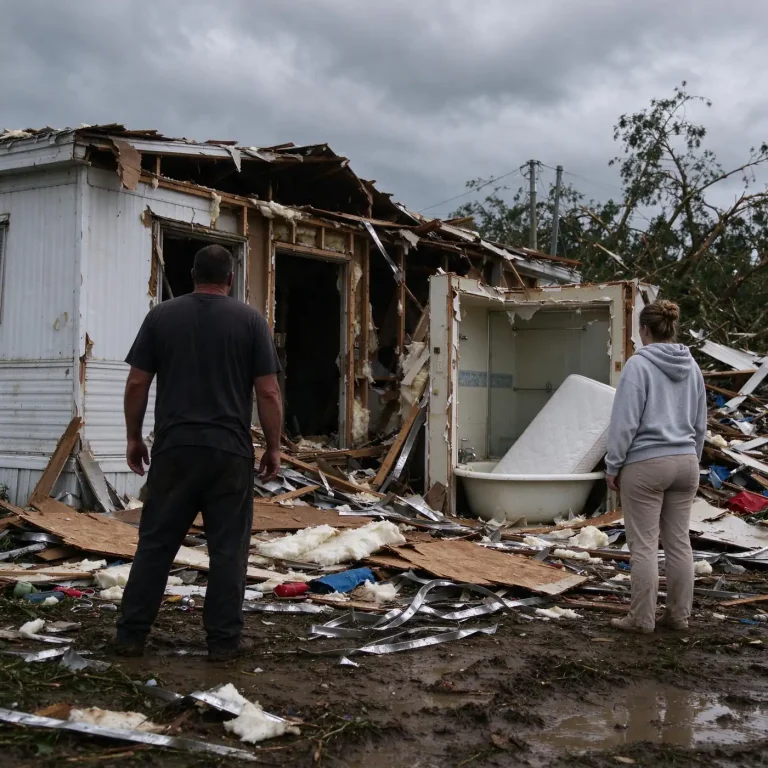
East Brewton residents are picking up the pieces after a tornado spawned by Tropical Storm Claudette tore through the community.
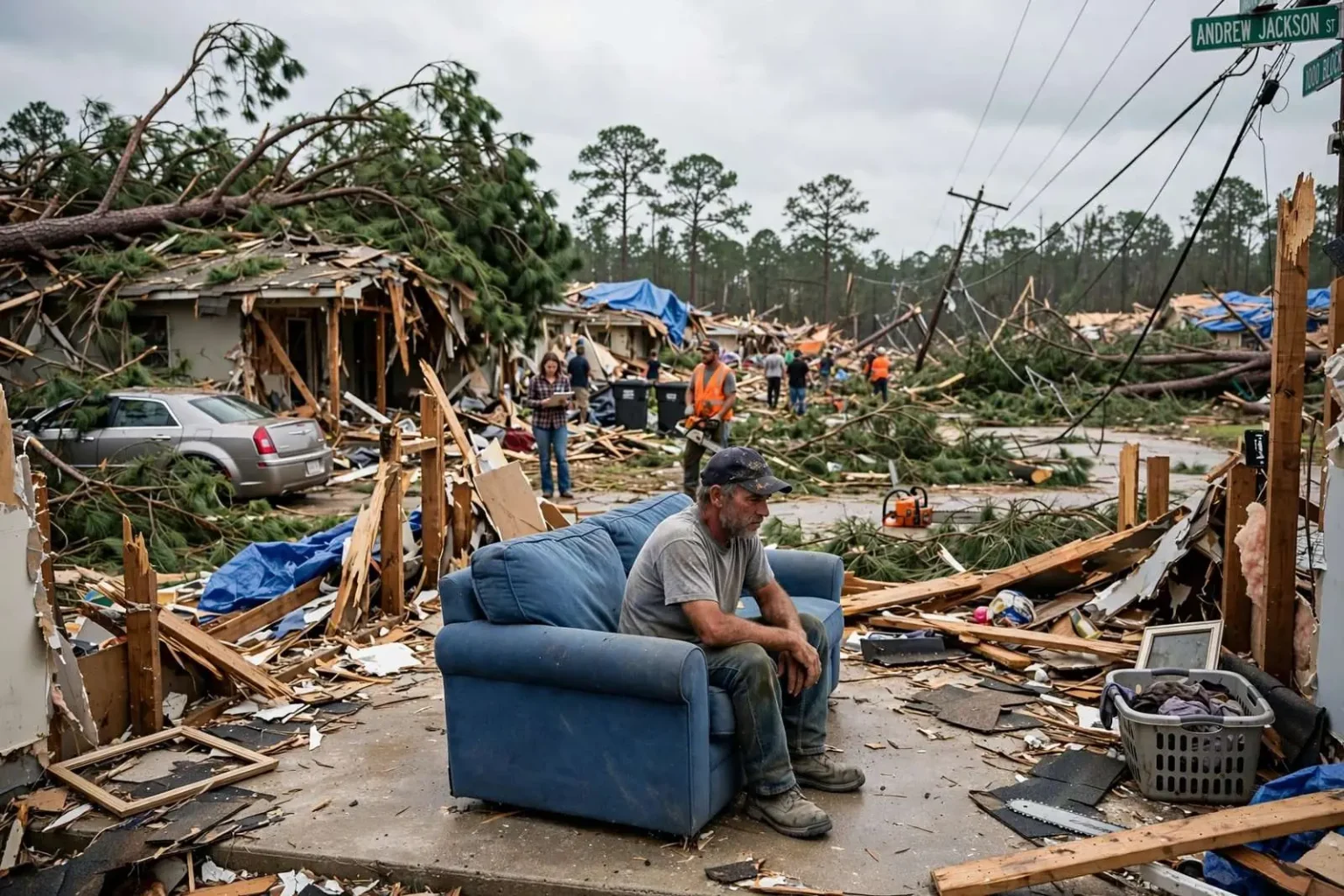
EAST BREWTON, Ala. — A man sat on a blue couch on Andrew Jackson Street, where four walls that once surrounded it are now gone. East Brewton still looked like a war zone after a tornado formed in the area Saturday morning as Tropical Storm Claudette moved through, leaving behind a damage scene residents spent the following days measuring in fallen pines and missing roofs.
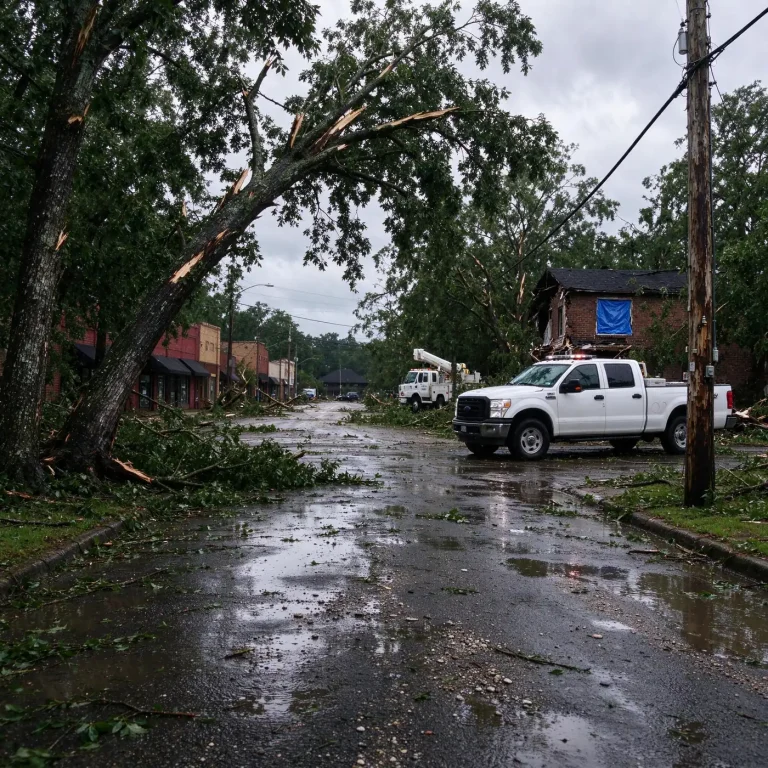
Trees remained on top of homes, and busted power lines littered the roadways. No one in the area knew when life would return to normal, but residents were thankful it was not worse. “Two days prior to this, something told me to get on my knees and pray and I did,” East Brewton resident Trenton Taylor said. “Thank God.”
The tornado arrived with Tropical Storm Claudette, the Gulf system that swept across the Alabama coastline and then inland, spinning up twisters and dumping flooding rains as it went. For East Brewton — a small mill town in Escambia County, just north of Brewton and west of the Florida line — the Saturday morning warning window was short, the way it always is with tornadoes embedded in a tropical system’s rain bands. When the wind eased, Andrew Jackson Street told the story.
Residents on Andrew Jackson Street surveyed damage to their homes and belongings Monday afternoon, two days after the storm. The neighborhood’s damage was intimate and specific — not a swath of flattened blocks, but houses gouged one by one, each family tallying its own losses against the trees that fell and the walls that failed.
What the storm took
Jerald Burns lost his 2007 Chrysler 300 to fallen pine trees. The car was a total loss in an instant, crushed under the kind of mature pines that shade every yard in the region and become the region’s greatest hazard in every hurricane and tornado. “It was snatching up the back of the house,” Burns said of the tornado. “It was just rocking. It was a bad experience man.”
Across the street, Felicia Elliot said she lost the roof to her laundry room and was unsure whether her landlord would repair it. Her loss illustrated the particular bind of renters after a storm: damage to a home she does not own, repairs she cannot schedule herself, and an insurance claim that belongs to someone else. In the days after a tornado, that gap — between what a renter needs and what a landlord’s policy covers — is one of the quiet difficulties recovery crews rarely see.
The blue couch on the slab where four walls used to stand belonged to another family’s inventory of losses. Homes damaged beyond quick repair force the immediate question — stay with relatives, find a hotel, apply for assistance — before the emotional weight of the loss has even settled. Neighbors traded that arithmetic up and down the street on Monday afternoon.
Claudette’s path of trouble
Tropical Storm Claudette was the kind of storm Gulf Coast residents know to respect even without hurricane winds. Forming over the northern Gulf and moving ashore, it carried tropical moisture into Alabama and the Southeast, spawning tornadoes embedded in its bands and dropping rainfall that flooded communities far from the coast. Its tornadoes arrived with little of the fanfare of a hurricane landfall — radar-indicated rotations, brief warnings, and minutes to take cover.
East Brewton’s experience matched the pattern of tropical tornadoes across the region: concentrated, sudden and localized. While one neighborhood dug out, nearby streets kept their limbs and their shingles — a geographic lottery that leaves some families rebuilding while their neighbors two blocks over rake leaves. That unevenness complicates recovery, too, since county and municipal damage assessments must document every affected structure to unlock state and federal help.
Utility crews faced the downed lines that littered the roadways. Fallen pines across distribution lines mean power outages that outlast the storm by days, and every downed line must be treated as live until crews de-energize it. Residents’ first-24-hours checklist in such storms — generators outside, away from windows; chainsaws handled with the caution the profession demands; utility notifications made before cleanup begins — plays out house by house.
The first days of recovery
By Monday afternoon, the work on Andrew Jackson Street was the manual kind: tarps on damaged roofs, chainsaws in the yards, insurance phone calls in driveways. Neighbors helped neighbors clear what could be cleared, and the pieces that could not be moved — the car under the pines, the open laundry room — stood as markers of the work ahead.
Small-town recovery runs on its own networks. In a community East Brewton’s size, the churches, volunteer fire departments and neighbors with tractors do the first week’s heavy lifting, long before any formal assistance arrives. Escambia County’s emergency management agency documents the damage that qualifies residents for aid, and state and federal programs — where they trigger — follow the paperwork rather than the need.
The uncertainty residents voiced about when life would return to normal is the honest answer after every tornado. Roofs take months to replace in a region where every storm creates a backlog; contractors’ schedules fill for a year; and the pines that made the neighborhood green return as a calculation every homeowner makes about the next one. What replaces normal, in the meantime, is routine: tarps checked after each rain, generators serviced, and a weather radio turned up louder in storm season.
Thankful it was not worse
The refrain on Andrew Jackson Street — residents thankful it was not worse — is the one that follows every Alabama tornado that spares a life. Taylor’s account of praying two days before the storm, and giving thanks after it, captured what the street’s survivors said in their own ways: the losses were real, the car and the roof and the walls, but the street’s families were standing.
That gratitude does not speed the repairs, but it defines the tone of a town’s recovery. East Brewton has weathered storms before — the Escambia County pine belt is struck repeatedly across the decades — and each recovery follows the same rhythm: neighbors first, insurers second, agencies third, and patience throughout. For the families of Andrew Jackson Street, the Monday-after surveying was the first step of that rhythm, taken under a sky that gave no promise about the next one.
The tornado that formed Saturday morning as Claudette moved through left East Brewton with downed lines, crushed cars and open roofs — and with every resident who stood in the aftermath on Monday still standing. In small-town Alabama, that arithmetic is the one that matters most, and it is the one the street counted first.
The tornado also tested the town’s warning systems in real time. Tornadoes embedded in tropical systems are notoriously difficult to warn for — they spin up quickly inside rain-wrapped bands, and the heavy rain itself masks them from spotters. The National Weather Service office responsible for Escambia County issued warnings as the rotation tracked through, but the effective warning time for any single street is measured in minutes. For families who had only Saturday morning’s routine to interrupt, the tornado’s arrival depended on phone alerts and the sound of the wind itself.
Storm season preparation, for East Brewton’s residents, will now include the lessons of this one. Emergency management officials across tornado country repeat the same guidance: know where you will shelter before the warning, keep shoes and helmets by the interior room, and never try to outrun a tornado in a car through falling trees. The pine forest that defines Escambia County makes vehicle travel during a warning especially dangerous — the tree canopy that shades the roads becomes falling debris across them within seconds.
The economic toll on a small town extends past the damaged homes. Lost vehicles like Burns’s Chrysler 300 are transportation to work as much as property, and roof damage like Elliot’s renders rooms unusable even when the house stands. Insurance deductibles — typically thousands of dollars before coverage begins — land on households already stretching paychecks, which is why community collections and church funds spring up in East Brewton’s name the way they do in every storm-hit Alabama town.
Claudette’s rains added their own complication to the cleanup. Debris piles left curbside can clog drainage ditches when the next rain arrives, and tarp-covered roofs face each new storm as a test. In the weeks after the tornado, the town’s rhythm became a cycle familiar across tornado country: haul, tarp, patch, and watch the sky for the next band of storms rolling in off the Gulf.
Through it all, the image that stays from Andrew Jackson Street is the one the storm could not take: neighbors walking the block on a Monday afternoon, checking on one another’s houses, counting blessings out loud — a car, a roof, four walls — and agreeing on the count that mattered. East Brewton’s recovery starts there, and it starts every day after that the same way.