Eight Mile Man’s Murder Case Heads to Grand Jury in Fatal Highland Avenue Shooting
A judge has ruled there's enough evidence to send a murder charge against an Eight Mile man to a grand jury in a fatal Highland Avenue shooting in Mobile's Happy Hill community.
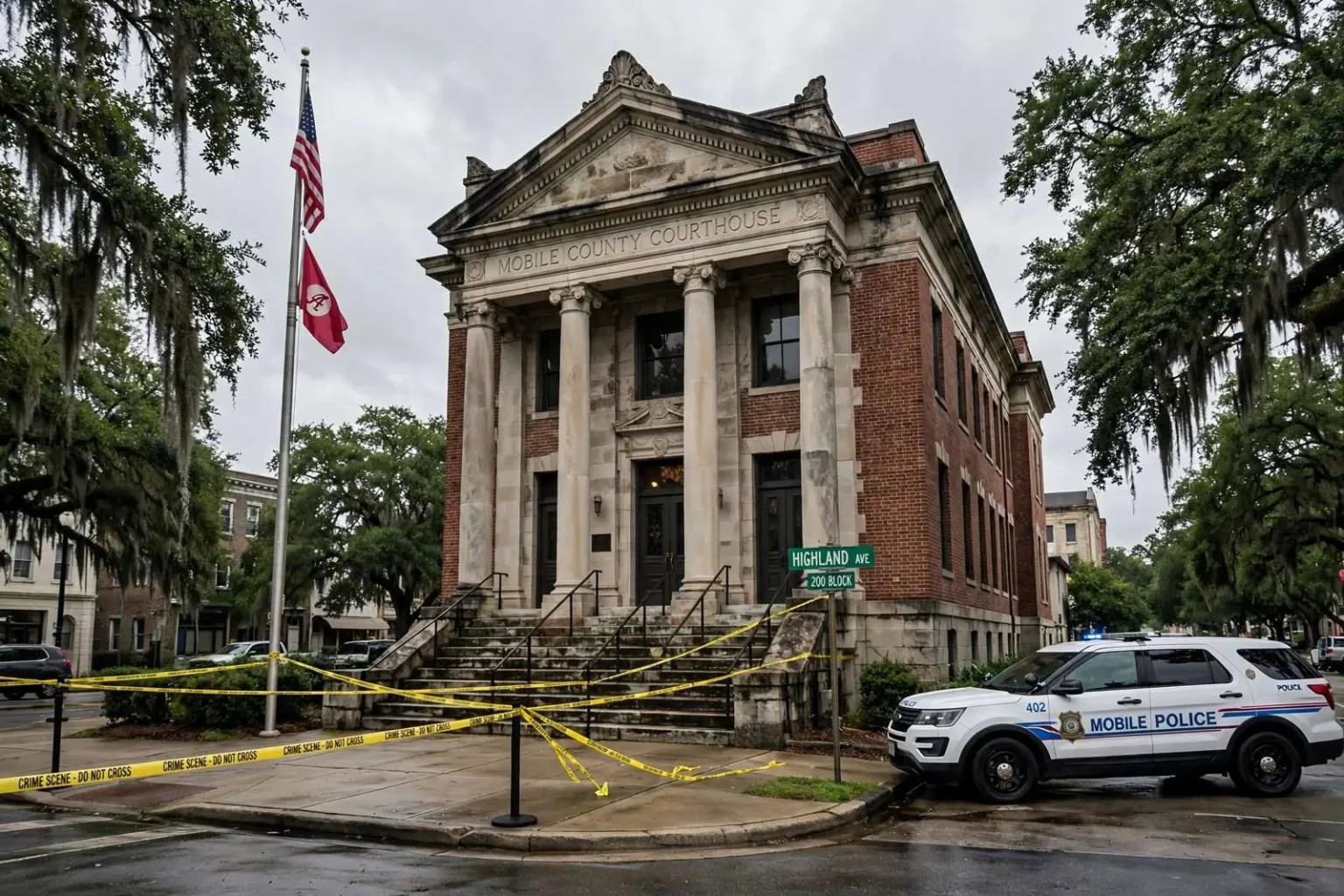
MOBILE, Ala. — A Mobile County judge has ruled there is enough evidence for prosecutors to present a murder charge to a grand jury against an Eight Mile man in connection with a fatal shooting earlier this year. The ruling came after a preliminary hearing, the stage in the criminal process where a judge decides only whether the state has shown probable cause — not whether a defendant is guilty. According to Mobile police, Joseph Smith IV drove to Highland Avenue in the city’s Happy Hill neighborhood in May, where he got into an argument with Jonathan Sanders. Investigators say both men then pulled out guns and exchanged gunfire, and Sanders was killed in the shooting.
The case now moves to the next phase of the Alabama criminal justice process. A grand jury will review the evidence in the case and decide whether to formally indict Smith on the murder charge. That decision will rest with a panel of citizens drawn from Mobile County, who hear the prosecution’s evidence in private sessions and determine whether there is sufficient basis to return an indictment. Smith has maintained that he acted in self-defense during the confrontation, a claim that prosecutors and, ultimately, a trial jury would have to weigh if the case proceeds past the grand jury stage.
What investigators say happened
According to investigators, the events that ended Sanders’s life began with a drive across Mobile County. Smith traveled from Eight Mile, a community in the northern part of the county near Prichard and Chickasaw, to Highland Avenue in Happy Hill, one of Mobile’s historic neighborhoods that rises above the downtown area. There, investigators say, Smith and Sanders got into an argument. What began as a confrontation escalated when both men drew guns and fired at one another, leaving Sanders fatally wounded.
Investigators also described a personal connection between the two men: Sanders had been dating Smith’s ex-girlfriend. Prosecutors presented that relationship as part of the context for the May confrontation, while the defense’s account centers on Smith’s assertion that he acted in self-defense when the exchange of gunfire began. The tension between those two narratives — a dispute rooted in a personal relationship, and a claim that deadly force was necessary — is precisely the kind of question the legal system is designed to resolve through evidence and testimony rather than quick judgment.
The road from preliminary hearing to grand jury
In Alabama’s court system, a preliminary hearing is an early checkpoint, not a trial. Prosecutors must show enough evidence to establish probable cause that a crime was committed and that the defendant was involved. The standard is deliberately low compared with the proof required for a conviction, which is why rulings at this stage say nothing about guilt or innocence. When a judge finds probable cause, as happened here, the case is forwarded to a grand jury, which operates differently: its sessions are closed to the public, the defense does not present its case, and the grand jury votes on whether the evidence justifies an indictment.
If the grand jury indicts, the case moves to circuit court for arraignment and, eventually, trial. If it does not, the charge does not move forward. Either way, the process reflects the structure of felony prosecution in Mobile County, where the District Attorney’s office presents cases to the grand jury regularly. Murder cases arising from mutual exchanges of gunfire present particular challenges for prosecutors, who must address self-defense claims and Alabama’s laws governing the use of deadly force in addition to proving the elements of the underlying charge.
Happy Hill and the neighborhoods involved
The shooting occurred on Highland Avenue in Happy Hill, a neighborhood with deep roots in Mobile’s history. Situated on high ground just east of downtown and near the city’s medical district, Happy Hill is recognized as one of the oldest neighborhoods in the city, with generations of families and churches anchoring its streets. Highland Avenue itself is a familiar corridor for Mobilians, running through a part of the city where residential streets sit close to major institutions. Like many urban neighborhoods, it has seen both the strains of city violence and the steady efforts of residents, churches, and community organizations to keep its blocks strong.
Eight Mile, the community where Smith lives, sits in the northern reaches of Mobile County, an unincorporated area adjacent to Prichard and Chickasaw along U.S. Highway 45. The distance between the two communities is modest — a drive of minutes across the county — but the case links two distinct corners of Mobile County’s map: a historic neighborhood inside the city limits and a suburban-edge community to the north.
Self-defense claims in Alabama courts
Smith’s assertion that he acted in self-defense will be a central issue as the case moves forward. Alabama law recognizes the right to use deadly force in defense of oneself or others in defined circumstances, and courts must carefully examine who was the initial aggressor, whether a party attempted to withdraw from the confrontation, and whether the level of force used was legally justified. When both individuals in a confrontation are armed and firing, reconstructing those moments — who drew first, who could have retreated, what each man knew at the time — becomes the core work of prosecutors, defense attorneys, and ultimately jurors.
That examination happens in stages. The grand jury hears only the prosecution’s presentation and decides whether an indictment is warranted. If the case is indicted and goes to trial, the defense will have full opportunity to present evidence, call witnesses, and argue the self-defense claim to a jury of Mobile County residents. Statements made at hearings and in police reports are not verdicts, and the presumption of innocence attaches to Smith at every stage of the proceedings that remain.
What comes next
For now, the matter rests with the Mobile County grand jury. Prosecutors will assemble the evidence gathered by Mobile police — witness statements, physical evidence from the scene, and the investigative record from the May shooting — and present it in closed session. The grand jury’s vote will determine whether Smith is formally indicted on the murder charge, allowing the case to proceed toward trial, or whether the charge ends at that stage.
The case is also, for the community, another entry in the ongoing account of gun violence in Mobile. Every fatal shooting leaves behind a family in mourning, a neighborhood that witnessed the aftermath, and a court docket that will occupy the justice system for months or years. The proceedings ahead — grand jury review, possible indictment, and potential trial — will determine how the law answers the questions raised on Highland Avenue in May: what happened during the argument between Smith and Sanders, whether the gunfire that killed Sanders was self-defense or murder, and what accountability the evidence supports. Until those questions are resolved through the legal process, the record stands as investigators have laid it out, and the presumption of innocence holds.
How Mobile County handles violent felony cases
The path this case is following is the standard route for serious felony charges in Mobile County. After an arrest, defendants in felony cases appear before a district court judge for a preliminary hearing unless a grand jury acts first. At the hearing, the prosecution presents enough of its evidence to establish probable cause, and the defense may cross-examine witnesses and argue for dismissal. Judges at this stage do not weigh credibility the way trial juries do; they simply decide whether a crime appears to have occurred and whether the accused is likely connected to it.
When the judge found that standard met, the case bound over to the grand jury. The Mobile County District Attorney’s office presents felony cases to the grand jury on a rolling schedule, and the panel’s role is sometimes misunderstood by the public. A grand jury does not decide guilt, does not hear from the defense, and does not evaluate self-defense claims in the way a trial jury would. It answers one question: is there probable cause to believe the accused committed the crime, enough to formally charge him by indictment? If the answer is yes, the case moves to circuit court, where arraignment, pretrial motions, plea negotiations, or trial follow on a timeline that often stretches well beyond a year.
Murder prosecutions carry the highest stakes in that system, and Alabama law sets severe penalties for murder convictions. Defense attorneys in such cases typically begin preparing their theory immediately — in this case, one built around the claim of self-defense — while prosecutors must be ready to rebut it with evidence from the scene, witness accounts, and forensic findings. The record established by Mobile police investigators in the May shooting will form the backbone of whichever path the case takes.
The broader toll of gun violence in Mobile
Each fatal shooting in Mobile County sets in motion the machinery described above, but the machinery is only part of the story. The man killed on Highland Avenue, Jonathan Sanders, leaves behind family and friends for whom the court process — hearings, continuances, and filings that unfold over months — is a long and often painful wait for resolution. The neighborhood where the gunfire occurred absorbs the fear and disruption that follow any shooting. And the accused, whatever the eventual outcome, faces the complete weight of the criminal justice system while his claim of self-defense awaits its day in court.
Community organizations, churches, and neighborhood groups across Mobile have worked for years on the circumstances that feed incidents like this one: conflicts between individuals that escalate to gunfire, easy access to firearms, and disputes rooted in personal relationships that turn deadly. Those efforts operate far from the courtroom, in mentoring programs, conflict mediation, and neighborhood outreach, but they address the same pattern this case represents — an argument between two armed men that ended with one of them dead.
The legal record to this point is limited and should be understood for what it is: a judge’s finding of probable cause, not a finding of guilt; investigators’ accounts of what happened in May, not adjudicated facts; and a self-defense claim that has been asserted, not tested. The grand jury will take up the murder charge next. Its decision will determine whether the case continues toward a trial, where the full evidence from both sides would be weighed under oath, or whether the charge ends at the grand jury stage. Until then, the proceedings remain early, the presumption of innocence remains intact, and the community waits for the process to run its course.