Evergreen Man Killed in Two-Vehicle Crash on Highway 83 in Conecuh County
Bobby McNeil, 65, of Evergreen died after his SUV collided head-on with a pickup truck on Alabama Highway 83 north of Evergreen, according to the Conecuh County Coroner's Office.
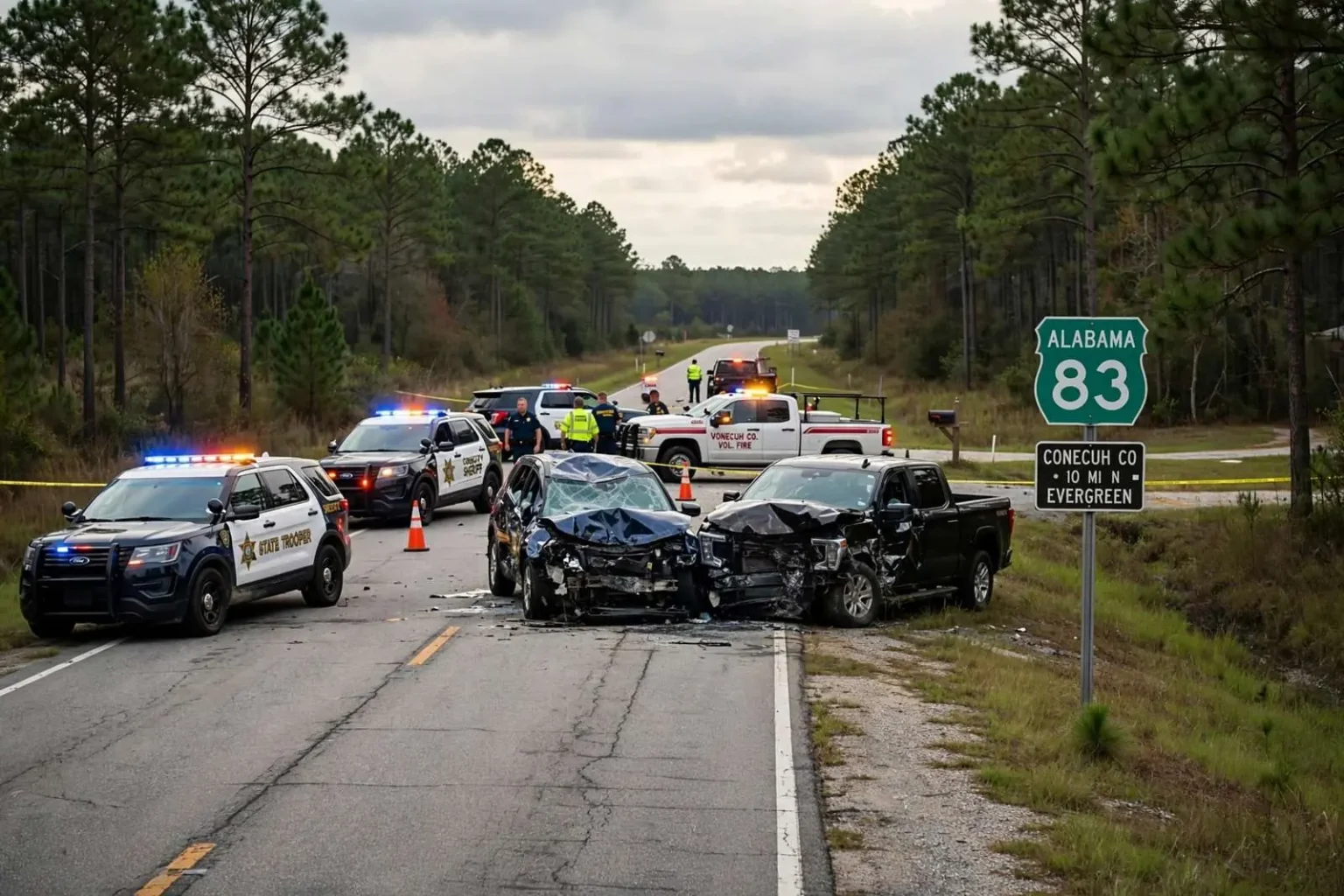
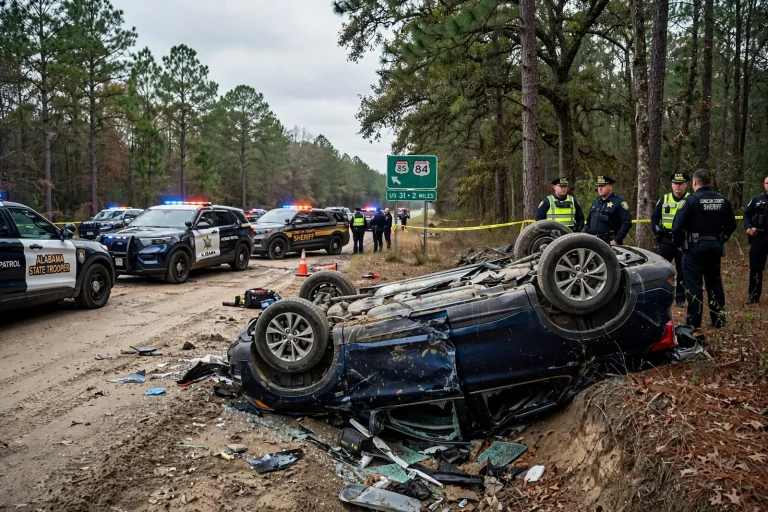
A 65-year-old Evergreen man has died following a two-vehicle crash in Conecuh County on Alabama Highway 83. The Conecuh County Coroner’s Office identified the victim as Bobby McNeil. According to officials, McNeil’s SUV collided head-on with a pickup truck at approximately 2:55 p.m. on July 18, at a point roughly 10 miles north of the Evergreen city limits. McNeil was transported to Evergreen Medical Center, where he was later pronounced dead. The Alabama Law Enforcement Agency and the Conecuh County Coroner’s Office are continuing to investigate the crash, and officials have not released information regarding the condition of the other driver involved.
Head-on collisions on rural two-lane highways are among the deadliest crash types in Alabama, and Highway 83 north of Evergreen is exactly the kind of road where they occur. The route carries a mix of local traffic, farm vehicles, and commuters between small Conecuh County communities, with portions of undivided roadway where a momentary drift over the center line, a failed passing maneuver, or an evasive swerve can put two vehicles together at closing speeds that exceed highway speeds elsewhere. No additional details about the circumstances of the impact have been made public while the investigation remains open, and authorities have not said what may have caused either vehicle to cross into the other’s path.
The response and investigation
When a fatal crash occurs on a rural highway in Conecuh County, the response typically draws on several agencies at once. Sheriff’s deputies and volunteer fire departments from nearby communities secure the scene and manage traffic, ambulance crews provide emergency care and transport, and the coroner takes responsibility for the identification of the deceased and for notifying family members. In this case, those duties fell to the Conecuh County Coroner’s Office, which released McNeil’s name and age after the family notification process, and to Evergreen Medical Center, the community hospital where he was pronounced dead after transport.
The Alabama Law Enforcement Agency, known widely as ALEA, handles crash investigations on state highways through its Highway Patrol Division. Investigators document the roadway, photograph the vehicles, measure skid marks and final resting positions, and interview witnesses in order to reconstruct what happened. That work can take weeks, particularly in cases where a vehicle’s mechanical condition, roadway factors, or possible impairment must be ruled out. ALEA’s findings, once complete, become part of the official record and may be used in any subsequent legal proceedings, though the agency does not always release a detailed public summary of rural crash investigations.
Highway 83 and Conecuh County roads
Alabama Highway 83 runs north from Evergreen through the western part of Conecuh County, connecting small farming communities and eventually continuing toward the Montgomery area. Like many rural Alabama highways, it is a two-lane road for much of its length, with a posted speed limit of 55 miles per hour or higher and limited lighting outside the towns. The stretch about 10 miles north of Evergreen, where the crash occurred, passes through rolling piney woods and past the driveways and side roads of rural homesteads, where entering and turning traffic mixes with vehicles traveling at highway speed.
Evergreen, the county seat of Conecuh County, sits along Interstate 65 and the old Louisville and Nashville rail line, and serves as the commercial and medical center for the surrounding rural county. Evergreen Medical Center, where McNeil was taken, is the local hospital that receives patients from across the county and adjacent areas. For residents of the rural stretches north of town, the hospital is the nearest emergency care, and the time between a serious crash and definitive treatment is a persistent concern that local officials have raised in discussions of rural road safety across south Alabama.
The toll of rural crashes in Alabama
Fatalities like this one fit a long-standing pattern in Alabama traffic data. Rural crashes account for a disproportionate share of the state’s traffic deaths, even though most driving occurs on urban roads, because rural highways combine higher speeds with delayed emergency response and less forgiving roadsides. A collision that might produce minor injuries at city speeds can be fatal when two vehicles meet head-on at a combined speed of more than 100 miles per hour. Safety officials across the state have focused for years on the leading contributors — unrestrained occupants, impairment, speeding, distraction, and driver fatigue — and on the difficulty of reaching crash victims quickly in sparsely populated counties.
Conecuh County, with a population of roughly 11,000 spread over more than 850 square miles, illustrates the challenge. Its residents depend on a network of state highways and county roads to reach Evergreen for work, school, medical care, and shopping, and long drives at highway speed are a daily fact of life. Coroner’s offices in counties like this one handle the aftermath of fatal crashes several times in a typical year, and each one ripples outward through small communities where victims and their families are known personally to neighbors, deputies, and first responders.
What happens in the days after a fatal crash
In the immediate aftermath, investigators work to answer the questions that determine how a case is treated. Toxicology testing may be ordered, vehicle damage is examined for signs of mechanical failure, and the crash scene is mapped to establish each vehicle’s direction and speed. The Coroner’s Office completes its own documentation, and the death certificate records the cause and manner of death. If evidence points to a violation — impaired driving, reckless operation, or a license violation, for example — the case file is forwarded for review and possible charges, which in fatal head-on crashes can range from traffic citations to serious felony counts.
The other driver’s condition was not released in this case, and that silence is routine in active investigations. Authorities generally withhold details about surviving parties until the facts are established, both to protect the integrity of the inquiry and out of fairness to those involved. Family members of the victim, meanwhile, are left to make arrangements while answers remain incomplete, a difficult position that coroners and victim advocates in rural counties work to ease by keeping families informed as the investigation progresses.
Safety reminders for rural highway travel
Law enforcement agencies routinely use crashes like this one to renew familiar safety appeals to rural drivers. Buckling up remains the single most effective step a vehicle occupant can take, since restraint use sharply reduces the risk of death in a head-on impact. Authorities also urge drivers to stay alert on two-lane roads, to pass only where the law and clear sightlines allow, to slow down for curves and driveways, and to avoid driving while impaired or drowsy — factors that repeatedly appear in the investigations of rural head-on collisions across south Alabama.
Drivers sharing the road with farm equipment and slow-moving vehicles on routes like Highway 83 are reminded to give them room and pass with care, and motorists traveling at dusk or after dark are cautioned about deer and other animals that dart onto roadways in the piney woods, causing the sudden swerves that can end in head-on crashes. None of these measures can eliminate risk on a rural highway, but they address the behaviors that investigators most often identify in the crashes that do occur.
The role of the coroner in a rural county
The Conecuh County Coroner’s Office holds a responsibility that few residents think about until it touches their lives. In Alabama, coroners respond to unattended and sudden deaths, confirm identity, document the circumstances, and determine whether further examination is required. In a fatal traffic crash, the coroner works alongside law enforcement from the first moments, and the identification of the deceased — released here as Bobby McNeil, 65, of Evergreen — comes only after next of kin have been located and notified. The office also serves as a point of contact for families navigating the paperwork that follows an unexpected death, from death certificates to insurance and estate matters.
Coroners in Alabama’s small counties often serve part-time and rely on deep familiarity with their communities. That closeness is a source of both compassion and strain, since the person documenting a death may have known the victim, or the victim’s family, for years. The Conecuh County Coroner’s Office continuing to work the Highway 83 case alongside ALEA reflects the standard division of duties: the coroner’s file addresses the death itself, while the law enforcement investigation addresses the crash that caused it.
Community impact and remembrance
In communities the size of Evergreen and the small settlements along Highway 83, a fatal crash is rarely an abstraction. The victim’s church, workplace, and neighbors feel the loss directly, and word of the crash spreads through the community within hours. Local funeral homes, pastors, and extended family networks carry much of the immediate burden, while friends often organize meals, transportation, and support for the family in the weeks that follow. Public expressions of sympathy commonly appear on social media within a day of a crash like this one, from people who knew the victim or simply recognized the stretch of road where it happened.
Roadside memorials — flowers, crosses, and wreaths placed near the site — are a familiar sight along Alabama’s rural highways, and they serve as quiet reminders to passing drivers of the people lost at those spots. Safety advocates note that these memorials, like the crash reports themselves, sometimes prompt short-term caution among drivers, and they encourage the habits that last: buckling up on every trip, putting phones away, and treating every curve and driveway on a two-lane road as a place where something unexpected can happen.
The investigation into the July 18 crash remains open, and authorities have said no additional details will be released while that work continues. Anyone who witnessed the collision or who has information relevant to the investigation can contact the Alabama Law Enforcement Agency or the Conecuh County Sheriff’s Office. For now, the record of the crash stands on the facts officials have confirmed: a 65-year-old Evergreen man, Bobby McNeil, died after the SUV he was driving collided head-on with a pickup truck on Highway 83 about 10 miles north of Evergreen on a July afternoon, and the agencies responsible for answering why are still at work.