Fairhope family shares son’s story to raise suicide prevention awareness
A Fairhope family shares their late son Reece's story to raise suicide prevention awareness as Baldwin County youth self-harm reports have risen.
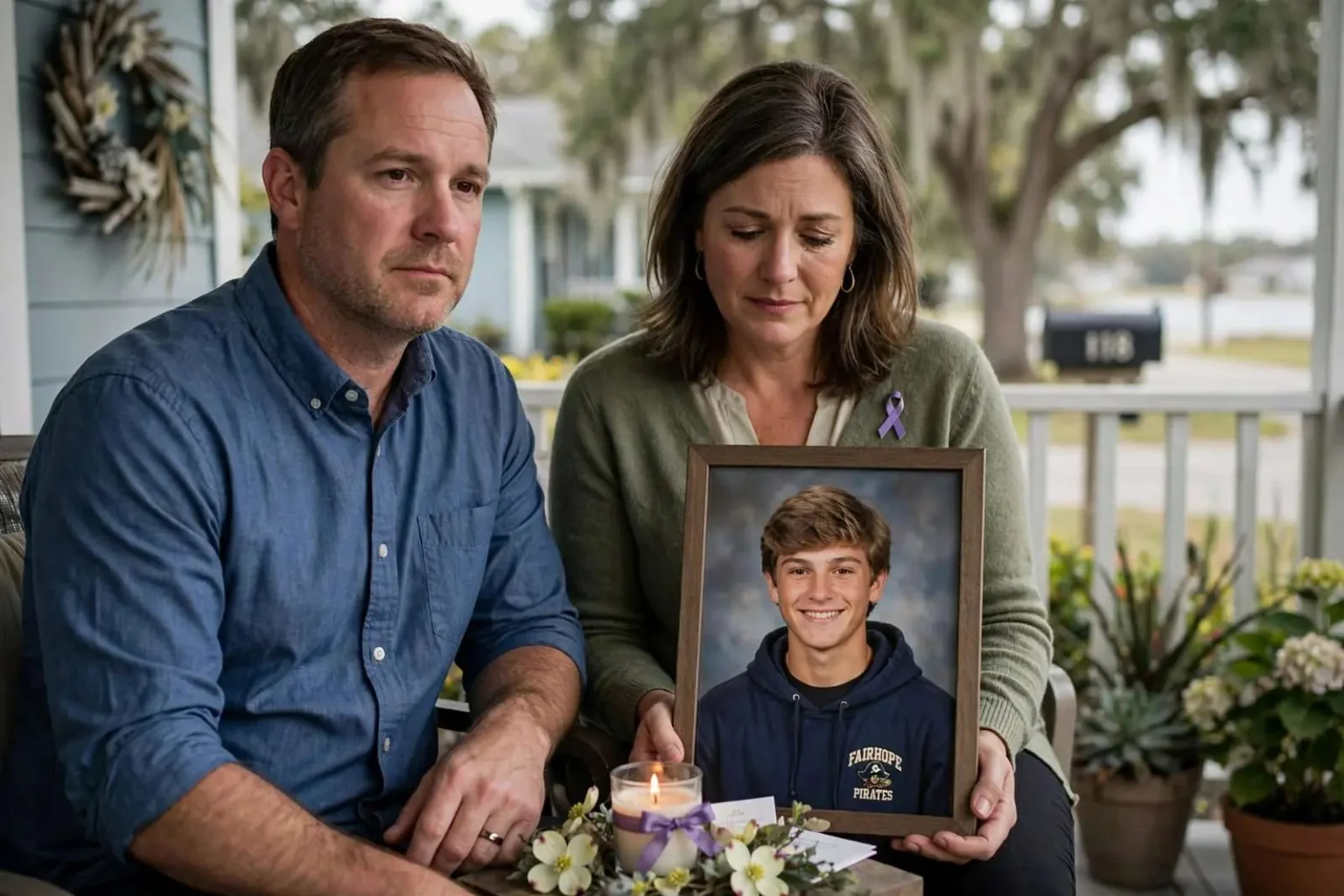
A Fairhope family is speaking openly about the loss of their 17-year-old son in hopes that sharing their story will help other families recognize the warning signs of suicide and reach out for help before it is too late.
Reece Johnson was a student at Fairhope High School, known among friends for his quick smile, sense of style and easygoing personality. To many who knew him, he seemed happy and carefree. His parents, Bryan and Susan Johnson, said few people realized the anxiety and inner struggles he was carrying.
The gap between the teenager people saw and the struggles he hid is the center of the story his family now tells. Adolescents, his parents said, can present a confident face to the world while privately managing worries they never voice, and the people closest to them often have no idea until the damage is done.
The Johnsons agreed to tell their story publicly as Baldwin County grapples with a troubling rise in youth suicide and self-harm. According to the Jennifer Claire Moore Foundation, the Baldwin County Board of Education received 416 intervention forms during the 2017-2018 school year from students exhibiting unhealthy coping behaviors, suicide ideation or suicide attempts. Reece was one of two completed suicides in the county that school year, and there were many more attempts.
Intervention forms are the school system’s formal channel for flagging students who show warning signs, filed by teachers, counselors and classmates and routed to staff trained to respond. Behind that single-year number are hundreds of individual moments when someone noticed something and acted, which is exactly the outcome the Johnsons hope their story encourages more often.
A Loss Beyond Understanding
His father described the grief of a loss that still feels impossible to accept. “I won’t stand here and apologize for the choice that he made that brought us so much pain,” Bryan Johnson told a packed church gathered to celebrate his son’s life. “All I can say is I don’t understand it.”
Friends remembered a teenager who could lift others out of dark places, even as he privately struggled. “He was always going. He was always doing something,” his father said. Classmates said Reece could slip into a place they didn’t understand, but no one believed he would act on it.
Fairhope, a city of roughly 20,000 on the eastern shore of Mobile Bay, is by most measures an unlikely setting for such a story: a prosperous bayside community with a walkable downtown, well-regarded schools and one of the highest quality-of-life reputations on the Alabama Gulf Coast. The Johnsons’ willingness to speak from that setting is part of the message, since the assumption that youth struggles belong somewhere else, or to some other kind of family, is exactly what prevention advocates work to overcome.
That combination, a visible warmth and an invisible struggle, is what mental health professionals describe when they talk about suicide risk among young people. The teenagers most at risk are not always the ones who look troubled; anxiety and depression can sit underneath academic success, social popularity and an active schedule, surfacing only in comments and behaviors that adults may dismiss as typical teenage moodiness.
The Johnsons want one message to reach every parent and every teenager: take talk of suicide seriously. “If someone actually says I’m going to kill myself, take them seriously, because you don’t get a second chance sometimes,” Bryan Johnson said.
His mother urged families to validate a struggling child’s feelings and seek immediate help. “I may not understand, but I believe what you’re saying,” she said. The advice is aimed at the reflex many adults have to minimize what a teenager reports, reassuring rather than listening, in the hope that the moment will pass on its own.
Both messages track what prevention organizations teach: a direct statement of suicidal intent is rarely a bid for attention, and the safest response is to treat it as a crisis, stay with the person and connect them with professional help. Parents who respond with belief rather than alarm, advocates say, make it far more likely a struggling teenager will keep talking.
Where to Turn for Help
Local and national resources are available for anyone struggling with thoughts of suicide or concerned about a loved one. The National Suicide Prevention Lifeline offers free, confidential support around the clock. In Baldwin County, Lifeline Counseling Services provides 24/7 counseling at 1-800-273-TALK (8255), and Alta Pointe Health Systems offers Mental Health First Aid training.
The Jennifer Claire Moore Foundation connects families with local hotlines and prevention programs, and the American Foundation for Suicide Prevention organizes an Out of the Darkness Suicide Prevention Walk in Daphne each year. If you or someone you know is in immediate danger, call 911.
Mental Health First Aid training, which Alta Pointe Health Systems offers locally, follows the same logic from the adult side. The courses teach teachers, coaches, clergy and parents to spot the signs of a developing mental health problem, offer initial support and guide a young person toward professional care, the same sequence of recognition and response the Johnsons’ story illustrates in the most painful way possible.
The point the family returns to most often is the simplest one. There is no script required to save a life, only the willingness to hear a hard sentence all the way through and refuse to look away.
The Foundation Carrying the Message in Baldwin County
The Jennifer Claire Moore Foundation, named for a Fairhope teenager lost to suicide in 1997, has spent years building prevention infrastructure across Baldwin County, from school-based peer helper programs to community training and awareness events. Its work with the county’s schools is the reason numbers like the 416 intervention forms exist at all: the foundation’s programs train students and staff to recognize warning signs and route struggling classmates toward help before a crisis.
Those peer programs matter because of who teenagers confide in. Prevention research consistently shows that young people in distress first tell a friend rather than an adult, which makes trained student peer helpers an early-warning system no counselor’s office can replicate. Baldwin County’s schools have adopted that model widely, and the intervention data collected through the school system reflects how often it activates.
The rise in youth suicide and self-harm that pushed the Johnsons to speak out is not unique to Baldwin County. Communities across Alabama and the nation have recorded increases in adolescent anxiety, depression and self-harm in recent years, and public health officials have urged schools, families and health systems to treat youth mental health with the urgency of any other public health threat.
Out of that concern, events like the Out of the Darkness walk in Daphne have grown into visible community gatherings, drawing hundreds of survivors, families and supporters who raise funds for prevention programs while making it easier for grieving families to speak. Public remembrance, advocates say, is one of the few reliable antidotes to the silence that surrounds suicide.
For the Johnsons, speaking publicly is the same choice on a smaller stage. They cannot bring Reece back, and they are the first to say they do not fully understand what happened. What they can do is make sure another Fairhope parent hears the message in time: take the words seriously, believe the child who says them, and reach for help immediately. The 416 intervention forms filed in a single school year suggest that in Baldwin County, the chance to act arrives far more often than anyone realizes.
Schools, meanwhile, have become the front line. Counselors across Baldwin County handle the intake work behind those hundreds of intervention forms, and district administrators have paired the paper process with training that helps teachers distinguish ordinary teenage turmoil from the signals that warrant immediate escalation. Every form filed represents a conversation that might not otherwise have happened, and prevention leaders cite the volume of forms as evidence that awareness campaigns are reaching the people who spend their days with teenagers.
What prevention advocates ask of the wider community is simpler and harder: normalize the conversation. Teenagers take their cues from adults, and a family, church or locker room where mental health can be discussed without shame makes it far more likely that a struggling student will say something before a crisis. The Johnsons’ story, told from a packed church in Fairhope to a countywide audience, is offered in exactly that spirit.
The reminder matters for a county that has grown rapidly for decades. New subdivisions along the Eastern Shore and the Highway 181 corridor keep Fairhope’s schools among the system’s largest, and growth of that pace strains the counseling resources every school relies on. Prevention programs like the foundation’s exist to stretch those resources by putting thousands of trained eyes, student and adult alike, throughout the buildings where teenagers actually spend their days.