Fairhope Lifts Hurricane Sally Curfew as Debris Cleanup Continues
Fairhope police lifted the Hurricane Sally curfew, but storm debris still lines city roads. Residents should use caution while cleanup continues.
FAIRHOPE, Ala. — The curfew that Fairhope put in place as Hurricane Sally swept through the Gulf Coast has been lifted, city police announced. In a statement released Sept. 25, 2020, the Fairhope Police Department said the emergency curfew enacted because of the storm was no longer in effect.
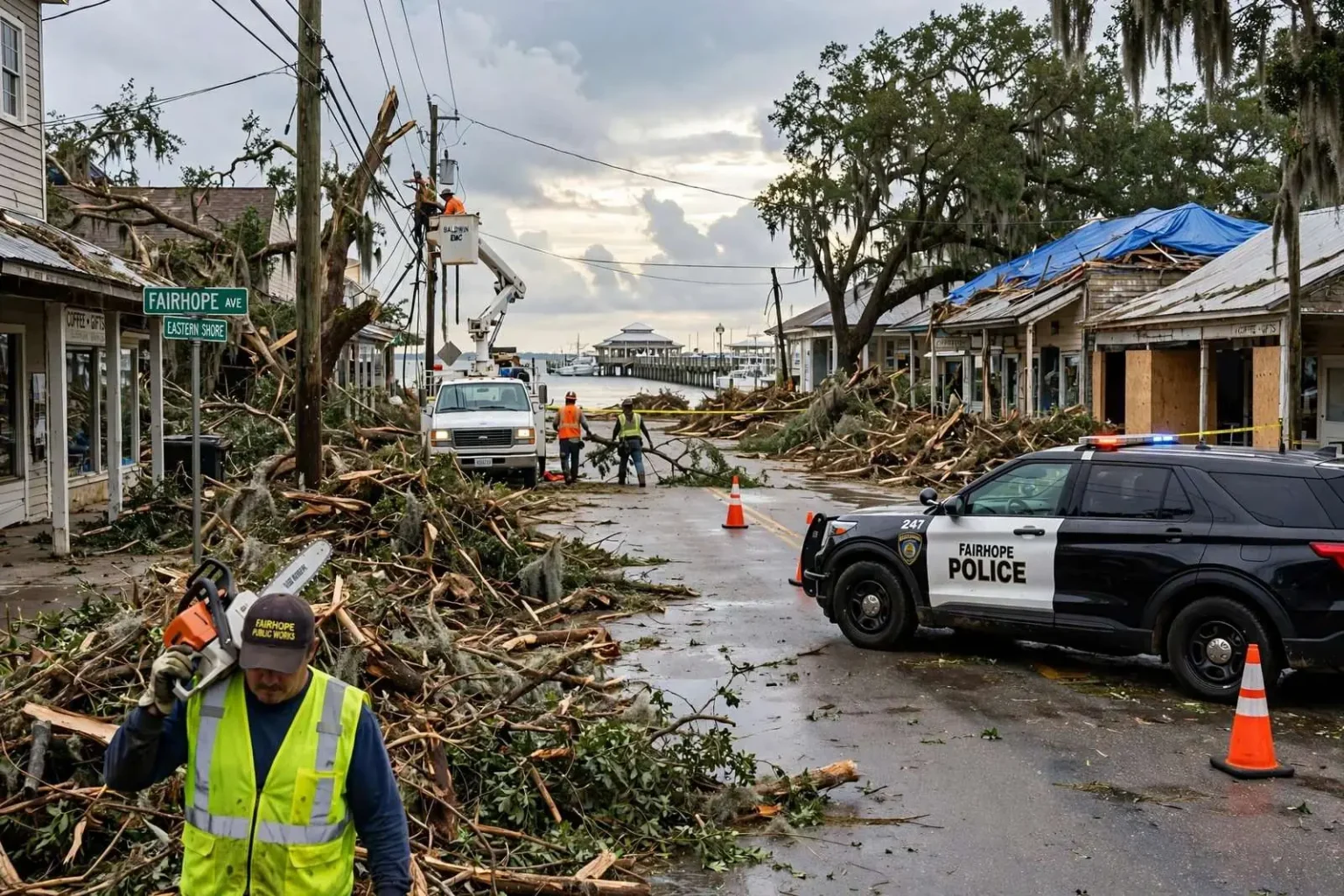
Officers urged residents to stay alert, noting that piles of storm debris still line many roadways and that driving at night requires extra caution. “There is still a lot of debris on the sides of the roads so please be cautious when travelling at night,” the department said.
The lifting of the curfew marks another step in Fairhope’s recovery from Sally, which battered coastal Alabama with high winds and flooding. City and county crews, along with utility workers, have been clearing downed trees, debris and damaged infrastructure in the weeks since the storm.
Curfews are among the most common emergency measures Gulf Coast cities adopt when a hurricane approaches, and Fairhope’s was typical of the tool: after nightfall, only essential travel was permitted, keeping residents off streets cluttered with debris and out of the way of repair crews working in the dark. Lifting one is a deliberate decision, made only when police and city administrators judge that the danger of nighttime movement has fallen below the burden the restriction places on residents.
A Storm That Refused to Hurry
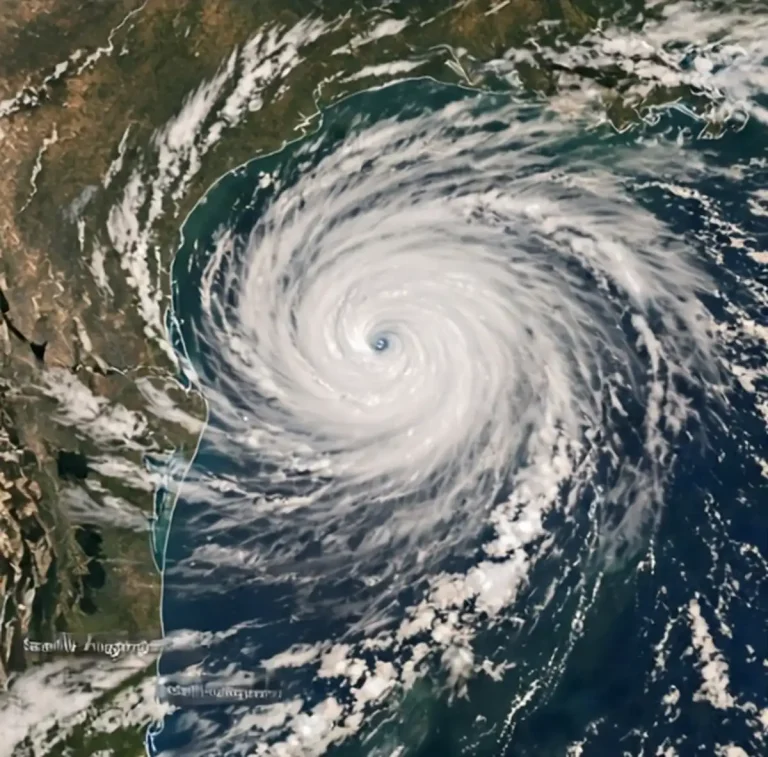
Hurricane Sally earned its reputation along the Gulf Coast for one reason above all: slowness. The storm crawled toward the northern Gulf Coast in mid-September 2020, and its sluggish pace meant that wind and rain pounded the same communities for hours longer than residents of faster-moving hurricanes typically endure. Coastal Alabama took a direct hit, with Sally making landfall near Gulf Shores as a Category 2 storm and driving sustained winds, torrential rain and a significant storm surge into Baldwin and Mobile counties.
The flooding was extraordinary even by hurricane standards, with some of the worst inundation concentrated just across the state line in the Pensacola area, where rains measured in feet fell within a day. On the Alabama side, the damage profile was dominated by wind and water working together: trees snapped and toppled into homes and power lines, roads flooded, and neighborhoods along Mobile Bay and its tributaries saw water pushed deep inland.
For Fairhope, a city of roughly 22,000 perched on the bluffs of the Eastern Shore, Sally’s arrival meant days without power for many residents, blocked streets and a cautious shutdown of normal civic life. Schools closed, businesses boarded up, and the city’s famous pier and parks absorbed the storm’s surge along with the rest of the bayfront.
The First Days After Landfall
In the immediate aftermath, the priority list was familiar to anyone who has lived through a Gulf Coast hurricane: search for injuries, clear the arterial roads, restore power and account for residents cut off by fallen trees and floodwater. Utilities brought in crews from across the region to rebuild the electrical grid, a task made harder in Baldwin County by the sheer volume of vegetation down across lines and roads.
The curfew fit into that recovery framework. With traffic signals dark at intersections across the city, debris creating hidden hazards on every block, and repair crews working long shifts, limiting nighttime movement reduced risk for residents and kept roads clear for line trucks and debris haulers. Similar curfews remained in place in other coastal communities in the days after the storm, each lifted on its own timeline as conditions improved.
Debris: The Long Tail of a Hurricane
The police department’s caution about nighttime driving reflects the reality that debris removal is the slowest phase of hurricane recovery. Vegetative debris alone in a storm like Sally is measured in hundreds of thousands of cubic yards across a county, and the process of collecting it — emergency road clearance first, then curbside pickup by contracted haulers, then grinding and disposal — stretches over months, not weeks.
For drivers, the danger in that period is uneven. Piles that look stable at midday hide branches, metal fragments and unmarked drop-offs after dark, and streetlights knocked out by the storm leave stretches of road nearly unlit. Police urging caution when travelling at night was practical advice grounded in the wreckage still lining both sides of Fairhope’s roadways when the curfew came off.
City and county crews have been working through the backlog in the weeks since landfall, joined by utility workers finishing grid repairs and contractors brought in under FEMA-supported debris programs. Storm debris management is federally reimbursable when documented properly, which is why municipalities ask residents to keep vegetative debris separate from construction material and to stack it clear of fire hydrants, storm drains and mailboxes.
What the Curfew’s End Means
The end of a curfew is both a practical milestone and a psychological one. Practically, it restores normal evening life — late shifts, youth sports, restaurant dinners, church activities — and signals to businesses that operating hours can return to normal. Psychologically, it is an official statement that the emergency phase has passed, even as recovery work continues on every street.
Fairhope’s recovery timeline will remain long after the curfew’s end. Roofing contractors, tree services and building trades across Baldwin County have been flooded with requests since landfall, and residents navigating insurance claims face the familiar post-hurricane challenge of adjusting damage assessments against policy limits. City offices have been coordinating with Baldwin County Emergency Management Agency, which serves as the clearinghouse for damage reporting that feeds state and federal disaster declarations.
Sally’s path through 2020’s hyperactive hurricane season — a season that ran through the Greek alphabet after exhausting the traditional name list — added another layer of stress for Gulf Coast residents already navigating a pandemic year. Shelters operated under COVID-19 distancing rules, and many residents who might otherwise have ridden out the storm with relatives chose hotels instead, complicating the typical recovery patterns.
Lessons From the Eastern Shore
Every coastal storm teaches the region something about its vulnerabilities. Sally’s slow crawl highlighted the flooding risk posed by rain-dominant hurricanes, which can dump catastrophic totals even when wind ratings look moderate on the Saffir-Simpson scale. The storm’s impact on Baldwin County — one of Alabama’s fastest-growing counties, with a population that has swelled along the I-10 corridor and the shore — underscored how much more property sits in harm’s way with each passing decade.
For Fairhope specifically, the bayfront geography that defines the city’s charm also defines its exposure. The pier, the bluff, the downtown’s proximity to the water — these are the places residents and visitors treasure, and the same features that make postcard views concentrate storm damage when surge and wind arrive together.
How Baldwin County Recovers
Baldwin County’s emergency management structure handled Sally the way it has handled previous strikes: county-level coordination of municipal requests, a unified damage assessment effort feeding the state, and distribution points for food, water and ice in the hardest-hit areas. The county’s growth has professionalized this apparatus considerably since Hurricanes Ivan in 2004 and Katrina in 2005, with better communication systems, pre-negotiated debris contracts and more detailed response plans than earlier generations of Gulf Coast storms could rely on.
Municipalities like Fairhope play their own role within that structure. City police handled enforcement of the curfew and traffic hazards inside city limits; public works departments cleared priority routes; and city administrators served as the communication channel between residents and the county’s emergency operations. The Sept. 25 statement from the Fairhope Police Department was part of that communication flow — a short, plain-language notice that reached residents through social media and local news at a moment when accurate information was the most valuable public service available.
The recovery economy is now the dominant local story in the storm’s wake. Hardware stores, roofers, landscapers and tree services across the Eastern Shore have months of work ahead, and the demand for licensed contractors comes with the perennial warning about storm-chasers — out-of-town operators who follow hurricanes and sometimes deliver shoddy work or vanish with deposits. Baldwin County officials traditionally urge residents to verify licenses and insurance before signing repair contracts, a caution that applies with particular force after a storm that damaged so many roofs in so many neighborhoods.
Back to Normal, Piece by Piece
Life in Fairhope is returning to its rhythms. Schools have reopened as buildings regained power and roads cleared, businesses have pulled plywood from storefronts, and the cafes and shops along Fairhope Avenue are serving customers again under lights that flickered back on over the course of the weeks since landfall. The curfew’s end simply removes the last formal restriction on that return.
Still, the police department’s closing caution remains the operative advice for the weeks ahead. Downed trees and debris piles on the roadsides will be a feature of Baldwin County landscapes into the fall and beyond, and nighttime driving on unlit, debris-lined streets demands the same care during recovery that a curfew was meant to enforce. The formal restriction is gone; the good sense it was meant to guarantee stays in effect.
For a city that has weathered hurricanes across its long history on the Eastern Shore, the end of Sally’s curfew is a familiar milestone — one more line crossed on the way back from a storm. The debris will take months to clear, the roofs months more to mend, and the memory of Sally will join Ivan and Frederic in the region’s long catalogue of survived storms. But as of Sept. 25, the streets of Fairhope are open around the clock again, and the city is moving on.