Fairhope Sewer Rehabilitation to Line 185 Manholes, 4,750 Feet of Clay Pipe West of Greeno Road
Fairhope Public Utilities is lining about 185 manholes and 4,750 feet of aging clay sewer pipe west of Greeno Road to seal cracks, resist corrosion and keep groundwater and stormwater out of the system.
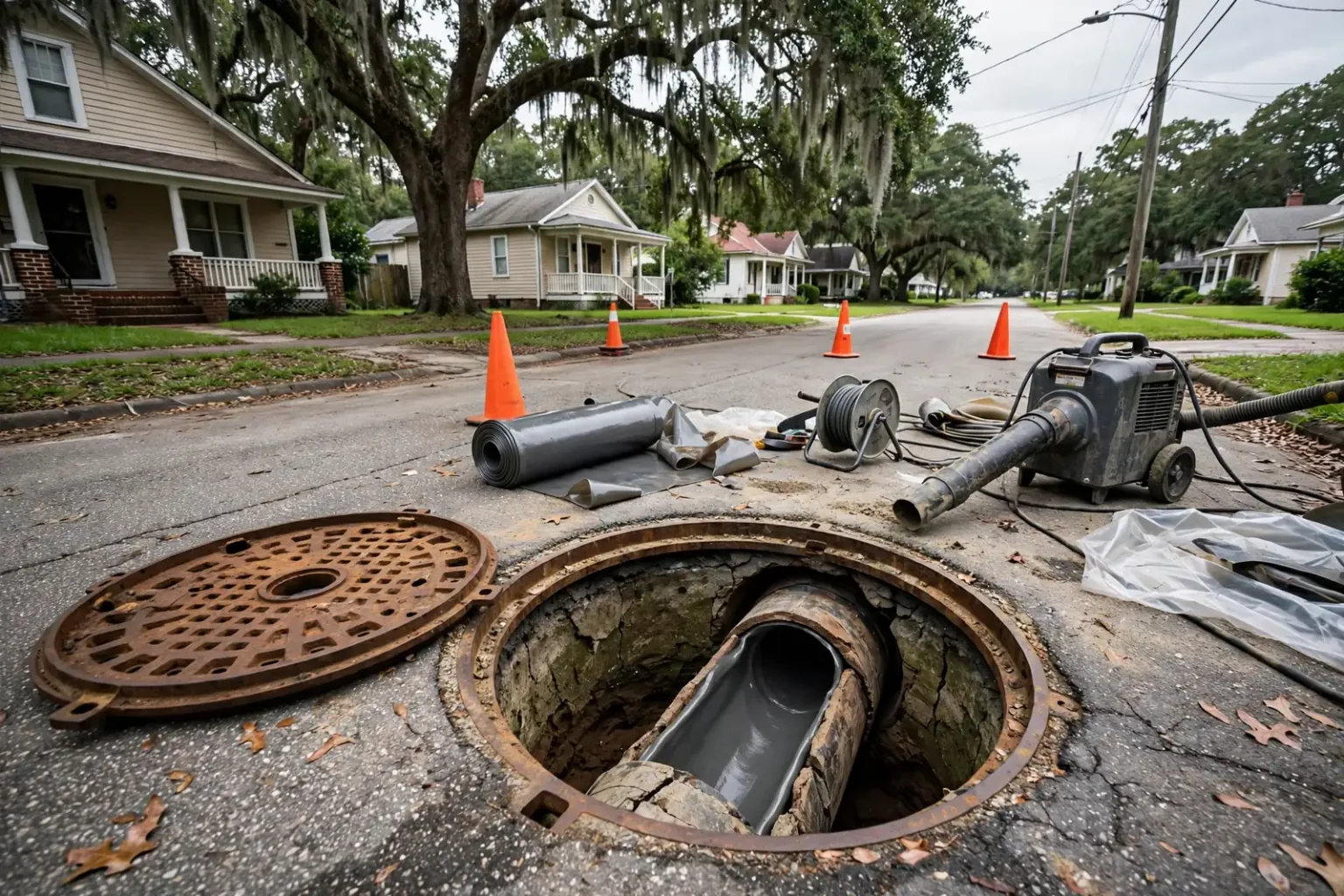
FAIRHOPE, Ala. — Fairhope Public Utilities is rehabilitating about 185 manholes and roughly 4,750 linear feet of aging clay sewer pipe in several areas west of Greeno Road, a Fairhope sewer rehabilitation project meant to shore up existing wastewater lines and make them last longer without digging them up and replacing them.
Instead of excavating and installing new pipe, contractors will coat the inside walls of the manholes and pipes with a specialized protective lining. The utility says the lining strengthens the structures, seals cracks and guards against corrosion.
The work is part of what the utility describes as its ongoing investment in maintaining and strengthening the wastewater system that serves the city. More manhole rehabilitation projects are planned in other parts of the system in the coming years.
The project at a glance
- Who: Fairhope Public Utilities, the city-owned utility system.
- What: Rehabilitation of approximately 185 manholes and 4,750 linear feet of clay sewer pipe.
- Where: Several areas west of Greeno Road.
- How: A protective lining applied to the interior of existing manholes and pipes, rather than full replacement.
- Why: To improve the condition of aging infrastructure, extend its life and reduce the amount of groundwater and stormwater entering the sewer system.
- What’s next: Additional manhole rehabilitation projects in other parts of the system in coming years.
For a sense of scale, 4,750 feet is a little less than nine-tenths of a mile of pipe.
Where the work is happening
Greeno Road is the local name for U.S. Highway 98 as it runs north and south through Fairhope, carrying traffic between Daphne and the southern part of the city. Neighborhoods west of Greeno Road include much of the city’s older core, closer to Mobile Bay and downtown. The utility did not list specific streets in its announcement.
Why clay pipe and manholes wear out
Clay pipe, often called vitrified clay pipe, was a standard material for sanitary sewers for generations because it resists chemical attack from wastewater. But clay pipe is laid in short segments, and over decades the joints between those segments can shift, crack or separate. Tree roots can push into those openings, and the ground around the pipe can settle.
Manholes face their own problems. They are typically built of brick, block or concrete, and the gases produced by wastewater, particularly hydrogen sulfide, can form acids that slowly eat away at concrete and mortar. Over time, that corrosion weakens the structure and opens paths for water to leak in.
What inflow and infiltration mean
The utility said the lining will also reduce the potential for groundwater and stormwater to enter the wastewater collection system. Utility engineers refer to this problem as inflow and infiltration, often shortened to I&I.
- Infiltration is groundwater that seeps into sewer pipes and manholes through cracks, broken joints and deteriorated walls. In coastal areas with a high water table, that can happen even when it is not raining.
- Inflow is stormwater that enters the system more directly during rain, through openings such as damaged manhole lids and frames or improper connections.
Sanitary sewers are designed to carry wastewater from homes and businesses, not rainwater. When extra water gets in, it takes up capacity in the pipes and lift stations and must be pumped and treated at the wastewater treatment plant along with sewage. That adds to energy and treatment costs and, as the utility noted, places additional strain on treatment facilities. During heavy rain, excess water in the system can also contribute to sewer overflows.
How lining works
Rehabilitating pipes and manholes from the inside is a form of what the industry calls trenchless technology. Rather than digging a trench along the length of a sewer line, crews work through existing manholes and access points. Depending on the product, a liner or coating is applied to the interior surface and then cures in place, creating a new protective layer inside the old structure.
Utilities across the country use lining methods because they can extend the service life of existing pipes and manholes, seal leaks and resist corrosion, often with less disruption than excavation. With fewer trenches, there is generally less impact on streets, driveways, yards and traffic. Fairhope Public Utilities has not announced a timeline or specific traffic effects for this project.
About Fairhope Public Utilities
The City of Fairhope owns and operates its own electric, natural gas, water and sewer utilities. According to the city, Fairhope was one of the first towns in the region to provide public water, began offering electricity in the 1940s and natural gas in 1950. The utilities serve more than 20,000 customers in Fairhope and in an area stretching from Bay Minette to Fish River.
The city’s water and sewer operation is a large one. The city says its water department has nearly 17,372 connections, serves an estimated 40,000 people and is the largest water supplier in Baldwin County. It draws water from 10 wells tapping an underground aquifer, pumps an average of 4.6 million gallons a day and stores 6.6 million gallons in five water towers. On the wastewater side, the department maintains 65 lift stations and one wastewater treatment facility.
Related work on Fairhope’s systems
The sewer rehabilitation project comes as Fairhope has been investing in other parts of its utility systems and in tools for tracking water quality problems.
As South AL News reported this week, the Mobile Bay National Estuary Program’s sewage detection dog, Dilla, has been used in Fairhope’s wastewater investigations. The program reports that canine detection saved the city about $166,000 and roughly three years of investigative work. In an earlier test in Fly Creek, the dogs did not alert on creek water where laboratory analysis later confirmed that elevated bacteria were not related to human waste.
On the water side, South AL News reported in late September that a Fairhope Fish River water main loop project received $2 million in hurricane recovery funds.
What residents should know
- The project rehabilitates existing sewer lines and manholes in place rather than replacing them.
- Work is concentrated in several areas west of Greeno Road.
- Residents with questions about utility work, service or billing can contact the city through the Fairhope 311 system.
- Fairhope Public Utilities plans more manhole rehabilitation projects in other areas in coming years.