Mobile County 911 Operator Made Wrong Call Before Carolina Court Killings, District Says
The Mobile County Communications District says the operator who took Christy DeLoach's call hours before she and her mother were killed should have transferred it to responders. The operator faces discipline and retraining.
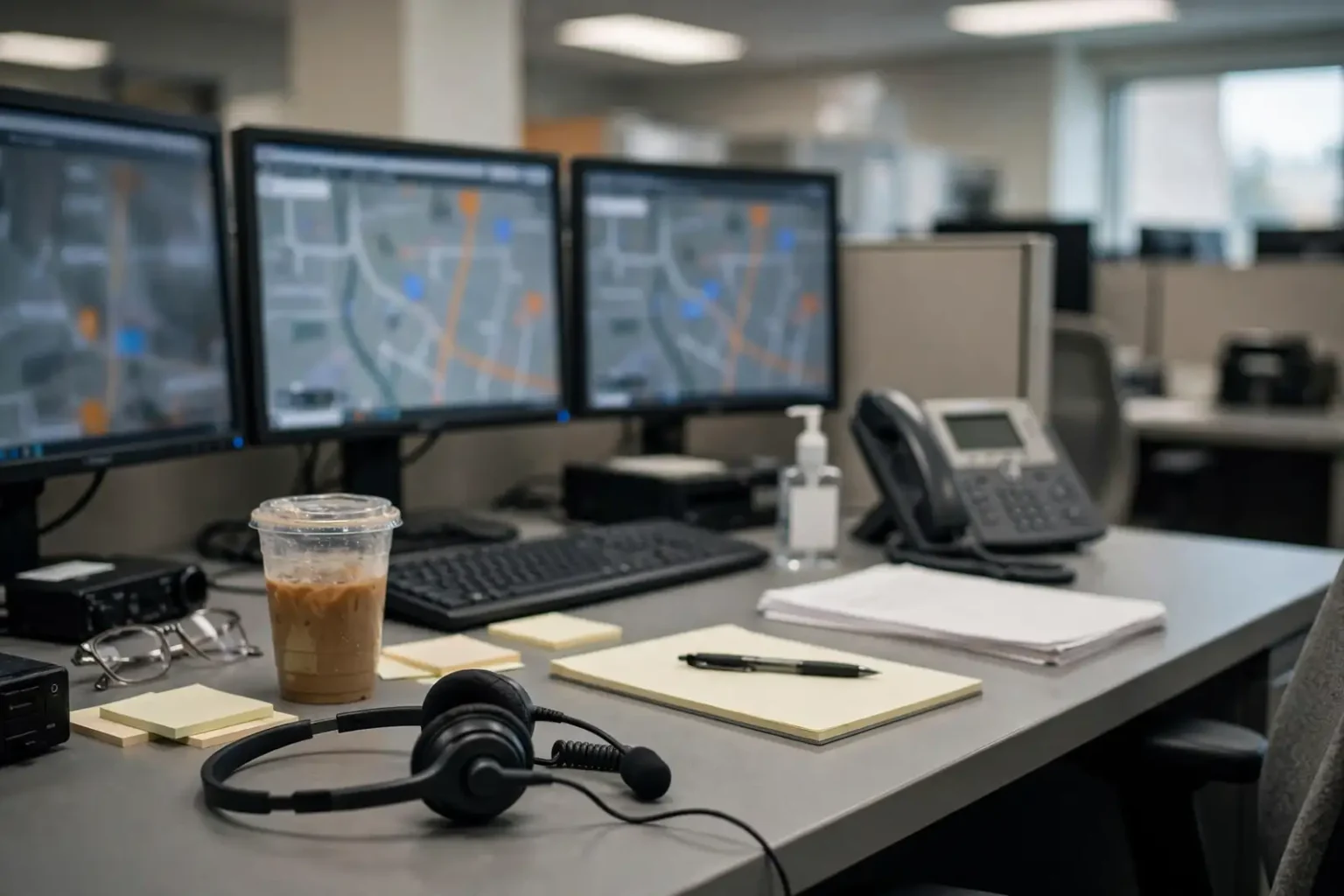
MOBILE, Ala. — The Mobile County 911 operator who took a call from Christy DeLoach on the morning she and her mother were killed should have passed that call to a responding agency instead of simply giving her a phone number, the Mobile County Communications District said this week. The district’s director said an internal review found the operator “did not make the correct judgment call” and that the employee will face discipline and additional training.
The finding is the first time the agency that answers emergency calls for most of Mobile County has publicly assessed how its staff handled the call, which came from the Carolina Court home roughly two and a half hours before police were sent there for a death investigation on Oct. 12.
Thomas Steele, 47, is charged with two counts of capital murder in the deaths of his grandmother, Dora Boone, 85, and his aunt, DeLoach, 65. Investigators allege he used a chainsaw to kill both women inside the home in the Chapel Hill subdivision of west Mobile. Steele has not been convicted and is presumed innocent.
What the review found
Asked by reporters to explain the district’s protocol for deciding when a call should be transferred to police, fire or medical responders, MCCD Director Robert Jackson released a written statement. In it, he said the district had reviewed and investigated the handling of the call and concluded the operator chose the wrong option.
“In the case of this call after review and investigation of the situation it was determined that the operator did not make the correct judgment call. This call falls into the levels of direct live transfer of caller, CAD screen transfer, and or call notification to agency not the level of provide information to caller.”
Jackson acknowledged the pressure that call-takers work under. “The job of a 911 operator is a difficult based on the constant need to make snap judgments and in this case, it was the wrong one,” the statement said. “The operator in question faces disciplinary action as well as additional training on how this and other calls are to be handled.”
The district did not name the operator or say what form the discipline will take. It also did not say whether its review found any broader problem with training or procedures, or whether other calls are being re-examined.
What the caller told 911
A transcript of the call shows it began shortly after 11 a.m. on Monday, Oct. 12. The caller, later identified by the dispatch office as DeLoach, said she was not sure whom she should be calling. She told the operator that her nephew had stopped taking his lithium, had given away his phone and his car, and was behaving in ways she described as bizarre. She said he had told her he planned to devote himself to God and stop using electronics, and she described him as bipolar.
When the operator asked whether she needed medical help, DeLoach said the problem was in his mind. Asked what she meant and whether he was being harmful, she said she was only trying to figure out what to do, that she had already called the 988 crisis line and tried to talk with him, and that he was calm and not violent. She said she supposed she would let the situation run its course.
The operator then gave her the phone number for the Mobile Police Department, and the call ended.
Earlier South AL News reporting, based on a longer portion of the same transcript, noted that DeLoach also told the operator her nephew was not suicidal, that he had canceled his benefits and that she feared he would end up living on the street. It remains unknown whether she ever called the police number she was given.
Understanding the options a 911 operator has
Jackson’s statement refers to several tiers of response that are common in 911 centers. In plain terms, they work like this:
- Direct live transfer: The call-taker connects the caller, while still on the line, directly to the agency that would respond, such as the police department. The caller can then explain the situation to that agency in real time.
- CAD screen transfer: CAD stands for computer-aided dispatch, the software emergency centers use to log calls and send units. A screen transfer moves the call information electronically to the responding agency’s dispatchers so they can decide whether to send someone.
- Call notification to agency: The 911 center alerts the responding agency about the call so that agency is aware of the situation and can follow up.
- Providing information to the caller: The call-taker gives the caller a number or other information and the caller decides what to do next. This is the option the operator chose on Oct. 12.
The district’s conclusion, in short, is that the call should have been put in front of a responding agency in one of the first three ways, rather than leaving the next step to the caller.
The district has not said whether any of those steps would have led to officers going to the home before the killings, and it is not possible to know. Authorities have not laid out a complete timeline of what happened inside the house after the call ended.
A timeline of the case
- Shortly after 11 a.m., Oct. 12: DeLoach calls 911 from the Carolina Court home seeking advice about her nephew.
- About 1:25 p.m.: The approximate time of the killings given in the criminal complaint, as previously reported. The communications district and police have said it is still unclear how long after the call the women died.
- About 1:36 p.m.: Mobile police are dispatched to the 2400 block of Carolina Court for a death investigation. Officers find both women dead and take Steele into custody.
- Oct. 13: Charges are upgraded to two counts of capital murder. At his first court appearance, Steele is removed from the courtroom after saying “Kill him” as an appointed lawyer stands beside him. The judge denies bond and orders a competency evaluation.
- Oct. 14: Police publicly identify the victims.
- Oct. 16: Presiding Circuit Judge Wesley Pipes orders Steele committed on an emergency basis to the Alabama Department of Mental Health for stabilization, treatment and an in-patient competency evaluation.
- Oct. 23: The communications district says the operator made the wrong call.
- Nov. 19: Steele’s scheduled arraignment, according to court records.
Where the criminal case stands
Steele has been taken to the Alabama Department of Mental Health for an emergency evaluation. Court documents show he remains scheduled for arraignment on Nov. 19, although the competency process could affect that date. In Alabama, a criminal case generally cannot proceed while a judge has unresolved questions about whether a defendant understands the proceedings and can help in his own defense.
Mobile County District Attorney Keith Blackwood has said an evaluation could take anywhere from 30 to 90 days and that his office is prepared to prosecute the case however it unfolds. Capital murder is the most serious charge in Alabama’s criminal code, and a conviction carries a sentence of life in prison without parole or death. Prosecutors have not said which penalty they would pursue.
About the Mobile County Communications District
The Mobile County Communications District, often called MCCD or Mobile County 911, provides around-the-clock 911 call-taking and dispatch for Mobile County. It serves more than 412,000 residents across roughly 1,230 square miles and coordinates responses with a range of partner agencies, including police departments, fire departments and emergency medical services.
Earlier this year, the district became the first 911 service in Alabama to earn accreditation from CALEA, the Commission on Accreditation for Law Enforcement Agencies, a national credentialing body for public safety agencies. The accreditation was recognized at a Mobile County Commission meeting in February. CALEA standards for communications centers cover areas such as call handling, operations and organizational accountability.
Alabama has 85 emergency communications districts, one for each of its 67 counties plus 18 municipal districts. State law allows a county or city to create a district by ordinance or resolution, and each district operates as its own political subdivision of the state.
How 911 and 988 fit together
DeLoach told the operator she had already called 988 before dialing 911. The 988 Suicide & Crisis Lifeline, which became the nationwide three-digit number for mental health crises in July 2022, connects callers with trained crisis counselors. It is meant for people who are struggling emotionally and for family members or friends worried about someone, and it can link callers with local crisis services.
911 remains the number to call when someone may be in immediate danger, when a person may harm themselves or others, or when police, fire or medical responders may be needed. Families dealing with a loved one’s mental health crisis sometimes find themselves unsure which line to use, as the transcript suggests DeLoach was. Crisis specialists generally advise callers to describe the situation as fully as they can, including any changes in behavior, stopped medications and whether weapons are in the home, and to call 911 without hesitation if they believe anyone could be in danger.
Mental health advocates also stress that people living with mental illness are far more likely to be victims of violence than to commit it.
Remembering Dora Boone and Christy DeLoach
Deed records show Boone and her late husband, Phillip, bought the Carolina Court house in 2014, and DeLoach lived there with them. Neighbors said DeLoach cared for her mother after her father’s death, loved gardening and was a familiar face at neighborhood events.
For nearly two decades, DeLoach worked as a hairstylist at a salon on McGregor Avenue, where co-workers remembered her as a woman of faith who rarely missed a day and lifted the spirits of everyone around her. Her station at the salon has been left as she kept it, with room for flowers.
What to know
- The Mobile County Communications District says its operator should have transferred or relayed DeLoach’s Oct. 12 call to a responding agency rather than giving her a phone number.
- The operator, who has not been named, faces disciplinary action and additional training.
- It is not known whether DeLoach later contacted police or exactly how long after the call the killings occurred.
- Thomas Steele, 47, is charged with two counts of capital murder and is undergoing an in-patient mental health evaluation. His arraignment is set for Nov. 19.
Anyone with information about the case can contact the Mobile Police Department at 251-208-7211 or text an anonymous tip to 844-251-0644.
Anyone worried about a loved one in a mental health crisis can call or text 988 to reach the 988 Suicide & Crisis Lifeline, available 24 hours a day. If someone is in immediate danger, call 911.