Gulf Shores Scams: Fake Planning Invoices, Police Calendar Calls and Crypto Cash Demands
Gulf Shores police and city officials warn of fake Planning Commission invoices, phony police calendar sponsorship calls and demands to deposit cash in crypto kiosks. One resident lost $4,000.
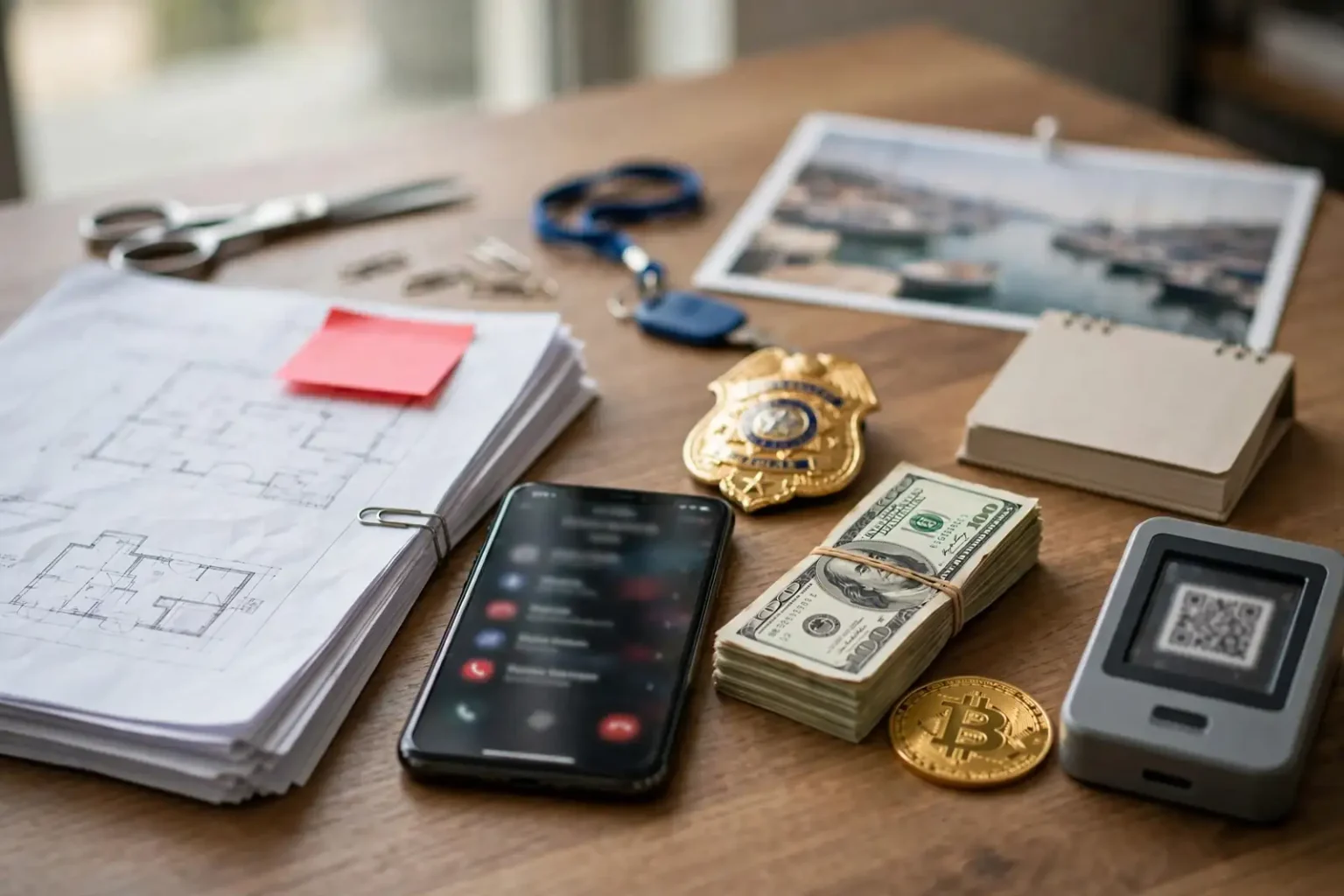
GULF SHORES, Ala. — The Gulf Shores Police Department and the City of Gulf Shores are warning residents and business owners about several Gulf Shores scams now going around. They include fake invoices sent to Planning Commission applicants, phone calls pitching a phony police calendar sponsorship and demands that employees collect cash for crypto kiosks or couriers. At least one resident has lost $4,000, the city said.
Officials said the three schemes are only examples and that others may be out there. Their main advice: always confirm who you are dealing with, and never send money until you have spoken with an official representative of the business, city or agency involved.
Scam No. 1: Fake ‘approval fee’ invoices for Planning Commission applicants
Residents who filed Planning Commission applications with the city this year have reported getting fraudulent emails and invoices that look real. According to the city, the messages include correct names, city details and references to the services the applicant asked for.
The emails claim the recipient owes an “approval fee.” Some include a made-up invoice with itemized charges. At least one Gulf Shores resident lost $4,000 to the scheme, the city said, and the same scam is happening nationwide.
The city’s message is direct: Gulf Shores will never ask for payment by email wire transfer for any service. Anyone who gets an invoice or wire request that seems to come from the Planning Department should contact the city to confirm it before doing anything.
The FBI has warned about this exact scheme
The Gulf Shores reports match a nationwide alert the FBI’s Internet Crime Complaint Center issued March 9, 2026. The alert warned that criminals are posing as city and county planning and zoning officials and targeting people and businesses with pending land-use applications.
According to the FBI, scammers pull details from public permit records, such as property addresses, case or zoning numbers and the names of real officials. That lets them write emails that are detailed, accurate and professionally formatted. Warning signs the FBI listed include:
- A sender address that looks like a local department’s name but uses a non-government email domain.
- Messages that arrive around the same time as real permit discussions or hearings.
- PDF invoices with itemized fees that tell you to ask for payment instructions by email rather than by phone, which makes it harder to check.
- Threats that your permit will be delayed if you don’t pay right away.
- Requests for payment by wire transfer, peer-to-peer payment app or cryptocurrency.
The FBI’s advice: don’t trust an email just because it has a government seal, letterhead or an official’s real name. Check the full email address carefully. Then call the office using the phone number on the government’s official website, not a number from the email or invoice.
Why applicants are easy targets
Planning Commission business is public by design. Agendas, applications and hearing schedules are posted so neighbors can follow development in their community. In a fast-growing city like Gulf Shores, where new construction and land-use decisions come up regularly, that openness also gives scammers what they need to make a fake invoice look believable.
Scam No. 2: A phony police calendar sponsorship
Gulf Shores businesses are getting calls from people who falsely claim to represent the Gulf Shores Police Department. The callers offer paid sponsorships or advertising space on a calendar.
The department said it is not running any fundraising or advertising campaign. Any caller asking a business to pay for a police calendar ad or sponsorship is not working for the department.
Fake fundraising pitches that use the name of police, firefighters or other first responders are a common scam because many businesses want to support local public safety. If someone calls claiming to raise money for a local agency, hang up and call the agency yourself using a number you look up independently.
Scam No. 3: Orders to collect cash for crypto kiosks or couriers
The third scheme targets employees, especially those who handle cash. According to police, scammers posing as law enforcement officers, corporate offices or legal representatives are telling employees to collect cash and then either:
- Deposit it into a cryptocurrency kiosk, or
- Hold it for someone to pick up.
Police said these instructions are always fraudulent. No legitimate agency or company will ever ask you to package cash, use a crypto ATM or hand money to a courier.
How crypto kiosk scams work
Cryptocurrency kiosks, often called Bitcoin ATMs, look like ordinary ATMs and are often found in convenience stores and gas stations. Once a victim feeds cash into the machine and scans a QR code the scammer provides, the money goes straight to the criminal’s digital wallet and is very hard to trace or recover.
The Federal Trade Commission has reported a sharp rise in these scams. In a September 2024 report, the FTC said consumers reported losing more than $110 million to Bitcoin ATM scams in 2023, nearly ten times the 2020 level, and more than $65 million in just the first half of 2024. The median reported loss was $10,000. Most of the losses came from government impersonation, business impersonation and tech support scams, the same kinds of pretexts Gulf Shores police are now warning about.
The FTC’s advice matches the police department’s: never withdraw cash in response to an unexpected call or message. Real businesses and government agencies will never tell you to use a Bitcoin ATM, buy gift cards or move money to “protect” it.
How to protect yourself and your business
Gulf Shores police and the city recommend these steps:
- Train employees, especially those who handle cash or customer information, on these scams and on what to do when someone calls with urgent instructions.
- Hang up right away if a call seems suspicious. Do not give out financial, business or employee information.
- Don’t click or pay. If you get an unexpected email asking for payment or containing a link, do not click it and do not send money.
- Verify independently. Contact the Gulf Shores Police Department or the city’s Financial Services Department to check on any questionable call, email or invoice. Use contact information from the city’s official website, gulfshoresal.gov, not the message you received.
Some other general precautions:
- Slow down. Scammers create urgency so you won’t stop to think or check. A real agency or company will give you time to verify.
- Set a cash policy at work. Make it a written rule that employees never move cash or make payments based on a phone call, and that a manager must approve any unusual request in person.
- Talk to someone you trust before sending money in response to any unexpected request.
If you’ve been targeted
If you think you have sent money to a scammer, act quickly:
- Call your bank or payment provider immediately. With wire transfers, the first hours matter most, and banks can sometimes stop or recall a transfer if they are notified quickly.
- Report it to the Gulf Shores Police Department if you live or do business in the city.
- File a complaint with the FBI at IC3.gov. For invoice scams, the FBI asks for the sender’s email address, the date of the email, any phone number given, the invoice amount, the payment method requested and any bank account information.
- Report it to the FTC at ReportFraud.ftc.gov.
- Keep records, including emails, invoices, receipts and call logs.
A costly problem nationwide
The scams in Gulf Shores are part of a much larger trend. The FBI’s Internet Crime Complaint Center received more than 1 million complaints in 2025. Losses from cyber-enabled fraud reached about $17.6 billion, including more than $3 billion from business email compromise, a scheme in which criminals pose as trusted vendors or officials to redirect payments. Closer to home, the City of Mobile disclosed this month that it lost $14.7 million in a single fraudulent transaction tied to Regions Arena construction, which is under investigation by the FBI and the U.S. Secret Service.
Free fraud prevention seminars next week
Baldwin County residents who want to learn more can attend one of two free fraud prevention seminars hosted by state Reps. Jennifer Fidler and Donna Givens with the Alabama Securities Commission and other agencies:
- Magnolia Springs: 5:30 p.m. Thursday, Oct. 29, Magnolia Springs Town Hall, 12191 Magnolia Springs Highway
- Loxley: 11 a.m. Friday, Oct. 30, Loxley Civic Center, 4198 Municipal Park Drive
Organizers have said the sessions will cover common scams targeting Alabamians, identity theft, scams aimed at seniors, and online and telephone fraud, and that anyone is welcome.