FEMA opens registration centers in Mobile, Brewton and Fairhope for Hurricane Sally survivors
FEMA has opened registration intake centers in Mobile, Brewton and Fairhope for Hurricane Sally survivors in Baldwin, Escambia and Mobile counties.
Disaster recovery centers open
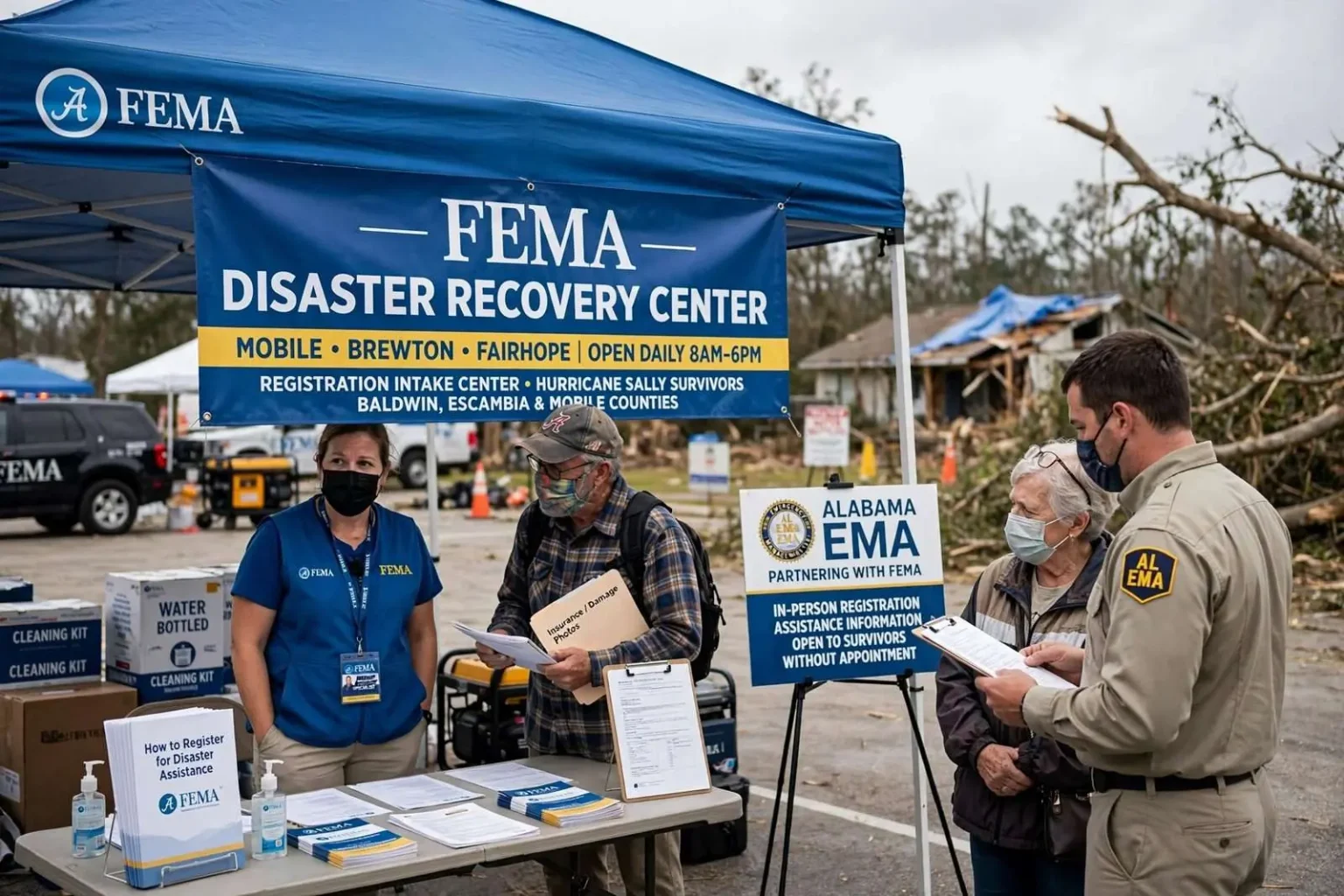
Three FEMA Mobile Registration Intake Centers will open this week for Hurricane Sally survivors who live in Baldwin, Escambia and Mobile counties, state officials announced. The centers in Mobile, Brewton and Fairhope join sites in Atmore and Foley that opened Sunday and have extended their days of operation. All centers are open daily from 8 a.m. to 6 p.m., weather permitting, giving residents across the storm-damaged region a week of full-day access to federal and state assistance staff without an appointment.
The intake centers are part of FEMA’s and the State of Alabama’s ongoing response and recovery mission following the hurricane, which struck the Gulf Coast in September and left a wide swath of wind and flood damage across south Alabama. Staffed by FEMA and Alabama Emergency Management Agency personnel, the centers serve as a point of registration and information for eligible individuals and families. Staff at the centers can walk survivors through the registration process, answer questions about the types of assistance available and help applicants understand what documentation may be requested as their cases move forward.
The locations were chosen to spread access across the three declared counties rather than concentrating it in one population center. Mobile residents can reach the center in the city, while Baldwin County survivors are served by the Fairhope and Foley sites. Brewton, the seat of Escambia County, anchors coverage of the county’s inland communities, and the Atmore site reaches the northern end of the county near the state line. That geography matters in a disaster like Sally, which damaged homes from the coast well inland.
Why the centers matter
“Mobile Registration Intake Centers are one registration option available to hurricane survivors, especially those without access to internet service or telephones,” said State Coordinating Officer Jeff Smitherman. “We want every eligible survivor to register with FEMA and apply for federal disaster assistance.” The quote underscores a persistent challenge in disaster recovery: not every affected household has reliable broadband, a working phone or the familiarity with online forms that federal registration assumes. In-person centers close that gap, particularly for older residents and families in rural areas whose services were disrupted by the storm.
For many survivors, the centers also provide something the online system cannot: a face-to-face conversation about their situation. Staff can help applicants who are unsure whether their damage qualifies, explain the difference between assistance for homeowners and renters, and point residents toward state and voluntary agency programs that operate alongside federal aid. Visitors to the centers are encouraged to wear masks as a health precaution while the recovery operation continues.
Additional centers are expected to open in Baldwin, Mobile and Escambia counties in the coming days, so residents who cannot reach this week’s sites may have another option closer to home soon. State officials have said the network of centers will continue to expand as long as demand warrants, and survivors should watch for announcements about new locations in their counties.
How to register
Survivors do not need to visit a center to apply. Registration is available online at disasterassistance.gov, through the FEMA app, or by calling the FEMA Helpline at 800-621-3362. All three routes feed the same federal registration system, so survivors can choose whichever option is most convenient and can begin online even if they later visit a center to ask follow-up questions.
When registering, applicants are typically asked for basic information about their household, insurance coverage and storm damage, so having those details on hand speeds the process. The assistance available through the federal program can include help with temporary housing, essential home repairs and other serious disaster-related needs not covered by insurance. Officials continue to urge every survivor who believes they may qualify to register, even those who are uncertain, because an application is the only way to be considered for aid.
The storm behind the recovery
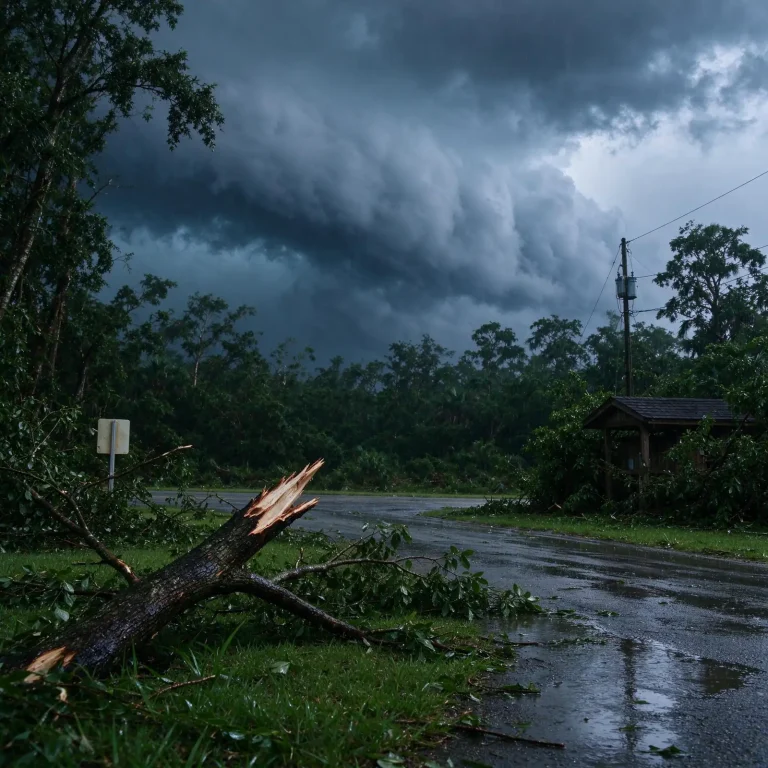
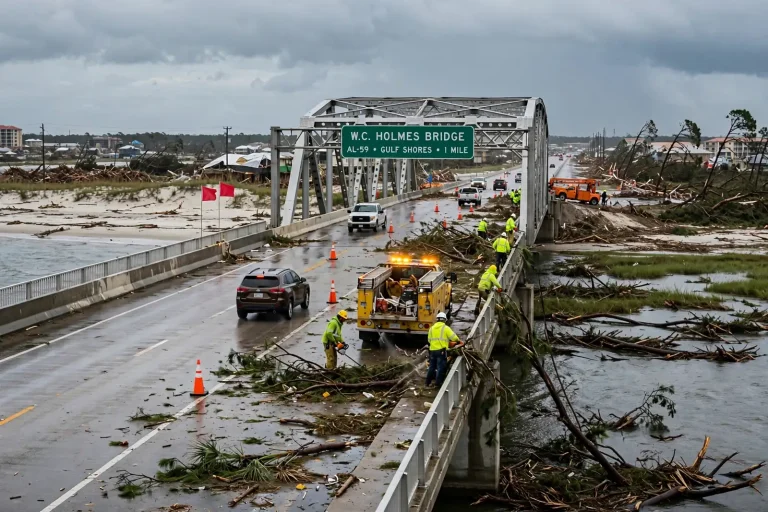
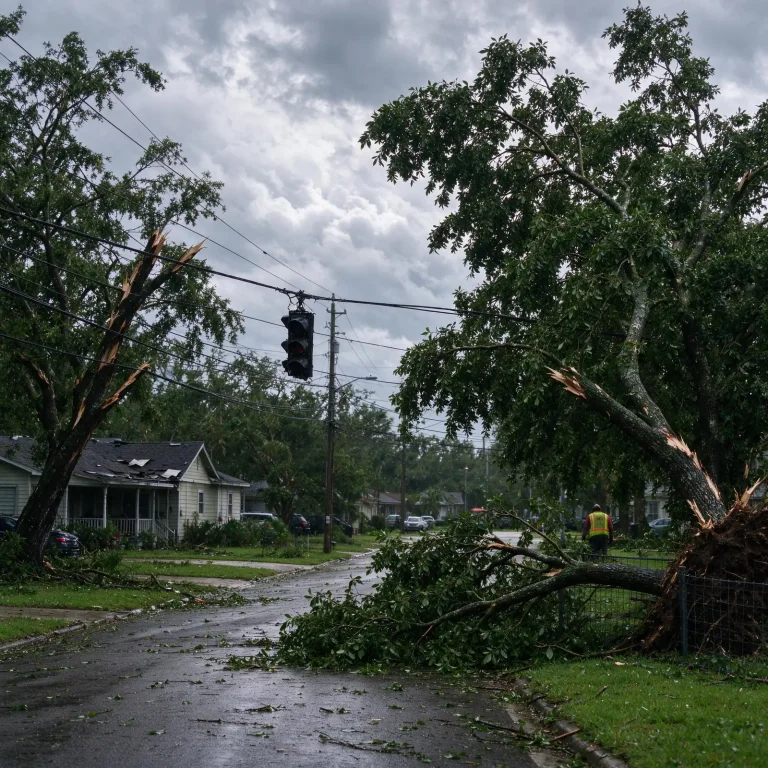
Hurricane Sally made landfall along the Gulf Coast as a slow-moving Category 2 storm in September, and its pace proved as damaging as its strength. Sitting over the region for hours, the hurricane pushed a significant storm surge into coastal communities and dropped torrential rain far inland, knocking out power to hundreds of thousands of customers across the Florida Panhandle and south Alabama. Baldwin County, which took the brunt of the Alabama landfall, saw widespread roof damage, downed trees and flooding in communities from Gulf Shores and Orange Beach north through Foley, Robertsdale and Bay Minette, while Mobile County dealt with wind damage, flooding and extended outages of its own.
The federal disaster declaration that followed covered Baldwin, Escambia and Mobile counties, the three counties now served by the intake centers. That declaration opened the door to the individual assistance program that the registration process connects residents to. For counties like Escambia, whose Brewton county seat and Atmore communities sit well north of the beaches, the declaration recognized that Sally’s damage was not only a shoreline problem: inland rivers, creeks and rural neighborhoods took serious hits as the storm’s rain bands parked over the region.
The state’s role in the response
The Alabama Emergency Management Agency works alongside FEMA throughout events like this, coordinating state resources, supporting local emergency managers and helping residents navigate the recovery process. The agency’s personnel at the intake centers represent that partnership in practice, pairing federal program knowledge with an understanding of how Alabama’s county-level emergency management structure operates. The joint staffing arrangement is standard for federally declared disasters, where state coordination and federal funding operate side by side from the first days after landfall through the long tail of rebuilding.
State Coordinating Officer Jeff Smitherman’s role places him at the center of that joint operation, serving as the state’s point person for the recovery mission. His public message since the storm has been consistent: survivors should register, even if their damage seems minor or their insurance might cover part of the loss, because registration is the gateway to every form of federal help and because assessments of damage sometimes reveal needs that are not obvious in the days after a storm.
What happens after registration
Once a survivor registers, the typical next step is a damage inspection, in which an inspector contacts the applicant to schedule a visit to the damaged property. Inspectors document the storm-related damage and that information feeds the eligibility determination for various categories of assistance. Applicants who receive an award can use the funds for the intended purpose, and those who are found ineligible receive a letter explaining why and describing the appeal process available to them.
Survivors who disagree with a determination have the right to appeal in writing within a set window after receiving their decision letter, and center staff can explain that process. The centers also serve residents whose circumstances change during the recovery, such as a household that discovers additional damage after the initial registration or a renter whose landlord’s repairs affect their housing situation. Keeping centers open daily from 8 a.m. to 6 p.m., weather permitting, is designed to make those follow-up visits practical for people who work during the week.
A long recovery
Months after landfall, the recovery from Sally is still unfolding across the region. Roofing crews, contractors and insurance adjusters have worked through backlogs that stretched well past the storm’s immediate aftermath, and many households are still weighing repair decisions or waiting on settlements. The registration centers are part of that longer timeline: federal and state officials have repeatedly emphasized that recovery is measured in years, not weeks, and that residents who have not yet sought help should not assume it is too late. The centers in Mobile, Brewton, Fairhope, Atmore and Foley remain the most direct way to start that process in person.
Who qualifies and how the process works
Eligibility for federal disaster assistance generally turns on a few straightforward questions: whether the applicant lived in a declared county at the time of the storm, whether the damage was caused by the disaster, and whether the loss is covered by insurance. Homeowners, renters and business owners in the declared counties may all register, and renters are often surprised to learn they can qualify for help with temporary housing and essential personal property even though they do not own the damaged home. Insurance does not disqualify an applicant, but survivors are asked to file insurance claims first, since federal assistance is designed to cover serious needs that insurance does not meet.
The intake centers exist precisely to help people work through those questions. Staff cannot determine eligibility on the spot, but they can explain the categories of assistance, help applicants organize the information the application asks for and make sure a survivor leaves the center registered. For residents of rural Escambia County communities like Brewton and Atmore, or east Baldwin County towns like Foley, the nearest center may still be a drive away, but it is far easier than navigating a federal form without internet service after a storm that damaged power and phone infrastructure across the region.
Assistance available to survivors
The federal disaster assistance program that registration unlocks covers several distinct kinds of need. Housing assistance can include reimbursement for short-term lodging, repair money to make a damaged home safe and sanitary, and in limited cases replacement assistance for homes destroyed by the storm. Other Needs Assistance covers disaster-related expenses outside housing, such as essential household items, medical and dental costs tied to the disaster and transportation needs. Each category carries its own rules and documentation requirements, which is why survivors benefit from talking through their situation with staff at a center rather than guessing at the system alone.
Beyond FEMA’s programs, registered survivors may be referred to other resources in the recovery system. Low-interest disaster loans made available through the federal government can help homeowners, renters and businesses fund larger repairs beyond the grant limits, and voluntary agencies active in the recovery can fill gaps that government programs do not reach. The centers function as a front door to that whole network, which is why officials describe them as a point of registration and information rather than simply a place to file a form.
What survivors should bring and expect
Survivors visiting a center do not need much paperwork to get started, but a few items speed the process: identification, proof of address in the affected area, insurance information if a policy exists, and a phone number or mailing address where FEMA can reach the applicant through the recovery. People who already registered online or by phone can still visit a center with questions about their case, an appeal or a change in their circumstances. Wearing a mask is encouraged for everyone visiting the sites while the recovery operation continues.
Officials stress two practical points for the days ahead. First, the centers in Mobile, Brewton, Fairhope, Atmore and Foley are open every day, not just weekdays, from 8 a.m. to 6 p.m., weather permitting, so survivors can plan visits around work schedules. Second, additional intake centers are expected to open in Baldwin, Mobile and Escambia counties in the coming days, and the network of sites may shift as demand changes. However residents choose to register — at a center, at disasterassistance.gov, through the FEMA app or by calling 800-621-3362 — the message from state and federal officials is the same: register now, and let the system determine what help is available.