FEMA Shuts Walk-In Sally Intake Centers in Mobile Area, but Phone and Online Aid Continue
FEMA closed walk-in Sally registration centers in Mobile, Baldwin and Escambia counties, but the helpline and online applications remain open to residents.
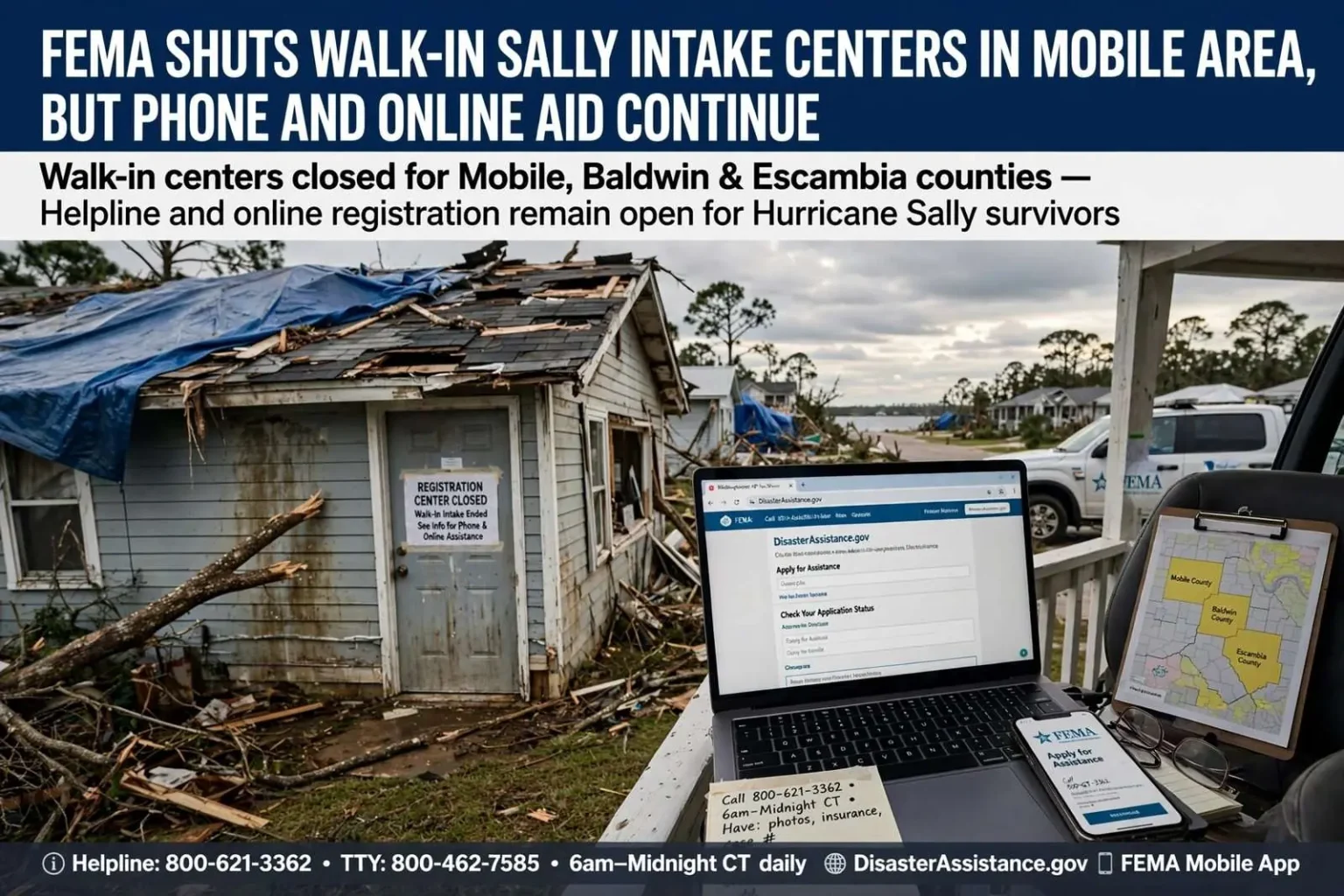
Homeowners and renters in Mobile, Baldwin and Escambia counties can no longer walk into a temporary registration center to sign up for federal help with Hurricane Sally damage. The Mobile Registration Intake Centers that handled in-person sign-ups in the three federally designated Alabama counties have closed, ending the walk-in phase of the disaster assistance effort on the Alabama coast.
Federal officials say the closures do not end the assistance program. FEMA disaster recovery specialists remain assigned to the region and are still fielding applications, questions and case updates from residents whose homes were damaged by the storm. The shift away from storefront centers follows the standard pattern of a federal recovery operation: intake centers open in the weeks after a disaster to handle the initial surge of registrations, then close as the workload settles into case management that can be handled by phone and online.
How storm survivors can still get help
The FEMA Helpline is open at 800-621-3362, with a TTY line at 800-462-7585. The toll-free number takes calls every day from 6 a.m. to midnight Central time, and multilingual operators are available to assist callers who prefer a language other than English. The long daily window means residents who work daytime hours can still reach the agency early in the morning or late in the evening, seven days a week.
Residents can also start or check a claim online at DisasterAssistance.gov, or use the FEMA mobile app on a smartphone. The online routes walk applicants through the same registration process handled at the intake centers, including entering household information, describing damage and uploading documentation. For residents comfortable with a computer or smartphone, the website and app often move faster than waiting on a phone line, and claims can be checked repeatedly without starting over.
Callers to the helpline can ask about the status of an application, update mailing addresses and phone numbers, add missing documents to a file, or ask to be referred to other recovery programs. Keeping contact information current matters more than many applicants realize: FEMA correspondence and inspection scheduling both depend on the address and phone number on file, and missed letters or calls are a common reason applications stall or are denied for lack of documentation.
Three Alabama counties covered
Only Mobile, Baldwin and Escambia counties were included in the federal designation for individual assistance tied to Sally, which pushed a destructive surge and days of rain across the Alabama coast in September 2020. Households in those counties remain eligible to register even though the storefront centers are gone. Residents of neighboring counties that were not included in the individual assistance designation are not covered by this program, which is why the county-by-county boundary matters for coastal households deciding whether to apply.
Individual assistance under a major disaster declaration can include help with temporary housing, essential home repairs and other serious disaster-related needs not covered by insurance. The program is intended to fill gaps, not to make survivors whole, so applicants are generally expected to work their insurance claims in parallel and to document what their policies do and do not cover.
Documenting damage before calling
Recovery officials continue to urge residents to document damage with photographs and to keep records of repair estimates and insurance correspondence before calling. Good documentation is the backbone of a successful application: photographs taken before repairs begin, contractor estimates in writing, receipts for emergency work, and copies of insurance claim filings and settlement letters all help establish the scope of damage and what other resources have already been applied.
Applicants should also have basic household information ready when they contact FEMA, including their address at the time of the storm, a description of the damage and current contact details. Whether the first contact comes through the helpline, the website or the mobile app, the registration creates a case number that survivors should keep on hand for every later call or upload, since it is the key to tracking assistance from application through disbursement.
Sally’s lasting mark on the coast
Hurricane Sally came ashore in September 2020 as a slow-moving storm that punished the northern Gulf Coast with a destructive storm surge and days of persistent rain rather than a single night of wind. The storm’s crawl allowed enormous rainfall totals to accumulate over communities from Mobile Bay eastward, flooding homes and businesses that in some cases had little time to recover between the surge, the inland flooding and the weeks of cleanup that followed.
For Baldwin County’s communities along the bay and the Perdido area, and for neighborhoods across Mobile and into Escambia County, the recovery stretched long past the headlines. Roofing, siding and flood repairs backed up contractor schedules for months, and disputes with insurers became a familiar part of the aftermath. The federal individual assistance program was designed to reach households whose losses exceeded what insurance and other aid covered, which is why officials continue to encourage eligible residents in the three designated counties to complete a registration even now.
Why registrations still matter
FEMA officials regularly caution disaster survivors against assuming they will not qualify. Eligibility determinations are made case by case after an application is filed and, in many instances, after an inspection, so a household that doubts its own eligibility may still be entitled to some form of assistance. With the walk-in centers closed, a phone call or a few minutes on DisasterAssistance.gov is all that stands between an unregistered household and a formal determination.
The agency also urges residents who registered earlier and have had changes in circumstances to update their files. A repair that turned out to cost more than the initial estimate, a denial based on missing paperwork, or a settlement letter from an insurer that arrived after the application was filed can all change the outcome of a case — but only if FEMA knows about them. The helpline and the online portal are the channels for keeping a file current now that the intake centers are gone.
The road ahead for the coast
The closure of the registration centers does not signal an end to the region’s recovery, which continues in fits and starts across the three counties years after the storm. Public assistance projects repairing infrastructure, along with the individual household cases still working through the system, form the long tail of a disaster whose damage was measured across an entire coastal county line.
For residents of Mobile, Baldwin and Escambia counties who have not yet applied, the message from recovery officials is unchanged: document your damage, gather your insurance records, and register by phone at 800-621-3362, online at DisasterAssistance.gov or through the FEMA app. The walk-in option is gone, but the assistance program itself remains open to eligible households in the three designated counties.
What individual assistance can cover
Under the individual assistance designation, FEMA’s programs are aimed at the essentials of getting a household back under a functioning roof. That can include rental assistance for displaced residents, grants for critical home repairs that make a house safe, sanitary and weatherproof, and help with other serious disaster-related needs such as replacing damaged essential household items. The assistance is structured to overlap with — not replace — insurance settlements, which is why the agency asks applicants to file insurance claims and report the results.
The application process also considers disaster-related medical, dental and funeral expenses, along with certain moving and storage costs incurred because of the storm. Each category requires documentation, which is why the repeated official advice about photographs, estimates and correspondence is more than boilerplate. A household that keeps a clean paper trail from the first days after the storm tends to move through the process with far fewer setbacks than one that repairs first and reconstructs its records later.
Working with inspectors and appeals
Many individual assistance cases involve a home inspection before funds are released. Inspectors verify ownership or occupancy, document the reported damage and confirm the household information on the application. With the walk-in centers closed, applicants coordinate inspections and follow-ups through the helpline or their online account, another reason current phone numbers and addresses on file are essential.
Applicants who receive a determination they believe is wrong have the right to appeal, and appeals must be submitted in writing within the deadline stated in the determination letter. Supporting documents — repair estimates, contractor invoices, insurance records, photographs — can be attached to an appeal or added to a file through the helpline. Recovery specialists routinely remind survivors that an initial denial is often a documentation problem rather than a final answer, and that a complete file is the strongest basis for turning one around.
Staying organized through a long recovery
For households still working through Sally claims, a simple system goes a long way: keep a folder — paper or digital — with the FEMA registration number, copies of everything submitted, notes on every call including the date and the name of the specialist, and all insurer correspondence in one place. When questions arise months into the process, that folder answers them in minutes.
Recovery from a hurricane the scale of Sally is measured in years, not weeks, and the federal programs that support it are built for that timeline. The intake centers on the Alabama coast have done their job and closed, but the helpline, the website and the mobile app keep the program within reach of every eligible household in Mobile, Baldwin and Escambia counties. Residents with unanswered questions about their Sally damage are encouraged to make the call, check their claim online and keep their documentation current until their case is fully resolved.