

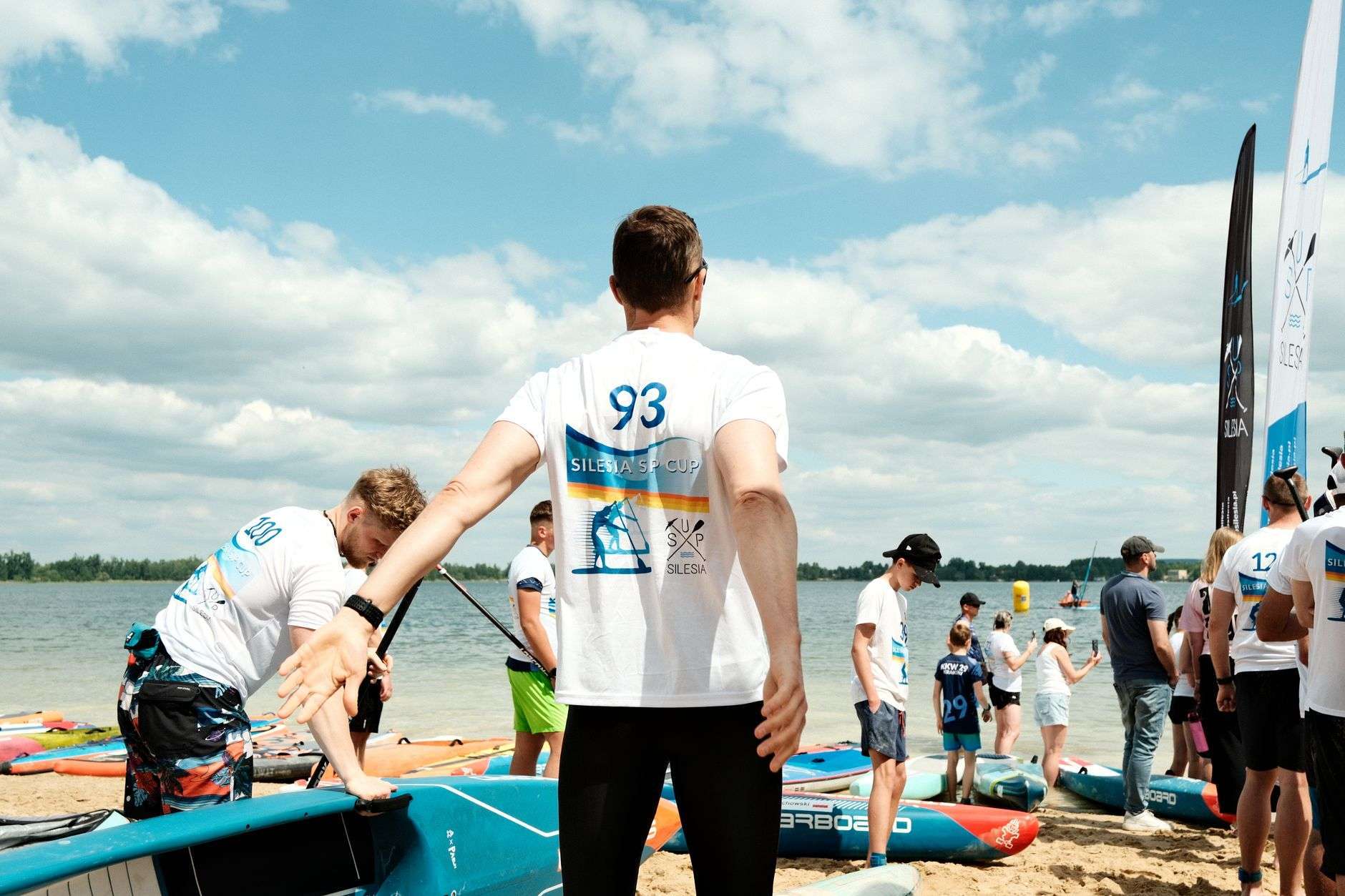
ORANGE BEACH, Ala. — The Flora-Bama Ole River Grill will host the fourth annual Flora-Bama Paddle Dash in October, a two-mile paddling race along the Ole River at the Alabama-Florida state line.
The course is simple and the start is early. Competitors paddle from the Ole River Grill beach to the Ono Island Bridge and back, with the men’s race going off at 7:30 a.m. and the women’s race 10 minutes later.
The Schedule
The event is set for Saturday, Oct. 3.
Check-in and t-shirt pickup start at 7 a.m. Registration will be on the beach between the Ole River Grill and the Flora-Bama Yacht Club. A safety briefing is scheduled for 7:25 a.m.
The men’s race begins at 7:30 a.m., followed by the women’s race at 7:40 a.m.
Complimentary breakfast will be served after both races conclude. Awards will be presented at 9 a.m. to the top three male and female finishers, with the top three in each division receiving a Flora-Bama gift card.
All registrants receive a t-shirt, a complimentary breakfast and two drink cards. The drink cards are available to participants who are 21 or older.
The Course
The race course begins at the beach between the Ole River Grill and the Flora-Bama Yacht Club.
Paddlers head one mile toward the Ono Island Bridge, staying to the left on the way out. Racers then turn around at the bridge and return along the same stretch of water to the starting point.
The keep-left instruction on the outbound leg is the standard convention for an out-and-back course on a narrow waterway. It keeps outbound and returning paddlers on opposite sides of the channel rather than converging head-on — which matters on a two-mile race where the fastest competitors will be coming back while slower ones are still heading out.
A Required Piece of Equipment
All participants must wear a personal flotation device throughout the race.
That requirement is not a formality. Paddle racing puts competitors in a narrow craft, under exertion, on open water, frequently standing in the case of stand-up paddleboards. A capsize under race conditions is ordinary rather than exceptional, and the difference between a delay and an emergency is usually whether the paddler is wearing flotation when it happens.
The Ole River, and Why It Works for This
The Ole River is a protected waterway running behind the barrier beach near the Alabama-Florida line, separating Ono Island from the Perdido Key side. It is narrow, sheltered and shallow compared with the open Gulf a short distance to the south.
Those characteristics are what make it a viable race venue. Open Gulf water in early October can produce swell and chop that would turn a two-mile paddle into an endurance test with a serious safety profile. A protected back-bay stretch delivers flat or near-flat conditions most mornings, which is why the race goes off at 7:30 — the calmest water of the day, before the wind builds and before recreational boat traffic picks up.
The Ono Island Bridge provides the other thing an out-and-back course needs: an unmistakable turnaround point that every competitor can see from a distance and nobody can miss.
Who These Races Are For
Two miles is a deliberate distance. It is long enough to separate competitors on fitness and technique, and short enough that a recreational paddler in reasonable shape can finish it.
That places the Paddle Dash in the accessible tier of paddle racing. Serious distance events on the Gulf Coast run considerably longer and draw a narrower field. A two-mile out-and-back with a 7:30 a.m. start, breakfast afterward and gift cards for the podium is built for a broad entry list — people who own a board or a kayak, paddle for exercise, and are willing to race it once a year.
The separate men’s and women’s starts, 10 minutes apart, are a practical choice for the same reason. Staggering the waves reduces congestion at the start line and at the bridge turnaround, and it produces clean results in each division without requiring timing chips to sort out a mass start.
The Venue
The Flora-Bama sits on the state line between Alabama and Florida, one of the most recognized beach venues on the Gulf Coast and an institution in Orange Beach and Perdido Key. The Ole River Grill and the Flora-Bama Yacht Club occupy the back-bay side of the property, facing the water the race runs on.
The venue hosts a dense calendar of events through the year, and paddling fits the back-bay side of the operation naturally — the same stretch of water that supports the Yacht Club’s day-to-day traffic is the course.
The property’s event schedule this fall also includes other community fundraising and competition events, part of a pattern of using the venue’s footprint for organized activity beyond its music calendar.
What to Bring and How to Plan
Competitors should plan around the 7 a.m. check-in rather than the 7:30 a.m. start. Registration happens on the beach, t-shirts are distributed at check-in, and the safety briefing at 7:25 is the last stop before the horn.
Early October mornings on the Alabama coast are typically mild, with water temperatures still warm from summer. Sun exposure builds quickly once the race is underway, so sunscreen applied before the start is more practical than applying it after.
A personal flotation device is mandatory and must be worn for the duration of the race, not carried on the craft.
Participants 21 and older receive two drink cards with registration. Those are redeemable at the venue, and the awards ceremony at 9 a.m. gives the morning a natural endpoint.
The Fourth Year
A race reaching its fourth consecutive year has cleared the threshold that most community events do not. The first year of an event runs on novelty. The second runs on the people who enjoyed the first. By the fourth, the entry list is largely made of paddlers who plan their October around it.
The Gulf Coast has developed a substantial paddling community over the past decade, built around protected back-bay water, bayous and the Intracoastal Waterway — conditions that suit kayaks and paddleboards far better than the open Gulf does. Events like the Paddle Dash are where that community gets to compete against itself.
Event Details at a Glance
What: Fourth Annual Flora-Bama Paddle Dash, a two-mile paddling race
When: Saturday, Oct. 3. Check-in 7 a.m.; safety briefing 7:25 a.m.; men’s race 7:30 a.m.; women’s race 7:40 a.m.; awards 9 a.m.
Where: Flora-Bama Ole River Grill, on the beach between the Ole River Grill and the Flora-Bama Yacht Club at the Alabama-Florida state line
Course: One mile out to the Ono Island Bridge, staying left, then turn and return the same route
Required: Personal flotation device worn throughout the race
Registrants receive: T-shirt, complimentary breakfast, two drink cards (21 and older)
Awards: Flora-Bama gift cards to the top three men and top three women
A Growing Sport on a Coast Built for It
Paddle sports have expanded substantially along the Gulf Coast over the past decade, and the geography is the reason.
The Alabama and northwest Florida coastline is not just Gulf-facing beach. Behind the barrier islands and beaches sits a network of protected water — the Intracoastal Waterway, back bays, bayous, rivers and tidal creeks — that is generally calm, shallow and shielded from open-water swell. That is close to ideal paddling terrain, and it is available year-round in a climate where water temperatures rarely make paddling uncomfortable.
Kayaks and stand-up paddleboards have both benefited from that. Equipment has gotten cheaper and more transportable, inflatable boards have removed the roof-rack requirement that used to limit ownership, and the result is a large recreational base of people who paddle regularly without ever entering a race.
Events like the Paddle Dash exist to give that base something to point at. A two-mile race in early October is a training goal for someone who paddles for exercise and a social event for someone who does not.
The Difference Between a Race and a Paddle
Anyone considering entering should understand what changes when a familiar distance becomes a timed event.
Two miles at a recreational pace is a pleasant morning. Two miles at race effort is a sustained aerobic effort with a technical component, and the technique is what separates finishers more than fitness does. Stroke efficiency, catch and release timing, body rotation and the ability to hold a line without wasting energy correcting course all matter more over a race distance than raw strength.
The turnaround at the Ono Island Bridge is the technical feature of this course. Turning a board or kayak at speed without losing momentum is a learned skill, and in an out-and-back race the field usually compresses at the turn and separates again on the return leg.
Conditions are the other variable. Even on protected water, a return leg into a building morning breeze feels substantially different from the outbound mile. The early start time exists partly to minimize that.
Safety on a Working Waterway
The Ole River is not a closed course. It is a navigable waterway with boat traffic, dock traffic and a bridge, and a race run on it shares the water with whatever else is out there on a Saturday morning.
That is the practical reason behind both the mandatory personal flotation device and the keep-left instruction on the outbound leg. Paddlecraft sit low, are hard to see from a powerboat’s helm, and produce no sound that carries. Keeping the race field organized on one side of the channel makes it predictable to everyone else on the water.
The 7:25 a.m. safety briefing is where course specifics, hazards and any day-of conditions get communicated, and it is scheduled five minutes before the first start for a reason. Competitors who skip it are the ones most likely to miss a change.
The Fundraising and Community Side
Races of this type occupy a particular niche in a beach community’s calendar. They are small enough to be organized by a venue rather than a promoter, cheap enough to enter without much thought, and social enough that the post-race breakfast is a meaningful part of the appeal rather than a courtesy.
Awards at 9 a.m. mean the whole thing is over before most of the coast has finished its first cup of coffee, which is part of the design. Participants get a race, a shirt, a breakfast and a morning on the water, and still have their Saturday.