

Every Saturday morning, a chef from Phenix City points his vehicle toward the Florida panhandle and sets up his tent at Palafox Market in Pensacola. On Sundays, he does it again at the Rosemary Beach market before heading home. What JR McKinny sells out of those tents is, in his customers’ estimation, the best tamales they have ever had — hand-rolled, made from a closely guarded family recipe, and shipped by the dozen to fans across the country.
How a Texas-born cook ended up selling his grandmother’s tamales on the Gulf Coast is a story of kitchens, hurricanes, and one very persistent family tradition.
Maw Maw’s Recipe
JR McKinny grew up in Dripping Springs, Texas. His grandmother, Ernestine “Maw Maw” Subia, lived in Port Arthur, Texas, and was renowned among family and friends for the hand-rolled pork tamales she made for holidays and gatherings. “The one dish that brought us all together was her delicious tamales, especially during the holidays,” McKinny says. Her love for her family, he adds, was only surpassed by her love of cooking great food.
McKinny knew his way around a kitchen early. He landed on the Gulf Coast as a sous chef for LaCo Latin Coastal Kitchen, part of the Spell Restaurant Group in Rosemary Beach, then moved to Saltwater Grill in Panama City, where he began experimenting — and eventually asked his aunt to teach him his grandmother’s tamale recipe. When his regional manager tried the tamales and sauces, the verdict was immediate: “This is the best thing I’ve eaten that has come out of this restaurant.” McKinny was named the chef soon afterward.
A Side Business, Then a Hurricane
The leap to full-time tamale-maker came with help from a friend. Terri Davidson, who owned Wine Dog, a small-plate tapas and wine bar in Panama City, struck a deal: McKinny would make tamales and menu items for her two days a week in exchange for kitchen access. The pair started selling tamales at the St. Andrews Market in Panama City — and then Hurricane Michael made landfall.
The storm left the area without electricity for a month. McKinny and his wife Barre salvaged 300 dozen tamales, hauled them to a farmhouse in Seale, Alabama, and started over at markets in the area. The grandmother’s process — streamlined, scalable — turned out to be the survival kit. They bootstrapped the business week by week. “We would just go week to week with the tamale business, so I didn’t have to get a real job,” McKinny says.
The Ancient Craft in the Husk
There is a reason the product survived the storm: tamales were engineered for resilience. The food dates back roughly 10,000 years to the indigenous peoples of Central and South America, and it survives as one of the oldest continuously made recipes in the Americas — portable, preservable, and dependent on corn, the ingredient that made civilizations possible.
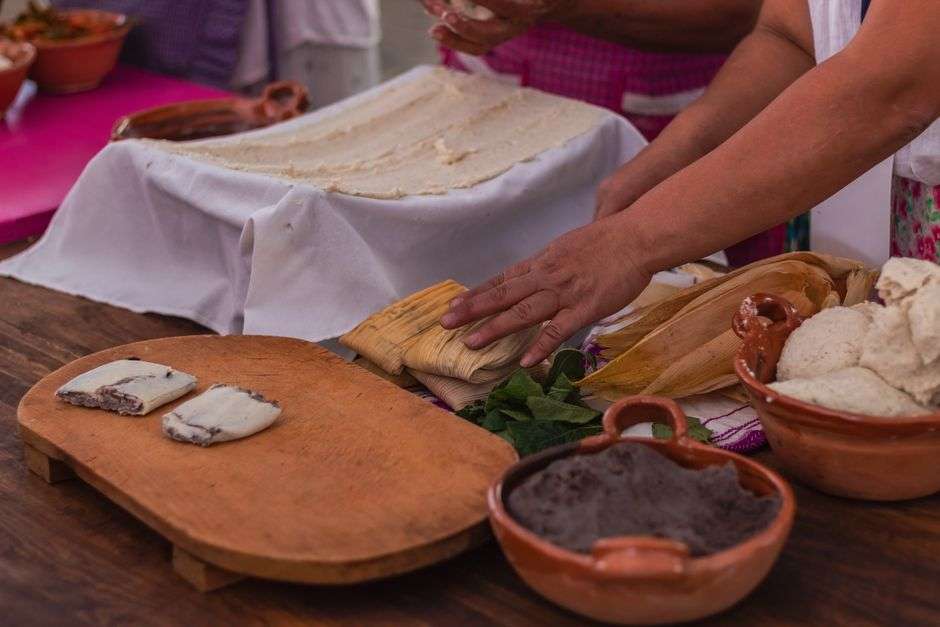
Done properly, a tamale takes four days. The heart of the process is the masa, made through nixtamalization — the ancient technique of washing corn kernels in an alkaline solution so the kernel’s skin releases, creating a moist, non-sticky dough. Corn husks wrap the masa and preserve the tamale; armies and civilizations once marched on them. McKinny’s pork tamales are the best seller, followed by roasted vegetable; the lineup also includes chicken, chorizo, jalapeño cheesesteak and smoked brisket versions, with sauces in three heats — mild, verde (medium) and El Sirracho (hot).
He is serious about sourcing — ingredients come from farmers markets where possible — and the smoked brisket tamale borrows from a friend who owns Franklin Barbecue in Austin, Texas, the temple of Texas brisket. His claim on the product’s behalf is simple: the best masa-to-meat ratio anywhere.
How to Get Them
Today It’s Tamale Time runs a restaurant in Phenix City and works the Gulf Coast market circuit on weekends — Palafox Market in Pensacola on Saturdays from 9 a.m. to 2 p.m., Rosemary Beach on Sundays. Frozen dozens ship anywhere and keep a year in the freezer, because they arrive uncooked: steam, unwrap, sauce, eat. The catering arm covers tacos as well as tamales for events around Columbus and Phenix City.
It is a good story about a good food — and a reminder, as McKinny’s own route proves, that the dishes families refuse to let go of have a way of surviving anything, even a hurricane.