Fox Weather’s ‘Beach House’ Broadcasts Live From Gulf Shores Wednesday: How to Watch
Fox Weather's 'Beach House' series broadcasts live from Gulf Shores Wednesday, spotlighting the area's beaches, Flora-Bama and more.
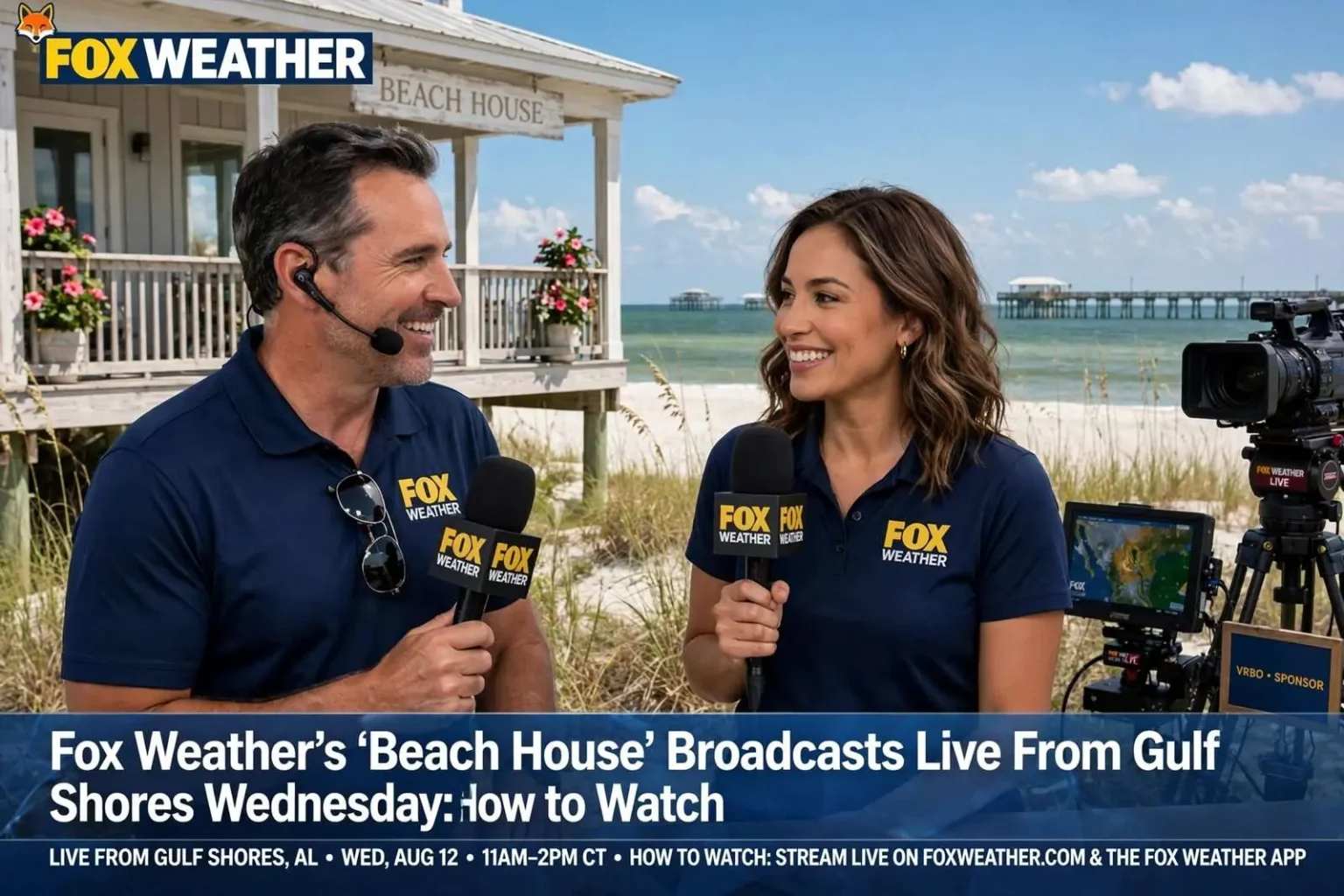
Fox Weather’s traveling “Beach House” series is making its long-teased stop in Alabama this week, bringing the network’s anchors out of the studio and onto the shoreline for a live, three-hour broadcast. Meteorologists Bob Van Dillen and Marissa Torres will broadcast live from Gulf Shores from 11 a.m. to 2 p.m. Central on Wednesday, Aug. 12, a change of scenery from their previous stop on the Jersey Shore. The move from the Atlantic coast to the northern Gulf swaps boardwalks and crowded beaches for the sugar-white sand and emerald water that have made the Alabama beach towns one of the most visited stretches of coastline in the country.
“Gulf Shores, Alabama. It’s going to be a lot hotter than it is right now, I know that much,” Van Dillen said as the pair wrapped their New Jersey segment. “Oh gosh, yes it is,” Torres replied. “Maybe then I’ll learn how to surf.” “On the Gulf, well, you have to have a storm out there,” Van Dillen said. “And hopefully we don’t have one.” The exchange drew laughs from viewers, but it also captured the reality of forecasting along the upper Gulf Coast in mid-August, when daytime heating and bathtub-warm Gulf water build scattered afternoon thunderstorms almost daily, and the Atlantic hurricane season is closing in on its historical peak.
The series, sponsored by VRBO, typically features a vacation rental offered through the platform, with the anchors broadcasting from an oceanfront property rather than a traditional set. That format has carried the show to beach communities along the Atlantic and Gulf coasts, pairing straight weather coverage with a tour of the vacation homes that anchor each town’s visitor economy. According to Fox, Wednesday’s Gulf Shores segment will “present viewers with the summer travel forecast, explore how the weather has shaped the Gulf Shores and Orange Beach area over the years and showcase different ways viewers can enjoy one of America’s most popular vacation destinations.”
A National Spotlight on Alabama’s Beaches
For Gulf Shores and neighboring Orange Beach, a live national broadcast is a kind of advertising that cannot be bought. The twin resorts sit on a narrow barrier island at the foot of Alabama’s coastline, drawing millions of visitors a year to a beach scene built around public beach accesses, the Gulf State Park, a family-friendly boardwalk district, and a fishing and charter fleet working out of both towns. Tourism officials have long marketed the area’s rare combination of wide beaches, calmer Gulf swimming conditions compared with the open Atlantic, and short drives from population centers across the Southeast.
The weather angle is more than a talking point for this stretch of coast. Because the island sits low and faces open water, its modern history is written in hurricanes — from Frederic in 1979 to Ivan in 2004, Katrina’s glancing blow in 2005, and Sally in 2020 — each of which flattened dunes, tore up beachfront businesses, and forced rebuilds that reshaped the skyline. The same warm Gulf water that draws swimmers all summer is the fuel that threatens the coast every June through November, a tension residents here understand better than most.
‘Comeback Kitchens’ Returns to the Flora-Bama
The broadcast will also include a “Comeback Kitchens” segment spotlighting the Flora-Bama in nearby Perdido Key and its recovery from Hurricane Sally in 2020. The sprawling beach bar, which straddles the Alabama-Florida state line and has been a Gulf Coast institution for decades, took a heavy hit when Sally came ashore just west of Gulf Shores as a Category 2 storm in mid-September 2020, ripping apart roofs and knocking out power across the coastal corridor for weeks. The Flora-Bama’s slow, determined recovery became one of the region’s most-watched comeback stories, and the “Comeback Kitchens” series highlights restaurants and bars that have fought their way back after disasters.
Sally’s landfall — and the damage it inflicted on Perdido Key, Orange Beach and Gulf Shores — remains fresh in the community’s memory. The storm surge and sustained winds leveled dune walkovers, sheared roofs off condominiums, and left mountains of debris along the coastal highways. Recovery stretched well beyond a single season, with some beachfront properties closed for a year or more, making the return of a national broadcast to the same sand another quiet marker of how far the coast has come.
The Pier, the Zoo and the Rest of the Itinerary
Wednesday’s features also include the Gulf State Park Fishing Pier and the Alabama Gulf Coast Zoo. The pier, which extends more than a quarter mile into the Gulf, is one of the largest of its kind on the coast and a landmark for anglers and sightseers alike; it too has been rebuilt after storm damage over the years and anchors the 6,000-plus-acre Gulf State Park that stretches from the beaches inland through lakes, maritime forest and dunes. The park is a centerpiece of Alabama’s coastal recreation, offering camping, trails and beach pavilions alongside the pier’s 24-hour fishing access.
The Alabama Gulf Coast Zoo, meanwhile, carries its own national pedigree. Long known as “The Little Zoo That Could” after an Animal Planet series chronicled its repeated rebuilds following hurricanes, the zoo moved from its low-lying site near the beach to a larger, purpose-built campus farther inland — a relocation driven directly by the flood risk that comes with coastal living. Its story mirrors the wider theme Fox’s producers will be exploring: how weather and water have shaped, and repeatedly reshaped, everyday life on this barrier island.
Between segments, the anchors are expected to work the summer travel forecast for the entire Gulf region, a useful service for the huge share of the Southeast that drives to Alabama’s beaches for late-summer vacations. Mid-August typically brings the hottest water temperatures of the year along the coast, along with the daily rhythm of morning sun, building afternoon storms and evening clearing — a pattern visitors can plan beach time around if they watch the radar.
The timing also puts the broadcast in front of one of the biggest travel audiences of the year. Late-summer beach trips remain the norm across Alabama, Mississippi, Louisiana, Tennessee and Georgia, with families squeezing in one last coastal week before school calendars take over. A three-hour live window from the sand puts Gulf Shores on screens at midday, when trip planners are most likely to be browsing. For a destination that competes with Florida’s Panhandle beaches just a few miles east, the exposure is worth more than any single advertising buy — and it arrives on a national network whose viewers are, by definition, already paying attention to the weather.
A VRBO Showcase and How to Watch
The VRBO connection is more than a sponsorship label. Earlier this year, VRBO named a Gulf Shores home among its top vacation rentals of 2026, a nod to the strength of the area’s short-term rental market, which ranges from modest beach cottages to multi-story homes with Gulf-front pools. Vacation rentals are a backbone of the local economy here, and the “Beach House” format effectively turns the rental itself into a set — giving viewers a long look at the kind of property families book for a week on the Gulf.
For locals, the broadcast doubles as a recruitment pitch for the late-summer and fall shoulder seasons, when crowds thin, rental rates drop and the water is at its warmest. The segment’s promise to “showcase different ways viewers can enjoy one of America’s most popular vacation destinations” lines up with the area’s mix of offerings: dolphin cruises out of the Orange Beach marinas, charter fishing, the back bay trails of Gulf State Park, and the restaurant scene that has grown up along the beach highway and the Intracoastal Waterway.
Fox Weather can be streamed live at foxweather.com or through the Fox Weather app for iOS and Android devices, meaning Wednesday’s three-hour window from Gulf Shores is available free to viewers anywhere with an internet connection. The network, which launched as a free ad-supported streaming service, has leaned on exactly this kind of traveling, location-based programming to build an audience, sending its anchors to cover severe weather and marquee events on location rather than from a New York studio.
The “Beach House” stops also tend to double as weather-education segments, and the Alabama coast offers plenty to explain. Producers can walk viewers through how a sea breeze forms along a barrier island, why the Gulf’s shallow shelf warms so quickly each summer, how rip currents form and what the flag system on Alabama’s beaches means, and how forecasters track tropical systems days before landfall. For a network built around weather, the natural laboratory of a Gulf Coast beach in August is hard to beat.
For the anchors, Wednesday’s forecast will hinge on the standard August setup: steamy morning sunshine, a sea breeze pushing storms inland through the afternoon, and the ever-present watch on the tropics. Van Dillen’s on-air hope that “hopefully we don’t have one” out in the Gulf is the same quiet wish every coastal resident from Texas to Florida carries through the season — and it makes the choice of Gulf Shores for a live beach broadcast both an easy sell and a fitting stage for the network’s brand of weather-first storytelling.