Free Clinical Breast Exams Draw Dozens to Mobile Screening Event for Breast Cancer Awareness Month
Dozens of people received free clinical breast exams in Mobile as part of a Breast Cancer Awareness Month screening event hosted with Family Health's Mobile Medical Unit.
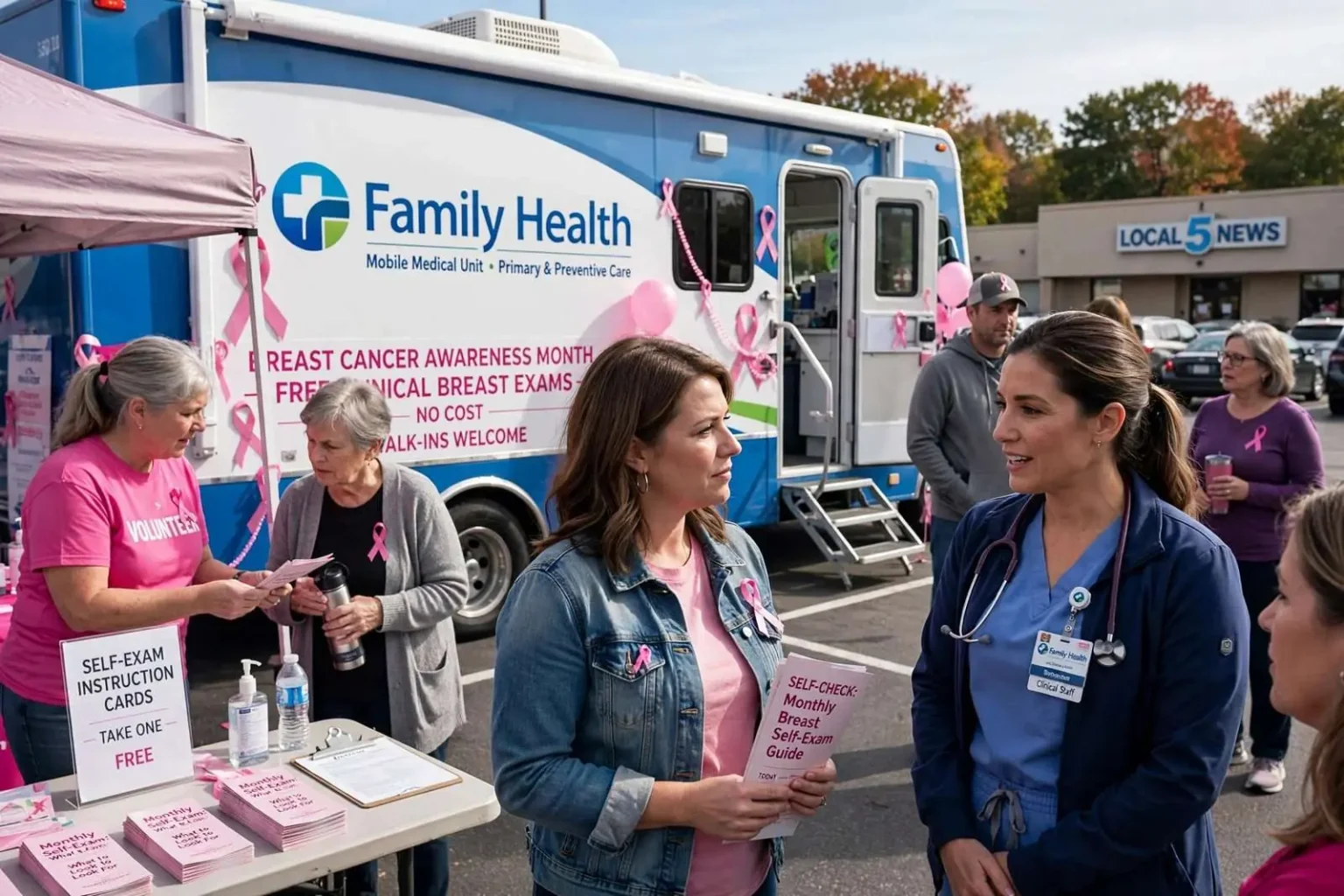
Dozens of people turned out in Mobile for a day of free clinical breast exams, part of a community effort marking Breast Cancer Awareness Month with hands-on screenings aimed at catching potential problems early. The event was organized in partnership with Family Health, whose Mobile Medical Unit was set up to offer quick clinical breast exams at no cost to anyone who walked up during the event.
The mobile unit is essentially a full-service clinic on wheels, and organizers say that mobility is the point. By parking a fully equipped exam room in a familiar, easy-to-reach location, Family Health removes many of the barriers that keep people from getting screened: cost, transportation, time off work and the intimidation of a hospital setting. Each exam took roughly 10 to 15 minutes, making it possible for working people to stop by on a lunch break or between errands.
“Survivability goes up significantly the earlier any kind of breast abnormality is found. Early detection is absolutely key,” said Kelly Warren, executive director of Family Health. Her organization operates primary and preventive care services across the Mobile area, with a focus on patients who might otherwise fall through the cracks of the health care system because they are uninsured or underinsured.
The screenings were not mammograms, but hands-on clinical exams conducted by medical professionals. Any patient found to have something unusual was immediately referred for follow-up care, closing the gap that often opens between an initial screening and a diagnosis. Organizers stressed that a clinical exam is a first step rather than a final answer, and that anyone with an abnormal finding should treat the referral as urgent rather than optional.
Teaching self-checks that save lives
Beyond the physical exams, organizers said the event was also about empowering people with the knowledge to check themselves regularly at home. “Women and men need to be doing them monthly — just self-checks, typically in the shower. We have great instructions on how to do that and what to look for,” Warren said. Monthly self-exams help people become familiar with their own bodies, which makes genuine changes easier to notice and report to a doctor sooner.
Inside the mobile unit, patients found a surprisingly high-tech setup, complete with private exam rooms and professional medical equipment designed to deliver full clinical care on the road. The unit travels to schools, churches, workplaces and community events across the area, bringing preventive services to neighborhoods where the nearest clinic may be miles away or where residents lack reliable transportation.
“With October being Breast Cancer Awareness Month, we thought what better time to provide free clinical breast exams,” said Brad Cross with Family Health. “We believe in early detection — it’s so beneficial to women in our community.” The awareness month, observed nationwide every October with pink ribbons, fundraisers and screening drives, has become the anchor for events like this one across Alabama, when health organizations time their outreach to the moment public attention is highest.
By the end of the day, 35 patients had received free exams, including Jennifer Bryars, who said she came out for the peace of mind. “It’s free, and it’s a way that I can know I’m okay and not have to worry until my next mammogram,” Bryars said. Her reasoning captured the appeal of the event for many attendees: a quick, free exam that fits into an ordinary day and buys reassurance in the meantime.
For Bryars, the cause carries personal weight. “One of my really good friends’ moms died of breast cancer, so I do everything for her,” she said. Stories like hers are common at awareness events across the Gulf Coast, where breast cancer has touched a large share of families either directly or through friends and neighbors, and where personal loss often converts into lifelong screening habits.
A community gathering as much as a clinic
The event drew a mix of cancer survivors, supporters, healthcare workers and volunteers, turning what began as a simple health screening into a broader celebration of awareness and community action, organizers said. Survivors on hand shared their experiences with people waiting for exams, conversations organizers said often do as much to encourage screening as any pamphlet or announcement.
The screening event was hosted in partnership with a local television station, whose parking lot served as the site for Family Health’s mobile clinic. Media partnerships have become a staple of mobile screening events because they combine visibility with convenience, letting organizers reach an audience that may never hear about a clinic across town. The station’s morning and midday coverage steered walk-ups to the lot throughout the day.
Breast cancer remains one of the most commonly diagnosed cancers among American women, and health agencies emphasize that survival improves dramatically when the disease is caught at an early, localized stage. That is why public health officials in Mobile County and across Alabama keep pushing the same core message: regular screening, monthly self-awareness and prompt follow-up on anything unusual. Men are not exempt, either — although the disease is far less common in men, it does occur, and Warren’s advice about monthly checks was deliberately addressed to both.
For those who missed Saturday’s event, the Mobile County Health Department offers affordable breast exams year-round, with costs ranging from $15 to $35. The department’s clinics spread across the county accept walk-ins during regular hours, and staff can connect patients who need mammograms or follow-up diagnostic work with programs that help cover the cost. Organizers said they hope to bring the mobile unit back for similar events in the future, particularly in underserved neighborhoods, and encouraged anyone who missed this one to watch for upcoming dates or to contact Family Health directly about its regular services.
Health advocates in Mobile County have long pointed to screening access as one of the most fixable gaps in local cancer outcomes. Mammography rates tend to track income and insurance coverage, and community clinics like Family Health exist precisely to close that distance between medical recommendation and everyday reality. A free ten-minute exam in a parking lot will never replace a full diagnostic workup, but organizers say it starts a conversation with patients who might otherwise go years without any breast health care at all.
What a clinical breast exam involves
For people who have never had one, a clinical breast exam is straightforward. A trained examiner visually inspects and systematically palpates the breast tissue and underarm area, feeling for lumps, thickening, skin changes or discharge that warrant closer study. The exam is painless, requires no disrobing beyond the chest area, and produces no radiation exposure, which is why health educators often describe it as the least intimidating entry point into breast health care.
When something suspicious is found, the standard pathway runs toward imaging, typically a diagnostic mammogram or ultrasound, and possibly a biopsy if imaging cannot rule out a problem. Family Health’s referral process connects patients with facilities that provide those services, and staff said helping patients navigate that pathway is as important as the exam itself, because fear and cost are the two biggest reasons abnormal findings go unchased.
The October timing also placed the event alongside a wave of related activity across the Gulf Coast, from hospital pink-out days to charity runs that fund screening vouchers for uninsured patients. Local health officials use the month to remind residents that Alabama’s breast and cervical cancer early detection programs exist to pay for screening and follow-up for eligible women, and that no one in the county should skip a recommended mammogram purely because of cost.
Saturday’s turnout, organizers said, justified the effort of hauling the mobile unit out for the day. Thirty-five exams in a single afternoon means thirty-five people who now know more about their own health than they did that morning, plus a parking lot full of neighbors who heard the early-detection message from people they trust. Organizers counted the day as a success and said the model, clinic plus community partner plus publicity, is one they intend to repeat.
Family Health’s broader mission stretches well beyond a single awareness month. The organization provides primary care, preventive screenings and health education to patients across the Mobile area regardless of their ability to pay, and its staff treats events like Saturday’s as an extension of everyday practice rather than a special occasion. The mobile medical unit, with its private exam rooms and professional equipment, allows that practice to travel wherever the need is greatest, from church health fairs to school events to workplace wellness days.
Organizers also used the day to hand out practical take-home materials: step-by-step self-exam instruction cards, information on scheduling mammograms, and contact numbers for the county health department’s year-round services. Those materials, they said, are designed to outlast the event itself, because the goal is not one exam per person per year but a lasting habit of monthly self-awareness and routine clinical follow-up. Anyone with questions about future mobile unit dates or Family Health’s regular services can reach the organization directly through its Mobile offices, and the health department’s affordable exam program remains available every working day of the year.