

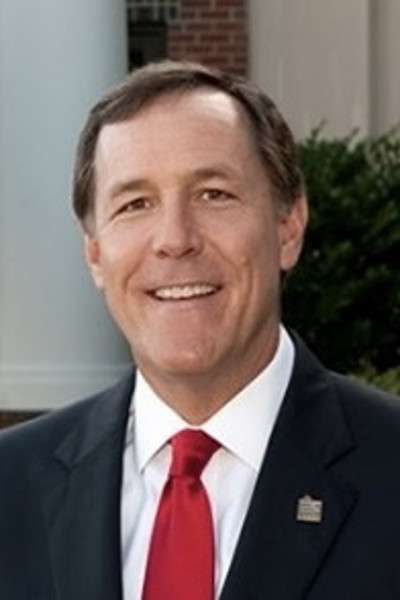
In the annals of Mobile political history, few defeats have been as spectacular—or as expensive—as Reid Cummings’ 2010 bid for the District 6 City Council seat. The real estate executive and University of South Alabama professor did everything conventional wisdom says a candidate should do. He raised more money. He outspent his opponent by a factor of two. He assembled a professional campaign operation. And on Election Day, he got crushed.
The final tally was brutal: Bess Rich, the former councilwoman who had held the seat from 1993 to 2001, captured 4,099 votes to Cummings’ 2,474. That’s a 25-point margin. In a district where every vote mattered, Cummings lost by nearly two-to-one.
But here’s the part that still makes political insiders wince: Cummings spent $123,108 on his failed campaign. That wasn’t just a lot of money—it was the most money ever spent on a Mobile City Council campaign since the county began keeping electronic records in 1997. It more than doubled the $59,700 spent by Rich, whose campaign budget ranked fifth in the modern era. Cummings outspent his opponent by more than $63,000 and still lost by 1,625 votes.
At the time, it looked like the end of the road for a promising political career. Instead, it turned out to be the beginning of something far more significant.
This isn’t just a story about a political loss. It’s a story about how one man took the most humiliating defeat of his life and turned it into the foundation of an extraordinary second act—one that would see him abandon the rough-and-tumble world of business and politics for the quiet halls of academia, where he would become one of the most respected real estate educators in the South.
The Candidate Who Had It All
On paper, Reid Cummings looked like the perfect candidate. He wasn’t some political novice stumbling through his first campaign. He was a successful real estate executive with decades of experience in development, leasing, management, brokerage, financial consulting, mortgage lending, and construction services. He had served as Chair of the Alabama Real Estate Commission, Chair of the Mobile Housing Authority, Chair of the Mobile Board of Zoning Adjustment, and President of the Mobile Area Association of Realtors.
He was an academic too—an assistant professor of finance and real estate at the University of South Alabama and director of the USA’s Center for Real Estate and Economic Development. He had graduated from Leadership Alabama, Leadership Mobile, and The Buckley School for Public Speaking. He had the résumé, the credentials, and the connections.
But credentials don’t vote. People do.
The Money Machine
Cummings’ fundraising operation was impressive by any measure. He raised a total of $89,429 in cash contributions as of his most recent campaign finance report before the election. But the real story was what happened behind the scenes—and it’s a story that reveals the seamy underbelly of Alabama’s campaign finance system.
According to records, Cummings received two contributions of $1,000 each from a political action committee called Alabama Citizens for the Environment, or ACE-PAC. But here’s where it gets interesting: nearly all of ACE-PAC’s funding in 2010—$155,000—came from the Jones Campaign Fund, the political vehicle of then-Mayor Sam Jones. The rest came from a company owned by Clarence Ball, a longtime Jones supporter. Larry Wettermark, the mayor’s attorney, was listed as chairman and treasurer of ACE-PAC.
In other words, the mayor’s political operation was funneling money to Cummings through a pass-through PAC—a practice that the Alabama Legislature would vote to outlaw in December of that same year.
Cummings claimed he never directly solicited money from the mayor, though he did ask Wettermark for support. He said he was “probably aware” at some point that the money had come from Jones, but that he hadn’t thought about it since the election. “I like the mayor. I think he’s done a good job and he’s been good for this city,” Cummings said. “I didn’t ask any money from anyone I wouldn’t be proud to be associated with.”
Those words would come back to haunt him.
The Timing Problem
Here’s where the campaign finance system failed voters—and where Cummings’ campaign exploited a loophole that should have been closed long ago.
Under Alabama law at the time, candidates had to file two finance reports before the election: one 45 days out and one between five and 10 days before the vote. But the comprehensive annual report didn’t have to be filed until January 31—months after the election was over.
This created a massive transparency gap. Late contributions could be hidden from voters until long after they’d cast their ballots.
According to Cummings’ final report filed in January, he received the first ACE-PAC contribution on October 29—just four days before the election. But ACE-PAC’s own report showed the first contribution to the Cummings campaign was made on September 30. That’s a nearly one-month discrepancy—a discrepancy that only became public after the election was over.
Cummings’ campaign denied sitting on any checks to avoid disclosure. But the optics were terrible. A candidate who had raised nearly twice as much as his opponent was taking money from the mayor’s political machine through a pass-through PAC, with contributions timed to avoid pre-election scrutiny.
It looked like exactly what it was: a cynical manipulation of a broken system.
The Spending Spree
The $123,108 that Cummings spent wasn’t just the most money ever spent on a council campaign—it dwarfed every other campaign in the modern era. To put it in perspective:
- The second-highest spender, Mabin Hicks, spent $78,655 in 1997.
- The Cummings-Rich race combined spending of $182,808.
- District 1 Councilman Fred Richardson spent less than $70,000 across four successful campaigns.
Cummings spent more than some candidates spend running for Congress. And for what? A city council seat that pays a fraction of what he spent to win it.
Even Cummings was shocked. “We overachieved, even my greatest expectations,” he said. “Not that it did any good.”
That last line—“not that it did any good”—seemed like the epitaph for his entire political career.
The Endorsement That Wasn’t
Cummings faced an uphill battle from the start. He was running against Bess Rich, a familiar name in Mobile politics who had represented District 6 from 1993 to 2001 before running for mayor. Rich had name recognition, a track record, and the backing of the establishment.
In September 2010, Mobile County Commissioner Connie Hudson—the very woman whose seat Cummings and Rich were both seeking to fill—endorsed Rich. Hudson had won her bid for the County Commission, leaving the District 6 seat vacant. Her endorsement of Rich was a significant blow to Cummings’ campaign.
Cummings was also facing a three-way race. John Burns, a retired Coast Guardsman and Mobile Aerospace Engineering employee, had joined the contest. While Burns was unlikely to win, his presence in the race could have split the anti-Rich vote—though in the end, it didn’t matter. Rich won in a landslide.
The Mayor’s Shadow
The connection to Mayor Sam Jones was a double-edged sword for Cummings. On one hand, it gave him access to money and political infrastructure. On the other hand, it tied him to a mayor who had his own political baggage.
Jones had been elected mayor in 2005 and was seeking re-election in 2009 (he won). But his administration was dogged by questions about campaign finance and political patronage. The ACE-PAC arrangement—which funneled $155,000 from Jones’ campaign fund to a PAC that then gave money to Cummings—looked like exactly the kind of backroom dealing that voters were sick of.
Cummings tried to distance himself from the controversy. He said he didn’t solicit the money directly and that he would “probably” have turned it down if he’d known where it came from. But the damage was done. In the minds of voters, Cummings wasn’t his own man. He was the mayor’s man.
What Went Wrong?
So how did a candidate with all the advantages—money, connections, credentials—lose so badly?
1. He confused spending with winning. Cummings raised and spent more money than any council candidate in history, but money doesn’t vote. He was outspent by his opponent on a per-vote basis: Rich spent about $14.57 per vote (based on $59,700 for 4,099 votes), while Cummings spent about $49.76 per vote ($123,108 for 2,474 votes). That’s not efficiency. That’s desperation.
2. He lacked a compelling message. Cummings was a businessman and academic. He had plenty of ideas, but he never articulated a vision that resonated with District 6 voters. Rich, by contrast, had a simple message: I’ve done this before, and I can do it again. Voters knew what they were getting with Rich. Cummings was an unknown quantity.
3. He was tainted by association. The ACE-PAC controversy hung over his campaign like a cloud. Even if Cummings had nothing to do with the PAC-to-PAC transfers, the appearance of impropriety was enough to sink him. Voters don’t like the smell of backroom deals, and Cummings’ campaign reeked of it.
4. He underestimated his opponent. Rich wasn’t some political neophyte. She had served on the council for eight years. She knew the district, she knew the issues, and she knew how to win. Cummings may have thought he could buy the seat. He was wrong.
5. He ignored the intangibles. Local politics is about relationships, trust, and personal connections. Cummings had the résumé, but Rich had the relationships. She had knocked on doors, attended community meetings, and built a network of supporters over years of public service. Cummings was trying to build all of that in a few months. It wasn’t enough.
The Pivot: From Politics to Podium
Most candidates who lose a race like that—especially one so expensive and so public—fade into obscurity. They nurse their wounds, maybe try again, or quietly retreat from public life.
Reid Cummings did something different. He doubled down on the one part of his life that had always been there, even as he chased political office: academia.
Before the 2010 election, Cummings was already a visiting instructor of finance and real estate in the Mitchell College of Business at the University of South Alabama. But after the loss, he threw himself into teaching and research with a vengeance. In 2014, he became a tenure-track assistant professor of finance and real estate. By 2019, he was a tenured associate professor. Today, he holds the rank of Professor of Finance and Real Estate.
But that’s just the beginning of the story.
The Scholar Emerges
Cummings didn’t just teach—he became one of the most published and respected real estate scholars in the region. He has authored and co-authored multiple publications for leading real estate, finance, and economics journals. He has presented academic papers and served as a panelist or discussant at national conferences of the American Real Estate Society, the American Real Estate and Urban Economics Association, the Financial Management Association, the Academy of Economics and Finance, and the Academy of Business Research.
His current research interests include agency, brokerage, and housing markets, geo-spatial relationships, real estate development, and economic development and impact analysis. He has completed economic impact assessments, intermodal transportation studies, and customized heat map, feasibility, site, and market analyses for business, nonprofit, and government clients.
In 2021, he led a study showing that the Dauphin Island Sea Lab generates an overall annual economic impact of $56 million for the state of Alabama and $54 million to the lower Alabama region.
The awards started piling up. He was named Mitchell College of Business Professor of the Year in 2016. He won Best Paper Awards from the Academy of Business Research in 2011, 2012, 2013, and 2018. He received Practitioner’s Research Awards from the American Real Estate Society in 2014 and 2015. He was named a University Scholar at Kennesaw State University in 2014.
The Administrator
Cummings didn’t stop at teaching and research. He became the Executive Director of the South Alabama Center for Business Analytics, Real Estate, and Economic Development (SABRE). He was appointed Interim Assistant Dean for Financial Affairs at the Mitchell College of Business.
Under his leadership, the Center expanded its focus on conducting public and private entity-sponsored real estate, finance, and economic development research and providing forums for professional education. “The University of South Alabama is uniquely positioned to provide not only thought-leadership, but institutional support and guidance to foster growth and economic development across a broad spectrum of industries and professions throughout the Gulf South and Coastal regions,” Cummings said.
He also began teaching International Business at Queen Mary University of London during the summer.
The Public Servant (The Right Way)
Remarkably, Cummings didn’t completely abandon public service after his electoral defeat. He just found a different way to serve—one that didn’t require winning votes.
In 2011, Alabama Governor Robert Bentley appointed Cummings to the 1st Congressional District Seat on the Alabama Real Estate Commission, reappointing him to a second term in 2016. He served on the Commission from 2011 to 2022, eventually becoming Vice Chairman.
In 2016, Mobile Mayor Sandy Stimpson appointed Cummings to the Board of Commissioners of the Mobile Housing Authority. At the time, the Housing Authority was under fire from a critical HUD report. Cummings brought 32 years of real estate development experience to the job, along with a decade’s worth of experience from his time serving on the city’s zoning and adjustment board.
“Again I’m brand new to it, but I’d like to see that the Housing Authority fulfils its mission to the benefit of the city and the folks who live here,” Cummings said at his swearing-in. “Look I’ve been in the real estate industry development business for 30 plus years, owing a lot of money that’s pressure, this is an opportunity for me to serve the city and I’m looking forward to it.”
He served on the Housing Board for two years.
Cummings also continued his service on the Mobile Board of Zoning Adjustment, where he had been a member from 1999 to 2011 and Chairman from 2003 to 2011. He served as a member of the American Real Estate Society Board of Directors from 2016 to 2021 and currently serves as Secretary. He has been Co-Editor of the Journal of Real Estate Practice and Education since 2018. And he has served as an Advisory Board Member of The First Bank (NASDAQ: FBMS) since 2016.
The Next Chapter: Samford University
In August 2025, Cummings made a move that surprised many in Mobile’s academic and business communities. He left the University of South Alabama after more than a decade to join Samford University’s Brock School of Business as the Lucille Ryals Thompson Endowed Chair of Real Estate and real estate program coordinator.
“I chose Brock School of Business because of the people,” Cummings said. “Without question, many things caught my attention. I saw just what everyone can see for themselves: world-class curriculum, and impressive programming and facilities. Spending time with and learning from the many people I have met and continue to meet has been brilliant. Everyone is clearly proud of where they work and genuinely welcoming to newcomers. I’m just very happy to join Samford as the new Lucille Ryals Thompson Endowed Professor of Real Estate.”
In his new role, Cummings will provide leadership for the real estate concentration and the Fairway Investments Commercial Real Estate Lab, among other initiatives. He will also lead the charge in establishing a real estate advisory board to professionals and experts in the field that will collaborate with the business school to advise on curriculum and programming as well as mentor students interested in real estate careers.
The Education
For a man who spent decades in the rough-and-tumble world of real estate development and politics, Cummings has assembled an impressive academic résumé. He earned a Doctorate in Finance, with Honors, from Kennesaw State University, a Master of Business Administration in Management, with Honors, from the University of Mobile, a Graduate Certificate in Economic Development, with Honors, from the University of Southern Mississippi, and a Bachelor of Arts in Political Science from the University of North Carolina at Chapel Hill.
He also holds an astonishing array of professional designations: Certified Commercial Investment Member (CCIM), Accredited Land Consultant (ALC), Certified Shopping Center Manager (CSM), Residential Mortgage Lender (RML), Certified International Property Specialist (CIPS), Short Sale & Foreclosure Resource (SFR), Certified Real Estate Brokerage Manager (CRB), and Certified Distance Education Instructor (CDEI). He holds real estate brokers’ licenses in Alabama and Louisiana.
The Businessman Who Walked Away
Perhaps the most remarkable part of Cummings’ story is what he walked away from. Before academia, Cummings founded and operated numerous companies, including The Cummings Company and The Chamberlin Company. He earned real estate brokers’ licenses in Alabama, Florida, Louisiana, and North Carolina.
He completed multiple large-scale commercial, residential, and resort development projects throughout the country. He had over 36 years of experience in real estate development, leasing, management, brokerage, financial consulting, mortgage lending, and construction services.
He was, by any measure, a successful businessman. But after the 2010 election, he made a conscious choice to step back from the business world and focus on academia. He didn’t need to teach. He chose to teach.
The Legacy of a Landslide Loss
Cummings’ defeat in 2010 didn’t end his career. It redirected it. The $123,108 he spent wasn’t just the most expensive loss in Mobile municipal politics—it was the price of admission to a different kind of life.
Today, Reid Cummings is not remembered in Mobile as the guy who lost the District 6 race. He’s remembered as the professor who built the real estate program at South Alabama, the scholar who published groundbreaking research, the administrator who led the Center for Business Analytics, and the public servant who served on the Housing Board and the Real Estate Commission.
He’s also remembered as the guy who, after losing the most expensive city council race in Mobile history, had the wisdom to realize that politics wasn’t his path—and the courage to walk away.
Epilogue: The System That Enabled It—and the Man Who Rose Above It
It’s worth noting that the campaign finance system that allowed Cummings to spend six figures and hide contributions until after the election has since been reformed. The Alabama Legislature outlawed PAC-to-PAC transfers in December 2010. The transparency gap that allowed late contributions to escape pre-election scrutiny has been partially addressed.
But the underlying problem remains: money in politics corrupts the process. Cummings’ campaign was a textbook example of how a wealthy candidate with establishment backing can try to buy a seat—and how voters can reject that attempt.
Yet Cummings himself is proof that people can change. The man who spent $123,108 trying to buy a city council seat is now the man who spends his days teaching students, publishing research, and serving the public in ways that don’t require a single campaign contribution.
In the end, Reid Cummings spent $123,108 to learn a lesson that should have been obvious from the start: you can’t buy respect. You can’t buy trust. And you certainly can’t buy a seat on the Mobile City Council.
But you can build a career. You can earn respect through scholarship and service. And you can find a path that doesn’t require winning a single vote.
All you have to do is lose—and then figure out what comes next.
Reid Cummings figured it out. And in doing so, he turned the most expensive loss in Mobile political history into the foundation of one of the most impressive academic careers in the region.