

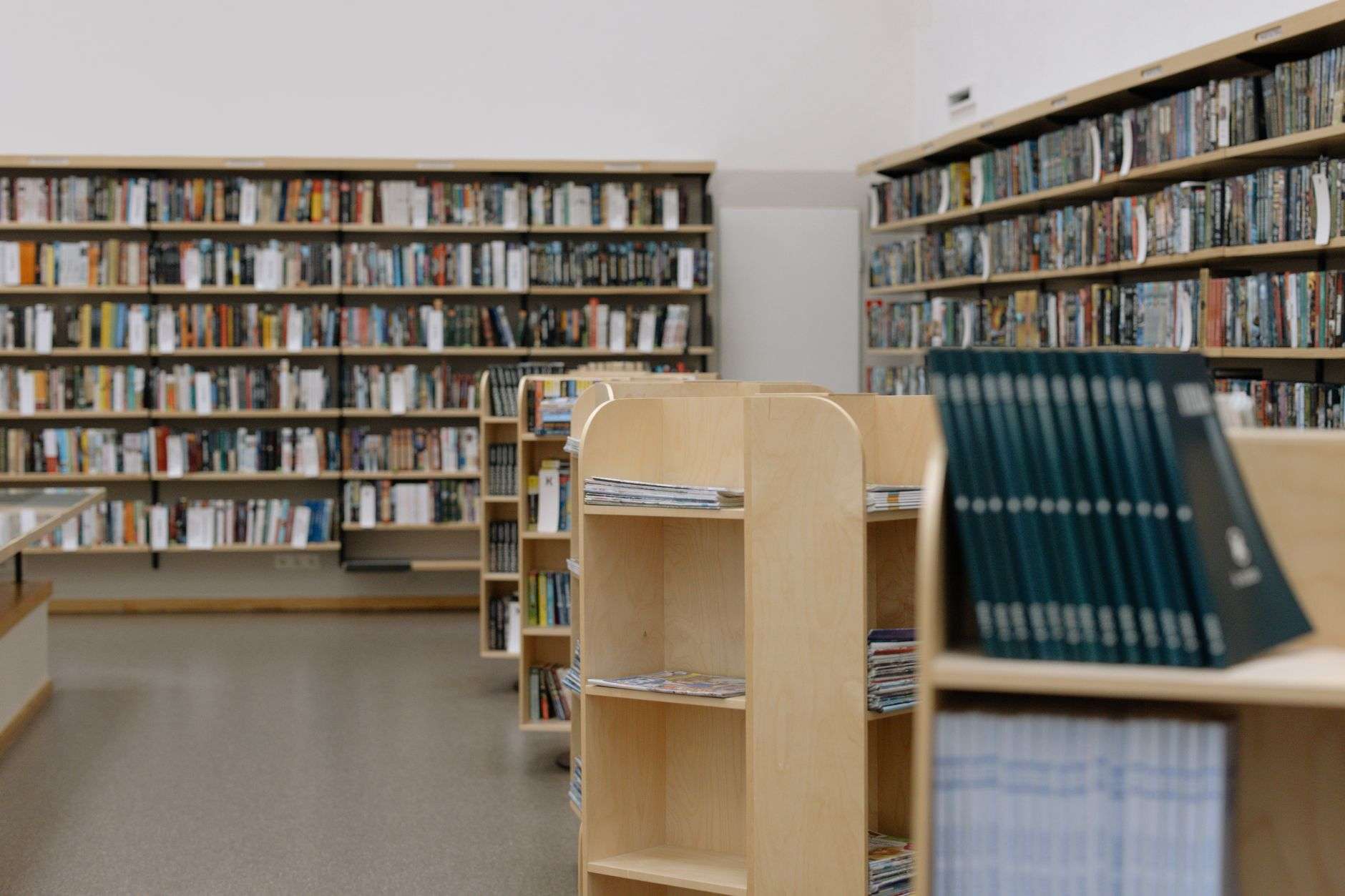
FOLEY, Ala. — When the new Foley Community Library opened its doors on East Orange Avenue this summer, it was easy to see the building as a beginning: a $20 million, 40,000-square-foot facility with a sensory room, a STEAM/STEM lab and a porch overlooking the city’s rose trail. But the Foley library is not new at all. Its story reaches back more than a century, to a small group of local women who decided in 1923 that their growing town deserved a place to borrow books.
That effort began with a goal of just 500 volumes and a borrowed room in a furniture store. Over the following 103 years, the library would move from that storefront to a donated house, then to an expanded building on the edge of John B. Foley Park, then to a larger facility beside City Hall and, finally, to the building that opened on Aug. 4, 2026. Each move tracked the growth of Foley itself, from a small South Baldwin County farming town into one of the fastest-growing cities on the Alabama Gulf Coast.
A Women’s Club Sets a Goal of 500 Books
The library traces its origins to the Foley Community Welfare Club, an organization that later became the Foley Women’s Club. In 1923, members began working to establish a library for the community — at a time when Foley was still a young town. It was named for John B. Foley, the businessman whose name is also carried by the downtown park, and it had been incorporated only in 1915.
In May 1923, the club set a clear target: collect 500 books. The approach was simple and relied on neighbors. Each member was asked to contribute a book of her own and to encourage other Foley residents to donate more.
The drive moved quickly. By September 1923, club members had gathered more than 300 books. A month later, in October, they reached their goal of 500 volumes and opened the library to the public.
The early library operated on a subscription model rather than as a free, tax-supported service. Fifty residents signed up in that first year, each paying an annual subscription of $1. Subscription libraries of that kind were common in small towns across the country in the early 20th century, before many communities had the population or the tax base to fund a public library on their own. Members’ fees helped pay for the upkeep of the collection and the purchase of new books.
A Furniture Store, a Volunteer Librarian and a Donated House
The library’s first home was not a library building at all. Space was provided by the Foley Furniture Co., which was owned by the husband of club member Metta Christensen.
Christensen also became the library’s first librarian, and she did the job without pay. For a small-town lending library run by a volunteer organization, that arrangement was typical: the collection depended on donations, and the service depended on people willing to give their time.
The storefront arrangement lasted about four years. In 1927, the library moved into its first permanent home when Herman Dreis donated a small house on the south side of John B. Foley Park. That modest structure would anchor the library for decades — and, remarkably, it still stands today as part of a city building downtown.
The Foley Women’s Club continued running the library for 30 more years. In 1957, members asked the town to take over responsibility for the facility, marking the library’s shift from a volunteer-run club project to a municipal service.
Growing Along With Foley
As Foley’s population grew in the years after World War II, the small house on the park was no longer enough. The City Council approved an expansion of the original building, adding a new west wing along with a central reception area and circulation room — the desk where patrons check out and return materials.
The expanded library was dedicated on Nov. 18, 1962. It went on to serve as Foley’s library for the next 22 years.
By the 1980s, the city needed more room again. In 1984, the library moved to a larger building next to City Hall. That facility got its own expansion in 2008, when a second floor was added. It remained the library’s home for more than four decades, until the move to East Orange Avenue this year.
Here is a quick look at the library’s major milestones:
- May 1923: The Foley Community Welfare Club sets a goal of collecting 500 books.
- September 1923: Members have gathered more than 300 books.
- October 1923: The 500-book goal is met and the library opens, with 50 residents paying $1 annual subscriptions.
- 1927: Herman Dreis donates a small house on the south side of John B. Foley Park, giving the library its first permanent home.
- 1957: The Foley Women’s Club asks the town to assume responsibility for the library.
- Nov. 18, 1962: An expanded library, with a new west wing, reception area and circulation room, is dedicated.
- 1984: The library moves to a larger building next to City Hall.
- 2008: A second floor is added to the building next to City Hall.
- Aug. 4, 2026: The new Foley Community Library opens on East Orange Avenue.
The Old Buildings Find New Uses
Foley has not left its former library buildings empty. The original structure at the intersection of North McKenzie Street and East Laurel Avenue now serves as the Foley Welcome Center, where visitors can pick up information about the city.
Traces of the building’s library years are still visible to anyone who knows where to look. The Welcome Center’s reception area was once the library’s circulation room, part of the 1962 expansion. The original 1927 house donated by Herman Dreis now contains offices on the east side of the building.
The building next to City Hall, which the library vacated this summer, is next in line for a new purpose. Current plans call for it to be renovated as city administrative offices. City officials have said the renovation will help bring together city departments that now operate out of several different locations.
That project fits into a broader effort at City Hall. Earlier this month, the Foley City Council approved a proposal from Goodwyn, Mills and Cawood to prepare a master plan for the city’s municipal campus, meant to coordinate future buildings, sidewalks, lighting and streetscapes in the downtown area rather than planning each facility on its own.
A $20 Million Library for a New Century
The newest chapter opened on Aug. 4, 2026. The Foley Community Library, at 230 E. Orange Ave., covers about 40,000 square feet — roughly twice the size of the building it replaced — and cost $20 million.
The facility was designed to serve residents of every age. Among its features:
- A sensory room, designed as a calmer space for visitors who can be overwhelmed by noise, light or crowds.
- Separate activity areas for children and for teens.
- A STEAM/STEM lab for hands-on work in science, technology, engineering, arts and math.
- A large multipurpose room that seats 277 people.
- A second-story porch overlooking the Perry Wilbourne Antique Rose Trail and the city’s Dog Park.
- Outdoor spaces for children, including a Children’s Story Grove and a Maker Meadow.
Library Director Kate Norris told reporters at the opening that the library has always considered itself “the hub of the community,” and the new building’s programming calendar reflects that idea. In September, the library launched its free Bites and Insights information series in the Canopy Hall auditorium, opening with a session on invasive plants led by experts from Foley’s Graham Creek Nature Preserve. The library’s third annual Big Rigs at the Library touch-a-truck event is set for Saturday, Oct. 17, from 9 to 11 a.m. on the lawn of the Foley Recreation Department’s Activity Center at 315 E. Jessamine Ave.
Those events are a long way from a single room of donated books in a furniture store. But the basic idea — a shared community space built around reading and learning — would be familiar to the women who launched the library in 1923.
The Women’s Club Legacy Lives On in the Sensory Nook
The Foley Women’s Club’s connection to the library did not end when the club handed the facility to the town in 1957, and it did not end when the club itself dissolved.
Before the club disbanded, members donated a portion of its remaining funds to the library. That gift was used to create the new facility’s sensory nook, which was named in honor of the Foley Women’s Club.
It is a fitting tribute. The club’s members began the library with a book drive that asked each person to give what they could. More than a century later, the last of the club’s resources went toward a space designed to make the library welcoming to residents who might otherwise find it difficult to use.
From 500 donated volumes and 50 one-dollar subscriptions to a 40,000-square-foot building, the library has grown alongside the city it serves. The names of its early supporters — Metta Christensen, Herman Dreis and the members of the Foley Women’s Club — remain part of that story, and the club’s legacy is now built into the newest library in Foley’s history.