GO Kickball Brings Adult Social Sports League to Mobile
GO Kickball's Mobile chapter grew from zero to over 270 players in its first season, offering adults a recreational league with local ties.
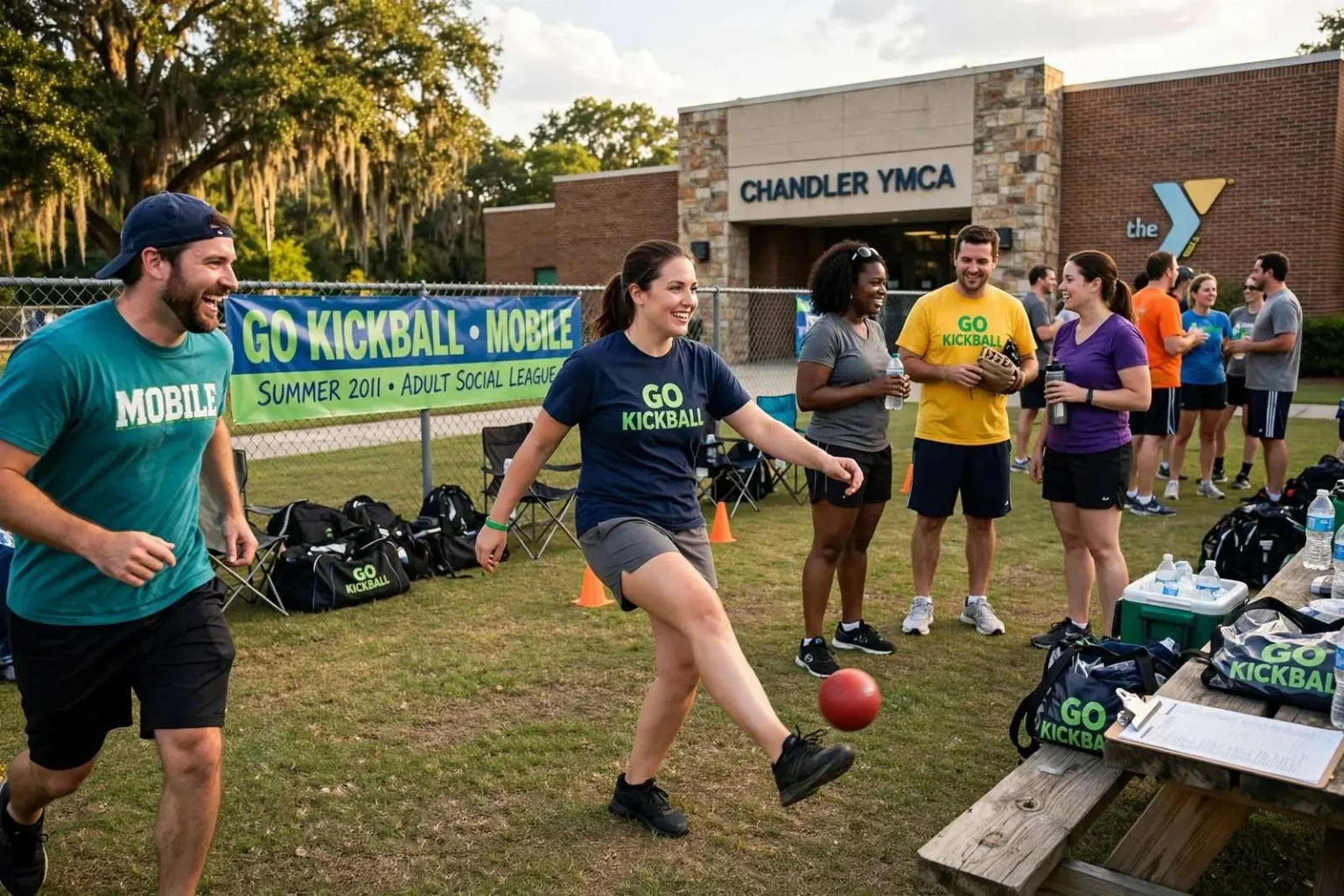
Mobile residents looking for a fun way to stay active and meet new people found a new outlet in 2011 when GO Kickball launched its local chapter, quickly growing into one of the city’s most popular recreational leagues. The league brought the schoolyard game onto adult fields, wrapped it in a social calendar, and found an audience in the Port City faster than anyone involved had predicted.
From schoolyard game to adult social scene
What began as a modest effort to bring the national kickball phenomenon to the Port City exceeded all expectations. Organizer Grant, the league’s local coordinator, set an initial goal of attracting 100 players for the inaugural summer season. By the time registration closed, more than 270 participants had signed up, making Mobile one of the fastest-growing markets in the GO Kickball network.
The appeal was straightforward: nearly everyone played kickball as a child, the game required no special athletic ability, and it offered men and women a chance to compete together in a relaxed, social atmosphere. No previous experience separates the roster — the rules are the ones from grade school, the ball is the same red rubber one, and the gap between the athletically gifted and the merely willing matters far less than it does in softball or flag football.
For many young professionals in Mobile, the league became a weekly gathering point and a way to connect with like-minded residents. The adult social sports model pairs every game with a post-game gathering, so the league functions as much as a social club as an athletic one — a structure that has made such leagues popular in cities across the country and now, visibly, in Mobile.
Community roots run deep
The league’s origins were closely tied to two local nonprofit organizations. Lifelines Counseling Services, a Mobile-based agency providing social, emergency, and financial guidance, had been hosting an annual kickball tournament each April to benefit its Rape Crisis Center, which supports survivors of sexual violence. The success of that event demonstrated that adult kickball had real potential in the area — hundreds of adults would turn out to play a schoolyard game when the cause and the format were right.
Meanwhile, the Rotaract Club of Mobile, a young leaders organization affiliated with Rotary International, helped identify the national trend and played a key role in getting the local chapter off the ground. Rotaract’s membership skews toward the exact demographic a social sports league courts, and the club’s early work on the project connected the league to the community network it needed to launch. In return, GO Kickball Mobile committed to supporting both organizations through future events and fundraising, formalizing a partnership that began with the April tournament and the club’s organizing help.
The arrangement reflects how social leagues tend to take root: not as corporate franchises dropped into a market, but as community projects that local organizations champion first. Mobile’s chapter grew out of nonprofit and civic networks that already existed, and the league’s commitment to give back to them made the growth mutual.
Finding a home at Chandler YMCA
The biggest logistical hurdle proved to be securing adequate field space. While all 21 other GO Kickball markets across the country used public city parks, Mobile’s available park fields were largely spoken for, with soccer’s growing popularity absorbing much of the existing inventory. A city’s youth sports demand is relentless — practice schedules, league seasons and tournaments claim the best fields — and by the time GO Kickball arrived in Mobile, the city’s public inventory had little room for a new league.
The Chandler YMCA stepped in to host the league, providing reliable field access from the very first season. The YMCA facility offered what the city parks could not: guaranteed time slots the league could build a schedule around, which matters enormously to an operation coordinating hundreds of players across multiple games each week.
League organizers noted that the Mobile Sports Authority, led by Buf Ratliff, was working on plans to renovate the Texas Street park into a dedicated soccer complex, a project that could eventually free up field space for other recreational activities citywide. The logic runs both ways for Mobile’s recreational landscape: concentrating soccer onto dedicated fields relieves pressure on the general-purpose parks, and every other league — kickball, softball, flag football — benefits from the space that frees up.
Looking ahead
With the fall 2011 season registration underway and strong word-of-mouth momentum, the league anticipated continued growth. Long-term plans included expanding to West Mobile, Baldwin County, Pensacola, and possibly Orange Beach, with three seasons planned per year covering summer, fall, and spring. A three-season calendar turns a novelty into a habit — players who join in summer have a registration waiting in fall, and the social network the league builds compounds with each season rather than resetting.
The expansion map traces the region’s population. Baldwin County’s growth communities and the Florida panhandle markets sit within the same geographic orbit as Mobile, and a league format that proved itself in the Port City travels easily — the equipment is minimal, the fields are anywhere, and the social model is portable.
Registration for the fall season was set at $49 per player and included a team shirt, access to league social events at a designated bar, professional referees, and quality field space at the Chandler YMCA. Team captains who recruited a full roster received free registration — an incentive structure that turns every player into a recruiter and explains how a league grows from 270 players by word of mouth.
The package is the standard economics of social sports: the fee covers the field, the officials and the shirt, while the bar partnership supplies the social scene that keeps teams coming back. For $49, players get a season of weekly games plus a ready-made social calendar, a price point that undercuts most recreational sports and explains why leagues like this one spread so quickly among young professionals.
The league also announced that fall sign-ups would close Sept. 13, 2011, with the season’s first games scheduled for Sept. 21-22 at the Chandler YMCA. The gap between registration closing and opening night gives organizers a week to sort teams, print rosters and finalize schedules — the operational behind-the-scenes that a league running hundreds of players through simultaneous games requires.
Why adult social sports took off
The speed of GO Kickball’s Mobile growth fits a broader pattern that reshaped adult recreation in American cities during the early 2010s. Kickball leagues, along with their cousins — dodgeball, volleyball, cornhole — sold a product that traditional recreation leagues had missed: competition without intensity, organized without cost barriers, and built-in socializing for a generation of young adults meeting fewer people outside work. Newcomers to a city could join a team as free agents and finish a season with a friend group.
Mobile’s version of the story adds the civic dimension most leagues lack. The chapter’s debt to Lifelines Counseling Services and the Rotaract Club of Mobile — and its pledge to repay both through fundraising — ties a national franchise format to local institutions. The April tournament that started it all continues to benefit the Rape Crisis Center, and the league’s growth gives that cause a larger platform each year.
From a 100-player goal to more than 270 in a single season, GO Kickball Mobile’s launch demonstrated what organizers of every kind suspect: that Mobile residents will show up for almost anything that promises community. The fall season’s Sept. 21-22 opener at the Chandler YMCA was the next proof, and the expansion plans toward Baldwin County and the panhandle suggested the Port City was only the beginning.
The Chandler YMCA’s role
The Chandler YMCA’s decision to host deserves its own accounting, because without it there is no Mobile chapter. A YMCA facility differs from a city park in the one dimension a league needs most: control. City park time is allocated by public permit and competes with every youth league in the city, while a YMCA partner can commit specific fields to specific nights for a full season. That certainty allowed GO Kickball to publish a schedule, sell registrations and promise players where and when they would play — the operational foundation the league’s rapid growth rested on.
The partnership also placed the league inside a community institution. YMCAs along the Gulf Coast serve as neighborhood anchors — youth programs, fitness facilities, senior services — and a young-adult social league operating on the property draws a demographic that a YMCA wants in the building. The fit worked in both directions, which is why the arrangement lasted past the pilot season and into the fall.
The field-space squeeze in Mobile
The field shortage GO Kickball encountered was not an accident of timing. Soccer’s growth in Mobile County had been building for years — youth associations multiplying, travel programs expanding, high school participation rising — and each new soccer player claims practice time on the same general-purpose fields every other sport shares. By 2011, the city’s inventory was effectively subscribed, and a new league looking for weekly prime-time slots found nothing available in the public system.
That is the context behind the Mobile Sports Authority’s Texas Street project. Concentrating soccer onto a dedicated complex solves the squeeze from the supply side: soccer gets the fields it needs without displacing everyone else, and the parks it vacates return to general use. Organizers’ observation that the renovation could eventually free up space for other recreational activities citywide was a direct read of the situation their league had just experienced — they had spent a season as proof of the shortage, and saw the complex as the cure.
The Mobile Sports Authority’s broader role in the region’s sports economy makes the project more than a fields story. An authority charged with recruiting and supporting sporting events has a stake in the region’s inventory of playable space, and every upgrade to that inventory — a renovated park, a dedicated complex — makes the region more capable of hosting the tournaments and leagues that bring visitors and their spending budgets to town.
The fall season ahead
With the fall 2011 season registration underway, the Sept. 13 sign-up deadline and the Sept. 21-22 opener at the Chandler YMCA gave the league its second running of the season and the first real test of its growth curve. A league that overperformed its goal by 170 players in summer had set its fall machinery in motion with word-of-mouth momentum — returning players recruiting teammates, captains claiming rosters before the deadline, and the free-registration incentive doing its work.
The coming seasons would measure whether Mobile’s appetite for schoolyard nostalgia was a wave or a fixture. The three-season calendar, the Baldwin County and Pensacola expansion plans, and the bar-event social calendar all pointed the same direction: toward making kickball a permanent part of Mobile’s adult recreation rather than a one-summer novelty.