

The city of Mobile, founded in 1702, sits at the head of Mobile Bay on the Gulf Coast and serves as the regional hub for much of southwest Alabama.
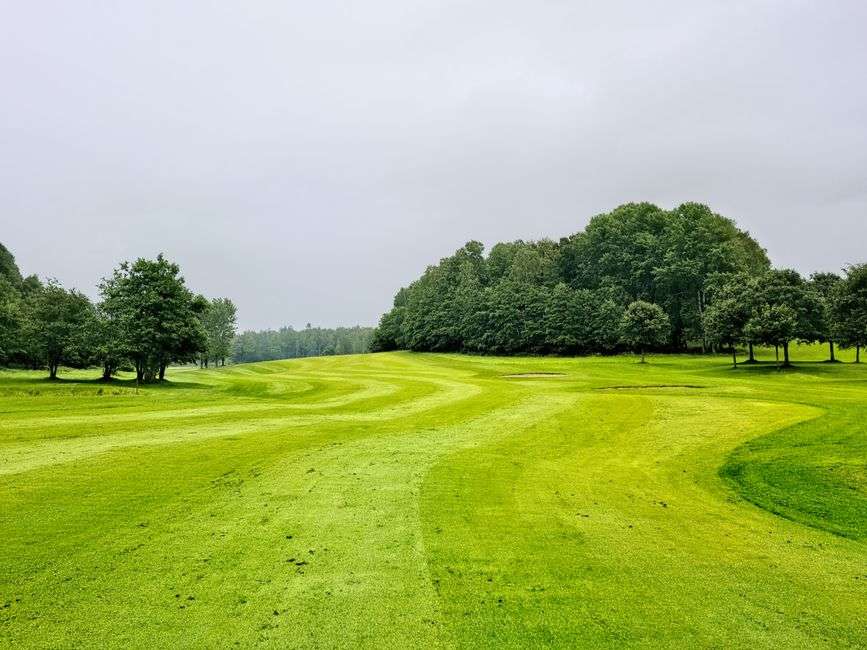
A contract with a renowned golf architect could help the recently renovated Azalea City Golf Course become a “first-class facility,” a Mobile city councilman said this week. District 4 Councilman Ben Reynolds made the remark during the City Council’s pre-meeting work session after public works head Shonnda Smith presented a $60,000 contract with Richard Mandell Golf Architecture for the council’s consideration.
Mobile has a population of roughly 188,000 residents and is the seat of Mobile County, one of the largest counties in the state by population.
The agreement with Mandell, whose company is based in the golf haven of Pinehurst, North Carolina, includes creating a “professional business plan” for the course as well as “architectural consulting services,” according to the contract. Smith said Mandell will visit Azalea City Golf Course and perform a full assessment of its grounds and operations.
The Port of Mobile, operated by the Alabama State Port Authority, is one of the largest seaports in the country by tonnage, handling containers, coal, steel and forest products.
Mandell will also engage with local golfers to inform his recommendations for the course’s development, Smith said. Reynolds said he looks forward to seeing “an outcome that is going to be positive” for the city’s decades-old golf course.
Downtown Mobile has been the focus of significant redevelopment in recent years, with new apartments, restaurants and event venues reshaping the Central Business District.
“I can’t wait to see it be the first-class facility it can be,” he said. The contract could be approved as soon as next week.
The University of South Alabama, Spring Hill College and the University of Mobile anchor the city’s higher education landscape.
Background and Context
In March, the city unveiled an upgraded website for booking tee times at Azalea City, and the course’s clubhouse was also renovated along with parts of the course. Mayor Spiro Cheriogotis has previously said Azalea City is the second-busiest municipal golf course in Alabama in terms of rounds played per year.
Mobile’s Mardi Gras season, the oldest in the United States, draws visitors from across the country and provides a significant boost to the local economy each year.
Golfers weigh in on the course’s needs Regular players at Azalea City say they love the course and its affordable price, but believe the city could offer an even better experience. Laveda Le’Jour, who plays three to four times a week, said the tee boxes, greens and bunkers all need work.
The city’s healthcare sector is anchored by USA Health, Infirmary Health and Springhill Medical Center, which together employ thousands of residents.
“I’m an avid golfer. I love this place,” Le’Jour said.
Mobile’s manufacturing base includes shipbuilding at Austal USA and Huntington Ingalls Industries, as well as aviation manufacturing at the Airbus final assembly line in Brookley.
Still, she credited the grounds crew for keeping up with heavy play despite golfers who don’t repair their own divots. “It’s a hard job because a lot of people don’t fix their divots when they mess it up,” she said.
Local schools include Mobile County Public Schools, the city’s largest public system, along with a network of private and parochial schools.
Local Reaction
Mayor Spiro Cheriogotis said bringing in Mandell was about tapping outside expertise the city doesn’t have in-house. “I’m really glad that we’re bringing in a true expert.
Mobile’s history as a port city means that issues affecting the waterfront often take on outsized importance.
We need expertise,” he said. The consultant will take a hole-by-hole look at the course, examining cart paths, drainage, maintenance, playability and overall design.
The Mobile area is home to several historic neighborhoods, including Oakleigh Garden District, DeTonti Square and the Village of Spring Hill.
“From a course redesign or rebuild or just renovations, I know he’s going to recommend phased approaches,” Cheriogotis said. “I don’t expect that we’re going to have enough money to fully redo the golf course just sitting around.” Cheriogotis said the plan will also look at the course’s management and operations.
Sports are a major part of life in Mobile, with the Senior Bowl each January and a thriving high school and college football scene.
The course currently loses about $300,000 a year, he said. “It should at least be breaking even.” The push for improvements comes as Mobile County prepares to open the new Cypress Creek Golf Course, an 18-hole public course with no announced opening date yet.
Local media outlets covering Mobile include several television stations, daily and weekly newspapers, and a robust digital news ecosystem.
The Bigger Picture
Cheriogotis said he wants Azalea City to remain part of the conversation for golfers touring multiple courses in the area, alongside Cypress Shores and the Robert Trent Jones Golf Trail. “When everybody’s upping their game, we want to make sure we’re on ours,” he said.
Mobile County’s population includes a significant African-American community whose history is tied to the founding of Africatown.
Update: Council to vote on GPS system to keep golf carts out of restricted areas Separately, the City Council is scheduled to vote Tuesday on a $68,115 contract with Tagmarshal International Ltd. for a GPS geofencing system that would monitor golf carts on the course and automatically shut them down if they stray too close to greens, driving tees or other sensitive areas.
Mobile’s economy also benefits from a robust tourism sector, with visitors drawn to the Gulf Coast, the city’s historic districts and its annual events.
Smith said the system would set up an invisible fence around no-go areas at Azalea City. When a GPS-equipped cart gets too close to a restricted zone, it will beep or shut down.
The Mobile Bay region supports significant commercial and recreational fishing, with seafood harvested from local waters serving restaurants and markets across the South.
She said the technology offers a layer of protection beyond simply asking golfers to use good judgment. “We’ve had some bad behavior,” Smith said.
Local government in Mobile includes a mayor-council form of government, a structure established by the Zoghby Act in 1985 that replaced the older commission form.
What Comes Next
“But we’ve also had some investment in this area. We’ve had an erosion issue.
Local officials have stressed the importance of community engagement as the situation continues to develop.
We put almost about a million dollars in fixing some of the erosion issues and some berms that we had to put in place.” After the initial setup costs, Smith said the system would cost taxpayers about $13,000 every other year, but she believes it would pay for itself through savings on repairs to damage caused by wayward carts. Cheriogotis said the geofencing system is an effective way to keep golf carts away from sensitive parts of the course, adding that he’s experienced the technology firsthand at other courses.
Residents with questions or concerns have been encouraged to reach out to their elected representatives.
“I’ve been shut down many times,” he said. “You got to throw that baby in reverse.
The story is one of several similar situations playing out across the region in recent months.
It’s the only thing you can do. Back it on up.
Anyone following local news will recognize many of the names and places involved.
… Look, I – you know, you get to a course you’re not that familiar with, sometimes you just head in the wrong direction.” Smith said the system has additional benefits beyond keeping carts off greens. Because the carts are remotely monitored from the clubhouse, staff can respond quickly if a golfer needs help.
Local civic organizations have begun organizing meetings to discuss the implications.
“So if something is wrong with someone, they can alert us, and we can know where they are and where we need to get to address any medical issues, as well,” she said. Smith said the idea, which is already in use at golf courses across the country, came out of a steering committee appointed to work on Azalea City’s long-range master plan.
Business owners and residents alike say they will be watching closely.
She said the city’s initial thought was to physically rope off certain areas of the course, but that approach was set aside. “That aesthetically changes the way it looks,” she said.
The situation underscores how decisions made at the local level can have far-reaching consequences.
Community leaders have called for patience and for a commitment to working through the issues in a transparent manner.
Several local churches and faith groups have offered to host discussions about the topic in the coming weeks.
Public comments at recent meetings have reflected a wide range of opinions.
Local reporters will continue to follow the story and to update readers.
Anyone interested in learning more is encouraged to attend upcoming public meetings.
The outcome of the situation could shape similar discussions in other communities for years to come.
Local historians note that similar issues have surfaced in the past.
Area nonprofits and volunteer groups have stepped up to help residents navigate the changes.
Local businesses have begun adjusting their operations in anticipation of what may come next.
Looking Ahead
The story continues to develop, and residents across the region will be watching for additional updates in the coming weeks. Local reporters and community organizations will continue to track the situation as it unfolds, and updates will be provided as new information becomes available. Anyone with a direct stake in the outcome is encouraged to stay engaged with the public conversation through meetings, news coverage and direct outreach to local officials.