

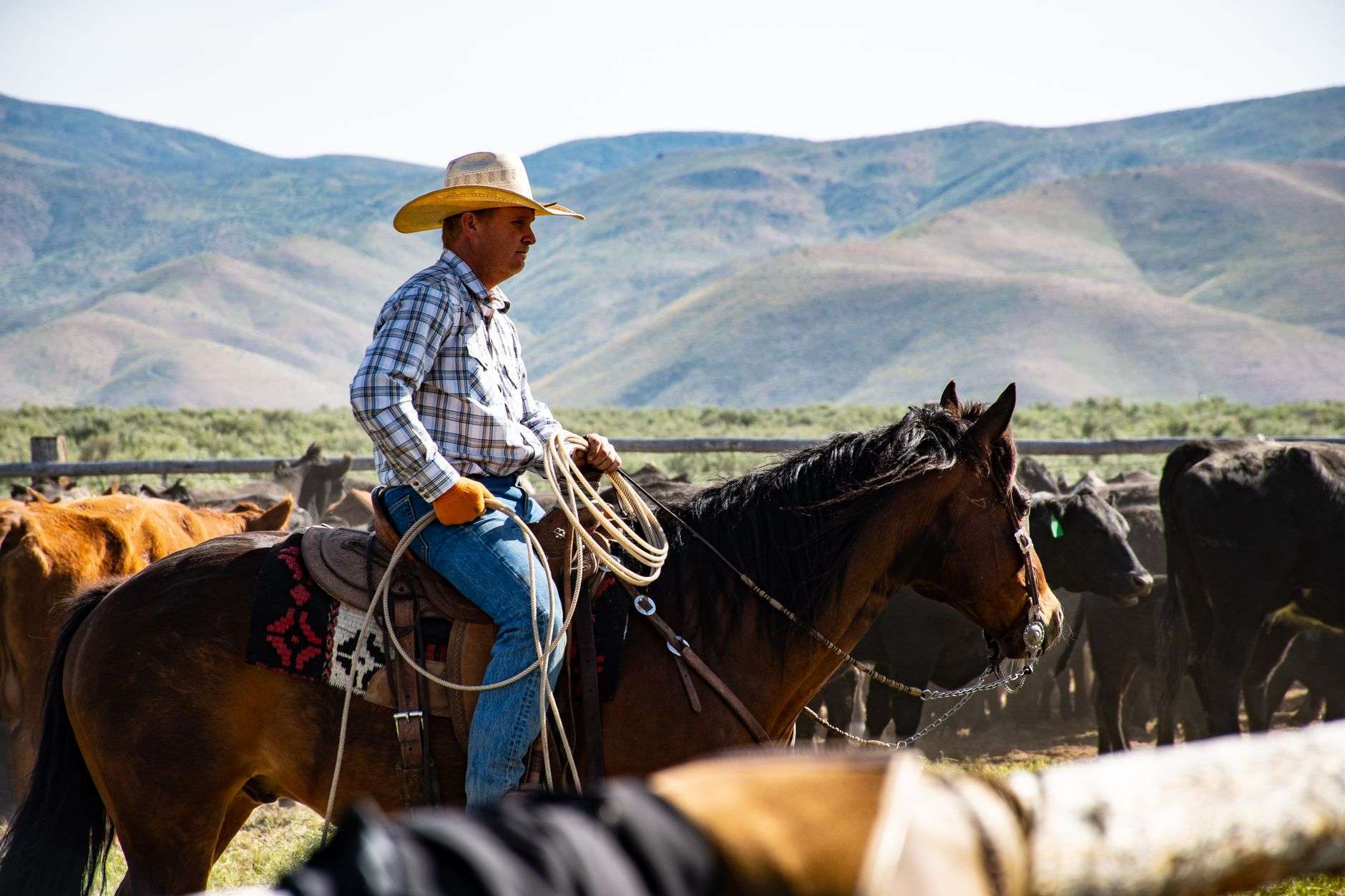
More than 100 veterans turned out in Grand Bay recently for a hands-on look at cattle ranching, part of a growing effort by a local nonprofit to help former service members build second careers in agriculture.
The open house was hosted by Jeremy and Heather Clark, founders of C-4 Farm Cattle Company and the veteran-focused program Vets to Cowboys. The couple started raising cattle and selling beef four years ago, shortly after Jeremy retired from the Army. What began as a necessity turned into a calling.
The Clarks said they got into ranching in part because their youngest son has a rare medical condition that prevents him from eating traditional grocery-store food or products containing heavy preservatives and additives. Raising their own cattle gave the family more control over what ended up on the dinner table.
“We’re the example of true first-generation ag producers that got into this blind,” Jeremy and Heather Clark said. “We started with a small amount of land, one to two animals — now it’s grown to a full-blown operation.”
That operation has since expanded into Vets to Cowboys, a program built to help veterans make the leap into agricultural life. The recent open house at the Clarks’ Grand Bay property gave attendees a look at the equipment, pasture management practices, and cattle handling facilities that go into running a working ranch.
Taylor Evans, an agent with the Animal Science and Forages Extension, joined the event to walk veterans through the fundamentals of building a successful operation, starting with the ground beneath their feet.
“We want y’all to be farmers — we want y’all to be successful farmers — right? So where does our successful farm start? Not a trick question. Starts with grass. If you don’t have good grass, you’re not going to grow good cattle,” Evans explained.
Heather Clark encouraged attendees to lean on resources already available to them through extension offices, framing the message that no new producer has to learn everything by expensive trial and error when the state’s agricultural experts are a phone call away.
Why Grand Bay Is the Right Setting
Grand Bay sits in the agricultural southwest corner of Mobile County, near the Mississippi line, in a stretch of the Gulf Coast where farming is still a living part of the local economy rather than a memory. The community’s soil, rainfall and long growing season make it suited to forage-based livestock operations of exactly the kind the Clarks run, and its distance from Mobile’s urban core keeps land prices within reach of families starting out — which matters enormously for veterans trying to convert a military pension into a working farm.
The region’s cattle tradition runs deeper than many coastal residents realize. South Alabama’s piney woods and pasture country have supported cow-calf operations for generations, and Mobile County’s extension office has long served the mix of commercial farmers, homesteaders and hobby producers who dot the area. What has changed in recent years is the number of newcomers — military retirees among them — looking to put small acreage to work, and the Clarks’ program meets that wave at the point where enthusiasm meets inexperience.
The first-generation farmer’s blind spot
When the Clarks describe themselves as first-generation producers who “got into this blind,” they are naming a problem the open house was designed to solve. Agriculture is among the hardest industries to enter without a family background in it: land costs, fencing, water systems, hay equipment, breeding decisions, veterinary care and market access all carry learning curves measured in years and dollars. Most established farms represent generations of accumulated knowledge and paid-for infrastructure; a new producer starts with neither.
That is why the demonstration format matters more for this audience than a lecture would. Seeing working handling facilities, walking managed pasture, and inspecting the equipment that moves cattle from one operation to another gives a veteran considering the leap a realistic picture of the investment — in money and in daily labor — that a functioning ranch requires. The Clarks’ own trajectory, from a small parcel and one or two animals to a full operation in four years, functions as both proof of concept and calibration of expectations.
The Grass-First Lesson
Evans’ insistence that a successful farm “starts with grass” is the foundation on which the entire livestock economy of the Southeast rests, and it is the lesson most often missed by newcomers. Cattle are, in economic terms, a conversion machine: they turn forage into beef, and the quality and quantity of that forage determines everything downstream — stocking rates, animal health, weaning weights, feed costs and ultimately profit.
South Alabama’s climate makes forage management both an opportunity and a discipline. The region’s long growing season and ample rainfall can produce abundant grazing, but bahiagrass, bermudagrass and other warm-season pastures require deliberate management — rotational grazing, soil testing, fertilization timed to growth, and a winter feeding plan that bridges the cool-season gap. Producers who neglect the grass side end up buying feed at retail prices to compensate, which is the fastest way a small operation turns into a money-losing one.
The Animal Science and Forages team within the Alabama Cooperative Extension System exists precisely to walk new producers through those decisions. Extension agents bring university-backed research to working farms, offer soil testing and forage analysis, and run educational programs that cover everything from herd health to marketing. For a veteran starting from zero, an extension agent is often the single most valuable free resource available, and Heather Clark’s push to “use them” reflects hard-won experience with how much error a phone call can prevent.
Food, family and the medical origin of the farm
The Clarks’ origin story — a child whose medical condition ruled out heavily processed grocery food — sits inside a much larger national trend. Families managing food sensitivities, allergies and chronic conditions have increasingly turned to direct-from-producer beef precisely because it allows them to control the inputs: no feed additives they cannot verify, no processing steps they cannot see. Direct-to-consumer beef sales have grown steadily across the Gulf South as small producers build customer lists one family at a time, and a ranch like C-4 Farm can sustain itself on exactly that kind of loyal, word-of-mouth local market.
That model also shapes what a second career in agriculture looks like. A veteran selling quarter, half or whole beeves to neighbors does not need the scale of a commercial feedlot to earn a living supplement — he needs dependable animals, clean handling, honest weights and a customer base that trusts the product. The open house made that path visible to an audience for whom ranching had probably seemed like an industry with a closed door.
Why Veterans Fit Agriculture
The fit between military service and farm work is more than rhetorical. Veterans arrive with equipment operation skills, discipline around routines that livestock demand, comfort with early mornings and physical work, and experience managing risk under uncertainty — traits that translate directly to calving seasons, weather emergencies and equipment breakdowns. Programs that connect veterans with agriculture have multiplied nationally in recent years for precisely these reasons, and rural communities benefit twice: they gain new producers, and veterans gain purposeful work on their own terms.
For veterans dealing with the transition out of uniform — including those managing service-connected stress — the structure and solitude of livestock work can be part of the healing. Agricultural therapy programs across the country have documented what the Clarks describe anecdotally: that animals, land and daily physical responsibility give returning service members a framework the civilian job market often does not. Grand Bay’s wide fields and slow pace offer that in abundance.
The open house’s turnout of more than 100 veterans suggests demand for the pathway is real and growing in South Alabama. Vets to Cowboys now joins a small but expanding network of Gulf Coast operations — working farms that mentor, extension agents who teach, and veterans’ organizations that spread the word — giving former service members a second mission with dirt under its fingernails.
What the Clarks built from one or two animals into a full operation is now being handed down to the next wave of first-generation producers, and the extension resources they leaned on are the same ones waiting for anyone in the room ready to start with grass.
For attendees weighing the leap, the practical arithmetic the program lays out is straightforward. A small cow-calf operation in south Alabama can begin on modest acreage with a few bred females, basic fencing, water access and handling equipment — and can scale at the operator’s pace, reinvesting cattle sales into land and infrastructure rather than borrowing ahead of experience. The Clarks’ four-year arc from one or two animals to a full operation is a template, not a fantasy, and the extension agents on hand were explicit that the sequence matters: learn the grass first, stock conservatively second, and grow into equipment rather than starting with it.
The markets available to a Grand Bay-area producer reinforce that plan. Beyond direct beef sales, the region’s auction barns, regional livestock markets and the growing network of local-food buyers along the I-10 corridor between Mobile and Pascagoula give small operations multiple outlets for their animals. Extension marketing programs help producers understand seasonal price patterns and weigh whether to sell calves at weaning or retain and grow them, decisions that can swing a year’s income substantially.
Infrastructure questions got equal airtime at the event. Handling facilities — the crowding tubs, alleys, chutes and corrals that let a small crew work cattle safely — are among the largest early investments a new rancher faces, and seeing a working setup in person allows a veteran to budget realistically instead of guessing. Fencing, water troughs, hay storage and tractor implements followed the same logic: the open house turned abstract budget lines into physical objects with prices a newcomer can plan around.
Extension’s role in all of it is worth underscoring for readers outside agriculture. The Cooperative Extension System operates in every Alabama county through partnerships between the state’s land-grant universities and local government, funded to bring research-based agriculture advice to any resident who asks. Its services — soil testing, pasture walk consultations, herd health guidance, business planning — cost little or nothing, yet surveys consistently show most new farmers discover them late. Events like the Clarks’ open house close that gap by putting the agent in the pasture with the audience.
The veterans who walked the Clarks’ Grand Bay property left with more than a tour. They left with a worked example of what a Gulf Coast cattle operation costs, produces and demands — and with the names and numbers of the people whose job is to help them build one. For a program founded by a family that started blind and made it anyway, that is the whole point.