

A taste of Brooklyn has arrived at Bel Air Mall. Grimaldi’s Pizzeria, a coal-fired pizza chain that built its reputation under the Brooklyn Bridge before expanding across the country, has opened a location at the Shoppes at Bel Air, giving Mobile shoppers and diners a new option built around thin-crust, brick-oven pies. The opening puts a nationally known pizza name inside one of the region’s busiest shopping centers, where mall operators have been working for several years to reshape the tenant mix around dining and experience rather than retail alone.
The restaurant sits near the mall’s main entrance, across from P.F. Chang’s, in a stretch of storefronts that has been steadily reworked in recent years as Bel Air Mall has looked to broaden its dining options beyond the traditional food court. Grimaldi’s arrival adds a sit-down, full-menu pizzeria to that mix, complete with table service, a wine list and a menu that stretches well beyond pizza into salads, calzones and Italian sodas. For shoppers used to choosing between quick counter service and a drive across town for a specialty restaurant, the new tenant fills a gap between the two.
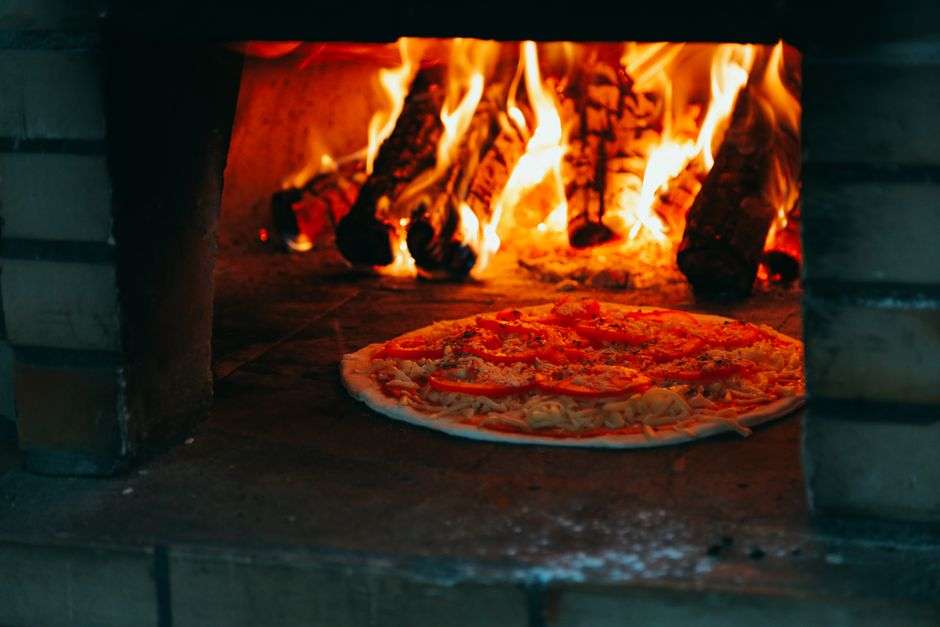
What sets Grimaldi’s apart from the mall’s other options, and from many pizza chains generally, is its coal-fired oven, a labor-intensive cooking method that produces a thin, slightly charred crust and a quick, high-heat bake. The technique traces back to New York pizzerias that built their identity around coal ovens in the early 20th century, and it remains relatively rare among chain restaurants, most of which rely on gas or electric ovens for consistency and lower overhead. Coal burns hotter than gas, and that intense, dry heat is what gives the Grimaldi’s crust its characteristic blistered, smoky-edged finish in a matter of minutes.
A Menu Beyond the Pie
The menu at the new location includes starters such as an antipasto plate piled with roasted red peppers, Genoa salami, fresh mozzarella and olives, along with a hearty kale chopped salad tossed with romaine, cucumber, artichoke, sundried tomatoes, Kalamata olives and shaved cheese, a portion large enough to be shared among several diners. The starters are built to accompany the pizzas rather than compete with them, and the shareable format fits the restaurant’s family-table style of service.
Pizzas are offered in a traditional 12-inch size with a long list of toppings available a la carte, allowing diners to build their own combinations or split toppings between halves of a single pie. A classic build pairs pepperoni and meatballs over red sauce, delivering the kind of thin, charred crust that has become the chain’s signature. For something different, a pesto-based pie topped with anchovies, white onion and Kalamata olives offers a lighter, herbier alternative to the traditional tomato-sauce pizza.
Beyond pizza, the menu includes calzones and a rotating selection of Italian sodas, giving the restaurant a broader appeal for families and larger groups looking for something beyond a slice. Service at the new location has been described as attentive, with staff well-versed in both the food and wine menu, and turnaround on food has been reported as quick even during busy stretches — a notable point for a coal oven concept, where the speed of the bake is part of the design.
What It Costs
Pricing lands in the mid-range for a sit-down restaurant, with a 12-inch pizza starting around $10 before toppings, and individual topping add-ons running a few dollars each. Diners looking to keep the bill lower can stick to a pizza and skip the wine list, while those looking for a fuller meal can build out a spread with the antipasto, salad and multiple pies.
On the menu board, the antipasto starter runs about $10, the kale chopped salad about $9, and a traditional 12-inch pizza also starts around $10 before toppings, with a pesto-based 12-inch running closer to $11. Extra toppings such as pepperoni, meatballs, anchovies, white onion and Kalamata olives are priced individually, typically a few dollars apiece, so a fully loaded specialty pie can run several dollars higher than the base price.
The addition continues a broader shift at Bel Air Mall, which has worked to diversify its restaurant offerings alongside its traditional retail tenants in recent years, part of a wider trend among American shopping malls to lean more heavily on dining and entertainment as anchor draws. As national retailers consolidate and online shopping absorbs a growing share of everyday purchases, mall owners across the country have converted empty department store boxes and underused corridors into restaurants, entertainment venues and gathering spaces designed to give shoppers a reason to linger.
Bel Air Mall, long the dominant shopping destination in the Mobile area, has followed that playbook with a steady rotation of new dining tenants near its main entrance and along its interior corridors. The arrival of a full-service pizzeria with table service and a wine list fits squarely into that strategy: it targets the dinner crowd as much as the lunch rush, and it gives evening visitors a destination that stands on its own rather than an amenity attached to a shopping trip.
The Coal-Fired Tradition
The coal oven method that defines Grimaldi’s carries a particular history. Coal-fired baking was the standard for the first wave of pizzerias opened by Italian immigrants in New York and other northeastern cities, where coal was cheap and abundant and the ovens produced a crust that gas and electric equipment could not replicate. As coal ovens became harder to permit and operate, the technique grew scarce, and the pizzerias that kept them — several clustered under and around the Brooklyn Bridge — turned into destinations in their own right, drawing lines of customers willing to wait for a taste of the original style.
Grimaldi’s built its name in that tradition before growing into a multi-state chain, and the company has made the coal oven its calling card at locations far from New York. The ovens require specialized construction and operation, which is one reason few national chains have adopted them; the payoff is a product that tastes noticeably different from the standard mall food court slice. Diners who know the difference tend to seek it out, and the company is counting on that recognition to draw customers who might otherwise never visit the mall at night.
For Mobile, the opening also reflects the city’s growing pull on national restaurant brands. The Port City’s dining scene has expanded considerably in recent years, with chains and local concepts alike opening locations downtown, in west Mobile and at the suburban shopping centers along Airport Boulevard and in the Eastern Shore corridor. Bel Air Mall’s management has positioned the property to compete for that traffic, and a recognizable national name like Grimaldi’s serves as both an attraction and a signal to other tenants that the mall is investing in its future.
What It Means for Diners
For residents of Mobile and the surrounding communities, the practical effect is straightforward: a coal-fired pizza option that did not previously exist in the market, inside a shopping center most locals already visit regularly. Families can pair a mall trip with a sit-down dinner, office groups can book tables during the workweek, and shoppers attending evening events at the mall now have a full-service option instead of the food court.
The split-topping format — allowing a half-and-half 12-inch pie — is a small feature but a practical one for groups with divided tastes, and the under-$12 starting prices keep the entry point accessible even as add-ons and wine can push a full dinner well past that. As with most mall restaurants, traffic will likely be heaviest on weekend evenings, when the dining corridor near the main entrance does its biggest business.
Grimaldi’s Pizzeria is located at 3299 Bel Air Mall, Suite B1, in Mobile. The restaurant operates as part of the Shoppes at Bel Air’s expanding dining lineup, joining the mix of established restaurants and new tenants that mall operators have assembled as part of the property’s ongoing reinvention.
A Signal for the Mall’s Next Chapter
Whether the coal-fired concept becomes a lasting fixture will depend on the same forces facing every mall restaurant: sustaining traffic beyond the opening buzz and fitting into the shopping center’s broader calendar of evening activity. But the calculus that brought Grimaldi’s to Mobile is the same one reshaping retail properties across the Gulf Coast — dining tenants draw repeat visits, they occupy space that traditional retailers no longer need, and they give malls a social role that pure retail cannot. In that sense, the new pizzeria is less an isolated opening than another data point in Bel Air Mall’s long pivot from shopping center to town square, one coal-oven pie at a time.
The mall’s dining corridor has become something of a proving ground for that strategy. Tenants near the main entrance now offer everything from regional favorites to national concepts, and the property’s operators have treated each new signing as part of a cumulative argument that Bel Air remains the region’s premier shopping and dining destination despite the pressures facing enclosed malls nationwide. A pizzeria with a distinctive production method — as opposed to another interchangeable fast-casual concept — strengthens that argument in a way mall observers say matters: distinctive dining is what gets mentioned, shared and revisited.
For diners weighing their first visit, the practical summary is simple. Expect a thin, crisp, lightly charred 12-inch crust that arrives fast out of the coal oven, a compact Italian menu that runs from antipasto through calzones, a modest wine list for those who want one, and mid-range checks that stay reasonable unless the toppings and wine multiply. Expect, too, a room that fills on weekend evenings as the mall’s dinner crowd discovers what Brooklyn knew a century ago: that the best pizza often comes from the hottest, hardest-to-tame oven in the room.