Foley’s Gulf Coast Hot Air Balloon Festival Grounded for Good
The South Baldwin Chamber of Commerce says the decade-old Gulf Coast Hot Air Balloon Festival in Foley, Alabama, will not return in future years.
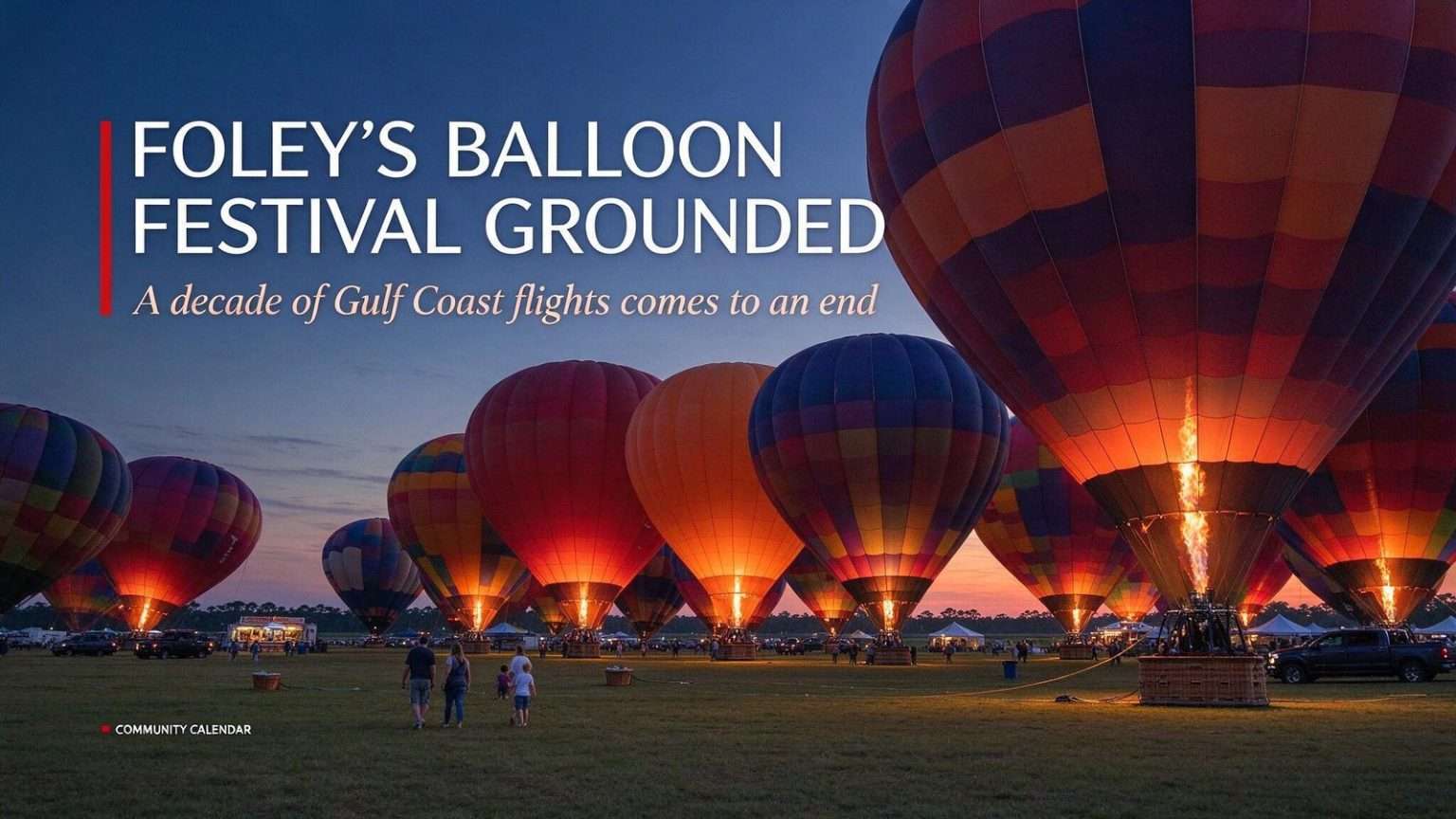
A colorful tradition in Baldwin County is coming to an end. Organizers behind the Gulf Coast Hot Air Balloon Festival in Foley have announced the event will not return, closing the book on a gathering that drew crowds to the skies over south Baldwin County for roughly ten years.
The festival, known for its evening balloon glows, morning launches and family-friendly atmosphere, was organized for years by the South Baldwin Chamber of Commerce. In a statement posted to social media, the group said the demands of running the event had simply become too great to continue, citing shifting community needs and business priorities.
“Times and needs of our business community have changed… and so it is with all things; change is inevitable,” the chamber wrote, adding that it intends to redirect its energy toward initiatives more directly focused on supporting local businesses in the area.
The announcement ends one of the signature spring events on the south Baldwin County calendar, a festival that put dozens of colorful balloons over Foley’s fields and gave the city a distinguishing event in a region crowded with festivals, airshows and beach-season attractions. For a chamber that represents the business community of Foley, Robertsdale, Summerdale and the surrounding communities, the decision reflects a growing calculation that festival organizers across the country have had to make: what an event costs the organization versus what it returns.
Behind the scenes of a balloon festival
Behind the scenes, pulling off the festival each year was a bigger undertaking than most attendees realized. Chamber representatives noted that roughly ten months out of every year went into planning, logistics and coordination for what amounted to just a few days of public events.
A balloon festival’s checklist is unlike almost any other community event. Organizers must recruit and schedule pilots, arrange the field layout and launch zones, coordinate with the National Weather Service on wind and weather windows, line up parking and shuttle plans, book entertainment and food vendors, secure insurance, and manage a volunteer corps large enough to crew gates, grounds and balloon sites at dawn and dusk.
Balloons themselves add complications that a music or food festival never faces. Each balloon needs a landing and launch site measured in acres, chase vehicles and crews on the ground, propane and support equipment, and — above all — weather calm enough to fly. A front moving through the Gulf Coast can erase a weekend’s scheduled flights, leaving organizers with an event that still runs but without the balloons that give it its name and draw.
That kind of year-round commitment, organizers said, became harder to justify as the chamber’s mission evolved. Chambers of commerce exist primarily to support their member businesses, and the staff hours, sponsor solicitations and board attention absorbed by a single large festival are hours not spent on workforce programs, business recruitment and member services that pay dividends all year.
Attendance, weather and the pilot pipeline
Attendance had also become difficult to gauge in recent years. Because the festival grounds were never fully gated, organizers had no reliable way to count how many people showed up each year.
Free, open grounds are popular with families, but they leave an organization flying blind on its most basic metric. Without turnstile counts, a chamber cannot say with confidence whether sponsorships are buying exposure, whether the event is growing or shrinking, or how a rainy year compares to a good one — and that uncertainty makes the event harder to sell to sponsors and harder to defend inside the organization’s own budget process.
Anecdotally, though, chamber members believed turnout had softened recently, a trend they attributed partly to unpredictable weather that can ground balloon flights with little notice. On the Gulf Coast, spring weather is a moving target: morning fog off the bay, afternoon sea breezes that build past safe flying limits, and thunderstorm lines that can form within hours. Balloonists need light, steady winds — generally the calmest windows come just after sunrise and before sunset, which is why balloon festivals cluster their signature events at dawn and dusk.
When flights are canceled, the festival continues on the ground, but the central attraction is gone. Repeat attendees who arrived to watch mass launches or evening glows and instead found a fairground without balloons have reason not to return the following year, and word of that disappointment travels quickly in a market where residents can choose among several large regional events each season.
There were also concerns about the pilots themselves. Flying and maintaining a hot air balloon is a costly pursuit, and chamber members worried that rising expenses were making it harder for pilots to justify participating in festivals like Foley’s, potentially thinning the ranks of flyers willing to make the trip in future years.
The economics of recreational ballooning have always been demanding. A balloon system — envelope, burner, fuel tanks, basket and chase vehicle — represents a six-figure investment for many owner-operators, and envelopes must be inspected and eventually retired on a strict schedule set by federal aviation rules. Insurance, propane, trailer maintenance and travel costs add up for pilots who fly largely for the love of it, and festivals that cannot offer attractive incentives find their invitation lists shrinking as the national pool of active balloons ages.
That pipeline problem is not unique to Foley. Balloon festivals across the country have reported difficulty booking enough pilots to fill their fields, and several long-running events have scaled back or folded for the same mix of reasons the South Baldwin chamber cited: cost, weather risk, volunteer burden and unclear returns.
What the festival meant to Foley
The festival’s decade in Foley coincided with the city’s transformation into one of Baldwin County’s commercial centers. Events like the balloon festival gave residents and visitors a reason to spend a weekend in Foley rather than passing through on the way to the beach, and the chamber’s festival filled hotel rooms and restaurants during a spring window between Mardi Gras season and the summer beach rush.
Local businesses that built promotions around festival weekend will feel the change first. Restaurants, hotels and retail shops that planned staffing and inventory around the influx will recalibrate, and the chamber’s decision removes an event that other organizers — civic clubs, church groups, the city itself — may now consider absorbing or replacing in some form.
South Baldwin County has never lacked for community gatherings, and the region’s festival calendar includes events that draw on the area’s agricultural roots, coastal identity and growing population. Whether a successor event emerges to fill the balloon festival’s slot will depend on whether another organization sees the same value the chamber once did — and whether it can find a model that solves the problems the chamber identified.
Lessons for other festival organizers
The chamber’s candid statement about the festival’s end offered an unusually clear accounting of why community events die, and other organizers in the region are likely to study it. The combination of ungated grounds, weather-dependent attractions, rising pilot costs and a mission that has evolved away from mega-events describes pressures felt well beyond Foley.
Gating an event solves the measurement problem but adds fencing, ticketing infrastructure and a psychological barrier that can cut turnout sharply, particularly for a family event that many attendees treated as a free evening out. Leaving grounds open preserves the community feel but leaves organizers guessing, and the guesswork eventually catches up with any event that needs sponsors to survive.
Weather risk, meanwhile, is the one variable no organizer controls. Festivals built around aviation of any kind — balloons, airshows, kite festivals — accept that some percentage of their events will be compromised, and successful organizers budget emotionally and financially for that reality. When soft attendance and canceled flights compound across several years, the cumulative effect can hollow out an event even if no single year looks fatal.
For the chamber, the pivot is back to basics: programs that serve member businesses directly, with the staff time once consumed by balloon logistics redirected to that work. Chamber leaders argued that a business organization serves its community best not by staging the largest event it can, but by delivering value to the businesses that fund it — a philosophy increasingly common among chambers that have stepped back from running festivals.
Residents who made the balloon festival an annual tradition will lose the sight that defined it: dozens of envelopes inflating across a Foley field at dawn, and the glow of burners lighting up the evening sky. The balloons that filled Baldwin County’s skies for a decade will fly elsewhere, and the fields that hosted them will wait to see what the community builds next.
The South Baldwin Chamber of Commerce’s statement closed the door on the festival’s return, but the community’s response to the announcement — and whether any group steps forward with a workable plan — will determine whether south Baldwin skies fill with balloons again, or whether the festival joins the region’s list of beloved events that ended when the math stopped working.