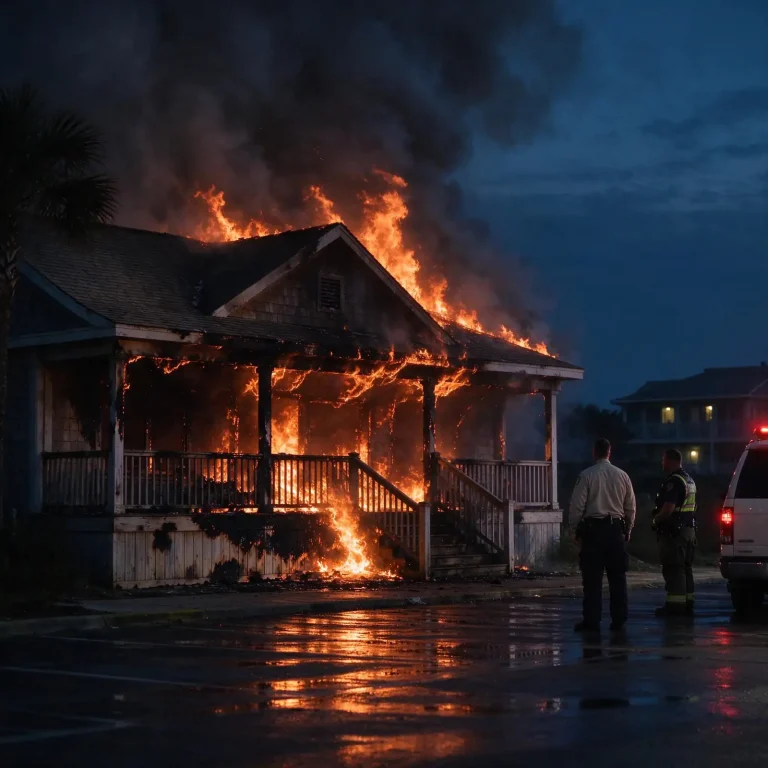
Gulf Shores and Orange Beach Push Beach Reopening Back to Oct. 2
Gulf Shores and Orange Beach delayed reopening their public beaches until Oct. 2 as crews cleared Hurricane Sally debris and assessed heavy sand erosion.
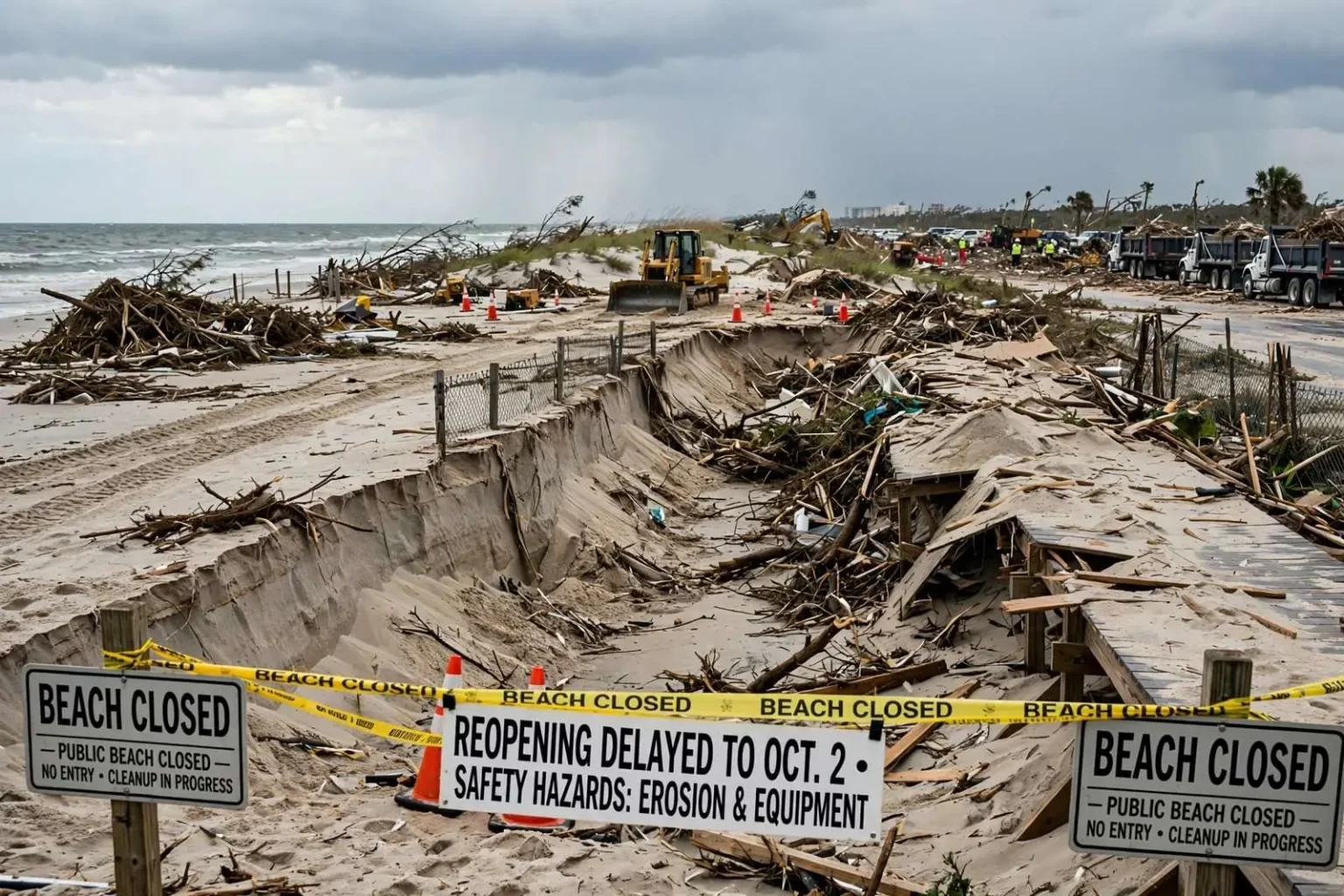
Anyone counting on a weekend on the sand in Gulf Shores or Orange Beach had to wait a little longer. Officials in both cities said their public beaches would remain closed until Oct. 2, rather than reopening that Saturday as first planned. The extra week reflects the scale of what Hurricane Sally left behind on the Alabama coast — and the logistics of cleaning up a shoreline that a hurricane rearranged in a matter of hours.
Hurricane Sally made landfall at Gulf Shores the week before as a slow-moving Category 2 storm, and its pace was as damaging as its strength. Crawling ashore at only a few miles per hour, the hurricane poured hours of wind, surge and waves onto the same stretch of coastline instead of passing quickly, piling water into neighborhoods and scouring the beach itself. Stretches of beach were badly eroded by the surge and waves, with the storm pulling sand off the berms and reshaping the shoreline profile that visitors walk on.
Other sections were still being cleaned when the original reopening date arrived. The delay was not a single decision but a rolling assessment: crews working the sand, debris still coming off the beaches, and city officials unwilling to invite the public onto terrain that was still an active cleanup zone.
Crews were also working well away from the beachfront, hauling off storm debris piled along neighborhood streets and roadways across south Baldwin County. The volume of vegetative and construction debris a hurricane like Sally generates is measured in cubic yards beyond anything a city’s regular collection can absorb, and the haul-out takes weeks of truck loads running from curbside piles to staging sites.
Why the sand stayed closed
City officials said reopening the sand while heavy equipment and debris trucks were still working would have created safety problems for visitors and residents alike. The reasoning is straightforward: a beach undergoing cleanup is a work site. Loaders cross the sand, trucks queue along access points, and crews concentrate in whatever section they are clearing that day. Mixing sunbathers and swimmers into that environment invites exactly the accidents a closure is meant to prevent.
Erosion added its own hazards. When surge strips a beach, it does not simply lower the sand — it cuts scarps, or vertical ledges, into the berm, and rearranges the underwater contour just past the surf line. A swimmer who knew the bottom before the storm can find it changed, and a two-foot drop-off that used to be a gentle slope is a genuine hazard for children and poor swimmers.
The Oct. 2 target gave crews a clear goal. By the first Friday of October, the cleanup machines would be largely off the public sand, access points repaired, and the worst of the scarps either graded down or marked. Cities along the Gulf have learned from past storms — Ivan in 2004, Katrina in 2005, Nate in 2017 — that reopening in stages, guided by conditions rather than optimism, prevents the reopened beach from having to close again.
What the storm did to the coast
Sally’s landfall near Gulf Shores put the eye’s worst effects squarely on the Alabama coastline. The storm’s slow forward speed loaded enormous rainfall totals onto the region, flooding streets far inland of the beach, while the onshore push of water drove surge through the barrier communities. Along the beach road in Gulf Shores and the public accesses in Orange Beach, the story was the same: sand shifted, dunes sheared, and the built edge of the coast battered.
Dunes took particular punishment. They are the coast’s first line of defense, absorbing wave energy and holding the sand that naturally rebuilds a beach after a storm. When surge cuts through a dune line, it moves sand inland — onto boardwalks, into parking lots, across beach roads — and the cleanup becomes a two-way operation: clearing what the storm deposited while restoring what it stripped.
The same dynamic played out across south Baldwin County’s neighborhoods. Debris crews worked streets well away from the water, hauling limbs, siding, fencing and household wreckage that the storm scattered. For coastal residents, the beach closure and the curb piles were two faces of the same event: a hurricane’s reach measured in miles inland, not just along the shoreline.
What visitors could expect
The delay pushed the reopening into the first weekend of October, a period that normally draws fall visitors to the Alabama coast. Autumn is a quiet treasure of the Gulf Shores and Orange Beach calendar — warm water, thinner crowds and lodging rates that dip from summer peaks. The lost week cost the beach towns some of that shoulder-season business, particularly for weekend reservations that could not be salvaged by the shift.
Officials asked beachgoers to watch for changed dune lines and drop-offs once access resumed, since the storm reshaped the shoreline in many spots. That advisory will matter most at the water’s edge, where the storm’s cuts are sharpest, and around accesses where the dune line now sits in a different place than the walkover expects. Locals’ advice for a post-storm beach applies: read the sand anew, keep children close to the surf line, and give any remaining equipment a wide berth.
The broader recovery will run far past Oct. 2. Debris collection in the neighborhoods continues for weeks after a landfall, insurance claims and repairs stretch into months, and the dunes themselves rebuild on nature’s schedule rather than the calendar’s. The beaches, though, are the coast’s front door — and both cities treated reopening them, safely and completely, as the symbolic first step in putting the season’s damage behind them.
The clean-up itself followed the pattern every Gulf Coast city knows after a landfall: first the roads, then the neighborhoods, then the sand. Each stage has to finish before the next one claims the crews and the trucks.
The bigger picture for Baldwin County
The beach economies of Gulf Shores and Orange Beach anchor a tourism industry that fills hotels, condominiums and rentals across south Baldwin County. A closed public beach in peak-reputation fall weather touches the whole ladder — restaurants, charter boats, amusements and the service jobs behind them. That economic weight is why both cities pushed to reopen as quickly as safety allowed, and why the extra week was framed as a delay rather than an indefinite closure.
It is also why the cleanup ran on two fronts at once. The beach is the product visitors come for; the neighborhoods are where the workforce and the year-round residents live. Clearing the streets kept daily life functioning while crews readied the shoreline, and the Oct. 2 reopening marked the moment the visitor-facing half of the recovery could begin in earnest.
For visitors planning a return, the message from both cities amounts to patience plus vigilance: the sand reopens Oct. 2, the water and views are still the ones worth the drive, and the storm’s fingerprints — a shifted dune here, a scarp there — are part of reading the coast as it is, not as it was before Sally came ashore.
The reopening timeline also depended on work most visitors never see: beach surveying. After a storm, coastal staff and contractors measure how much sand the beach lost, where the scarps run and how the underwater slope changed. Those surveys guide the grading work — smoothing the worst cuts, pushing sand back toward the water line — and they determine when a public beach is genuinely ready rather than merely cleared.
Access points receive their own attention. Walkovers, boardwalk ramps and dune crossovers are the controlled ways onto the sand, protecting both the dunes and the visitors who use them. Storm damage to those structures — undercut pilings, shifted walkways, debris-strewn entries — can close an access even when the beach itself looks open, and repairing them is part of the checklist behind an official reopening date.
Swimming conditions get a separate evaluation. Beyond the drop-offs, heavy surf and storm runoff can affect water quality in the days after a hurricane, and beach warning flags do the daily work of telling swimmers what the Gulf is doing. The calm, clear days that often follow a hurricane’s exit can be deceptive: the sandbar and channel pattern the storm left behind produces rip currents in places that never had them before, which is another reason officials ask beachgoers to relearn the shoreline before trusting it.
Lifeguards and beach patrol, where staffed, spend the first reopened weeks on exactly that education — redirecting swimmers away from the changed spots, marking soft or eroded sections, and answering the question every returning visitor asks: what did the storm do to my beach? The honest answer along the Alabama coast after Sally is that it moved the map, section by section, and Oct. 2 is the day the public gets to start reading the new one.