Gulf Shores Fire Rescue to Open New Firefighter Training Facility With Sept. 22 Ribbon-Cutting
Gulf Shores Fire Rescue will hold a public ribbon-cutting at 10 a.m. Sept. 22 at its new fire training facility on West 36th Avenue, followed by live demonstrations of the site’s training features.
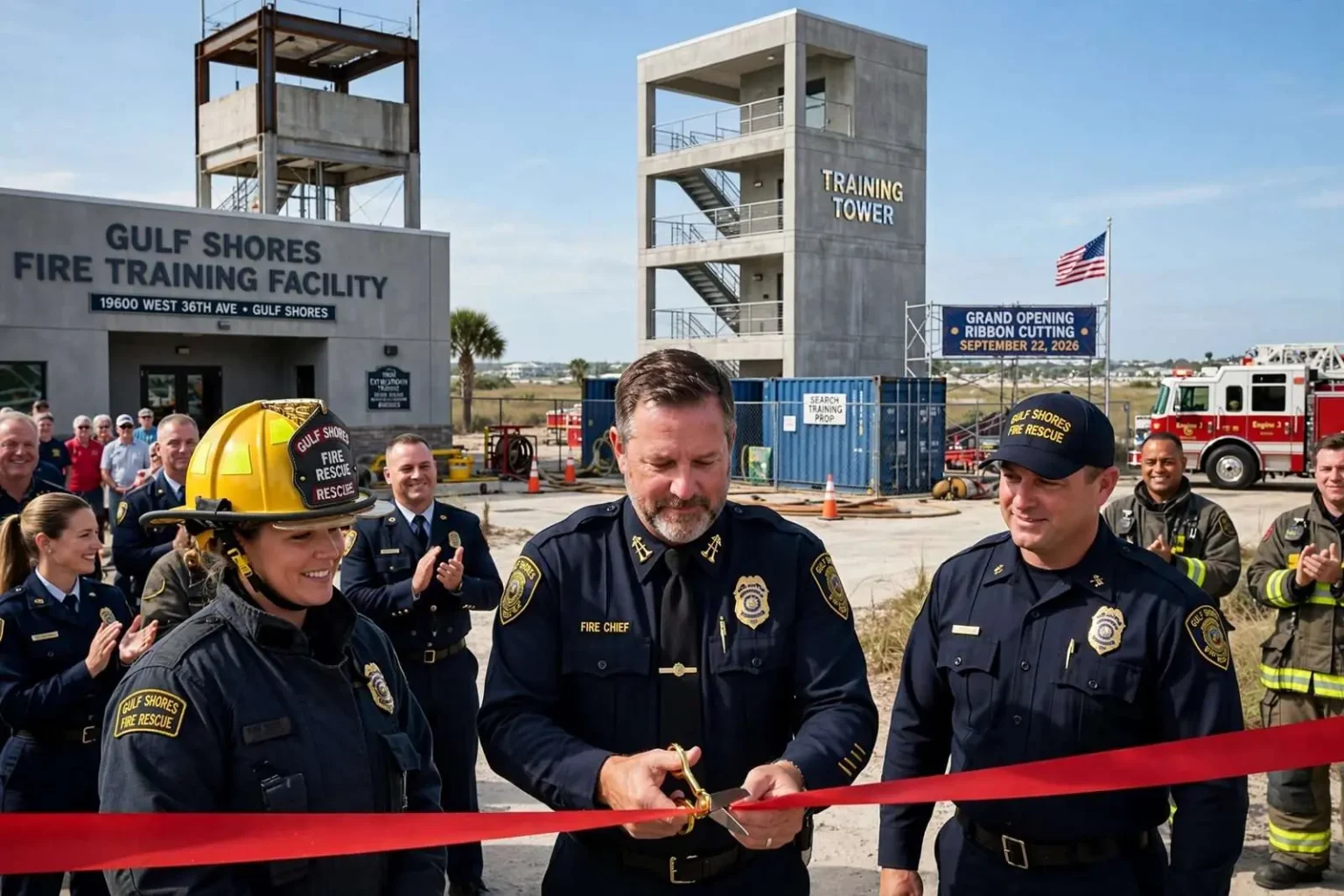
GULF SHORES — Gulf Shores Fire Rescue will formally open its new purpose-built training campus this month, and it is inviting the public to come watch what happens inside one.
The department will hold a ribbon cutting for the new Gulf Shores Fire Training Facility at 10 a.m. Tuesday, Sept. 22, 2026, onsite at 19600 West 36th Ave. in Gulf Shores. The event is open to everyone, refreshments will be provided, and guests are asked to RSVP through the Gulf Shores Fire Rescue reservation link by Wednesday, Sept. 16.
What the facility includes
The training facility was designed to support comprehensive firefighter education, with hands-on training environments that simulate structural fires, rescue situations and advanced emergency response scenarios. The department says the site will serve as a resource for both new recruits and veteran firefighters as they build and maintain the skills needed to protect Gulf Shores residents and visitors.
The grounds include a live-burn tower, a maze-style search prop, rappelling anchors and a simulated vehicle extraction area. The campus also features a five-story training tower used for high-rise rescue drills, a Class A burn building that can simulate live-fire conditions, a search maze built from shipping containers and an extrication pad for vehicle rescues, along with a separate pad for hazardous-materials training, classroom space for instructor-led sessions and a secured outdoor area where recruits can practice hose advances and ladder operations safely.
‘A major step forward’
Fire Chief Mark Sealy framed the project as a shift in what the department is able to practice.
“This training facility represents a major step forward in our ability to prepare firefighters for the evolving challenges of emergency response,” Sealy said. “Our team is committed to excellence, and this space gives us the tools to train safely, effectively, and realistically. We look forward to showing the community how this facility will enhance our service for years to come.”
Why a purpose-built site matters
A dedicated training facility solves a problem that is easy to overlook from outside the fire service: modern firefighting requires constant repetition of skills that are dangerous to practice anywhere real.
For decades, many departments trained by burning donated houses scheduled for demolition. That method had obvious appeal — a real structure with real construction — but it was unpredictable. Acquired structures often contain asbestos, lead paint, unstable framing or unknown modifications, and each one can be used exactly once. Scheduling depended on whether a property owner happened to be tearing something down.
A purpose-built facility replaces that with a controlled, repeatable environment. Training structures are typically built of concrete and steel with replaceable interior linings, designed to withstand repeated heating and cooling. Because the layout is known, instructors can reconfigure it — moving walls, changing exit routes, adding obstacles — so that crews cannot simply memorize the building.
The range of skills such a site supports goes well beyond putting water on fire. Departments use them to practice forcible entry on doors built to be broken repeatedly, ladder work, roof ventilation on props designed to be cut open and rebuilt, search patterns in blacked-out spaces, hose advancement up stairwells, and confined-space and above-grade rescue. One of the most consequential drills is rapid intervention: the procedure for locating and removing a firefighter who has gone down inside a burning structure. It is difficult, physically punishing and impossible to rehearse realistically without a facility built for it.
Live fire training and NFPA 1403
Training with real fire is among the most tightly regulated activities in the fire service, for a straightforward reason: firefighters have been killed in training exercises.
The governing document nationally is the National Fire Protection Association standard on live fire training evolutions, NFPA 1403, which sets requirements covering the fuels that may be used, the ratio of instructors to students, the assignment of a dedicated safety officer, the presence of a charged backup hose line, prohibitions on certain accelerants, limits on how many fires may be set at once, and required pre-burn briefings and building inspections. Purpose-built facilities make compliance far more practical than acquired structures do, because instructors know the building’s materials, its ventilation behavior and its exit paths, and can position safety personnel accordingly.
Alabama firefighters generally certify through the Alabama Fire College, the state’s central fire training institution, and maintain their qualifications through continuing training delivered at the department level. Local facilities matter for that second part. A department without one has to send crews out of town for hands-on training, which means travel time, overtime and reduced staffing at home.
A coastal city’s response profile
Gulf Shores presents a response profile that is not typical of a city its size on paper. Its year-round population is modest, but the number of people inside city limits swings dramatically with the seasons and with events, as visitors fill condominium towers, rental houses, hotels, restaurants and the beach itself. A department serving that pattern has to be prepared for high-rise operations, water and beach rescue, large-crowd incidents and a volume of emergency medical calls that does not track the census.
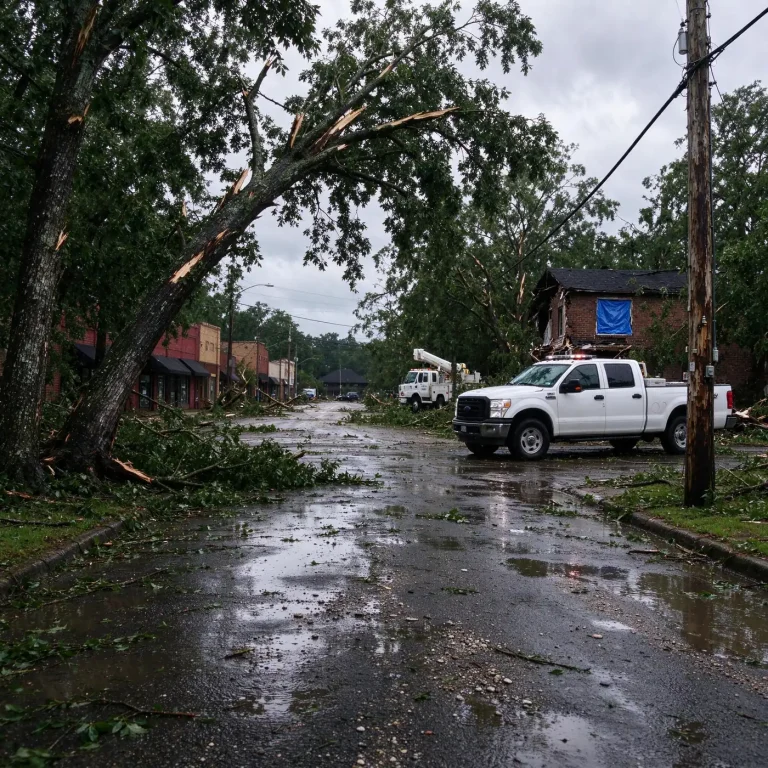
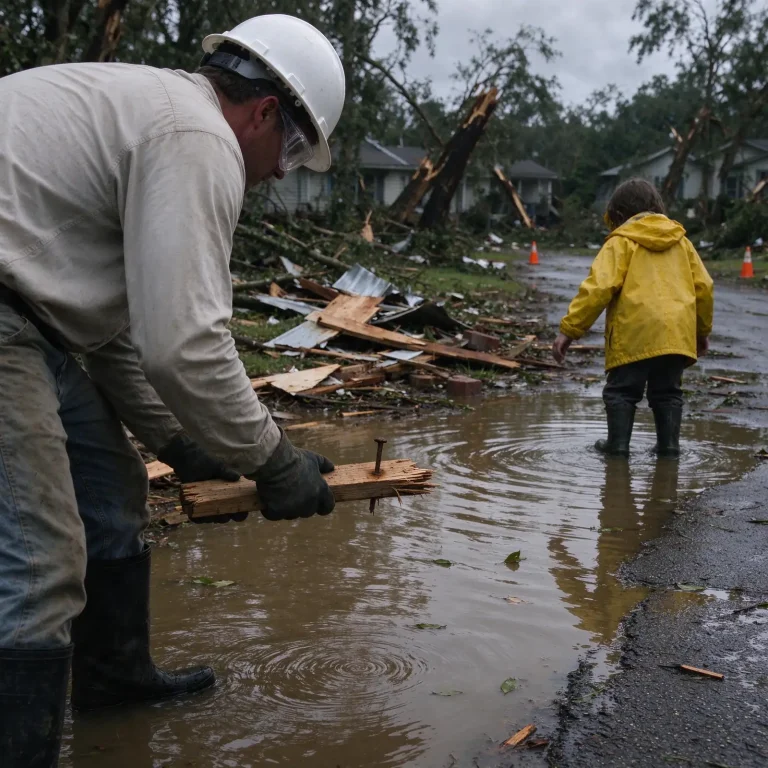
Coastal geography adds its own layer. Hurricanes and tropical storms bring evacuations, wind damage, flooding, downed power lines and post-storm search operations, and the same narrow road network that carries tourists in has to carry them out. Gulf Shores firefighters also routinely respond to calls involving multi-story condominium fires, beach rescues and highway accidents on the heavily traveled State Route 59 and Gulf Shores Parkway corridors, where summer traffic can affect response times.
Training that reflects those realities — multi-story interior attack, technical rescue, incident command over a large scene — is exactly the sort that requires a physical facility rather than a classroom.
Joint training and recruitment
Department leaders say the new facility will also allow Gulf Shores to host joint training with neighboring agencies, including the Orange Beach Fire Department, Fort Morgan Volunteer Fire Department and mutual-aid partners in Baldwin County. Mutual-aid drills are a regular part of preparing for hurricane season, large-scale structure fires and mass-casualty incidents on the beaches.
Sealy has also pointed to retention as a benefit: firefighters who can train close to home, in a modern facility, are more likely to build long careers with the department. Recruitment is a secondary benefit of the ceremony itself. Fire departments across the country compete for candidates, and open houses are a reliable way to reach people who had not previously considered the job.
What to expect Sept. 22
Following the ribbon cutting, attendees will be invited to watch live demonstrations highlighting each of the facility’s training features, offering what the department describes as an inside look at the skills firefighters use every day — from hose work and search techniques to rescue scenarios.
Public demonstrations serve a purpose beyond spectacle. Fire departments are among the most visible municipal services and among the least understood, and residents rarely see the work that precedes the two minutes of activity they witness at an actual emergency. A morning spent watching crews force a door, throw a ladder or search a smoke-filled room tends to change how a taxpayer thinks about a training budget line.
More information about the Gulf Shores Fire Training Facility is available at gulfshoresAL.gov.