Harbor Lady to Bring Winter Sightseeing and Dinner Cruises to Mobile Bay
City officials prepared to announce the arrival of the Harbor Lady, a 149-passenger vessel set to offer daily sightseeing and dinner cruises along the Mobile River and into Mobile Bay through the winter.
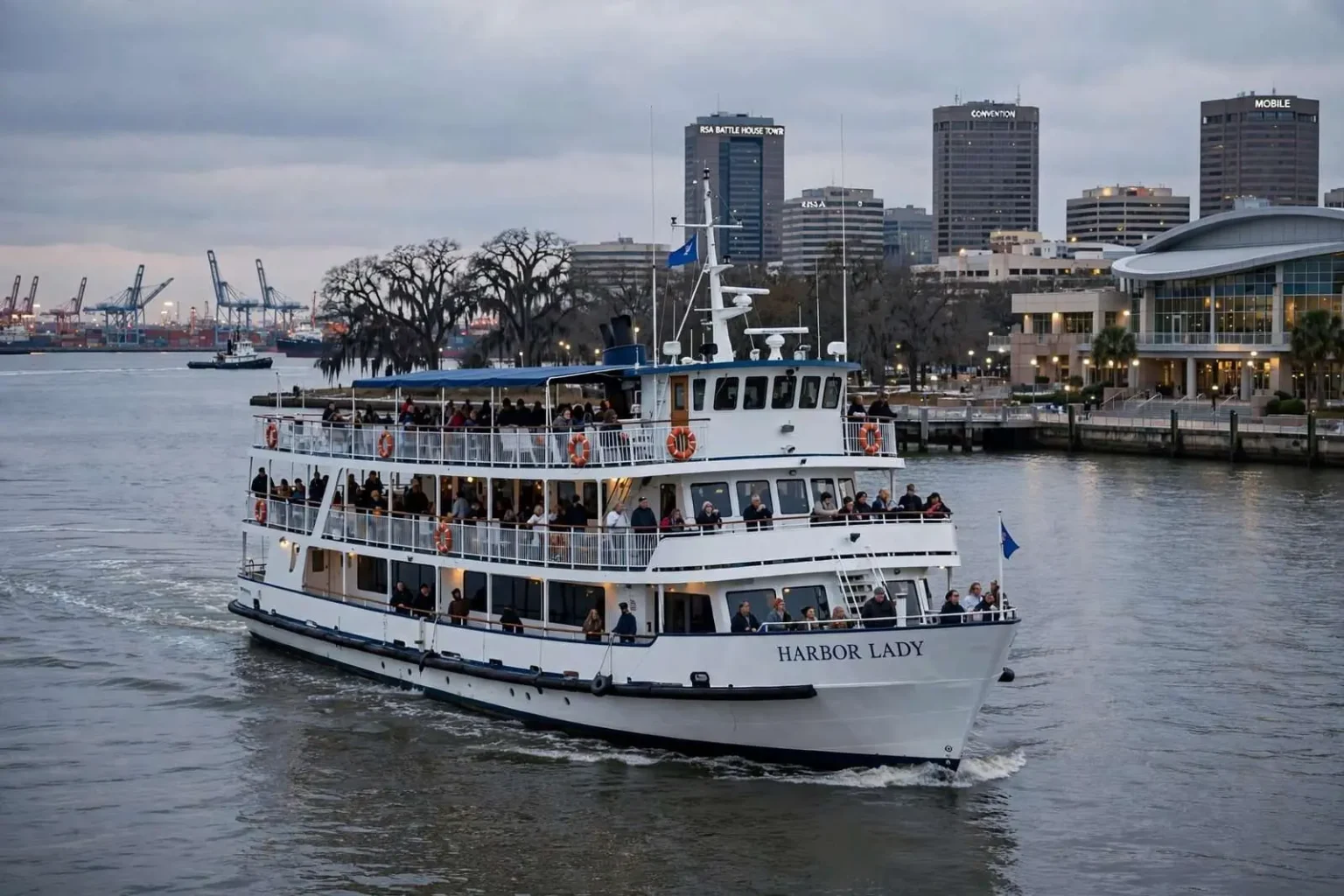
Downtown Mobile’s waterfront was poised to gain a new attraction as city officials prepared to announce the arrival of the Harbor Lady, a 149-passenger vessel that would offer daily sightseeing and dinner cruises along the Mobile River and into Mobile Bay throughout the winter. The boat’s arrival promised to put paying passengers back on the water in a season when the city’s riverfront typically sits quiet.
Mayor Sam Jones and officials with the Mobile Bay Convention and Visitors Bureau scheduled an afternoon press conference at the Arthur R. Outlaw Convention Center on Water Street to unveil what they billed as “an exciting new waterfront venture.” The Harbor Lady and its crew were to be on hand for the announcement, giving reporters and invited guests a first look at the vessel before its first paying passengers climbed aboard.
Sightseeing cruises were set to begin Tuesday, Nov. 15, with dinner cruises following on Dec. 1. The addition promised to give both residents and off-season visitors a fresh way to experience the bay during the cooler months, when the waterfront typically quieted down and the city’s tourism calendar thinned out between the fall festival season and the arrival of Mardi Gras.
Schedules and fares
The midday sightseeing cruise, running from 11:30 a.m. to 1:30 p.m., was priced at $23 for adults, $21 for senior citizens 55 and older, and $8 for children ages 5 to 13. The two-hour daytime sail was designed to fit comfortably into a lunch break or a half-day of sightseeing for visitors staying downtown.
Evening “city lights and cocktails” cruises were also planned, including a 6:30 to 8:30 p.m. sailing and a later 9:30 to 11 p.m. option, with adult fares of $29 and senior fares of $27. The later departure was aimed at the dinner-and-nightlife crowd, letting riders take in the lights along the riverfront after dark from a vantage point no landbound restaurant can match.
Reservations were handled by phone, and organizers encouraged early booking for the launch week and the holiday-season dinner sailings, when demand from family gatherings and office parties was expected to be heaviest. Operators of seasonal excursion boats traditionally build much of their winter business around private charters and holiday parties, and the Harbor Lady’s owners were counting on a strong opening run through the December calendar.
About the vessel
The Harbor Lady was a 95-foot Skipperliner built in Wisconsin and licensed by the U.S. Coast Guard, the federal agency responsible for certifying the safety of passenger vessels operating in American waters. Coast Guard inspection covers everything from life-saving equipment to hull condition, and a licensed passenger vessel of this size carries a crew trained and documented for the work.
During the summer and early fall the boat operated in Door County, Wisconsin, a peninsula and island destination on Lake Michigan whose resort towns draw heavy seasonal crowds, relocating south for the winter season. The arrangement made economic sense for a northern operator: when the Great Lakes season closed, the vessel steamed south to a market where winter temperatures remain mild enough for open-air cruising, keeping the boat earning nearly year-round.
The vessel featured three open-air decks, offering passengers sweeping views of the river, the working port and the bay beyond. From the upper deck, riders could trace the skyline of downtown Mobile, watch cargo ships and tugs working the river channel, and look south toward the delta country where the Mobile River opens into the wider bay.
For a city that had worked for years to draw people back to its riverfront, the arrival of a dedicated excursion boat represented a modest but welcome boost. City leaders hoped the cruises would complement the convention center and the surrounding district, giving convention delegates, business travelers and weekend visitors one more activity within walking distance of downtown hotels and restaurants.
A riverfront on the rebound
Mobile’s relationship with its own waterfront has long been complicated. For decades the working port’s fences, warehouses and rail lines separated downtown from the Mobile River, and residents drove past rather than to the water. Beginning in the 1990s and accelerating through the 2000s, the city invested heavily in reversing that pattern — building Cooper Riverside Park along Water Street, opening the Arthur R. Outlaw Convention Center, and later adding attractions designed to reconnect the public with the water that built the city.
The logic behind those investments is simple: harbor cities that celebrate their waterfronts capture tourism dollars and civic pride, while those that wall themselves off from the water lose both. A sightseeing boat fits squarely into that strategy. It turns the port itself into the attraction, letting passengers experience the cranes, barges and oceangoing ships of one of the nation’s busiest deepwater ports from the best possible seat — the water itself.
The timing also matched a broader push to grow Mobile’s visitor economy outside the Carnival season. Mardi Gras dominates the city’s tourism calendar in the weeks before Lent, filling hotels downtown and drawing tens of thousands of parade-goers, but the winter weeks before the season and the summer months after it have historically been harder to fill. An attraction that ran daily through the off-season gave hoteliers and restaurant owners another reason for visitors to come, and another thing for the Convention and Visitors Bureau to market to meeting planners and tour groups.
Winter cruising on the Gulf Coast carries real advantages over the northern alternative. Afternoon temperatures in Mobile during December and January routinely reach the 60s, and the bay’s calm winter conditions make for smooth sailing compared with open Gulf waters. For snowbirds who spend months on the coast each winter, the cruises added one more outing to a calendar that already included golf, fishing and festivals.
What riders could expect
The sightseeing route carried passengers down the Mobile River and out into Mobile Bay, past a working waterfront that includes cargo terminals, shipyards, tug docks and the moorings of the towboat fleet. The bay itself stretches more than 30 miles south to the Gulf of Mexico, and even a short cruise offers a perspective on the city’s geography that no driving tour can provide — the sweep of the river bends, the scale of the port complex and the low line of the delta country to the north.
Dinner cruises added a table-service element, the format familiar from excursion boats across the country: reserved seating, a meal served aboard and a slower pace timed to sunset and the lighting of the skyline. For anniversary dinners, holiday parties and visiting relatives, the format has long been a staple of the excursion industry, and Mobile — despite its harbor heritage — had gone years without a regular dinner boat operating from its downtown docks.
Organizers also positioned the boat as a draw for groups. Tour operators bringing motorcoach travelers through the region, civic clubs looking for meeting venues with a difference and families hosting relatives over the holidays all fit the profile the operators hoped to reach, and the phone-based reservation system was set up to handle both individual bookings and larger party arrangements through the season.
The crew structure on a vessel like the Harbor Lady typically includes licensed operators, deckhands and service staff, with capacity split across the three decks. The boat’s 149-passenger rating put it in the mid-size range for excursion vessels — large enough to host a wedding reception or a corporate gathering, small enough to navigate comfortably the river channel and bay shallows.
Part of a larger waterfront strategy
City officials have repeatedly framed downtown’s revival around the riverfront. The convention center on Water Street anchors the southern end of downtown, Cooper Riverside Park provides green space at the water’s edge, and attractions clustered nearby keep foot traffic moving between the business district and the docks. Each addition — a park, a museum, a cruise boat — is meant to build on the last, compounding into a district that feels active in the evening rather than emptying out after office hours.
The Harbor Lady’s operators, for their part, were betting on a simple proposition: that Mobile residents and visitors want to be on the water, and will pay a modest fare for two hours of breeze, skyline views and a close-up look at one of America’s great working ports. The vessel’s Wisconsin owners had tested that proposition in reverse, moving their operation to a winter market where the season never really closes.
If the launch week and holiday sailings went well, the winter season offered a ready-made test of whether a permanent excursion operation could work in Mobile year after year. Either way, for the weeks between mid-November and the end of the year, downtown Mobile’s docks had an attraction of their own — and the city’s long effort to bring its people back to the river had one more reason for them to come.