Health Officials Confirm Mobile County’s First Vibrio Infection of the Year After Gulf Shores Swim
Mobile County health officials confirmed the year's first Vibrio infection in a swimmer at Gulf Shores, and urged beachgoers with cuts to stay out of the.
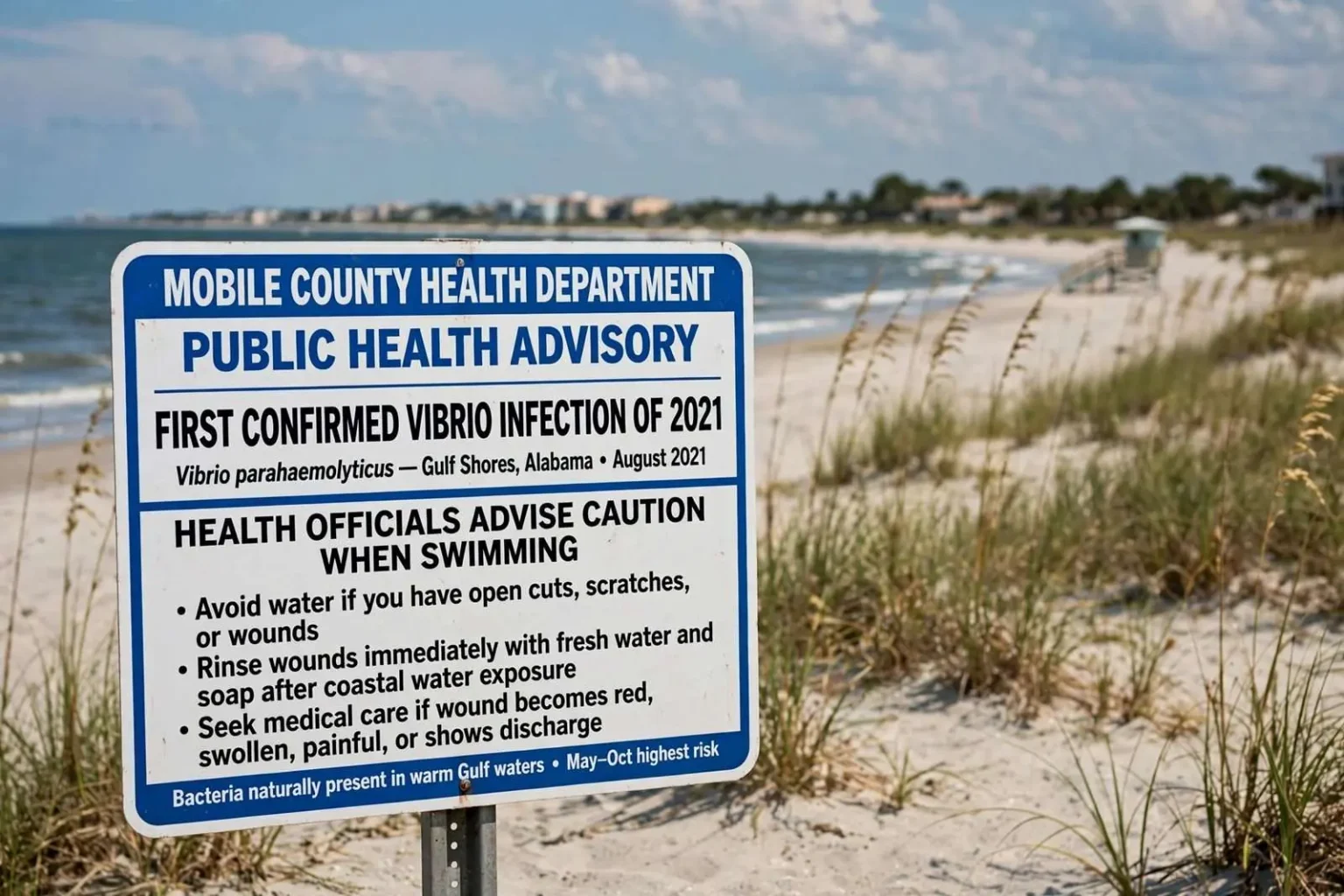
The Mobile County Health Department has confirmed the county’s first Vibrio infection of 2021, in a person who had been swimming in the water at Gulf Shores. Health officials identified the bacteria as Vibrio parahaemolyticus, one of the species the department describes as flesh-eating. The announcement serves as a seasonal warning for the hundreds of thousands of residents and visitors who swim, wade, fish and boat along the Alabama Gulf Coast each year, where the bacteria that cause vibriosis are a natural and recurring part of the coastal environment.
According to the health department, the infection occurs when the bacteria reach the bloodstream through a break in the skin, such as a fresh cut or scratch. The department has not released additional details about the patient or said when the exposure happened, a practice consistent with how local health agencies handle individual disease cases to protect medical privacy. Health officials typically use each confirmed case to renew their public guidance, because the conditions that produce vibriosis along the northern Gulf Coast repeat themselves every summer.
How the Bacteria Get Into the Body
Vibrio bacteria live naturally in coastal waters, particularly warm, brackish environments such as the bays, sounds and shallow Gulf waters that line the Alabama coast. More than 70 species of Vibrio have been identified, and only a portion of them are known to make people sick. Vibrio parahaemolyticus, the species identified in this case, is among the more commonly encountered along the Gulf Coast and is capable of causing illness in two distinct ways: through an open wound exposed to contaminated seawater, or through the consumption of contaminated seafood, particularly raw or undercooked shellfish.
The wound route described by Mobile County health officials is the one that matters most to swimmers. A fresh cut, scrape, surgical incision, new tattoo or even a minor scratch can serve as an entry point when a person wades or swims in water where the bacteria are present. Once the bacteria pass through broken skin, they can multiply rapidly in surrounding tissue and, in more serious cases, reach the bloodstream. That progression is what leads health departments to describe certain Vibrio species as flesh-eating, a term applied to infections that destroy soft tissue. Early treatment makes a significant difference, which is why officials urge anyone who develops increasing pain, spreading redness, swelling or discharge around a wound after seawater exposure to seek medical care promptly and to mention the water exposure.
What Health Officials Advise
The Alabama Department of Public Health urges beachgoers to stay out of natural bodies of water if they have open cuts or wounds. Anyone injured while in the water should clean the wound immediately to lower the risk of infection. State guidance stresses washing with soap and clean fresh water as soon as possible after leaving the surf, and keeping a close watch on any wound that was exposed in the days that follow. Health officials also advise people with weakened immune systems or chronic conditions such as liver disease to take the warnings especially seriously, because those individuals are more likely to develop severe illness if an infection takes hold.
State figures showed 16 cases of vibriosis reported in Alabama so far in 2021. That statewide total counts infections from all exposure routes, not just swimming, so it includes people who were sickened by eating contaminated seafood. Public health investigators use those reports to track where and how exposures occur, to watch for trends across the warm-weather season and to shape the warnings that local departments such as Mobile County’s issue to residents and visitors. Because the state sits at the center of one of the most active coastal regions in the country, Alabama typically records vibriosis cases every year, and the first confirmed case of a season often draws the most public attention.
Why Late Summer Raises the Risk
Vibrio bacteria reach their highest concentrations from May through October, when water temperatures climb and salinity levels favor their growth. In some areas the bacteria can be present year-round, though the risk to the public is far lower in the cooler months. The seasonal pattern explains why health departments across the Gulf Coast time their reminders to the summer season, when beach traffic is heaviest and water conditions are most favorable to the organism. Warmer water also means more people are in the water at precisely the time the bacteria are most abundant, a combination that makes prevention advice all the more important.
Infections are not limited to swimmers. The bacteria can also cause illness when someone eats contaminated seafood, particularly raw or undercooked shellfish, with oysters being the most frequently cited source. Shellfish filter large volumes of water as they feed, which concentrates Vibrio organisms from their surroundings. Cooking shellfish thoroughly kills the bacteria, which is why food safety officials point to proper handling and preparation as the surest protection on the foodborne side of the risk.
The National Picture
Nationally, the Centers for Disease Control and Prevention estimates about 80,000 people become sick with vibriosis each year and roughly 100 die from their infections. The federal agency notes that many of those illnesses are linked to eating contaminated seafood rather than water exposure, but wound infections receive sustained attention from health officials because of how quickly they can escalate. The CDC and state health departments alike emphasize that vibriosis remains uncommon relative to the enormous number of people who enjoy coastal recreation every year, and that simple precautions address most of the risk.
Those precautions are straightforward. Stay out of natural bodies of water when cuts or wounds are open, or protect them with waterproof bandages if entering the water cannot be avoided. Clean any wound that gets wet with soap and fresh water as soon as possible afterward. Avoid raw or undercooked shellfish, handle raw seafood separately from other foods and refrigerate it promptly. Anyone with a compromised immune system should be especially cautious, both about water exposure and about raw seafood. And when a wound looks or feels worse after seawater contact rather than better, seek medical attention without delay and tell the provider about the exposure.
What It Means Along the Alabama Coast
For Mobile County, the confirmation of a locally acquired case involving swimming at Gulf Shores puts a familiar summer risk squarely in view. Baldwin County’s beach communities draw visitors from across the region during the warm months, and many of those visitors come from Mobile and other inland areas for day trips on the sand and in the surf. The health department’s message is not a call to stay away from the water, but a reminder that the same warm conditions that make the coast enjoyable also support the bacteria that live there naturally.
Public health officials expect to see additional vibriosis reports as the 2021 season continues, and departments along the coast will continue tracking cases and issuing seasonal guidance. For residents, the practical takeaway is unchanged from year to year: cover or stay out of the water with open wounds, clean injuries promptly, cook seafood thoroughly and pay attention to how any wound is healing after time in the Gulf. Those basic steps, officials say, are the difference between a routine day at the beach and an infection that can become serious in a matter of days.
A Yearly Pattern Along the Gulf
Vibriosis is a reportable condition, which means laboratories and health care providers are required to flag suspected cases to public health authorities. That reporting system is what allows the state to tally 16 cases midway through 2021 and what allows county departments to announce confirmations like this one. Each reported case is investigated for details such as the likely exposure route, the body of water or food involved and the severity of illness, and those details feed the seasonal advisories that Gulf Coast residents have come to expect. The system also means that when health officials describe a case as the first of the year in a county, the count reflects confirmed and investigated infections rather than every illness that may have occurred.
Mobile County, home to Alabama’s second-largest city and a population that lives within easy driving distance of the Baldwin County beaches, sits at the center of the region’s summer beach culture. Many residents spend weekend after weekend on the Gulf Shores and Orange Beach sand, and fishing, crabbing and wading in the bays are everyday activities for thousands of families. That constant contact with coastal water is precisely why county and state health officials revisit the same warnings every summer: the advice changes little, but each season brings a new group of beachgoers who have not yet heard it.
Officials also draw a distinction between natural bodies of water and maintained swimming pools, where chlorine and filtration keep bacterial levels in check. The risk described in this case applies to the Gulf, the bays, rivers, lakes and bayous — the waters where Vibrio and other naturally occurring organisms live. For most people, a day in those waters carries no consequences at all. The danger is concentrated among the specific circumstances this case illustrates: a break in the skin that allows bacteria a way in, and a delay before the wound is cleaned or examined.
As the 2021 season continues, the Mobile County Health Department and the Alabama Department of Public Health will keep posting guidance for beachgoers and shellfish consumers alike. The first confirmed case of the year is, in that sense, less a surprise than a marker of the season — evidence that the bacteria are active in the warm coastal waters and a prompt for the public to take the precautions that officials repeat every year from May through October.