

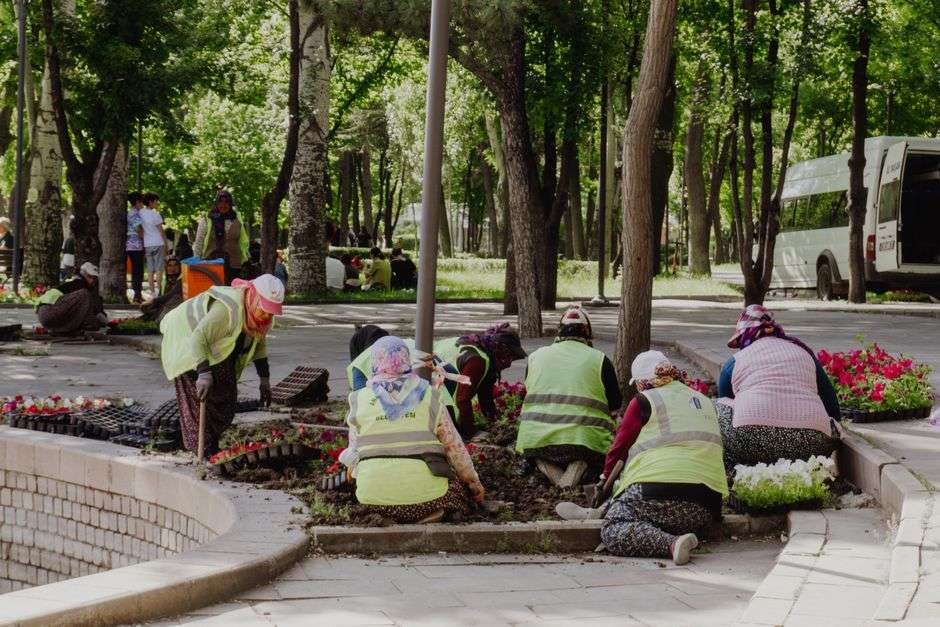
Few corners of Baldwin County carry as much layered history as the 12-acre tract in Fairhope South where the Anna T. Jeanes school once served the community’s Black families. Today the property belongs to a new chapter: Hope Community, the Fairhope nonprofit that has spent the years since its 2023 founding turning the historic grounds into a working vision of what the organization calls “Nurturing Unity and Relationships through Food, Healing, and Education.”
A Property With a Story
The school takes its name from Anna T. Jeanes (1822–1907), the Philadelphia Quaker philanthropist whose late-life giving transformed rural Black education across the American South. In 1907, Jeanes transferred $1 million to a trust overseen by Booker T. Washington and Hollis B. Frissell to fund what became known as the Jeanes Fund — supporting supervising teachers who brought industrial and academic training to rural Black schools across fifteen states. Jeanes Teachers, as they were called, became a backbone of Black rural education for half a century, and schools across the South carried her name in gratitude.
The Fairhope South school that inherited that legacy served the community for generations, and the property itself is now listed as a Baldwin County Historical Site. In 2023, Hope Community became a 501(c)(3) nonprofit, formed a board of directors, and set its focus on revitalizing and restoring the historic property; the City of Fairhope has since leased the 12-acre site to the organization.
What Volunteers Have Built So Far
The transformation so far is the work of volunteers — more than 650 members strong — who have cleared the property and built raised garden beds, compost areas, butterfly gardens, and a colorful picnic area with lending libraries shaded by live oaks. The physical labor is the visible half; the organizational half is the long-range plan: a teaching farm, a community garden, and a teaching kitchen that will give people of all ages space to connect with nature and neighbors, learn regenerative growing practices, and learn to cook healthy food.
Future plans also include a museum-style interactive exhibit honoring the legacy of Anna T. Jeanes and the Fairhope South community, versatile meeting spaces for local events, and 1.5 miles of nature trails designed to promote wellness and connection with the land.
Food RX: The Flagship Program
Among Hope Community’s most successful programs is Food RX, a series of monthly interactive cooking classes run in partnership with USA Health Systems and The Hive Foundation at the Mapp Family Campus Teaching Kitchen. Nutrition experts and professional chefs team up to help participants take control of their health through food — practical cooking skills, nutrition science, and a shared meal at the end of each session. Classes have been led by local food educators, including Kristin Alpine of Wild Flowers and Fresh Food. Eventually, a permanent state-of-the-art teaching kitchen is planned for the Anna T. Jeanes property itself.
Building the Team — and the Money to Sustain It
Growth has created the organization’s next challenge: professional management. Hope Community has grown to more than 650 members, and its volunteer corps has carried garden oversight, property maintenance, trail work, and event production on goodwill alone. The organization has launched a fundraising campaign to hire a full-time farm and operations manager to coordinate volunteers, oversee the gardens and nature trails, maintain the property, and run events.
“We are so grateful for the overwhelming support of our community, volunteers, donors, and sponsors,” says Andolyn Fitzgerald, head of the communications committee, “but to realize our vision, we need a full-time project manager. We want to raise more than the expected 12-month salary so that this position can be sustainable into the future.”
Events That Bring the Community to the Land
Hope Community’s calendar keeps pulling people onto the property. The Mobile Bay Makers Market sets up every other Sunday, drawing shoppers and energy to the Anna T. Jeanes site. The quarterly Hope Community Story Slam at the Book Cellar in Fairhope packs the room. And each January, the “Our Roots Run Deep” 5K — first run last January to raise funds and awareness — returns for its second edition in January 2026.
A Playground, Trails, and a Growing Vision
One of the most significant projects on the horizon is public: the City of Fairhope and the Fairhope/Point Clear Community Foundation plan to build a public playground with a splash pad on a 1.6-acre corner of the property — an amenity that will draw residents and visitors into a part of town that has been historically underserved, and put the restored campus at the center of daily life rather than occasional events.
The organization’s vision statement describes a thriving, interconnected community where all individuals have access to locally sourced healthy foods, employment opportunities, and cultural enrichment that foster sustainable and resilient living. On paper it sounds ambitious. In practice, the work is happening one volunteer Saturday, one cooking class, and one market Sunday at a time.
Fairhope’s founders named their town for its “fair hope” of success. A century and a half later, the organization restoring the Jeanes school grounds has taken the idea a step further — building, on ground with its own deep history, a fair hope of its own.
Why the Jeanes Name Matters Here
The Anna T. Jeanes connection gives the Fairhope South property a national backstory. The Jeanes Fund’s supervising teachers — usually experienced Black educators themselves — traveled between rural schools by horse and buggy, improving buildings, training teachers, and connecting isolated communities to better materials and methods. Alabama’s Black belt and coastal counties both benefited from the program, and the Fairhope South school stands as a local marker of that national movement. Hope Community’s plan to build a museum-style exhibit about Jeanes and the community she served would make the property one of the few places in Alabama where the Jeanes story is told in full.
The restoration also adds a missing piece to Fairhope’s historical narrative. The town’s better-known story — the 1894 single-tax colony, the artists, the bluff-top parks — happened a mile north, but Fairhope South developed its own dense community life around institutions like the Jeanes school. Restoring the grounds and telling that history together is, the organization argues, the point: one community’s story, told whole.
How to Plug In
The organization’s entry points are deliberately low-barrier. Membership is open to anyone; volunteer days handle garden and grounds work; the Makers Market runs every other Sunday on the property; and the annual fundraising push supports the operations manager position that would make the operation durable. Donations of materials, plants, and expertise are as welcome as money — the butterfly gardens and raised beds were built largely from contributed labor and goods.
For a county adding new residents by the thousands each year, the model offers something the newer subdivisions don’t: a place where the work of community is the product. The 650 members who show up suggest the market for that is real.