Hurricane Isaias Cleanup Begins in Baldwin and Mobile as Bridges Reopen, Curfews End
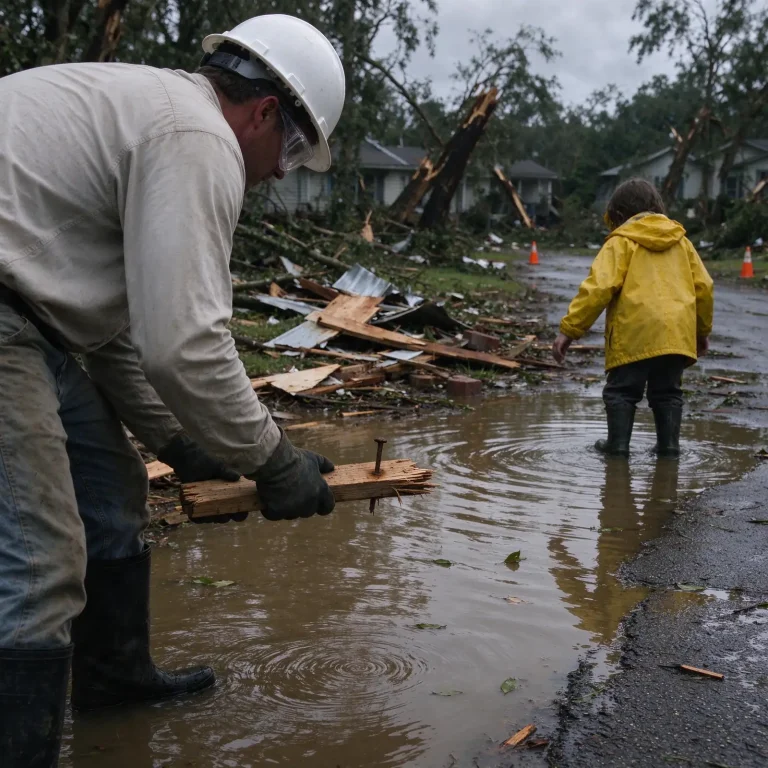
Curfews ended, the Gulf Shores and Orange Beach bridges reopened and shelters began closing Saturday as Baldwin and Mobile counties started clearing downed trees, power lines and debris left by Hurricane Isaias.
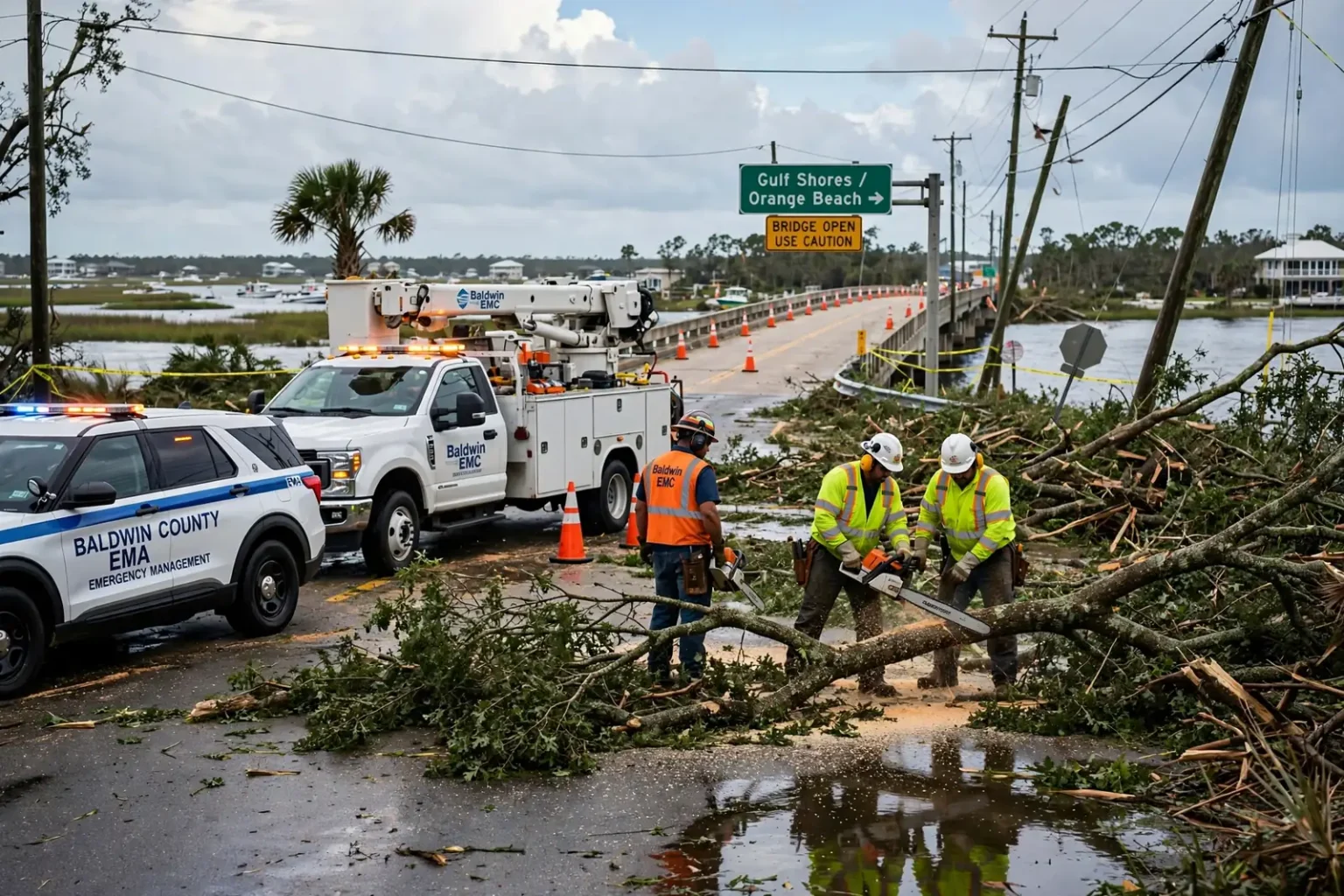
Hurricane Isaias cleanup began in earnest across Baldwin and Mobile counties on Saturday, Oct. 10, as residents woke to downed trees, dark traffic signals and tangled power lines after the storm swept across the northern Gulf Coast overnight. Curfews were lifted, the bridges to Gulf Shores and Orange Beach reopened, and emergency shelters began to close, but officials on both sides of Mobile Bay urged people to stay cautious while crews work to clear roads and restore services.
Isaias made landfall near Destin, Fla., around 8:30 p.m. Friday, Oct. 9, as a strong Category 2 hurricane with maximum sustained winds of 105 mph. That track placed coastal Alabama on the storm’s western side, sparing Baldwin County a direct hit. Even so, the hurricane left a trail of fallen trees and widespread outages, and tens of thousands of people went to bed without power Friday night. Baldwin County Emergency Management Agency said no injuries had been reported in the county.
Curfews lifted and bridges reopened
Some of the most visible signs of recovery came early Saturday. The bridges to the island communities of Gulf Shores and Orange Beach, which closed at noon Friday ahead of the storm, reopened at 8 a.m. Saturday. Because the Gulf Intracoastal Waterway separates the beach cities from the rest of Baldwin County, those bridges are the only way to drive on or off the island, and their reopening allows residents and recovery crews to return.
All municipal curfews in Baldwin County had also been lifted by Saturday morning. Across the bay, the City of Mobile officially ended its general curfew at 6 a.m. Saturday. Officials in both counties stressed that the end of a curfew does not mean conditions are back to normal and asked drivers to use caution as cleanup work continues.
Shelters close as needs decrease
With the storm moving inland and sheltering needs declining, Baldwin County began demobilizing its emergency shelters Saturday:
- The Safer Place at St. Paul’s Episcopal Church was scheduled to close at 10 a.m. Saturday.
- The Baldwin County Shelter at the Coliseum in Robertsdale was scheduled to close at 1 p.m. Saturday as post-storm operations continue.
The Baldwin Regional Area Transit System, known as BRATS, said it would continue transporting people who need assistance during the transition and throughout the shelter demobilization. Residents who relied on the shelters and need help getting home, or getting to another safe location, can contact the county’s transit service for assistance.
Hazards remain on Baldwin County roads
Although the worst of the storm passed overnight, Baldwin County EMA warned Saturday that many hazards remain. Numerous traffic signals were still without power, downed and damaged power lines were reported across the county, and fallen trees were widespread.
The agency urged motorists to treat any intersection without working signals as a four-way stop and to avoid downed power lines, blocked roads, fallen trees and standing water.
“Remaining indoors is strongly encouraged unless emergency travel is necessary,” Baldwin County EMA stated in its morning update.
Standing water can hide washed-out pavement, debris and live electrical lines, and even shallow moving water can sweep a vehicle off the road. Following long-standing National Weather Service guidance, drivers who come upon a flooded road should turn around rather than attempt to cross it.
Foley escapes the worst, but trees are down
In Foley, preliminary assessments conducted by city crews overnight indicated the city avoided the widespread damage it experienced during previous major hurricanes. Several areas did sustain damage, however, including downed trees, power outages and debris along roadways.
City crews identified significant tree damage in the area between Myrtle Avenue and Highway 98, from Alston Street to Cedar Street. Additional downed trees were found in the northwestern part of the city and at Graham Creek.
Gulf State Park closed until further notice
Gulf State Park, the popular state park that stretches along the beach between Gulf Shores and Orange Beach, remains closed to the public until further notice, including all beaches, boardwalks and trails. Park officials said people had already been seen on the beach and trail systems Saturday, before staff could finish required safety checks.
“We have noticed the public accessing the beach and trail systems. However, our staff has not yet completed required safety assessments, and hazardous conditions may exist. For your safety and our emergency response team’s safety, please stay off park grounds and off the beaches until we officially clear all areas,” a statement from the park said.
After a hurricane, beaches can hold hidden hazards such as debris, damaged structures, eroded dunes and dangerous surf and rip currents, which is why officials ask visitors to wait for an all-clear before returning.
Baldwin EMC reports major impacts despite no direct hit
Power remained the most widespread problem across Baldwin County on Saturday. Baldwin EMC, the member-owned electric cooperative based in Summerdale, said that at the peak of the storm more than 52,300 of its meters were without power after transmission losses affected five substations. By 9:30 a.m. Saturday, the cooperative had restored service to more than 32,500 meters, with 17,415 still out.
“Although we were spared a direct landfall from Hurricane Isaias, our area has experienced major impacts,” said Mark Ingram, Baldwin EMC’s vice president of corporate services and public relations. “Our crews are finding a significant number of downed trees and downed power lines throughout the service area. The damage is extensive, but crews are working as quickly and safely as possible to make repairs and restore power.”
The cooperative mobilized its basecamp in Summerdale to receive more than 400 additional personnel expected to arrive Saturday. Officials said they hoped to restore several large circuits during the day, bringing power back to large groups of customers at once as repairs are completed.
Baldwin EMC explained that crews work in stages, starting with the main circuits before moving to three-phase lines, single-phase lines, individual taps and, finally, the service lines that run to individual homes. That approach restores the most customers in the shortest time, but it also means a single home can stay dark after neighbors’ lights return if the line serving that house was damaged. Restoration times will vary depending on location and the severity of the damage.
Baldwin County EMA said more than 146,000 customers across the county had their power restored by Saturday morning. Members still without service are encouraged to report outages directly to Baldwin EMC.
Gas service and free Wi-Fi
Riviera Utilities, which serves much of south Baldwin County, said crews had restored natural gas service to the affected system in Gulf Shores and were ready to help customers relight appliances and restore service to their homes. Customers must contact Riviera Utilities to request service restoration and must be at their property when crews arrive.
Free public Wi-Fi hotspots are also being opened in counties affected by the storm. The hotspots are available to anyone at no cost, and in Alabama they include Baldwin, Mobile, Houston and Tuscaloosa counties. For residents whose home internet is down, the hotspots can help with checking on family, contacting insurance companies and following official updates.
Mobile tallies tree incidents and dark signals
In Mobile, early reports indicated nearly 70 tree-related incidents and more than 200 total unit calls from Mobile Fire-Rescue Department during the height of Hurricane Isaias’ impacts, according to Dale Liesch, the city’s media relations manager. Downed power lines remained throughout the city Saturday.
As of Saturday morning, more than 46 traffic signals were still out across Mobile. As in Baldwin County, drivers should treat any dark signal as a four-way stop, come to a full stop and proceed only when the way is clear.
The city asked residents to report problems involving city services through its 311 service. Mobile is also asking residents to place storm-related debris at the curb as soon as possible so Public Services crews can collect it.
Tips for setting out storm debris
Placing debris properly helps crews move faster and keeps streets and drainage clear. General guidance from local governments and FEMA includes:
- Place debris at the curb or edge of the right-of-way, not in the street.
- Keep piles away from storm drains, fire hydrants, mailboxes, utility poles and boxes, and low-hanging lines.
- Separate vegetative debris such as limbs and leaves from construction debris, appliances and household garbage.
- Do not stack debris on top of or against downed power lines; report those lines to your utility instead.
Staying safe during cleanup
The hours and days after a hurricane can be as dangerous as the storm itself. Officials and utilities offered several reminders:
- Treat every downed line as energized. Stay far away, keep children and pets clear, and report the line to your utility or 911.
- Use generators outdoors only. Run portable generators well away from doors, windows and vents to prevent carbon monoxide poisoning, and never plug one into home wiring without a properly installed transfer switch.
- Be careful with chainsaws and ladders. Wear protective gear, avoid cutting trees that are tangled in lines, and leave large or unstable trees to professionals.
- Watch for scams. Hire licensed contractors, get written estimates and avoid anyone who demands full payment before work begins.
- Document damage. Take photos of damage before cleanup to support insurance claims.
Elsewhere in Alabama
The storm’s effects reached well beyond the coast. In Birmingham, the Department of Public Works received reports of 24 downed trees blocking roadways during the height of the weather system, according to Rick Journey, the city’s director of communications. Crews cleared 12 of those locations overnight and expected to clear the remaining 12 on Saturday.
What comes next
For residents of Baldwin and Mobile counties, the coming days will be about clearing roads, restoring power to the remaining neighborhoods and hauling away debris. Officials urged patience and caution: stay off roads unless travel is necessary, keep away from downed lines and standing water, and follow updates from Baldwin County EMA, the City of Mobile, local municipalities and utilities as recovery continues.