
Inaugural Dauphin Island Native American Festival Set for March 30 at Fort Gaines
The inaugural Dauphin Island Native American Festival comes to historic Fort Gaines on March 30, 2019, with storytelling, crafts and fort tours.
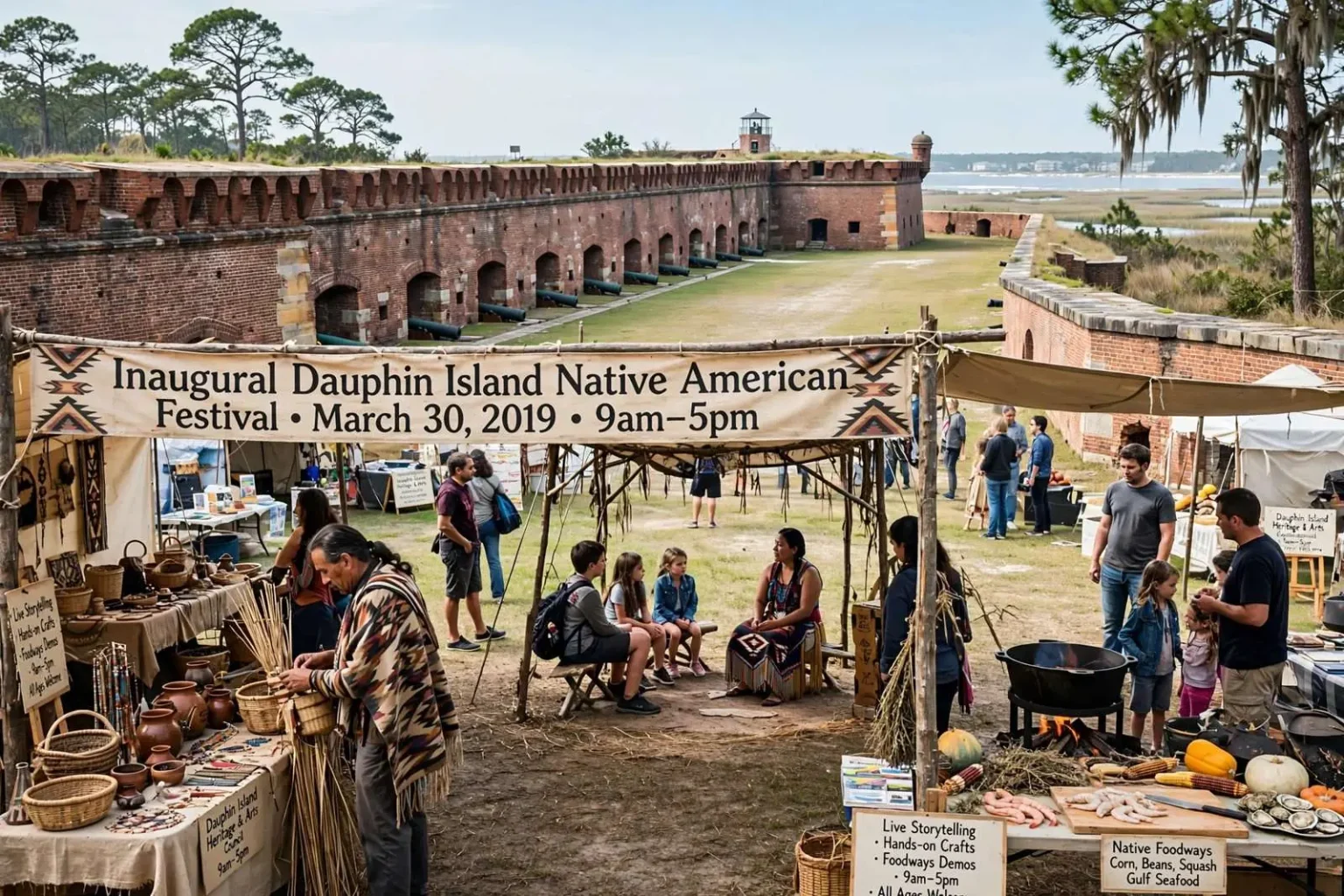
The inaugural Dauphin Island Native American Festival will take place Saturday, March 30, 2019, from 9 a.m. to 5 p.m. at historic Fort Gaines on Dauphin Island. The event celebrates the cultures that lived along the Alabama coastal region from the 1700s into the early 1800s, and organizers from the Dauphin Island Heritage and Arts Council have built a full day of programming intended to be both educational and entertaining for visitors of all ages.
The festival’s setting is part of its appeal. Fort Gaines stands at the eastern end of Dauphin Island, overlooking the pass that guards the entrance to Mobile Bay, and its grounds provide a fitting backdrop for an event centered on the deep history of the Alabama Gulf Coast. Long before the fort’s walls rose, the island itself was a gathering place for the Indigenous peoples of the northern Gulf Coast, and traces of their presence remain part of the island’s landscape and identity today.
Programming for the day includes live storytelling and hands-on demonstrations of Native American foodways, along with recreational activities and arts and crafts. The demonstrations are designed to be participatory rather than purely observational, giving visitors — especially children — a chance to see, taste, touch and try skills that sustained coastal communities for generations. Storytelling traditions, which carried history and knowledge from one generation to the next, anchor the cultural side of the program.
Why Dauphin Island Holds Deep Indigenous History
Dauphin Island’s role as a landing place and crossroads goes back centuries before European settlement. The island’s shell mounds — accumulations of discarded shells and other material left by Native peoples over long periods of use — are among the best-known archaeological features on the Alabama coast, and the park that preserves them remains one of the island’s most significant heritage sites. The cultures celebrated at the festival lived along the coastal region through the 1700s and into the early 1800s, a period that saw French, Spanish and British powers contest the Gulf Coast while Indigenous communities adapted to profound change.
The island entered the written record in the colonial era, when French explorers arrived at the mouth of Mobile Bay at the dawn of the 18th century and established Mobile as the capital of French Louisiana. But the Native peoples of the region — including groups tied to the broader Choctaw, Creek and other Southeastern communities — were the coast’s original inhabitants, and their trade networks, foodways and seasonal use of barrier islands long predated the colonial era. The festival aims to put that history in front of a modern audience in an approachable, family-friendly way.
Organizers billed the event as a fun and educational experience for the whole family, spotlighting the deep Indigenous history of the Alabama Gulf Coast. For the Dauphin Island Heritage and Arts Council, the inaugural festival extends a mission of celebrating and preserving the island’s cultural life — a mission that also encompasses the island’s arts community and its annual traditions.
A Full Day of Demonstrations and Storytelling
The schedule runs from 9 a.m. to 5 p.m., giving visitors most of a Saturday to explore both the festival grounds and the fort itself. Live storytelling sessions walk audiences through the traditions and narratives of the coastal Native cultures, while foodways demonstrations show how local ingredients — from Gulf seafood to native plants — were gathered, prepared and shared. Recreational activities give younger visitors a way to engage with the past through play, and arts and crafts vendors and demonstrators round out the day.
Fort Gaines: A Fortress With a Story of Its Own
Fort Gaines is one of the Gulf Coast’s most significant historic sites, and admission to the festival covers a tour of the fort along with all festival activities. Construction of the masonry fort began in the early 1820s as part of the federal government’s post-War of 1812 coastal defense program, and it was named for General Edmund Pendleton Gaines, a prominent Army officer of the era. The fort occupies the eastern tip of Dauphin Island, where it guards the main ship channel into Mobile Bay alongside its counterpart across the pass, Fort Morgan on the peninsula to the east.
The fort earned its place in American history during the Civil War Battle of Mobile Bay in August 1864, when Union forces under Admiral David Farragut ran past the forts and captured the bay. Confederate defenders at Fort Gaines endured bombardment before surrendering, and the fort’s massive brick walls, powder magazines and bastions survive for visitors to explore today. Interpretive exhibits, the blacksmith shop and the views from the ramparts make the fort a destination in its own right, and festival-goers on March 30 will have the run of the grounds.
For a festival about the island’s earliest cultures, the fort setting offers a layered experience: visitors can walk through a 19th-century military installation while learning about the peoples who lived along this coast centuries earlier. The combination reflects Dauphin Island’s unusually rich historical record, from pre-colonial shell mounds to colonial landings, Civil War combat and the modern fishing and tourism community.
Tickets and Admission Details
Admission covers both the festival and a tour of Fort Gaines. Tickets are $6 for ages 5 to 12 and $12 for ages 13 and up, with children under 5 admitted free. That pricing makes the event one of the more affordable full-day heritage experiences on the Alabama coast, particularly given that it includes access to the fort’s grounds and exhibits.
Advance tickets were available online, at the Dauphin Island Gallery or at Fort Gaines, and tickets were also sold at the gate on the day of the event. Visitors planning to attend were encouraged to secure advance tickets, but walk-up attendance remained an option for those deciding on the spur of the moment. The Dauphin Island Gallery, an island institution showcasing local art, served as a convenient in-person outlet for residents and early visitors.
Getting to the island is part of the experience for many attendees. Dauphin Island sits at the mouth of Mobile Bay, connected to the mainland by the Gordon Persons Bridge over the Intracoastal Waterway from the north, and reachable by the Mobile Bay Ferry from Fort Morgan across the bay — a crossing that delivers passengers directly to the island’s eastern end near Fort Gaines. March typically brings mild weather to the coast, and the festival’s outdoor setting is well suited to the season.
What the Festival Means for the Island
The inaugural festival adds a new thread to Dauphin Island’s calendar of heritage events, which already draws visitors from Mobile, Baldwin County and beyond. For the Heritage and Arts Council, staging the event at Fort Gaines ties the island’s arts community to its historical landmarks and creates a format that can grow in future years. A first-year event also gives local vendors, demonstrators and volunteers a new stage on which to share their work with an audience that extends beyond the island’s year-round population.
Native Foodways and Coastal Traditions
The foodways component of the festival offers one of the most direct connections to the past. The coastal peoples of the northern Gulf built their diet around what the region provided: fish and shellfish from the bays and Gulf waters, game from the pine forests and marshes, corn, beans and squash from cultivated plots, and gathered plants such as nuts, berries and wild greens. Demonstrations at the festival show techniques of preparation and preservation that sustained communities through the seasons, and they illustrate how the region’s food traditions echo through the cooking of the Gulf Coast today.
Storytelling, likewise, carries the kind of knowledge that written records rarely capture. In Native traditions across the Southeast, stories teach history, explain the natural world and pass along values from elders to children. The live storytelling sessions at the festival invite audiences to experience that tradition as it was meant to be experienced — spoken aloud, in the company of others, on ground with its own long story to tell.
The arts and crafts on display extend the same thread into the present. Southeastern Native material culture — basketry, pottery, beadwork, tools and clothing — reflects both practical ingenuity and artistic expression, and contemporary craftspeople working in those traditions keep the skills alive. For visitors, the chance to watch artisans at work and ask questions is a rare and valuable kind of education, particularly for families looking for activities with substance behind them.
Planning a Day at the Festival
Visitors making the trip to Dauphin Island for the festival have plenty of ways to fill the day. The event runs a full eight hours, and the admission includes the fort tour, so families can move between the festival activities and the fort’s exhibits at their own pace. The island’s beaches, birding sites — the island sits along a major migratory flyway — and seafood restaurants round out a spring day trip, and March 30 falls within a season when the island’s natural attractions are at their best.
Organizers recommend arriving early, both to take advantage of the full schedule and to find convenient parking near the fort. As with any outdoor event on the coast, comfortable shoes and weather-appropriate clothing make the day easier, and the fort’s ramparts and grounds involve considerable walking. The festival is designed to be accessible to all ages, and the mix of demonstrations, activities and stories means there is something for visitors who come for the history as well as those who come for the entertainment.
A First Year With Room to Grow
Every festival has a first year, and the inaugural Dauphin Island Native American Festival sets a foundation for what organizers hope becomes a lasting tradition. The combination of the Heritage and Arts Council’s organizing experience, the fort’s established visitor base and the subject matter’s genuine depth gives the event strong footing. For the Alabama Gulf Coast, a region whose colonial history is well told but whose Indigenous history often receives less attention, the festival fills a real gap.
For one Saturday at the end of March, the story of the coast begins not with European sails but with the peoples who lived, traded, fished and told stories along these shores through the 1700s and into the early 1800s. On Dauphin Island, within the walls of a fort that has watched over the bay for two centuries, that long story gets the stage it deserves.