Inside Hangout 2017: a smoother, still-unforgettable Gulf Shores weekend
Hangout Festival 2017 in Gulf Shores drew Mumford and Sons, Twenty One Pilots, and Chance the Rapper. Fans share their May weekend on the Alabama coast.
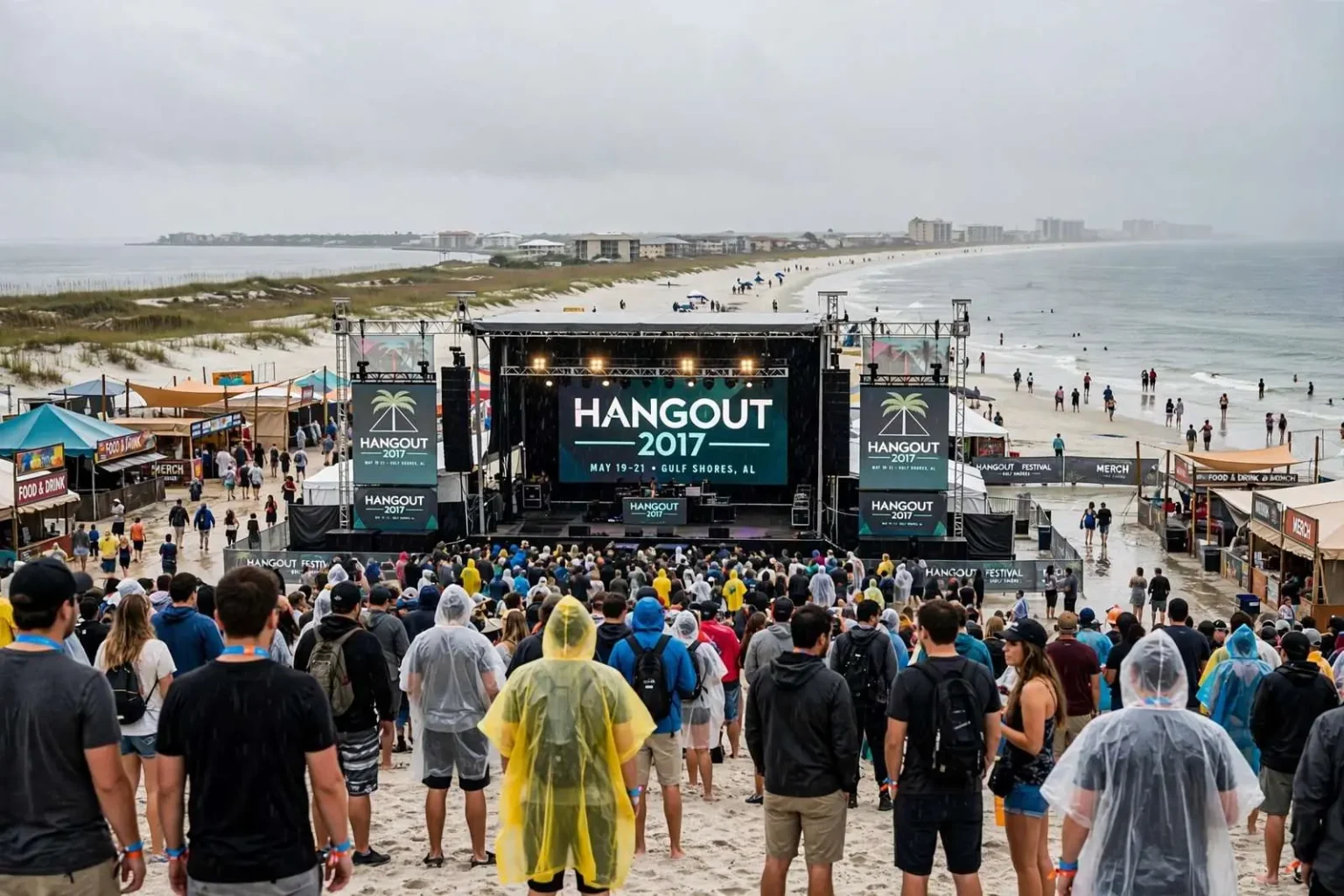
GULF SHORES, Ala. — As Labor Day nears and summer winds down, it’s the season for looking back at some of the best festivals across Alabama and the Southeast. Few are bigger for the Gulf Coast than Hangout Festival, the award-winning three-day event that floods Gulf Shores, Orange Beach, and Foley each May. The 2017 edition, held May 19–21, sold out quickly as always thanks to an attendance cap, drawing fans from across the region to the sugar-white sand of the Gulf Shores beachfront for a weekend of headliners and rising acts.
The 2017 bill was stacked. Headliners included Mumford and Sons, Twenty One Pilots, Chance the Rapper, MGMT, and Weezer — a lineup that stretched from folk-rock arenas to hip-hop’s biggest new voice to two decades’ worth of alt-rock favorites. Around them sat the usual deep Hangout undercard, with sets running across multiple beachside stages from midday until night.
The site itself is one of the most distinctive in American festival culture. Rather than a farm field or a downtown lot, Hangout occupies actual beachfront on the Gulf of Mexico, with stages planted on and beside the sand and attendees moving between them barefoot, many spending the gaps between sets wading in the surf. That single design choice shapes everything else about the event — the pacing, the dress code, the weather contingency plans, and the sheer effort required to move staging, sound, and power onto and off of a barrier island each year.
Crowd Control Comes of Age
By its eighth year, the festival’s security and staff ran “like clockwork,” with no “floppiness” around entrances or blocked roads — a marked evolution from the growing pains of earlier editions. The event has long wrestled with the challenges of dropping a massive crowd onto a barrier-island beach town, where the road network in and out of Gulf Shores has limited capacity and every attendee enters through the same corridors.
Several deliberate choices combined to smooth out the 2017 experience. The attendance cap kept the crowd at a size the site and the surrounding towns could absorb. The removal of late-night shows ended the after-midnight exodus that had once backed up traffic through Gulf Shores, Orange Beach, and Foley well past midnight. And an expanded footprint spread stages, amenities, and crowds across more of the beach, reducing the choke points that had produced logistical and noise complaints in earlier years.
Together, those changes cleared up the logistical and noise complaints that had cropped up in the festival’s earlier editions. Neighbors who had once grumbled about the noise and the traffic found a quieter, earlier-ending event, and attendees found entrances and exits that moved without the bottlenecks of previous years.
The cap, in particular, has become one of the festival’s defining features. While peer events across the country have pushed their capacities higher and higher, Hangout has held its number at a level the beach town can actually host, which is why the sell-out comes quickly every single year and why tickets have taken on a scarcity value for the region’s festival-goers. Fans know that waiting means missing out, and the draw of the lineup only sharpens that urgency.
Getting to that level of polish took years of iteration. The festival’s early editions wrestled with the same issues that confront any young event: entrance lines that moved slowly, roads jammed at peak arrival and departure times, and neighbors with legitimate complaints about noise carrying over the water and through the island’s quiet residential streets. Each year’s post-mortem produced adjustments, and by 2017 the cumulative effect was visible — an event that had learned its own site’s limits and now operated comfortably within them.
Fans on the Ground
The weekend delivered plenty for the Southern attendees who made the trip. Stacelyn Gilbert of Wetumpka braved pouring rain Saturday but was glad to be there for Lil Yachty and Tory Lanez. Erin Wicht of Biloxi was “super pumped” for Mumford and Sons’ closing set. Kristian Cowart of Ocean Springs loved Twenty One Pilots despite the rain, and Abbie Bishop of Hattiesburg praised the diverse crowd and The Head and the Heart.
That geography — Wetumpka, Biloxi, Ocean Springs, Hattiesburg — tells the story of who Hangout draws. The festival sits at the center of a drive-in market that stretches across Alabama and Mississippi and down the Gulf Coast, close enough that a weekend pass requires no flight. For many attendees, the festival has become an annual pilgrimage: the same groups of friends, the same rented condos, the same mornings walking to the beach with wristbands already on.
The rain that swept through Saturday tested that loyalty, but the crowds that stayed — ponchos up, feet in the wet sand — came away with the kind of festival memories that outlast the sunshine years. Sets by Lil Yachty and Tory Lanez carried the afternoon despite the weather, and Twenty One Pilots’ headline performance that evening gave the drenched crowd its payoff.
More Than a Concert on the Beach
Hangout has grown into an economic engine for the towns that host it. Each May, the influx of festival-goers fills hotels and vacation rentals from Gulf Shores to Foley, packs restaurants and shops along the beach highway, and gives the towns a national audience months before the summer season peaks. The festival’s award-winning reputation is built on that combination — a one-of-a-kind beachfront site with the production values of a major national festival.
For the attendees, the weekend runs on its own distinctive rhythm. Days begin late and end earlier than at most festivals now that the late-night shows are gone, with the final sets wrapping at a hour that lets the beach towns return to something like normalcy each evening. In between, the site operates as a full beach town of its own — food vendors, drink stands, merch tents, and shade structures spread across the expanded footprint, with the surf a few steps from every stage.
The setting remains the festival’s signature. Stage risers sit directly on the sand, with the Gulf as a backdrop and attendees wading between sets barefoot. Few festivals anywhere can offer that, and it is the reason Hangout sells out year after year despite capping its attendance — scarcity and scenery working in the same direction.
The towns around the festival have learned to plan for it as well. Gulf Shores, Orange Beach, and Foley coordinate on traffic management each May, with routes adjusted and emergency services staged for the surge. For a barrier island with a single highway corridor, absorbing a festival-sized influx is a genuine municipal undertaking, and the improvement in that coordination over the festival’s first several years is a large part of why the recent editions have run so much more smoothly than the early ones.
The Headliners’ Draw
The 2017 lineup reflected the festival’s habit of booking across eras and audiences. Mumford and Sons brought the closing-night headline slot, a band whose stadium folk-rock had become a fixture of festival lineups worldwide. Twenty One Pilots rode the peak of their commercial run into a Saturday night headline set. Chance the Rapper represented hip-hop’s independent vanguard, while MGMT and Weezer gave the bill its alt-rock anchor points for older fans who came of age on the genre’s 2000s wave.
Beneath the headliners, the undercard did what Hangout undercards always do: mix rising acts, regional favorites, and genre-spanning supporting slots that reward fans who arrive when the gates open rather than before the headliner. For the bands themselves, a Hangout slot means playing in front of a beach crowd that spans the whole Gulf South — an audience few club tours can assemble.
Weezer’s slot gave the weekend its dose of nineties-and-beyond nostalgia, with a catalog that festival crowds of all ages know by heart, while MGMT brought the psychedelic pop that made it one of the most distinctive acts of its era. The spread mattered: three generations of headliners meant three generations of fans sharing the same sand, which attendees consistently cite as part of what makes the Hangout crowd different from a single-genre festival audience.
A Regional Centerpiece
For the Gulf Coast, Hangout remains both a tourism draw and a centerpiece of the regional festival season. It anchors the May calendar for the beach towns, sets the tone for the summer that follows, and gives the Alabama coast a signature event on par with any festival in the Southeast. Each spring, thousands of fans return to the sand — and as this year’s sold-out, smooth-running edition showed, the event has matured into something that can handle its own success.
As the summer winds down and the Gulf Coast looks toward fall, the memory of that weekend — the rain, the sand, the closing chords from Mumford and Sons — is already turning into anticipation for the next one.