Liar’s Contest Kicks Off Alabama Deep Sea Fishing Rodeo Weekend on Dauphin Island
Frank Dickey of Chatom won the Alabama Deep Sea Fishing Rodeo's Liar's Contest with a tall tale about a fiberglass spine, opening rodeo weekend on Dauphin.
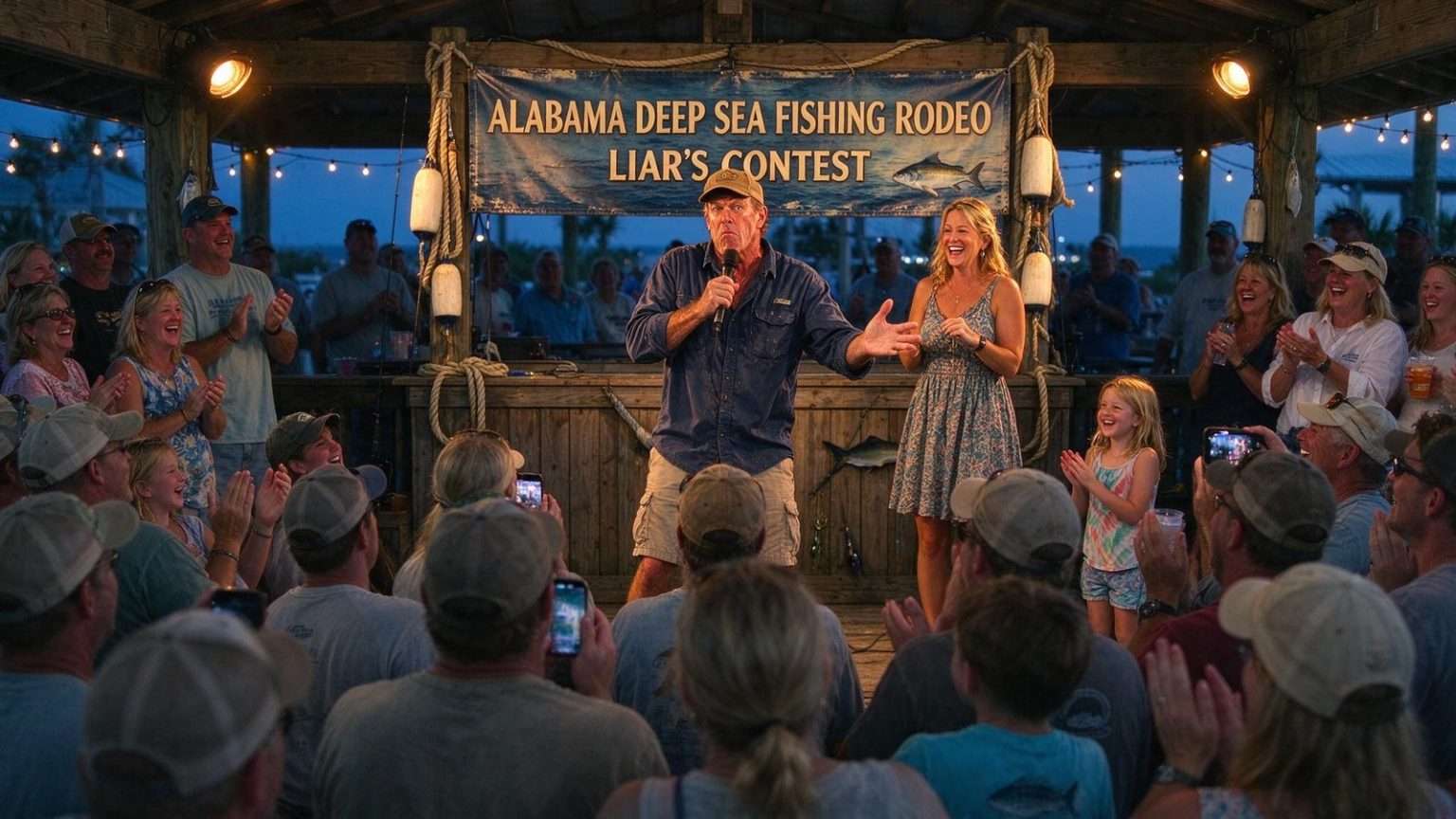
DAUPHIN ISLAND, Ala. — Before the first line hits the water at the Alabama Deep Sea Fishing Rodeo, there’s one competition where honesty is a handicap: the tournament’s traditional Liar’s Contest. The Thursday-night storytelling contest opened rodeo weekend on Dauphin Island, with contestants spinning tall tales of monster catches and improbable escapes for a live audience.
The contest is a fixture of the rodeo’s opening festivities, an evening when the rules that govern the weighmaster’s scales are suspended entirely and the only judging standard is entertainment. Contestants take the stage with stories of record-breaking fish, epic battles with weather and wildlife, and escapes that grow less plausible with each retelling — and the crowd’s laughter and applause, not any claim to truth, decides the winner.
A Fiberglass Spine and a Fish Story
This year’s winner was Frank Dickey of Chatom, whose winning tale had it all. Dickey told the crowd he ruptured every disc in his back trying to reel in a fish at the previous year’s Rodeo — so badly that doctors replaced his spine with fiberglass, putting him back in action just in time for this year’s tournament.
Dickey kept the performance going through his post-win interview, introducing the woman beside him as his wife — then admitting afterward that she wasn’t really his wife at all. The commitment to the bit is precisely why he took home the title. In a contest where the prize goes to the best lie, the judges reward storytelling craft: the straight face, the details that sound almost reasonable, and the willingness to stay in character when the audience is already laughing.
Chatom, Dickey’s hometown, sits in Washington County north of Mobile, part of the inland stretch of south Alabama from which many rodeo anglers travel to the coast each July. The Liar’s Contest draws exactly that mix — tournament fishermen, island regulars and visiting families — for a night of competition that requires no boat, no bait and no fish at all.
The Rodeo Itself
The Liar’s Contest has long served as the playful prelude to the Rodeo itself, which opens the next morning with its signature cannon blast on the island’s east end and bills itself as the world’s largest fishing tournament.
The cannon blast that opens the tournament is one of the Gulf Coast’s most recognizable traditions: at the signal, a fleet of boats that has assembled off the east end of Dauphin Island races to begin fishing, and the latest installment of a long-running Alabama summer institution is underway. The rodeo runs three days at its site on the island’s east end, with the public welcome to watch the fish come in, browse vendor rows and follow the leaderboard as the largest fish in each category changes hands.
The scale of the event justifies the “world’s largest” billing. The tournament awards prizes across dozens of categories spanning big-game offshore species, inshore favorites like speckled trout and flounder, and even an area set aside for children competing for their first titles. Entry tickets double as a shot at the prize board, and thousands of anglers — from party-boat regulars to families fishing from the pier — participate each summer.
A Scientific Side to the Spectacle
What many casual attendees don’t realize is that the rodeo has long doubled as a research event. Scientists from the University of South Alabama and the Dauphin Island Sea Lab station themselves at the weighmaster’s scales each year, sampling the catch to gather data that no single research vessel could collect. Otoliths — the ear bones used to age fish — tissue samples and stomach contents harvested from tournament landings have fed decades of studies on Gulf fish populations, reproduction and migration.
That partnership between a fishing tournament and the research community is unusual on the Gulf Coast, and it has made the rodeo genuinely valuable to fisheries science. Researchers have documented the arrival of new species in northern Gulf waters, tracked recovery patterns after hurricanes and oil spills, and built long-term datasets on everything from red snapper to sharks — all by taking measurements at a scale that only a tournament bringing thousands of fish to one set of scales can provide.
Dauphin Island’s Summer Stage
For Dauphin Island itself, rodeo weekend is the centerpiece of the summer season. The barrier island, connected to the mainland by the Gordon Persons Bridge over the Intracoastal Waterway, swells with visitors who fill vacation rentals, seafood restaurants and the island’s public beaches. The event dates to 1929, when local organizers launched a fishing tournament to promote the coast, and it has run almost continuously since — through hurricanes, wartime interruptions and the rebuilding years that followed.
The Liar’s Contest belongs to that history’s lighter side. Fishing tournaments on the Gulf have always involved stories as much as statistics, and an event that made the storytelling official — with a stage, a judge and a title on the line — was an inevitable outgrowth of the genre. It also sets the tone for the weekend: a rodeo that opens with an evening of celebrated untruths is announcing that the next three days are about community as much as competition.
How the Rodeo Weekend Unfolds
The rhythm of rodeo weekend follows a pattern regulars know by heart. Thursday night brings the Liar’s Contest and the social kickoff on the island’s east end. Friday morning’s cannon blast sends the fleet out, and fish begin arriving at the scales by midday. Saturday is traditionally the busiest day on the grounds, with families crowding the weighmaster’s stand whenever word spreads that something large is in a truck on the way in. By Sunday afternoon, the final weigh-ins settle the leaderboard and the awards ceremony closes the summer’s biggest fishing weekend on the Alabama coast.
Between weigh-ins, the rodeo grounds operate like a small seaside festival. Food vendors, bait and tackle dealers, boat displays and sponsor booths line the site, and the public can walk up to the scales to watch each fish measured and identified. For many families along the Gulf Coast, bringing children to see a six-foot shark or a cooler full of red snapper hoisted for the crowd is itself an annual tradition, one generation handing down the ritual to the next.
The Species Behind the Stories
The tournament’s category structure mirrors the range of fishing the northern Gulf offers. Offshore, anglers target marlin, tuna, wahoo and dolphin beyond the shelf, where charter fleets out of Dauphin Island, Orange Beach and Bayou La Batre run full-day trips. In the deeper waters of the continental slope, grouper and tilefish draw bottom-fishing crews. Closer in, the bays, passes and surf produce speckled trout, redfish, flounder and sheepshead — species that weekend anglers with small boats and pier passes can chase as seriously as the offshore crews chase billfish.
That accessibility is central to the rodeo’s claim on the title of world’s largest. A modest entry fee and a public weigh-in mean that a child fishing from the Fort Morgan pier competes, in principle, in the same event as a sportfisherman returning from the rigs with a blue marlin on the deck. The prize structure rewards the biggest fish in dozens of separate categories rather than a single champion, spreading the chances across the whole fleet and keeping every boat’s hopes alive through the final afternoon.
A Tradition That Keeps Adapting
The rodeo’s longevity owes something to its willingness to change with the times while keeping its rituals intact. Category lists have shifted as fisheries management has changed; the research sampling program has grown more sophisticated with each decade; and the grounds have rebuilt after storms that flattened them. What has stayed constant is the core arrangement — a public tournament on a barrier island, scales open to everyone, and a weekend that belongs as much to the crowd as to the competitors.
The Liar’s Contest sits at the center of that constancy. Long before the first fish is weighed, the tournament’s real opening act is a hall full of listeners deciding which impossible story is told best — and, this year, a fisherman from Chatom with a fiberglass spine, a borrowed wife and the championship to prove that on Dauphin Island at rodeo time, the best story wins.
Why the Tall Tales Matter
It might seem odd for a fishing tournament famous for honest scales to open with a contest rewarding the best lie, but the pairing makes sense on reflection. Fishing culture on the Gulf Coast has always run on stories — the one that got away is the genre’s founding text — and the Liar’s Contest simply gives that impulse a stage, a microphone and a winner’s spot. By letting the community laugh at its own exaggerations before the serious weighing begins, the rodeo draws a line between the sport’s folklore and its competition, and honors both.
The Thursday-night crowd leaves with the weekend’s tone set: three days of fish, family and friendly competition ahead, with the knowledge that everyone’s best story — true or otherwise — belongs at the rodeo. That blend of spectacle and self-aware humor is precisely what has kept the Alabama Deep Sea Fishing Rodeo, and its opening night of celebrated fibs, a fixture of Gulf Coast summers for generations.