

Homeowners across the Gulf Coast spend hours planning flower beds, trimming shrubs and mulching walkways, yet many gardens still feel like they’re missing a finishing touch. Local horticulture experts say the solution may be one of the most overlooked elements of Southern landscaping: the perennial climbing vine.
Vines have long been part of the region’s gardening heritage, softening fences, arbors and porch railings the way a well-chosen accessory completes an outfit. In the warm, humid climate of coastal Alabama, which falls mostly within American Horticultural Society zones 8 and 9, a wide range of climbing and trailing perennials thrive with relatively little maintenance once established.
That combination of heat, humidity and mild winters gives South Alabama gardeners a longer growing season than most of the country enjoys, but it also brings challenges — heavy spring rains, clay-heavy soils in some neighborhoods, sandy soils in others, and pest pressure that rarely takes a winter break. The right vine, experts say, can handle all of it while adding vertical interest that ground-level plantings simply cannot provide.
Clematis offers variety for nearly every spot
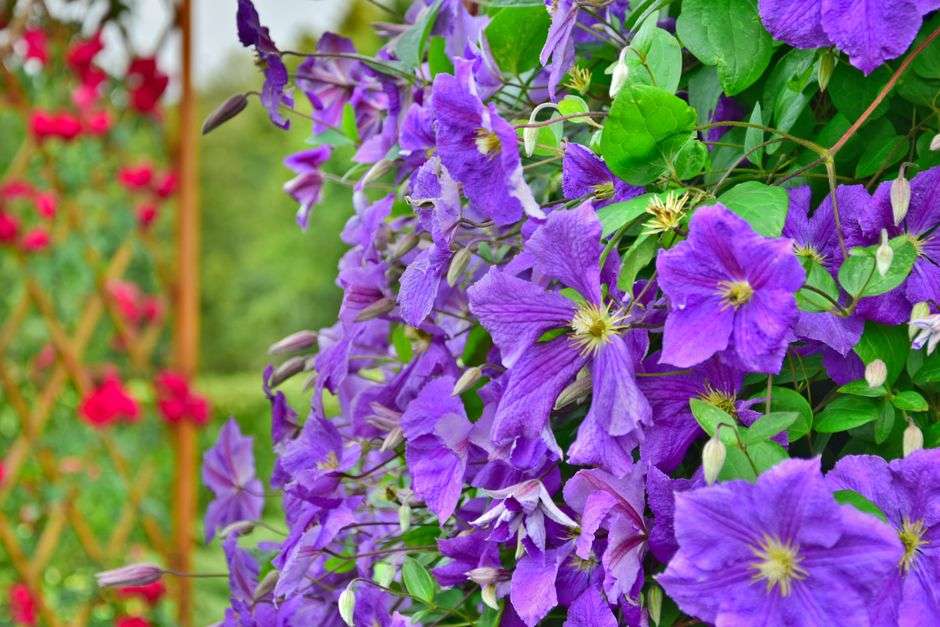
Among the most popular options is clematis, a genus with dozens of varieties suited to different growing conditions. Clematis alpina is a deciduous vine prized for its long stalks and one- to three-inch flowers in a range of colors. Clematis integrifolia stays more compact, reaching about three feet tall with blue, urn-shaped blooms roughly an inch and a half wide, and performs well across a broad span of growing zones.
For shadier spots, Clematis armandii can climb to eight feet and produces fragrant pale pink flowers on long stalks. Clematis lanuginosa often blooms twice a year, in spring and again in summer, and tends to produce larger flowers than other clematis varieties, though gardeners should watch for clematis wilt, a fungal disease that can also spread to other plants in the garden.
That wilt risk is worth taking seriously in the Gulf Coast’s humidity, where fungal problems spread quickly in still, damp air. Gardeners who space plants for airflow and avoid overhead watering give themselves the best chance of keeping a clematis planting healthy from season to season.
Native options from the botanical experts
Nita Crandall, a horticulture expert with Mobile Botanical Gardens, points local gardeners toward several other perennial vines well suited to the area. Crossvine, native to the central and southern United States, is a vigorous climber with long red and yellow tubular flowers that carry a subtle mocha scent; because it grows aggressively, Crandall recommends keeping an eye on it so it doesn’t overtake nearby plantings.
Climbing hydrangea, a member of the hydrangea family native to the Southeast, produces small white flowers in late spring and summer and is often found naturally in wet, forested areas — a hint that it will be happiest in the damper, shadier corners of a Gulf Coast yard where many ornamentals struggle.
Yellow jessamine, also known as Carolina jasmine or evening trumpet flower, can climb nearly 20 feet and produces clusters of yellow, trumpet-shaped blooms, often with orange centers, that make it a favorite for arbors and walls in warm climates. Gardeners should note that the plant contains compounds toxic to humans and honeybees, so it should be handled and placed with care.
A related plant, swamp jessamine, also called Rankin’s trumpet flower, is similarly hardy and can climb more than 20 feet with its own yellow blooms, offering a similar look for gardeners who want a native trumpet-flowered vine on a large structure.
Vines that bring in the birds and butterflies
For gardeners hoping to attract wildlife, Lonicera sempervirens, commonly called coral honeysuckle, trumpet honeysuckle or scarlet honeysuckle, is a non-invasive evergreen that can grow beyond 20 feet and draws butterflies, bees and hummingbirds with its tubular flowers. Mobile Botanical Gardens carries a yellow-flowered cultivar of the plant, known as Sulphurea, in its on-site Marketplace for gardeners who want to add it to their own yards.
Wildlife gardeners along the Gulf Coast prize tubular-flowered natives precisely because they line up with the migration calendar. Hummingbirds moving along the coast each spring and fall feed heavily on trumpet-shaped blooms, and a yard planted with them becomes a stop on a much longer journey. Unlike the aggressive Japanese honeysuckle that has overrun fence lines across the South, coral honeysuckle behaves itself in the landscape while offering the same nectar reward.
Manettia cordifolia, better known as Brazilian firecracker vine, is another favorite for South Alabama gardens. The easy-to-grow summer bloomer thrives in full sun to partial shade, reaching eight to 20 feet tall, and produces red, scarlet and reddish-orange flowers from one to two inches long that appear from late spring through fall.
It also does well in large containers, making it a popular addition to hummingbird gardens on patios and porches — a useful trait for condo dwellers and renters who want the wildlife benefit of a vine without planting one in the ground.
A wisteria that stays where it is put
Rounding out the list is Amethyst Falls wisteria, a non-invasive variety that can grow more than 30 feet and produces clusters of purple flowers that, from a distance, resemble bunches of grapes. It blooms in spring and, with light trimming, can flower again in summer. The vine tolerates full sun to partial shade and can be trained onto fences, arbors or trellises, and it is a strong draw for butterflies.
The non-invasive label matters here. Anyone who has watched the Asian wisteria species swallow a fence line, strangle a mature tree or crack a porch lattice in the Mobile area knows why local experts steer gardeners toward American-bred options instead. Amethyst Falls gives the dangling purple blooms gardeners want without the decades-long regret, blooming reliably on new wood and staying manageable with seasonal pruning.
Choosing among these vines largely comes down to matching the plant to the site: sun-loving bloomers such as the firecracker vine and wisteria for open fences and arbors, shade-tolerant choices such as climbing hydrangea for woodland edges, and wildlife magnets such as coral honeysuckle wherever a hummingbird highway passes overhead.
With a structure to climb and a season or two of establishment, most of these perennials ask little more than an annual trim — and in return they turn blank walls and ordinary chain-link into the most photographed corner of the yard.
Where to get help and see plants in person
Gardeners with questions about selecting, planting or maintaining perennial vines can reach out to the Mobile County or Baldwin County offices of the Alabama Cooperative Extension System, both of which offer free guidance on plant selection and care. The Extension System’s Master Gardener Helpline is also available at 1-877-252-4769, or by emailing questions to [email protected].
The Extension System’s master gardeners are trained volunteers who staff helplines across the state, and their Gulf Coast expertise runs deep in exactly the questions coastal gardeners ask most: what survives salt air, what tolerates summer downpours, and what will not take over the fence line by August. The service costs nothing, and the advice is tailored to the counties where the questions come from rather than to a national median.
Local gardeners looking for inspiration can also visit Market in the Square, held Saturdays through July 28 from 7:30 a.m. to noon at Cathedral Square in downtown Mobile. In addition to local produce, homemade bread, jams, preserves, honey, crafts and live music, shoppers can stop by the Master Gardener tent for gardening advice.
The Saturday market doubles as a testing ground for plant questions, since vendors and volunteers alike are usually growing the same things home gardeners are attempting — the same heat, the same bugs, the same sandy or stubborn soil. A five-minute conversation there can save a season of trial and error.
Mobile Botanical Gardens also posts information on upcoming fall classes and events at mobilebotanicalgardens.org, giving area gardeners a calendar of workshops, plant sales and walks through the gardens’ collections as the cooler planting season approaches.
Fall is, in fact, the smart time to plant most perennial vines along the Gulf Coast. Soil stays warm well into autumn while air temperatures ease, letting roots settle in before next summer’s heat arrives, and winter rains handle much of the watering. Gardeners who establish vines in the coming months will be rewarded with climbing growth and blooms by the time porch weather returns.
Whether the goal is a hummingbird stop on the patio, a fragrant arbor over the back gate, or simply something green and flowering to hide the neighbor’s storage shed, the Gulf Coast’s palette of perennial vines offers a fit for nearly every yard — and the local experts are standing by to help match the vine to the spot.