

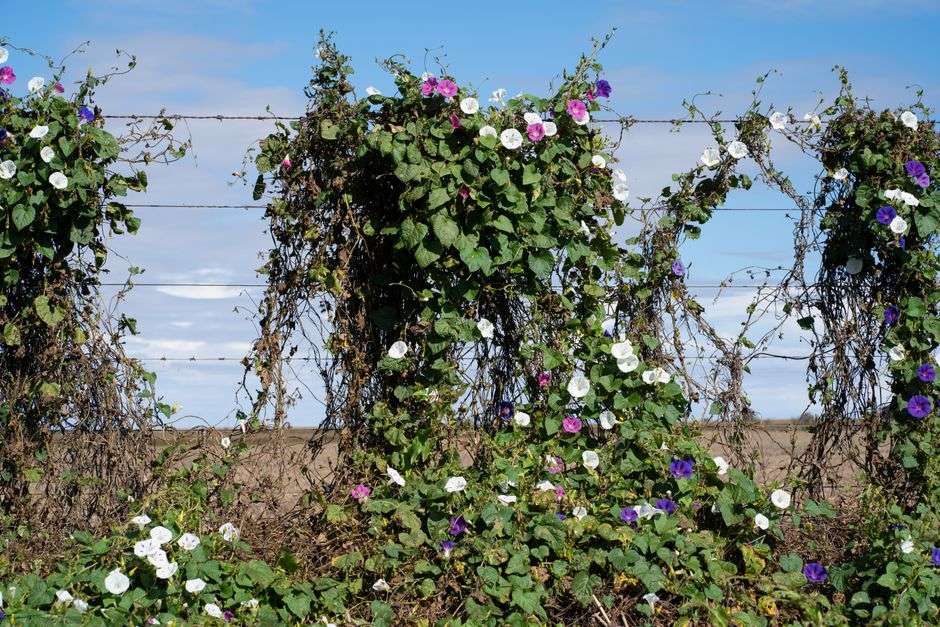
Gardeners across the Mobile area looking to add height and color to their yards this summer have an easy, budget-friendly option: annual flowering vines. Mobile County Master Gardener volunteers say a simple trellis, fence or arbor, combined with the right vine, can transform a plain corner of the yard into a standout feature within a matter of weeks. For gardeners watching a flat, bare fence line or an empty stretch of lattice, few plantings deliver a faster visual payoff over a single season.
Unlike perennial vines, which return year after year and often require regular pruning and shaping, annual vines are started fresh from seed each season. That makes them especially forgiving for gardeners who want to experiment. If a vine does not perform well in one spot, or a homeowner simply wants to try something new, next year offers a clean slate with no established root system to work around or remove. There is no long-term commitment, no slow-motion mistake to undo, and no need to dig out a woody crown that has outgrown its welcome.
Why annual vines earn their keep
The forgiving nature of annuals is what local volunteers emphasize most to newcomers. A perennial vine planted in the wrong place can dominate a bed for years before someone decides it has to go, and removing a mature woody vine from a fence or tree is a job in itself. Annuals sidestep that problem entirely. They rise quickly, bloom for a season, and then are cleared away with the rest of the summer cleanup, leaving the gardener free to change course the following spring.
That flexibility also makes annual vines a natural fit for renters, for gardeners trying out a new bed design, and for households that want maximum color in the weeks when the yard actually gets used — porch season on the Gulf Coast. A fast-growing annual vine can screen a utility box, soften a chain-link fence, or shade a west-facing window long before a slow, permanent planting could manage any of those jobs.
Sun, water and support
Master Gardener volunteers note that most annual vines are vigorous growers, but only when given enough sun and consistent water. The general rule of thumb is at least a half-day of full sun for vines to bloom to their potential over a single growing season. Gardeners who try to stretch a sun-loving vine into deep shade usually end up with plenty of leaf and little flower, a common disappointment that a few minutes of site observation in advance can prevent.
Vines are also opportunistic climbers, readily attaching themselves to nearly any support available. Gardeners without an existing trellis, fence or arbor can improvise with garden netting, string or wire, including aluminum or copper, to give young vines something to grab onto as they get established. What matters is giving the seedling something slender to twine around early; a vine that cannot find a grip in its first weeks of growth often sprawls along the ground instead of climbing.
Timing fertilizer correctly also matters. Master Gardeners recommend waiting until vines are established before feeding them, then applying a landscape fertilizer such as a 12-4-6 blend in spring and again in midsummer, following label directions for application rates. Feeding too early pushes growth the young roots cannot support, while a missed midsummer round can leave a heavy-blooming vine running out of fuel at the peak of the season.
Seven vines that perform in South Alabama
Local horticulture experts point to seven annual vines that tend to perform especially well in South Alabama gardens. Morning glories (Ipomoea purpurea) are prized for their ability to cover a fence quickly with a wall of color. Because the seeds have a tough outer coat, gardeners should nick the coat and soak the seeds overnight in room-temperature water before planting to speed up germination. Once established, morning glories are notably drought tolerant, a useful trait in the long hot stretches that define a Gulf Coast summer.
Moonflower (Ipomoea alba), a night-blooming relative of the morning glory, is typically grown as an annual outside the warmest parts of the country. Its fragrant white blooms, which can stretch five to six inches across, open at dusk and last through the night, making it a favorite for evening gardens and patios. Like morning glory, moonflower seeds benefit from nicking and an overnight soak before planting. Planted near a porch or patio, moonflowers turn an ordinary summer evening into a scent-and-silhouette display that peaks just as the day’s heat finally breaks.
Mandevilla (Mandevilla splendens), a tropical woody vine with more than 100 species and funnel-shaped flowers, performs best in partial shade and can overwinter in truly tropical climates. In South Alabama, where temperatures can dip below 45 degrees, gardeners typically need to bring potted mandevillas indoors for the winter or treat them as a one-season planting. Because starting the seeds requires greenhouse conditions most homeowners do not have, Master Gardeners suggest beginning with an established plant from a local garden center. For gardeners willing to carry the pot inside each winter, a mandevilla can become a repeat performer year after year.
Annual sweet pea (Lathyrus odorata) rewards patient gardeners who plant in early fall rather than spring. A bamboo tripod makes an easy support, and getting the root system established before winter allows the vine to put on vibrant growth once days lengthen and warm in spring. Seeds should be nicked and soaked before planting. Sweet peas prefer cool weather and produce about a month of fragrant, colorful blooms — a short but intense season that makes the early planting worth the extra planning.
Black-eyed Susan vine (Thunbergia alata), with its white, buff, orange or yellow blooms centered by a dark eye and its arrow-shaped foliage, thrives in full sun and is well suited to arbors and containers alike. It is also one of the faster growers on the list, capable of covering small structures in short order, which makes it a good first vine for a gardener testing whether the climbing habit suits a particular spot.
Purple hyacinth bean vine (Dolichos lablab) offers gardeners a bonus: seeds for next year. Once the pods mature, the beans can be collected, dried in an envelope and replanted the following spring, or shared with family and friends. This large, full-sun vine tolerates poor soil and is considered one of the easier annual vines to grow, which has kept it a staple of Southern pass-along gardening for generations.
Ornamental sweet potato vine (Ipomoea batatas) is grown not for flowers but for its foliage, which provides a striking contrast in garden beds and containers. The variety ‘Blackie’ produces deep burgundy leaves, while ‘Marguerite’ offers chartreuse foliage. Like the others on this list, it performs best in full sun. Used alongside flowering vines, the ornamental sweet potato gives beds and planters a bold foliage anchor that the bloom-focused climbers lack.
Where to learn more
Gardeners looking for more detailed guidance can consult Alabama Extension publication ANR-1198, ‘Vines for Alabama Landscapes,’ available at aces.edu. The publication is part of a broader library of free Alabama Cooperative Extension System materials covering everything from soil preparation to pest management, written for Alabama growing conditions rather than borrowed from national guides.
Mobile County Master Gardeners also offer two free programs later this summer for residents interested in learning more. The Mobile Master Gardeners monthly meeting is set for Thursday, June 7, from 10 to 11:45 a.m. at the Jon Archer Agricultural Center, 1070 Schillinger Road N. in Mobile, with a program on Historic Gardens presented by Evan Ware. A Lunch & Learn session on Gardening for the Disabled, led by David Schmohl, follows on Monday, June 18, from noon to 1 p.m. at the same location. Organizers note there is no monthly meeting or Lunch & Learn program in July.
The Master Gardener program itself is a volunteer network trained through the Alabama Cooperative Extension System, and the Mobile County volunteers staff outreach across the county throughout the year, from plant clinics to school gardens. Residents with gardening questions can reach the Master Gardener Helpline at 1-877-252-4769 or email [email protected]. For gardeners weighing which of the seven vines fits their yard — a shady porch, a sun-baked fence, a container by the front door — the helpline is the quickest way to get a local answer before buying seed or plants.
Between the free Extension publications, the summer programs at the Jon Archer Agricultural Center and the helpline, Mobile County gardeners have unusually good support for a project as simple as a vine on a trellis. The advice from the volunteers is consistent: match the vine to the sunlight, give it something to climb, water it steadily, and let a single season of blooms make the case for planting again next year.