Logging community demands answers a month after Clarke County trucker found shot dead
A month after 72-year-old trucker Thearthor Dixon was found shot dead in Clarke County, the logging community is pressing police for answers in the.
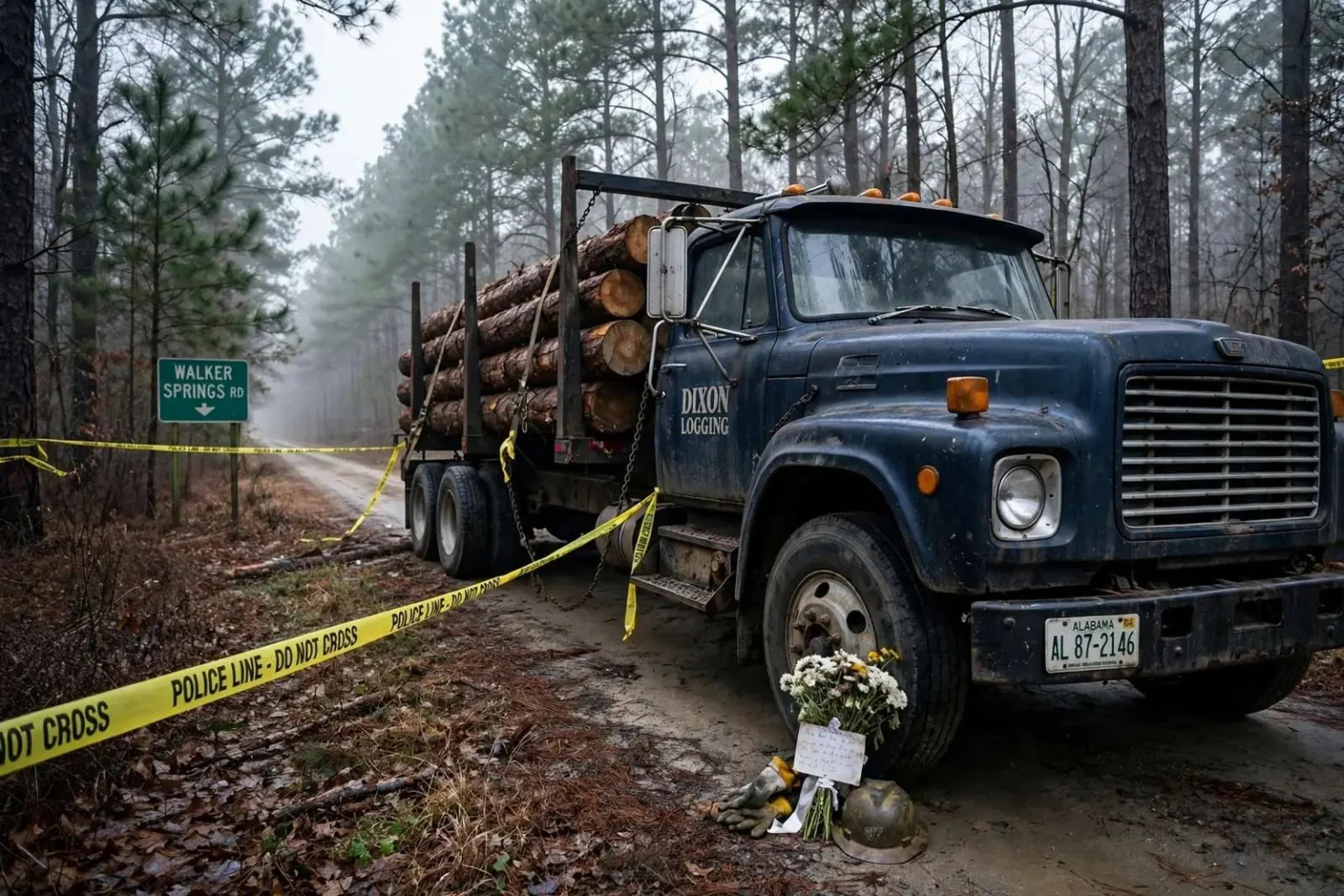
Nearly a month after a 72-year-old trucker was found shot to death beside his rig in the woods of Clarke County, the region’s logging community is still demanding answers. Thearthor Dixon was discovered on the morning of Jan. 28 next to his truck off Walker Springs Road near Jackson. Authorities said he had been shot multiple times, and the case remains open with no arrest announced.
Dixon’s death has reverberated well beyond Clarke County’s timberlands. Members of “Southern Loggers,” a Facebook group that connects timber workers across several states, have kept the case in the spotlight since word of the killing spread, circulating updates and pressing anyone with information to come forward. Nick Askew, an administrator of the group, said the killing has unsettled drivers who often work alone in remote areas before dawn, long before most travelers are on the road and long before help could arrive quickly if something went wrong.
That isolation is a defining feature of the job in southwest Alabama. Log trucks run narrow, unpaved county roads and forest tracks in Clarke, Washington, Monroe and surrounding counties, often in the dark in order to reach mills by opening time. A driver whose truck breaks down, or who stops to check a load or a strap, can be miles from the nearest residence. Workers in the industry say the death of a hauler in those circumstances strikes at the sense that the woods, whatever their hazards, have never been a place where someone would be targeted.
A community built around the timber trade
Clarke County sits in the heart of one of the most heavily forested regions of Alabama. Lumber and papermaking have anchored the local economy for more than a century, and Grove Hill, the county seat, and Jackson, the county’s largest city, both grew up around sawmills, wood yards and the rail lines that once moved timber out of the region. While the big pulp and paper operations have consolidated over the decades, logging and hauling remain a fixture of daily life, with family-run crews cutting and trucking pine across thousands of acres of company and private land.
In that world, the log truck driver occupies a demanding middle position. He is often the last link in a chain that begins with a landowner and a cutting crew, and the first link in the chain that feeds the mill. Loads are heavy, schedules are tight, and pay frequently depends on the number of loads delivered rather than hours logged. Drivers commonly start their days between midnight and 4 a.m., chaining and loading in the dark, then running two-lane roads such as Walker Springs Road, which winds through rural western Clarke County toward the Tombigbee River and the communities along it.
It is against that backdrop that the Facebook group “Southern Loggers” has functioned as more than a social club. Groups of its kind serve as informal bulletin boards for the trade, carrying load prices, equipment for sale, road hazard warnings and, increasingly, safety talk. After Dixon was found dead, members used the group to press for answers, share the few details authorities had released and keep the case from fading from public attention as the weeks passed. For drivers who work the same kinds of roads Dixon did, the group’s insistence on keeping the case visible has been a form of mutual protection.
What authorities have said so far
Jackson Police Chief Jerry Taylor said robbery appears to be the motive in the killing. He said his office has worked with other agencies since the morning Dixon’s body was found, and that he expects to share more details in the coming days. Investigators have not said what, if anything, was taken from Dixon or his truck, a gap that has added to the frustration voiced by members of the logging community.
Dixon’s body was discovered beside his truck in the woods off Walker Springs Road, a rural corridor lined with timberland well outside Jackson’s city limits. Discovery of a body in a remote location typically brings multiple agencies into a case from the outset: municipal police, the Clarke County Sheriff’s Office, and state investigators can all be drawn in for scene processing, evidence collection and interviews. Authorities have not detailed which agencies are assigned or what evidence has been recovered, consistent with an active investigation.
The risks of working alone before dawn
The circumstances of the killing have prompted a broader conversation among timber workers about the realities of solo work in remote areas. Log truck drivers routinely operate alone: one driver, one truck, one load, often dozens of miles from a populated crossroads. Cell coverage along forest roads in south Alabama can be spotty, and a driver who fails to check in or arrive at a mill may not be missed for hours.
Veterans of the trade describe habits built around that vulnerability. Some share their routes with spouses or dispatchers so someone knows where they should be at a given hour. Others favor meeting points where several trucks gather at first light, or arrange to load at the same decks each morning so a familiar face would notice an absence. None of those practices removes the fundamental isolation of the job, which is why the Dixon case has landed with such force among drivers who recognize their own routines in the outline of his last morning.
Alabama’s logging industry is consistently ranked among the most dangerous in the state by federal workplace safety statistics, though those figures are dominated by equipment accidents, highway crashes and loading injuries rather than violence. Violent deaths of loggers are rare enough that cases like this one draw attention across state lines, which helps explain why a Facebook group connecting workers in several states has taken up the cause.
How rural homicide investigations proceed
Homicides in rural south Alabama typically move more slowly than cases in dense urban areas, for reasons that have little to do with effort. Crime scenes in wooded, unlit areas are difficult to process, particularly after exposure to days or weeks of weather. Potential witnesses are few, and the population along a road like Walker Springs Road is scattered across miles of timberland. Investigators often depend on recollections from passersby, neighbors who noticed unusual vehicles, or records from the victim’s phone and truck that take time to obtain and analyze.
Multi-agency cooperation, which Chief Taylor said has been underway since the morning the body was found, is standard in such cases. A municipal department investigating a death outside its routine caseload will commonly lean on county investigators, the Alabama Law Enforcement Agency and forensic specialists to move evidence forward. Coroner’s findings, ballistics and digital forensics each run on their own timelines, and prosecutors generally prefer that investigators finish the bulk of their work before making substantive public statements, precisely to protect any eventual trial.
That caution does little to satisfy a community asking for answers, however. Members of the logging community have openly questioned why more information has not been released a month into the investigation, and some have speculated about what might have been taken from the truck. Law enforcement officials across the region generally respond to such pressure the same way: they ask for patience, repeat the request for tips, and note that early public detail can taint witness memories and complicate prosecution.
What residents and workers can do
Authorities have not publicized a specific tip line for the Dixon case, but the standard channels in Clarke County remain available. The Jackson Police Department can be reached directly during business hours, the Clarke County Sheriff’s Office takes information around the clock through its dispatch line, and regional CrimeStoppers programs allow anonymous tips with the possibility of cash rewards. Investigators routinely stress that even fragments of information, a vehicle description, a remembered sound, an offhand remark, can break a case open weeks or months after the fact.
For drivers in the timber trade, the case has also renewed interest in basic precautions that cost little. Checking in at predictable times, photographing loads and locations as a matter of routine, keeping phones charged and mounted where they can be reached, and letting family or dispatch know when a route changes are all practices workers say they are revisiting. Some have urged employers to treat lone-driver welfare as a safety issue on par with equipment maintenance, arguing that a company that tracks loads in real time can also notice when a truck stops moving.
The economic weight of the timber trade in the region gives the case an added resonance. Timber is among Alabama’s most valuable agricultural commodities, and Clarke County alone supports scores of harvesting crews, haulers and wood-dealer operations. Every load that moves from the woods to a mill depends on someone willing to run a dark road alone before sunrise. Until an arrest is made in Dixon’s death, the people who do that work say they will keep asking the only question that matters: who killed a 72-year-old driver beside his own truck, and why.
None of that returns Thearthor Dixon to his family or answers what happened on a dark stretch of Walker Springs Road on the morning of Jan. 28. Chief Taylor has said more details are expected in the coming days, and members of “Southern Loggers” say they intend to keep watching for them. The case remains open, and the demand for answers shows no sign of fading.