
Love bugs are back: how to protect your car during Gulf Coast bug season
Love bugs are back across Alabama and Florida. Here is what drivers on the Gulf Coast should know to protect their cars during bug season.
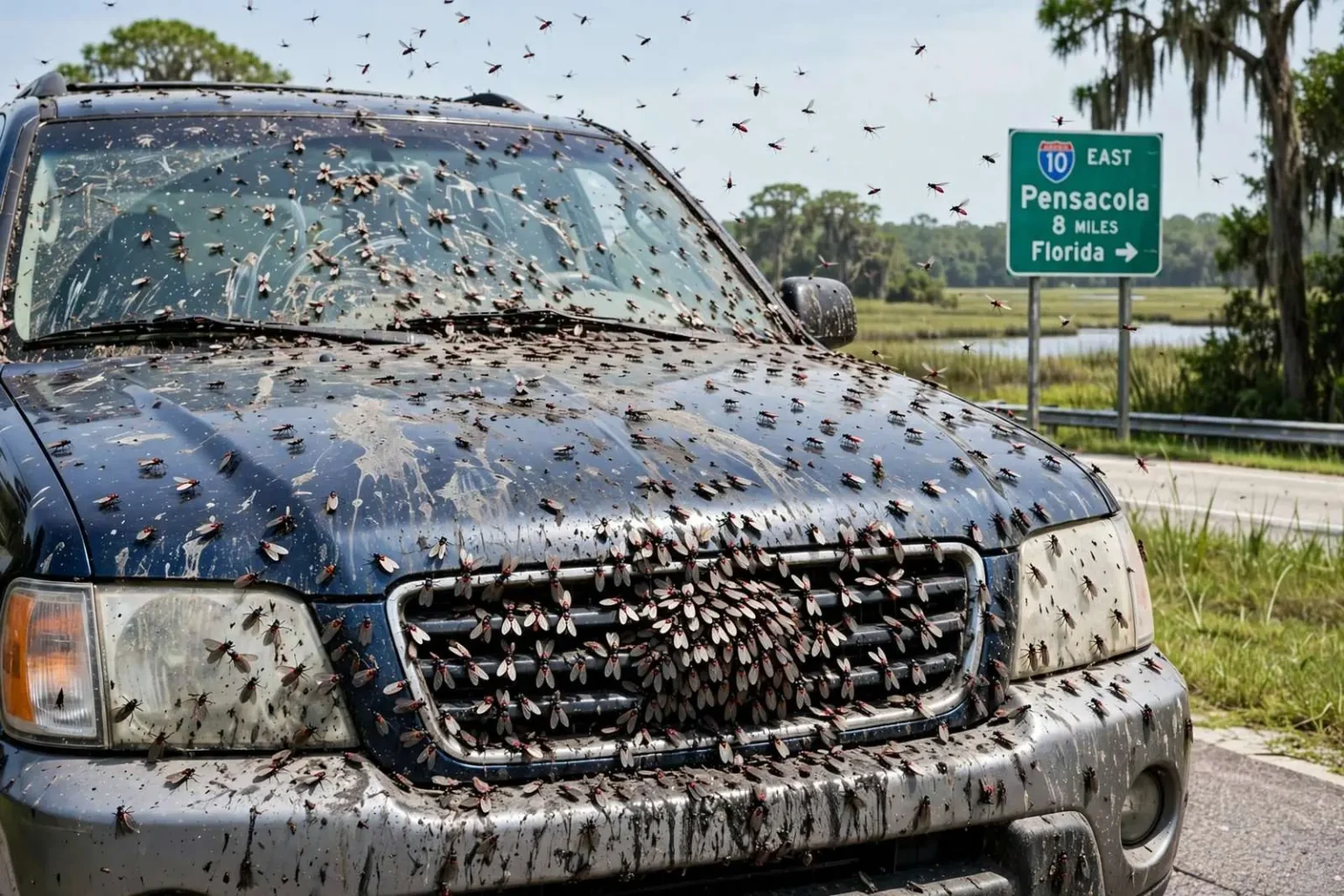
It is that dreaded time of year again along the Gulf Coast, when love bugs take to the air across Alabama and Florida. The tiny insects, a species of march fly, show up twice a year — first between April and May and again in August and September — and their arrival is one of the most predictable annoyances on the regional calendar, arriving with the regularity of spring pollen and summer humidity.
Love bugs are a seasonal nuisance, especially for drivers. The insects swarm in daylight hours, often near roadways, and cars traveling at highway speed plow through clouds of them by the thousands. Anyone who has driven Interstate 10, U.S. 98 or the beach highways during a peak flight period knows the aftermath: a windshield spattered gray, a grille packed with bodies and a front bumper that looks as though it has been through a sandstorm.
Auto detailers say the bugs should be cleaned off quickly. Left on a vehicle, their bodies can damage paint and clear coat, and experts warn against using windshield wipers on live bugs, which can smear acidic residue across the glass. The window for safe removal is measured in days, not weeks, and shorter still in the sun.
Why love bugs are such a nuisance
Love bugs, known scientifically as Plecia nearctica, are flies in the family Bibionidae, and their common name comes from their most visible habit: mating flights in which male and female pairs stay joined together, drifting slowly through the air in tandem. The females lay eggs in decaying vegetation — grass clippings, leaf litter, mulch — where the larvae feed before emerging as adults. The adults live only a matter of weeks, and their entire purpose above ground is reproduction, which is why the flights can seem so dense and so pointless from a human perspective.
The two annual generations explain the calendar. The spring flight, between April and May, is typically the lighter one. The late-summer flight, in August and September, tends to be heavier and coincides with peak travel to and from the beaches, which is why so many Gulf Coast residents associate the bugs with road trips rather than with the swamps and fields where they actually breed.
Contrary to persistent local legend, the bugs were not introduced to eat mosquitoes, and they were not engineered by anyone. The species migrated into the Gulf states naturally, arriving from Central America through Texas and Louisiana in the mid-20th century and working its way east into Florida and Alabama. They have no significant sting or bite, do not carry diseases and are largely harmless to people. Their real damage is cosmetic and chemical: the crushed bodies of the insects are acidic, and that acid etches into automotive paint if it is allowed to bake in the sun.
Protecting your vehicle
The first rule from professional detailers is speed. Bugs should be cleaned off as soon as practical, ideally the same day they hit the car. The longer the residue sits, especially on a hood or bumper exposed to direct sunlight, the more the acidity works into the paint and clear coat. A week of baked-on love bugs can leave permanent pits and stains that no amount of polishing will fully remove, and repainting a hood or front end costs far more than any amount of prevention.
Washing technique matters as much as timing. Detailers recommend soaking the affected areas first, using water and a bug-removal product or a mild car-wash solution, so the debris softens before anything touches it. Scrubbing dry bugs grinds the acidic residue into the finish, and rough brushes or abrasive pads can leave swirl marks that compound the damage. A microfiber cloth or a soft bug sponge, worked gently after a thorough soak, is the safer approach.
Windshield wipers deserve a special warning. Experts advise against using them on live or fresh bugs, because the blades smear the acidic residue across the glass instead of removing it, leaving a hazy film that reduces visibility and can be difficult to clean later. Spraying washer fluid first and, better yet, stopping to clean the windshield properly will preserve both the glass and the wiper blades, which degrade quickly when they drag through sticky bug debris.
Prevention can go a long way during the heaviest flights. A coat of wax applied before the season creates a sacrificial barrier that keeps bug residue from bonding directly to paint, and specialized protective films for hoods, front bumpers and mirror backs offer stronger protection for drivers who log lots of highway miles. Some residents in bug-heavy stretches along the coast also apply a light spray of cooking oil or a dedicated bug-preventive product to the front of the vehicle during peak weeks, which makes later cleanup dramatically easier — though any such coating should be washed off promptly rather than left on through the season.
Timing your driving
Love bugs are most active during daylight hours, with flight peaks in late morning and again in the late afternoon, and they are strongest on warm, calm days immediately after rain. They are drawn to light-colored surfaces and to the heat of asphalt, which is why roads and pale vehicles collect so many of them. Drivers can reduce the toll by scheduling trips for early morning or evening when practical, keeping speeds moderate on bug-dense corridors and avoiding tailgating, which puts the windshield in the direct debris stream of the vehicle ahead.
Route matters less than time of day, but certain stretches are consistently worse. Highways that cut through wet, vegetated land — the kinds of corridors that run across south Alabama and the Florida panhandle — see heavier flights than open, developed areas. Drivers heading to and from the beaches during the late-summer flight should expect significant accumulation on any extended highway run and plan for a rinse when they arrive.
Beyond the car
Love bugs find their way into more than grilles. They gather around pool screens, stain exterior walls and windows when crushed, and wander indoors through any door left ajar. Around the house, the same principles apply: remove them gently, rinse surfaces rather than smearing them, and keep outdoor lighting use minimal during peak flights, since light attracts many night-flying insects, though love bugs themselves are chiefly daytime fliers. Residents who maintain pressure-washed exteriors and screened porches along the coast generally find the cleanup manageable if it is done regularly rather than left to accumulate.
There is at least one ecological silver lining. Love bug larvae help break down decaying plant material, performing a small but genuine service in the marshy, vegetated landscape of the Gulf Coast. The adults do not sting, bite or spread disease, and the swarms are harmless to pets beyond the obvious annoyance. The inconvenience, in other words, is temporary and surface-level — provided vehicle owners act before the acid does its work.
The late-summer flight runs through August and September across Alabama and Florida, and the spring generation will return between April and May. Gulf Coast drivers who soak, rinse and protect their vehicles during those windows come out ahead, and anyone who has already parked a bug-crusted car in the driveway should add a wash to this weekend’s list before the sun turns a nuisance into a repair bill.
Commercial operators face the same arithmetic on a larger scale. Trucking companies, bus lines and delivery fleets along the Gulf Coast schedule extra washes during the two flight windows, because paint damage on a fleet compounds quickly and a truck that carries the company name spattered in bugs makes a poor impression at every stop. Rental car agencies at beach-destination airports run similar cycles, and body shops in the region see a predictable bump in paint-correction work after each flight season winds down.
Motorcyclists should take particular care during the flights. Bugs that are a cosmetic problem for a car are a visibility and safety problem for a rider, since a windshield, visor or helmet face shield coated in residue in a matter of miles. Riders are advised to carry water and a cloth for mid-trip cleanup, to replace or clean visors regularly through the season and to favor full-face protection during peak flight hours.
Boaters and trailer owners are not exempt either, as highway runs to the launch ramp collect the same residue on fiberglass and gel coat as on automotive paint. The marine versions of the advice are identical: rinse early, soak before scrubbing and wax before the season as a sacrificial layer.
The takeaway
Love bug season is one of those Gulf Coast rhythms that every newcomer learns within a year and every long-timer dreads on schedule. The insects are harmless, the flights are short and the cleanup is genuinely manageable when it is done promptly. The costly mistake is waiting — letting a day of highway driving sit on the paint through a week of sun, or dragging wipers across a coated windshield. A hose, a bucket, a microfiber towel and half an hour of attention during the August and September flight will get any vehicle through the season with its finish intact.


