Macaroni Grill on Airport Boulevard: The Best of the Chains, With Reservations
A Sunday lunch after church at Macaroni Grill on Airport Boulevard produced a measured verdict in May 2008: better than most national chains in Mobile, but still trailing Carrabba's.
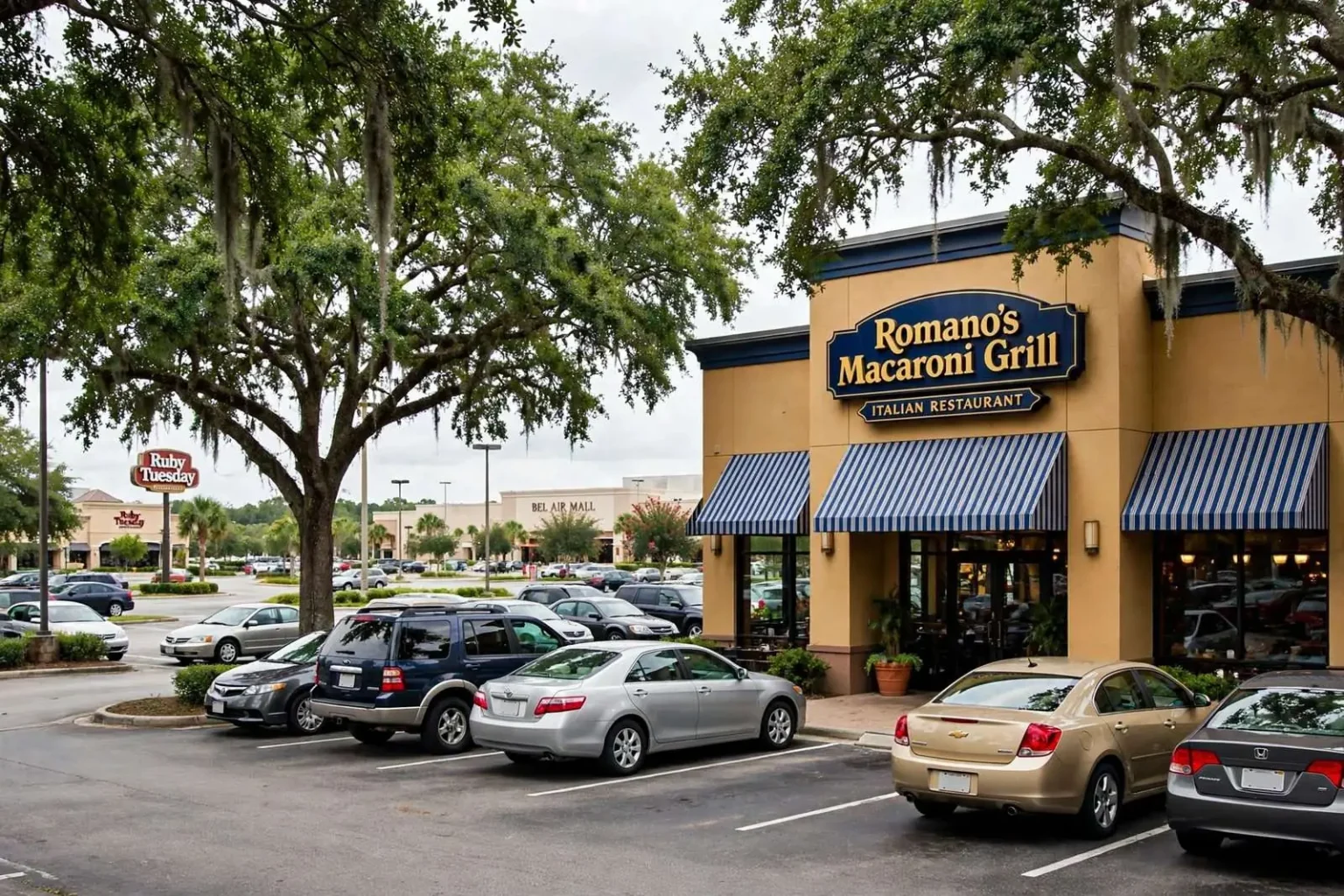
The stretch of Airport Boulevard around Bel Air Mall has long been Mobile’s parade ground of national restaurant chains, a place where the signs are familiar before you have read them. In May 2008, a Mobile dining critic writing under a pen name devoted a review to one of them, and used the occasion to sort the field. His subject was Macaroni Grill. His conclusion was that it was the best of a competitive set, and that this was worth saying out loud.
Setting the field
On price, he noted, Macaroni Grill sat comfortably alongside Ruby Tuesday, O’Charley’s, Applebee’s and Friday’s. The difference, in his judgment, lay in the quality and selection of the dishes. The food was simply better than what the other chains were putting out.
He was equally quick to name the ceiling. Macaroni Grill was not as good as Carrabba’s, another chain, and he saw no reason to pretend otherwise. It is a distinction worth preserving: the critic was not sneering at chain restaurants as a category. He was ranking them, on their own terms, for readers who were going to eat at one anyway.
That practicality defined much of his reviewing. Mobile’s dining scene in 2008 ran from white-tablecloth institutions downtown to the po-boy shops and barbecue stands of the neighborhoods, with the Airport Boulevard corridor occupying its own middle ground — the place where families, shoppers and travelers actually ate most often. A critic who ignored that middle ground, he seemed to understand, would be writing for an audience that existed only in his imagination.
The corridor itself was a product of the mall era. Bel Air Mall, anchored by department stores since the 1950s, pulled a constellation of chain restaurants along Airport Boulevard, and by 2008 the strip held one of the densest collections of national dining brands between New Orleans and Pensacola. Competition among them was constant, and the differences between them — menu quality, service pacing, bread baskets — were the sort of details a regular reviewer could track.
A convenient Sunday
The visit was not a pilgrimage. He and his dining companion stopped after Sunday church services because they wanted to do some early afternoon shopping and the location was convenient to the mall. By his own accounting, they managed to eat there about once a year.
The pen name itself was part of the column’s chemistry. Mobile’s dining circles are small enough that an unnamed critic could eat unrecognized, order like anyone else and report what arrived. Readers, meanwhile, speculated in print and in conversation about who wrote the reviews, and the guessing became part of the column’s local following. What mattered to the paper was the consistency: the same tea order, the same bread scrutiny, the same willingness to rank chains and independents by the same standards week after week.
Service was prompt. They were seated quickly and the server appeared soon after. He declined the offer of flavored tea, as he declined it everywhere, and ordered regular iced tea, a small ritual that appeared in nearly every review he wrote.
The tea ritual was one of the signature running jokes of the critic’s column. In a region where restaurant tea menus have grown elaborate — peach, raspberry, mint and beyond — he held the line for the plain, unsweetened-by-anyone’s-standards version, and readers came to expect the declaration in every review. It was a small insistence on consistency, the kind of fixed point that lets a reviewer compare one plate to another across years of visits.
The bread, and a comparison
While they studied the menu, the warm bread arrived, and it drew careful attention. He called it a good bread, soft with a slightly crisp crust, and they finished all of it. The bread at Carrabba’s, he maintained, had better taste and texture. But this was a compliment with a compliment inside it, since he thought highly enough of the bread to eat every bit.
Bread had a particular weight in his reviews because Mobile’s own bread culture gave him a standard. A critic who spent his columns defending the honor of po-boy bread — the crisp-crusted, airy French loaves on which the city’s signature sandwich depends — was not going to let a chain’s basket pass unexamined. That the Macaroni Grill loaf earned a full finish said more than its ranking against Carrabba’s suggested.
What they ordered
The menu, he found, was interesting and varied, running through a wide range of Italian dishes including pizza and sandwiches.
Pasta Milano — bow-tie pasta with grilled chicken in a garlic cream sauce. He conceded it was probably not a healthy choice, then praised it thoroughly: very tasty, seasoned with lots of garlic, and portioned just right for a noon meal. He would order it again, though he wanted more chicken in the dish.
The Pasta Milano order also showed how the critic handled chain menus — by finding the dish the kitchen actually executed well. Cream sauces and garlicky pastas are forgiving dishes for a high-volume kitchen, and a reviewer who tested a chain on its signature plates rather than its weakest ones gave readers a fairer picture of what they would actually be served. His note that he wanted more chicken was the kind of practical adjustment a regular diner could use: order it, know what to expect, know what to ask for next time.
Half roasted Tuscan chicken sandwich with a garden salad — his companion’s choice, which he judged very good. The sandwich came on a delicious soft heated bread that he rated better in taste and quality than the bread at Panera.
The comparison to Panera — then, as now, the benchmark for chain bakery-café bread — was among the stronger compliments available in his vocabulary for corporate cooking. It also tracked the direction the casual dining segment was moving: toward freshly baked bread and longer, more varied menus, with Italian-themed chains like Macaroni Grill and Carrabba’s leaning hardest into the bread-and-pasta identity that distinguished them from burger-and-salad competitors.
The verdict
“As far as chain restaurants go, Macaroni Grill is one of the better ones,” he concluded, before offering the driest possible endorsement: he might even be back again before the end of the year.
The review is a small document of a particular moment in Mobile’s dining life. In 2008, the casual dining chains were at or near their commercial peak, and the Airport Boulevard corridor was where a family went when it wanted a table, a menu and no surprises. The independent restaurant boom that would later reshape downtown Mobile and midtown was still gathering.
What makes the review worth rereading is its refusal to be snobbish. A critic who spent most of his columns hunting gumbo in strip malls and defending the honor of po-boy bread was perfectly willing to sit down at a national chain on a Sunday afternoon, order the bow-tie pasta, and tell the truth about it.
His honesty ran in both directions. Naming the ceiling — Carrabba’s, and above it the independents — kept the ranking credible, while naming the floor kept his praise useful. Readers who trusted him on gumbo could rely on him at a mall-adjacent pasta house, and that consistency is what gave a pen-named critic’s weekly column its standing in a city where restaurant reviewing was otherwise thin.
Romano’s Macaroni Grill has since closed most of its Gulf Coast locations. The bread, by all accounts, was the part people missed.
What the review still says
Fifteen years on, the review reads as an artifact of a dining economy that has partly vanished. The casual chains have retreated from many markets, the Airport corridor has evolved, and downtown Mobile’s restaurant row — an outcome barely visible in 2008 — now carries the city’s reputation for eating out. The critic’s snapshot captures the exact pivot point: the moment when a chain dinner was still the region’s default night out, judged fairly on its own terms by a reviewer who never pretended it was anything more.
The chains’ retreat from the Gulf Coast since then has its own explanation. Casual dining chains built their 1990s and 2000s expansion on suburban growth and mall traffic, and both eroded as shoppers moved online and diners sought more distinctive food. Mobile followed the national pattern: Applebee’s, Friday’s and their peers consolidated, and locations that anchored Airport Boulevard a decade ago have closed or changed hands repeatedly. The Italian chains, with their bread-and-pasta identity, held a bit longer — but the economics of the mall-adjacent dinner house never fully recovered from the shift.
Yet the habits the critic described persist. Sunday-after-church dinners remain a Gulf Coast institution, the iced tea debate continues in every restaurant in the region, and the bread basket is still the first thing a Mobile diner judges. In that sense the review has aged better than the restaurant it covered — a record of how the region actually eats, written by someone who ate there too.